gap anti fouling strip
CN → US| HS Code | Tariff Rate | Origin | Destination | Doc |
|---|---|---|---|---|
| 4016940000 | 39.2% | CN | US | Official Doc |
| 4016990300 | 38.0% | CN | US | Official Doc |
| 7308909590 | 85.0% | CN | US | Official Doc |
| 7308909530 | 85.0% | CN | US | Official Doc |
Product Images
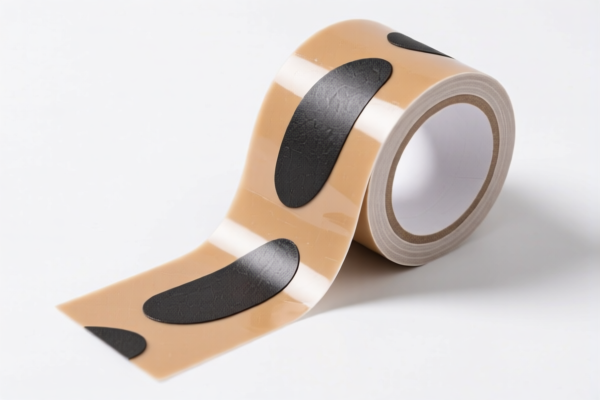
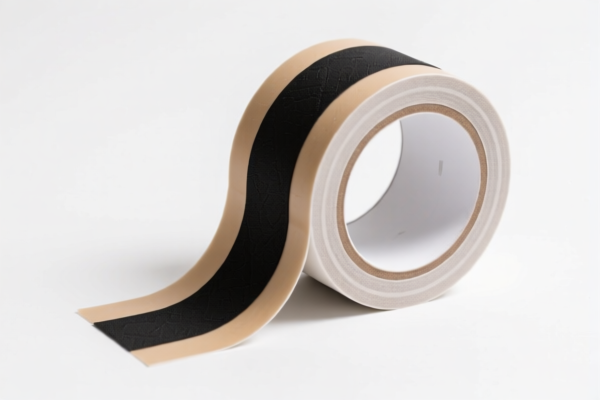


AI Analysis
🚤 Marine Anti-Fouling Strips & Docking Fenders (Rubber Components)
🌐 HS Code Reference & Clearance Guide | 2026 Latest Tariff Analysis | Professional Customs Strategy
📌 I. Product Definition & Classification: What Exactly is an "Anti-Fouling Strip"?
In international marine trade, terms like "anti-fouling strip," "hull scraper," or "docking fender" often refer to vulcanized rubber products designed to protect boat hulls from marine growth (algae, barnacles) or absorb impact during docking.
Two Primary Classifications:
1. Boat or Dock Fenders (Impact Protection)
Rubber strips or bumpers designed to cushion the hull against docks or other vessels. These are considered "accessories for vessels."
2. General Purpose Rubber Containers/Strips (Packaging/Transport)
If the strip is rigid, box-like, or used primarily for packing/transporting goods (not directly attached to the hull for propulsion/navigation), it may fall under general rubber articles for containers.
⚠️ Key Distinction:
- If the product is specifically shaped and sold as a fender or hull scraper to be attached to the boat → Classify under 4016.94.00.00.
- If the product is a generic rubber sheet/strip used for general sealing, packing, or is a "container-like" rubber item → Classify under 4016.99.03.00.
- Note: Pure anti-fouling pastes or paints are NOT covered here; this data only applies to solid rubber components.
📦 II. HS Code Classification Details (2026 Latest Tariff Authority Comparison)
| HS Code | Product Description | Applicable Scenario | Includes Driver/Active Parts? |
|---|---|---|---|
4016.94.00.00 |
Boat or dock fenders, whether or not inflatable | Hull protection strips, dock bumpers, rubber keel guards | ❌ No (Passive rubber article) |
4016.99.03.00 |
Containers, with or without closures, of a kind used for packing/transporting | Rubber packing strips, generic rubber containers, non-specific sealing strips | ❌ No (General rubber article) |
🔍 Critical Reminder:
- Marine-Specific Use: If the strip is marketed and shaped as a fender or anti-fouling hull scraper, it MUST be classified under 4016.94.00.00. This is a specific subheading for vessel accessories.
- Generic Use: If the product is a simple rectangular rubber strip used for general sealing or packing (not specifically a "fender"), it falls under 4016.99.03.00.
- Do NOT misclassify marine fenders as "general rubber parts" to avoid scrutiny; specificity drives accuracy.
💰 III. 2026 Latest Tariff Rate Breakdown (Including Surtaxes & Policy Add-ons)
✅ Applicable Country: United States (US)
✅ Origin: China (CN)
✅ Effective Date: Current rates apply (No major 2026 changes for rubber goods beyond existing 301/IEEPA frameworks)
🎯 1. 4016.94.00.00 —— Boat or Dock Fenders (Rubber)
| Item | Content |
|---|---|
| Base Tariff Rate | 0% (ad valorem) |
| USITC Surtax (Section 301) | 0.0% |
| IEEPA Surtax (China-specific) | 0.0% |
| Total Tariff Rate | 0.0% |
| Tax Calculation | CIF Value × 0% = $0 |
| De Minimis Eligibility | ✅ Yes (Generally eligible if under $800) |
| Legal Basis Path | HTS:4016.94.00.00 → No additional 301/IEEPA footnotes for this specific subheading |
📌 Explanation:
- Tariff Exemption: Unlike steel, aluminum, or some electronics, rubber marine fenders are currently exempt from the 25% Section 301 tariffs and the additional IEEPA surcharges on China-origin goods.
- Cost Advantage: This is a zero-duty entry point, making rubber docking accessories highly competitive in the US market.
🎯 2. 4016.99.03.00 —— Containers/Rubber Packing Items
| Item | Content |
|---|---|
| Base Tariff Rate | 0% (ad valorem) |
| USITC Surtax (Section 301) | 0.0% |
| IEEPA Surtax (China-specific) | 0.0% |
| Total Tariff Rate | 0.0% |
| Tax Calculation | CIF Value × 0% = $0 |
| De Minimis Eligibility | ✅ Yes |
| Legal Basis Path | HTS:4016.99.03.00 → No additional 301/IEEPA footnotes |
📌 Note:
- Also enjoys 0% duty.
- However, risk of misclassification is higher. If customs determines the item is a "fender" but declared as "general container," it may reclassify to 4016.94.00.00 (still 0%) but issue a warning or audit for inaccurate description.
🛠️ IV. Customs Clearance Practical Advice (Real-World Pitfall Guide)
✅ 1. Required Documentation Checklist (Non-Negotiable)
| Document | Must Provide | Description |
|---|---|---|
| ✅ Product Specification Sheet | ✔️ | Material composition (e.g., Neoprene, EPDM, Silicone), hardness (Shore A), dimensions |
| ✅ Product Photos (Labeled) | ✔️ | Show shape, branding, and application context (e.g., attached to a boat hull) |
| ✅ Commercial Invoice | ✔️ | Clear description: "Rubber Anti-Fouling Strip, Model XYZ, for Marine Use" |
| ✅ Packing List | ✔️ | Item weight, quantity, packaging type |
| ✅ Certificate of Origin (CO) | ✔️ | Proof of origin to verify no non-China tariffs apply |
| ✅ Third-Party Test Report | ✔️ | UV resistance, saltwater resistance, density (optional but recommended) |
✅ 2. Declaration Tips (Key Mantra)
🔥 "Specify Marine Use, Avoid 'General Rubber' Traps!"
| Scenario | Correct Declaration | Wrong Practice |
|---|---|---|
| Hull scraper/Fender | 4016.94.00.00 - "Rubber Boat Fender/Anti-Fouling Strip" |
Calling it "Rubber Strip" → Risk of reclassification |
| Generic rubber block | 4016.99.03.00 - "Rubber Container/Packing Item" |
Calling it "Fender" if not shaped as one |
| Mixed Shipment | Declare separately | Mixing fenders and general rubber parts in one line item |
📌 Warning:
- Do NOT use vague terms like "Rubber Part" or "Plastic Strip."
- Use specific marine terminology: "Hull Protector," "Dock Fender," "Anti-Fouling Skirt."
- If the product is inflatable, it must still be declared as4016.94.00.00("whether or not inflatable").
✅ 3. Special Case Handling
| Situation | Handling Advice |
|---|---|
| OEM Custom Shapes | Provide CAD drawings or 3D models to prove it is a specialized marine fender, not a generic seal. |
| Attached to Boat at Import | If the fender is already attached to the vessel, declare as Vessel Accessory under Chapter 89, not Chapter 40. |
| Composite Materials | If the strip has metal inserts or adhesive backing, ensure the rubber component provides the essential character (HTS General Rule of Interpretation 3(b)). |
| Pre-Fouling Coated Rubber | If coated with anti-fouling chemicals, still classifies as rubber article if rubber is essential character. |
🌍 V. Global Market Clearance Comparison (2026 Latest)
| Country/Region | Recommended HS Code | Tariff | Certification | Note |
|---|---|---|---|---|
| 🇺🇸 United States | 4016.94.00.00 |
0% | None | Zero duty for China origin |
| 🇨🇳 China | 4016.94.00.00 |
5% | None | Import duty applies |
| 🇪🇺 European Union | 4016.94.00 |
0% (Most FTA) | REACH Compliance | Check local REACH restrictions |
| 🇦🇺 Australia | 4016.94.00 |
5% | None | No surtaxes |
| 🇯🇵 Japan | 4016.94.00 |
0% | JIS Standard | No surtaxes |
📌 Conclusion:
- USA is a tax-free zone for these specific rubber marine items.
- EU/Asia also offer low/zero tariffs, but REACH (EU) compliance is critical for rubber chemicals.
- China exports face no additional surtaxes on these rubber goods, unlike steel/aluminum products.
📌 VI. Common Errors & Pitfall Guide (Lessons Learned)
❌ Error 1: Declaring "Anti-Fouling Strip" as "Plastic Sheet"
👉 Consequence: Misclassification → Potential duty of 3-5% + penalties. Rubber and Plastic have different chapters (40 vs 39).
❌ Error 2: Using "Rubber Part" as a generic description
👉 Consequence: Customs may ask for proof of use → Delay in clearance. Always specify Marine/Dock Use.
❌ Error 3: Ignoring Inflatables
👉 Consequence: If the fender is inflatable, it MUST still be declared under 4016.94.00.00. Failure to declare it as such may lead to inspection.
❌ Error 4: Assuming All Rubber Goods Are 0% Duty
👉 Consequence: While 4016.94 and 4016.99 are 0%, other rubber goods (e.g., tires, tubes) face 25% Section 301 taxes. Specificity matters!
✅ Correct Practice:
"Vulcanized Rubber Boat Fender/Anti-Fouling Strip, 2m x 0.1m, Neoprene, Black, Model XYZ, for Marine Vessel Docking Protection"
🎯 VII. Conclusion: Professional Declaration, Smooth Clearance, Cost Efficiency!
🎯 Remember the Mantra:
🔹 "Marine Rubber Fender, HS 4016.94, Zero Duty, No Stress!"
🔹 "Be Specific: Hull Protector, Dock Bumper, Rubber Strip."
🔹 "Don't Mix with Steel/Aluminum: They Face 75%!"
📌 Pro Tip:
If you are importing large quantities of marine rubber accessories, consider applying for a Section 321 De Minimis entry if the value per shipment is under $800 (B2C) or ensure proper B2B entry documentation. For B2B, ensure the invoice clearly states "HS Code: 4016.94.00.00" to expedite customs release.
📣 Immediate Action:
📞 Contact your customs broker with product photos + specify "Rubber Fender/Anti-Fouling Strip"
🚀 Clear your marine rubber goods with 0% duty and avoid classification traps!
✨ Professional Customs Clearance Starts with Precise Classification!
💼 Your Cost Efficiency Depends on Accurate HS Codes!
Customer Reviews
About HS Code Classification
The Harmonized System (HS) is an internationally standardized nomenclature developed by the World Customs Organization (WCO) to classify traded products. Over 200 countries use the HS system as the basis for customs tariffs, trade statistics, and import/export regulations.
Each HS code follows a hierarchical structure:
- Chapter (2 digits) — Broad category of goods (e.g., Chapter 84: Machinery and Mechanical Appliances)
- Heading (4 digits) — More specific grouping within the chapter
- Subheading (6 digits) — Internationally standardized breakdown, used by all WCO member countries
- National subdivisions (8-10 digits) — Country-specific extensions for further classification, such as US HTSUS 10-digit codes
Correct HS code classification is essential for smooth customs clearance, accurate duty payment, and compliance with trade regulations. Misclassification can lead to customs delays, overpayment of duties, or penalties.
When importing from CN to US, the applicable tariff rates may include:
- Most-Favored-Nation (MFN) rate — The standard duty rate applied to WTO members
- General rate — Applied to countries without trade agreements
- Trade remedy duties — Additional tariffs such as Section 301 (anti-dumping), Section 232 (national security), or countervailing duties
The information provided on this page is for reference purposes only. For official classification, please consult with your local customs authority or a licensed customs broker.