gardening pruning shears
CN → US| HS Code | Tariff Rate | Origin | Destination | Doc |
|---|---|---|---|---|
| 8201500000 | 0.0% | CN | US | Official Doc |
| 8201600000 | 0.0% | CN | US | Official Doc |
| 8214906000 | 0.0% | CN | US | Official Doc |
| 8213009000 | 0.0% | CN | US | Official Doc |
| 8214203000 | 14.0% | CN | US | Official Doc |
Product Images
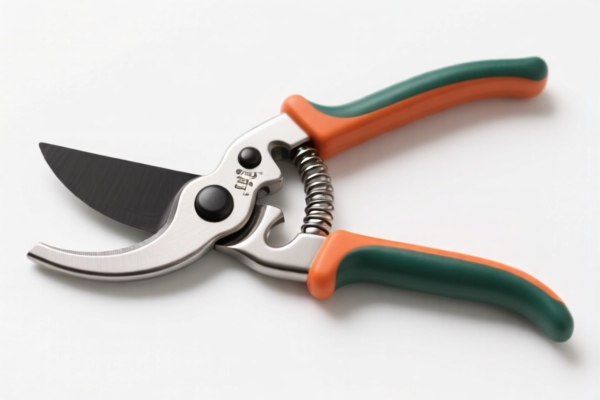
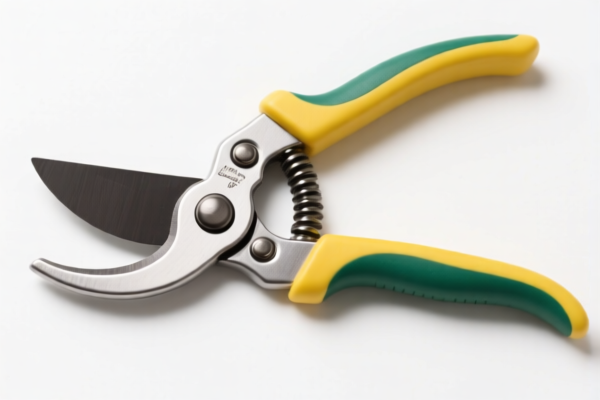
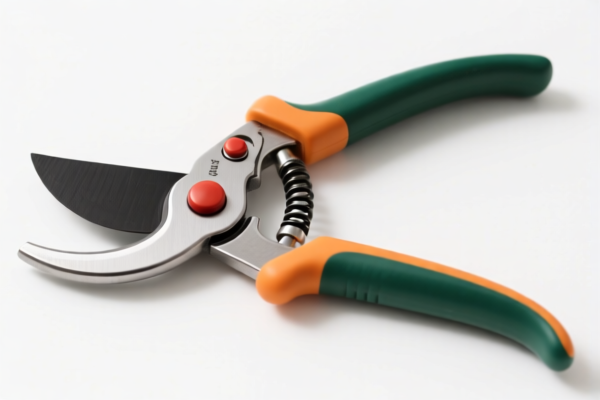
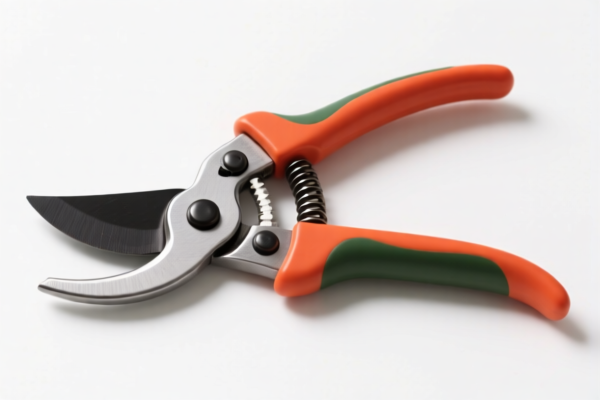
AI Analysis
✂️ Gardening Pruning Shears (Pruners)
🌐 HS Code Reference & Customs Clearance Guide | 2026 Latest Tariff Analysis | Professional Clearance Strategy
📌 I. Product Definition & Classification: Do You Really Understand "Pruning Shears"?
Gardening pruning shears (often called secateurs, hand pruners, or loppers) are essential handheld tools for horticulture, arboriculture, and landscaping. They are designed to cut branches, stems, and twigs. In international trade, their classification depends heavily on material composition, mechanism, and specific use case (general pruning vs. specialized nail/foot care).
⚠️ Key Distinction Points:
- General Pruning/Gardening: Usually classified under Chapter 82 (Tools of base metal), specifically 8201 or 8214, depending on construction.
- Nail/Foot Care: If the shape/function mimics human nail clippers, it may fall under 8214.20.30.00.
- Material: Stainless steel blades are common, but the classification often remains in "Base Metal Tools" rather than "Stainless Steel Articles" unless specified otherwise in specific subheadings.
📦 II. HS Code Classification Details (2026 Latest Tariff Authority Comparison)
Based on the provided data, here are the precise HS Codes and their corresponding tax structures for Gardening Pruning Shears.
| HS Code | Product Description | Application/Scenario | Material/Structure | Total Tax Burden* |
|---|---|---|---|---|
8201.50.00.00 |
Pruning tools; functionally consistent with branch cutters, shear pruners, etc. | General garden pruning, removing woody stems | Base metal tools | 35.0% + 1¢/each |
8201.60.00.00 |
Pruning tools; highly consistent with pruning scissors in function, no material or form conflict | Similar to above, broader category of pruning implements | Base metal tools | 35.0% + 1¢/each |
8214.90.60.00 |
Stainless steel garden shears; classified as cutting/pruning tools, base metal material, fits "other scissors" | Heavy-duty garden shears, stainless steel blades | Stainless Steel/Base Metal | 10.0% + 0.2¢/each |
8213.00.90.00 |
Stainless steel garden shears; classified as scissors, metal material, fits "scissors and parts thereof" | Fine precision pruning, ornamental gardening | Stainless Steel/Base Metal | 10.0% + 3¢/each |
8214.20.30.00 |
Edge trimmers/shears; function as nail/foot care tools, form factor similar to nail clippers | Special Case: If marketed/used as nail/foot clippers | Base Metal | 10.0% (No per-unit) |
🔍 Important Note:
- 8201.50/60: These are for general pruning tools. They attract the highest additional duties (Section 301 + 122).
- 8214.90/8213.00: These are classified as scissors/shears. They have lower additional duties (0% Section 301) but a 10% Section 122 tariff.
- 8214.20.30: This is a risky classification. It applies only if the tool is explicitly for nail/foot care. Misusing this code for garden tools can lead to severe penalties.
💰 III. 2026 Latest Tariff Rate Details (Including Surtaxes & Policy Add-ons)
✅ Applicable Country: United States (US)
✅ Origin: China (CN)
✅ Effective Time: Current rates as per provided data
🎯 1. 8201.50.00.00 & 8201.60.00.00 —— General Pruning Tools
| Item | Detail |
|---|---|
| Base Duty | 1¢ per each + 2.8% ad valorem |
| Section 301 Surtax | +25.0% |
| Section 122 Surtax | +10.0% |
| Total Effective Rate | ~35.0% + 1¢/unit |
| Tax Calculation | (CIF Value × 2.8%) + (CIF Value × 25%) + (CIF Value × 10%) + 1¢/unit |
| De Minimis Exemption | ❌ Not Applicable (Deemed commercial entry) |
| Legal Basis Path | HTSUS:8201.50/60 → Section 301: Footnote 9903.88.01 → Section 122: IEEPA:9903.01.25 |
📌 Explanation:
- These codes are classified under Tools of Chapter 82.
- They are subject to both the 25% Section 301 tariffs and the 10% Section 122 tariffs.
- Total tariff burden is ~35%, making these products expensive to import into the US from China.
🎯 2. 8214.90.60.00 & 8213.00.90.00 —— Scissors & Shears (Stainless Steel)
| Item | Detail |
|---|---|
| Base Duty | 0.2¢/each + 3.1% (8214.90) OR 3¢/each + 3% (8213.00) |
| Section 301 Surtax | +0.0% (Exempted for scissors/shears under certain interpretations) |
| Section 122 Surtax | +10.0% |
| Total Effective Rate | ~10.0% + small per-unit fee |
| Tax Calculation | (CIF Value × 3.1% or 3%) + (CIF Value × 10%) + 0.2¢/3¢/unit |
| De Minimis Exemption | ❌ Not Applicable |
| Legal Basis Path | HTSUS:8214.90/8213.00 → Section 122: IEEPA:9903.01.25 |
📌 Note:
- These codes are classified under Scissors (8214/8213).
- They benefit from 0% Section 301 surtax (based on the provided data indicating 0.0% added tax).
- Total tariff burden is ~10%, significantly lower than general pruning tools.
- Strategic Insight: If your pruning shears are structurally similar to scissors (e.g., bypass pruners), consider classifying under 8214.90.60.00 to save ~25% in duties.
🎯 3. 8214.20.30.00 —— Nail/Foot Care Tools (Misclassification Risk)
| Item | Detail |
|---|---|
| Base Duty | 4.0% |
| Section 301 Surtax | 0.0% |
| Section 122 Surtax | +10.0% |
| Total Effective Rate | 14.0% |
| Tax Calculation | CIF Value × 14.0% |
| De Minimis Exemption | ❌ Not Applicable |
| Legal Basis Path | HTSUS:8214.20.30.00 → Section 122: IEEPA:9903.01.25 |
📌 Warning:
- This code is for nail/foot care.
- Do NOT use this for garden tools unless you are actually selling nail clippers.
- Misclassification can lead to audits, fines, and forced retroactive payments of higher duties.
🛠️ IV. Customs Clearance Practical Advice (Real-World Pitfall Guide)
✅ 1. Documentation Checklist (Non-negotiable)
| Document | Required? | Description |
|---|---|---|
| ✅ Product Specification Sheet | ✔️ | Detail blade material (e.g., Stainless Steel 420J2), handle material, cutting capacity (e.g., max 25mm branch) |
| ✅ Product Photos | ✔️ | Clear images of the tool, showing blade type (bypass/anvil), handle grips, and any brand markings |
| ✅ Commercial Invoice | ✔️ | Must clearly state "Gardening Pruning Shears" or "Stainless Steel Scissors" |
| ✅ Packing List | ✔️ | Include quantity, weight, and unit count |
| ✅ Material Test Report | ✔️ | Confirm blade material (stainless vs. carbon steel) to support HS Code choice |
✅ 2. Classification Strategy (Key Rules)
🔥 “Function over Form, Material over Name”
| Scenario | Recommended HS Code | Why? |
|---|---|---|
| Standard Garden Pruners (Bypass/Anvil) | 8201.50.00.00 or 8201.60.00.00 |
Function is pruning. High tariff (~35%). |
| Precision Scissor-Type Pruners | 8214.90.60.00 |
Resembles scissors. Lower tariff (~10%). Consult customs broker for eligibility. |
| Nail Clippers Sold as "Garden Tools" | 8214.20.30.00 |
Illegal. High risk of seizure. |
| Stainless Steel Shears | 8214.90.60.00 |
Material and form align with scissors category. |
📌 Critical Tip:
- If your pruning shears look and function like scissors (e.g., bypass mechanism with pivoting blades), try to argue for 8214.90.60.00 to save 25% in duties.
- Provide technical drawings showing the scissor-like mechanism to support this classification.
✅ 3. Special Cases & Risk Management
| Situation | Handling Advice |
|---|---|
| OEM/White Label | Ensure the invoice reflects the actual function. Do not use generic terms like "Tool" without specification. |
| Mixed Shipments | If shipping both garden shears and nail clippers, separate the HS Codes. Do not lump them under one line item. |
| Stainless Steel Claim | If claiming 8214.90.60.00, provide material certificates to prove blade is stainless steel. |
| High-Value Items | Consider Advance Ruling from CBP to confirm classification and avoid post-import audits. |
🌍 V. Global Market Comparison (2026 Latest)
| Country/Region | Recommended HS Code | Tariff | Certification | Notes |
|---|---|---|---|---|
| 🇺🇸 USA | 8214.90.60.00 |
~10% | None required | Best for cost-saving. Avoid 8201 if possible. |
| 🇨🇳 China | 8201.50.00.00 |
9.5% | CCC (if applicable) | Standard export duty. |
| 🇪🇺 EU | 8207.30.00 or 8214.90 |
0-4.5% | CE (if power tool, not applicable here) | No surtaxes. Lower duties than US. |
| 🇬🇧 UK | 8201.50.00 |
4.5% | UKCA | Post-Brexit rules apply. |
| 🇦🇺 Australia | 8201.50.00 |
5% | SAA | No additional surtaxes. |
📌 Conclusion:
- USA is the most challenging market due to Section 301/122 tariffs.
- Classifying as "Scissors" (8214) instead of "Pruning Tools" (8201) can save 25% in duties for compatible products.
- Always verify if your product’s mechanism qualifies as "scissors" under US CBP interpretation.
📌 VI. Common Mistakes & Pitfall Guide (Blood & Tears Lessons)
❌ Mistake 1: Classifying all garden shears under 8201.50.00.00
👉 Consequence: Pay 35% duty. If your product is scissor-like, you overpaid by 25%.
👉 Fix: Analyze if it fits 8214.90.60.00.
❌ Mistake 2: Using 8214.20.30.00 for garden pruners
👉 Consequence: CBP will reject the classification as "not nail clippers". Fines and delays.
👉 Fix: Never use nail care codes for garden tools.
❌ Mistake 3: Ignoring the 1¢/unit duty in 8201 codes
👉 Consequence: Underestimation of total landed cost for high-volume, low-value items.
👉 Fix: Factor in per-unit fees in your pricing model.
❌ Mistake 4: Vague Product Description ("Garden Tool")
👉 Consequence: CBP may reclassify to the highest duty code or demand additional documentation.
👉 Fix: Use precise descriptions: "Bypass Pruning Shears, Stainless Steel Blades, Rubber Handles."
✅ Correct Approach:
"Pruning Shears, Bypass Type, 8" Length, Stainless Steel Blades, Ergonomic Handles, Model XYZ, For Gardening Use"
🎯 VII. Conclusion: Professional Classification Saves Money!
🎯 Remember the Rule:
🔹 "Scissors Save 25%!"
🔹 "If it cuts like scissors, classify as scissors!"
🔹 "Never mix Nail Care Codes with Garden Tools!"
🔹 "35% vs 10%: The difference is in the HS Code!"
📌 Pro Tip:
If you are shipping to the US, request a CBP Advance Ruling for pruning shears that resemble scissors. This will provide legal certainty and protect you from future audits.
📣 Take Action Now:
📞 Contact a Licensed Customs Broker
📸 Provide Product Photos & Technical Specs
🚀 Optimize Your HS Code to Minimize Tariffs!
✨ Professional Customs Clearance Starts with Accurate Classification!
💼 Every Dollar Saved in Duty is Pure Profit!
Customer Reviews
About HS Code Classification
The Harmonized System (HS) is an internationally standardized nomenclature developed by the World Customs Organization (WCO) to classify traded products. Over 200 countries use the HS system as the basis for customs tariffs, trade statistics, and import/export regulations.
Each HS code follows a hierarchical structure:
- Chapter (2 digits) — Broad category of goods (e.g., Chapter 84: Machinery and Mechanical Appliances)
- Heading (4 digits) — More specific grouping within the chapter
- Subheading (6 digits) — Internationally standardized breakdown, used by all WCO member countries
- National subdivisions (8-10 digits) — Country-specific extensions for further classification, such as US HTSUS 10-digit codes
Correct HS code classification is essential for smooth customs clearance, accurate duty payment, and compliance with trade regulations. Misclassification can lead to customs delays, overpayment of duties, or penalties.
When importing from CN to US, the applicable tariff rates may include:
- Most-Favored-Nation (MFN) rate — The standard duty rate applied to WTO members
- General rate — Applied to countries without trade agreements
- Trade remedy duties — Additional tariffs such as Section 301 (anti-dumping), Section 232 (national security), or countervailing duties
The information provided on this page is for reference purposes only. For official classification, please consult with your local customs authority or a licensed customs broker.