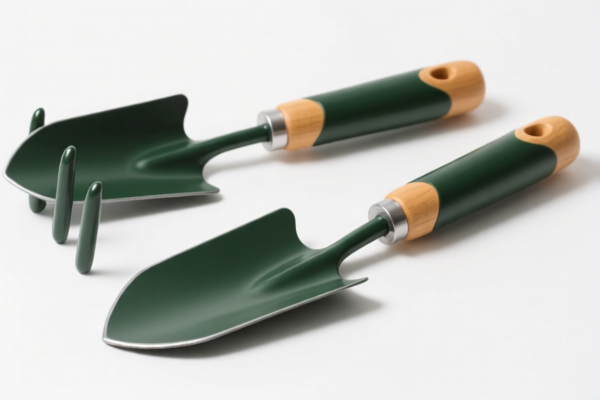
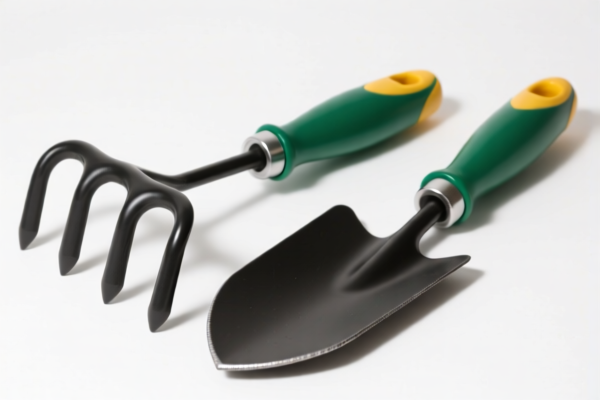
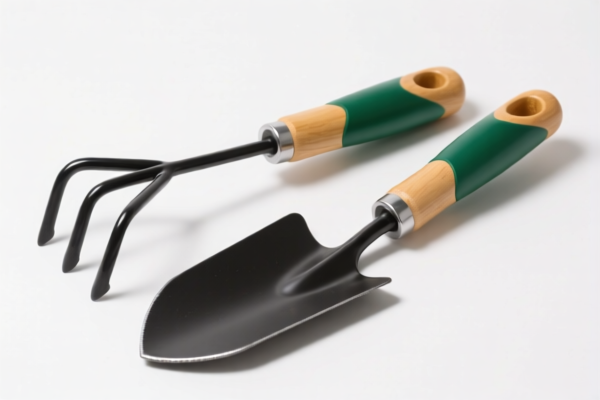
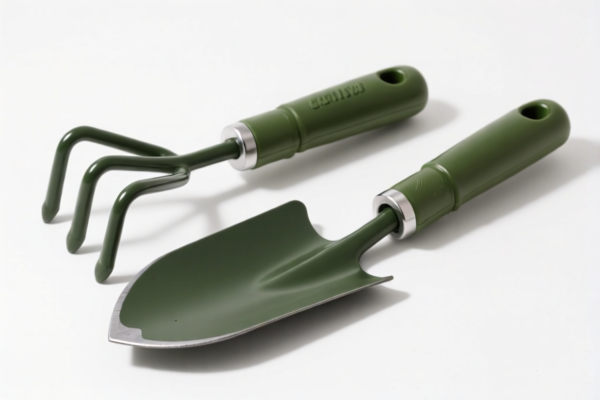
gardening shovel
CN → US| HS Code | Tariff Rate | Origin | Destination | Doc |
|---|---|---|---|---|
| 8201300080 | 35.0% | CN | US | Official Doc |
| 8201906000 | 35.0% | CN | US | Official Doc |
| 4417008010 | 40.1% | CN | US | Official Doc |
| 4417008090 | 40.1% | CN | US | Official Doc |
Product Images
AI Analysis
🌿 Gardening Shovel (Horticultural Tools)
🌐 HS Code Reference & Customs Clearance Guide | 2026 Latest Tariff Analysis | Professional Strategy for Metal & Wood Tools
📌 I. Product Definition & Classification: What Exactly is a "Gardening Shovel"?
A gardening shovel is a hand tool primarily used for digging, lifting, and moving soil, gravel, or snow in horticultural and agricultural contexts. In international trade, the classification depends heavily on material composition and structural design.
Key Distinction Points:
- All-Metal Tools: If the head and shaft are primarily metal (steel, iron), it falls under Chapter 82 (Tools).
- Mixed Material Tools (Wood Handle + Metal Head): The classification often shifts to Chapter 44 (Wood) if the wooden handle is the principal material, or remains in Chapter 82 depending on specific legal notes regarding "composite articles."
- General Hand Tools: Broader category for other horticultural implements not specified elsewhere.
⚠️ Critical Insight:
- Metal-Only Shovels: Classified under 8201 (Hoe, Rake, etc., of iron/steel).
- Wood-Handled Shovels: Often classified under 4417 (Wooden articles) because the wooden handle is considered a significant component, or under 8201.90 if deemed a "part" or "other" metal tool.
- Tariff Impact: The material split creates a massive tax disparity (35% vs. 40.1%).
📦 II. HS Code Classification Matrix (2026 Latest Tariff Authoritative Mapping)
| HS Code | Product Description | Material Composition | Key Features |
|---|---|---|---|
8201.30.00.80 |
Shovels, spades, and hoe handles (metal head + metal shaft) | Metal (Iron/Steel) | All-metal construction; pure horticultural shovels. |
8201.90.60.00 |
Other hand tools (metal) | Metal (Iron/Steel) | Broader category for metal gardening tools not specifically listed as shovels. |
4417.00.80.10 |
Wooden articles (gardening tools) | Wood/Metal Hybrid | Principal material is wood (e.g., long wooden handle with metal head). |
4417.00.80.90 |
Other wooden articles (tool parts) | Wood/Metal Hybrid | Wooden handles or parts thereof; fits "other wooden tools." |
🔍 Classification Logic:
- If the shovel is entirely or predominantly metal, use 8201.
- If the shovel has a distinct wooden handle that defines its utility as a "wooden article," customs may prefer 4417.
- Note: Misclassification here leads to a 5.1% tax difference on the base rate, which significantly impacts landed cost under additional tariffs.
💰 III. 2026 Tariff Rate Breakdown (Including Add-ons & Policy Surcharges)
✅ Applicable Country: United States (US)
✅ Country of Origin: China (CN)
✅ Effective Date: From November 10, 2025 (for imports after this date)
🎯 1. Metal Shovels (8201.30.00.80 & 8201.90.60.00)
| Item | Detail |
|---|---|
| Base Tariff | 0.0% (Ad Valorem) |
| Section 301 Tariff | +25.0% (USITC Footnote) |
| IEEPA Section 122 Tariff | +10.0% (Specific China surcharge) |
| Total Effective Tax Rate | 35.0% |
| Tax Calculation | CIF Value × 35% |
| De Minimis Exemption? | ❌ Not Eligible (Deny De Minimis) |
| Legal Path | USITC:8201.30.00.80 → Section 301 + IEEPA:122 |
📌 Explanation:
- Although the base tariff is 0%, the 35% total rate is due to combined Section 301 (25%) and Section 122 (10%) surcharges.
- This applies to all-metal gardening shovels.
🎯 2. Wooden/Mixed Shovels (4417.00.80.10 & 4417.00.80.90)
| Item | Detail |
|---|---|
| Base Tariff | 5.1% (Ad Valorem) |
| Section 301 Tariff | +25.0% |
| IEEPA Section 122 Tariff | +10.0% |
| Total Effective Tax Rate | 40.1% |
| Tax Calculation | CIF Value × 40.1% |
| De Minimis Exemption? | ❌ Not Eligible (Deny De Minimis) |
| Legal Path | USITC:4417.00.80.10 → Section 301 + IEEPA:122 |
📌 Explanation:
- These codes incur a base tariff of 5.1%, unlike the 0% for metal tools.
- Total Rate: 5.1% (Base) + 25% (301) + 10% (122) = 40.1%.
- Warning: Wooden-handled shovels are 5.1% more expensive in duties than all-metal ones in this specific tariff matrix.
🛠️ IV. Customs Clearance Practical Advice (Battle-Tested Strategy)
✅ 1. Required Documentation Checklist
| Document | Required? | Purpose |
|---|---|---|
| ✅ Product Specifications | ✔️ | Must detail material composition (e.g., "Steel Head, Maple Handle"). |
| ✅ Technical Drawings | ✔️ | To prove if the item is a "whole tool" or "parts." |
| ✅ Commercial Invoice | ✔️ | Must clearly state "Gardening Shovel" and material breakdown. |
| ✅ Origin Certificate | ✔️ | Essential for verifying CN origin to apply correct surcharges. |
| ✅ Photos (Labeled) | ✔️ | Show handle material, head shape, and any branding. |
✅ 2. Declaration Tips (Key Mnemonics)
🔥 “Material Determines Code, 301 is Non-Negotiable!”
| Scenario | Correct HS Code | Risk of Misclassification |
|---|---|---|
| All-Metal Shovel | 8201.30.00.80 |
If declared as wood → 40.1% instead of 35%. Overpayment! |
| Wood-Handled Shovel | 4417.00.80.10 |
If declared as metal → 35% instead of 40.1%. Underpayment → Penalties! |
| Generic "Tool" | ❌ Avoid | Vague descriptions lead to random inspections and delays. |
| Composite Parts | Check Notes | Ensure handle/head relationship meets Chapter 44 or 82 legal notes. |
📌 Strategy:
- Be Precise: Do not just write "Shovel." Write "All-Steel Gardening Shovel" or "Wood-Handled Spade."
- Check the Handle: If the handle is wood, Customs may argue for Chapter 44. Ensure your spec sheet supports the chosen classification.
✅ 3. Special Cases & Risk Management
| Situation | Advice |
|---|---|
| OEM Custom Shovels | Provide design files to prove material intent. |
| Packaging | If sold as a kit (Shovel + Rake), declare each item separately by its HS Code. |
| Origin Shifts | If the metal is Chinese but assembled in Vietnam, IEEPA 122 may still apply if substantial transformation isn't proven. |
| Sample Imports | Even samples are subject to 35%-40.1% tariffs. No duty-free entry for commercial samples from China. |
🌍 V. Global Market Comparison (2026 Update)
| Region | HS Code Focus | Base Tariff | Total With Surcharges (China Origin) | Notes |
|---|---|---|---|---|
| 🇺🇸 USA | 8201 (Metal) / 4417 (Wood) |
0% / 5.1% | 35.0% / 40.1% | Heavy Section 301 + 122 tariffs. |
| 🇪🇺 EU | 8201 / 4417 |
0% / 4.7% | ~5-10% | No Section 301/122 equivalents. |
| 🇨🇳 China | 8201 / 4417 |
10-15% | 10-15% | Export duties may apply; import is low. |
| 🇯🇵 Japan | 8201 / 4417 |
3-5% | 3-5% | No major surcharges for horticultural tools. |
📌 Conclusion:
- The US market is the most expensive due to layered punitive tariffs.
- Metal shovels (35%) are cheaper than Wood-handled shovels (40.1%) in the US due to lower base rates.
- Consider supply chain adjustments if targeting the US, as the 5.1% base difference adds up on large volumes.
📌 VI. Common Mistakes & Pitfalls (Lessons Learned)
❌ Mistake 1: Declaring all shovels under one generic code.
👉 Result: Customs reclassifies based on material, leading to back-dated duties and fines.
❌ Mistake 2: Ignoring the "Section 122" 10% surcharge.
👉 Result: Underestimating landed cost by 10%, eroding profit margins.
❌ Mistake 3: Claiming "De Minimis" for small shipments.
👉 Result: Rejection. Horticultural tools from China are explicitly excluded from de minimis thresholds (under $800).
✅ Best Practice:
Use exact descriptions: "Heavy-duty steel gardening shovel, 40-inch handle" or "Oak-handled wooden spade for landscaping."
🎯 VII. Final Recommendation: Strategic Clearance
🎯 Key Takeaway:
🔹 Metal Shovels: 35% Total Tax.
🔹 Wood-Handled Shovels: 40.1% Total Tax.
🔹 Action: Optimize material composition or supplier country if targeting high-volume US exports.
📌 Pro Tip:
Apply for an Advance Ruling (CBP Ruling) before shipping large batches. This provides legal certainty and prevents post-clearance audits.
📣 Immediate Next Steps:
📞 Contact your freight forwarder with detailed material specs.
📄 Prepare precise commercial invoices distinguishing metal vs. wood components.
🚀 Calculate Landed Cost using 35% (Metal) or 40.1% (Wood) to ensure profitability.
✨ Professional clearance starts with precise classification!
💼 Every percentage point of duty is a point of profit or loss.
Customer Reviews
About HS Code Classification
The Harmonized System (HS) is an internationally standardized nomenclature developed by the World Customs Organization (WCO) to classify traded products. Over 200 countries use the HS system as the basis for customs tariffs, trade statistics, and import/export regulations.
Each HS code follows a hierarchical structure:
- Chapter (2 digits) — Broad category of goods (e.g., Chapter 84: Machinery and Mechanical Appliances)
- Heading (4 digits) — More specific grouping within the chapter
- Subheading (6 digits) — Internationally standardized breakdown, used by all WCO member countries
- National subdivisions (8-10 digits) — Country-specific extensions for further classification, such as US HTSUS 10-digit codes
Correct HS code classification is essential for smooth customs clearance, accurate duty payment, and compliance with trade regulations. Misclassification can lead to customs delays, overpayment of duties, or penalties.
When importing from CN to US, the applicable tariff rates may include:
- Most-Favored-Nation (MFN) rate — The standard duty rate applied to WTO members
- General rate — Applied to countries without trade agreements
- Trade remedy duties — Additional tariffs such as Section 301 (anti-dumping), Section 232 (national security), or countervailing duties
The information provided on this page is for reference purposes only. For official classification, please consult with your local customs authority or a licensed customs broker.