gauze bag
CN → US| HS Code | Tariff Rate | Origin | Destination | Doc |
|---|---|---|---|---|
| 3923210095 | 38.0% | CN | US | Official Doc |
| 3923290000 | 38.0% | CN | US | Official Doc |
Product Images
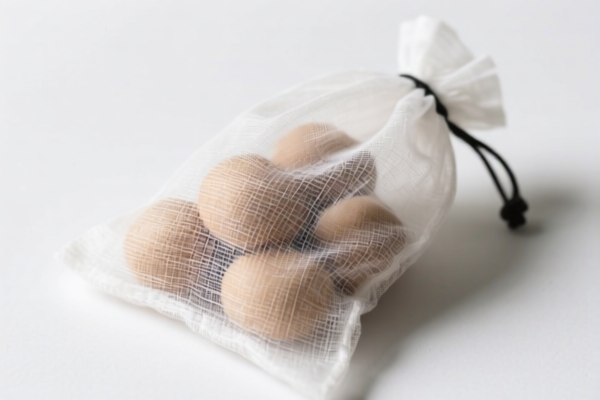
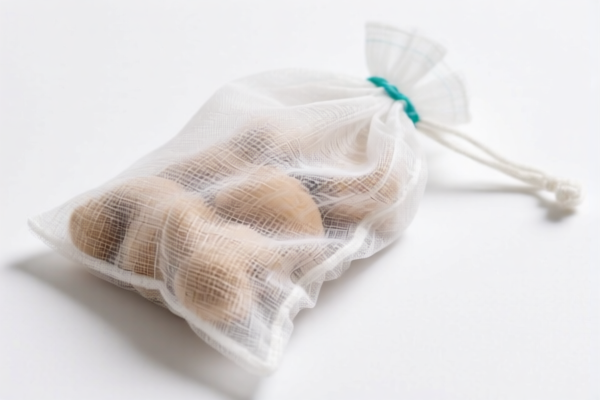

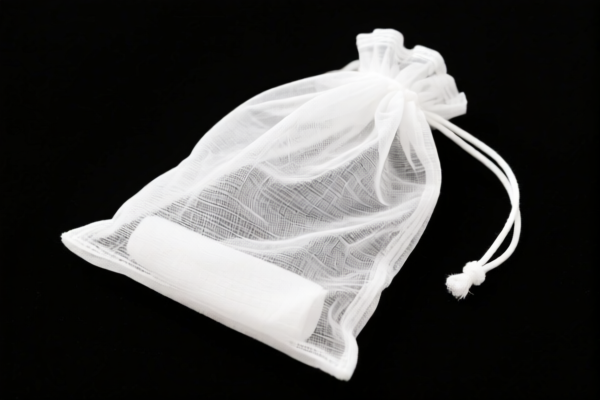
AI Analysis
🩹 Gauze Bag (Medical Packaging & Storage)
🌐 HS Code Reference & Customs Clearance Guide | 2026 Latest Tariff Analysis | Professional Compliance Strategy
📌 I. Product Definition & Classification: Do You Really Understand "Gauze Bags"?
A Gauze Bag is a medical or industrial textile product used for storing, protecting, or conveying goods. In international trade, its classification depends strictly on the material composition and specific use.
1. Polyethylene Gauze Bags: Made from plastic films (e.g., LDPE/HDPE), often used for sterile medical packaging or general storage.
2. Non-Plastic Gauze Bags: Made from cotton, linen, or synthetic fibers (non-plastic textiles), used for wrapping instruments, drying, or filtration.
⚠️ Key Distinction Point:
- If the bag is made of Plastics (Polymers) → It falls under Chapter 39 (Plastics and Articles Thereof).
- If the bag is made of Textiles (Non-Plastic) → It falls under Chapter 63 (Other Made-Up Articles).
- Note: Based on the provided DATA, we are focusing on Plastic Gauze Bags.
📦 II. HS Code Classification Details (2026 Latest Tariff Authority Comparison)
Based on the <DATA> provided, here are the two possible HS Codes for plastic gauze bags:
| HS Code | Product Description | Applicable Scenario | Material Type |
|---|---|---|---|
3923.21.00.95 |
Sacks and bags (including cones): Of polymers of ethylene | Bags made of Polyethylene (PE): LDPE, HDPE, Linear LDPE. Common in sterile medical wraps or produce packaging. | ✅ Polyethylene (Plastic) |
3923.29.00.00 |
Sacks and bags (including cones): Of other plastics | Bags made of PP (Polypropylene), PVC, PET, or mixed plastic films. Not polyethylene. | ✅ Other Plastic |
🔍 Critical Reminder:
- "Gauze Bag" is a functional name. Customs looks at material.
- If it is a "Sterile Plastic Wrap Bag" made of PE, it is3923.21.00.95.
- If it is a "Non-Woven Bag" made of PP (often called "Gauze-like" in marketing), it may still be classified as3923.29.00.00if considered a plastic article, OR potentially under textiles if it meets specific fabric definitions. However, per the provided DATA, we strictly analyze the plastic categories.
💰 III. 2026 Latest Tariff Rate Breakdown (Including Additional Duties)
✅ Applicable Country: United States (US)
✅ Origin: China (CN)
✅ Effective Date: Current rates apply for imports from China.
🎯 1. 3923.21.00.95 —— Polyethylene Sacks and Bags
| Item | Content |
|---|---|
| Base Tariff Rate | 3.0% (ad valorem) |
| Section 301 Additional Duty | +25.0% |
| Total Tax Rate | 28.0% |
| Tax Calculation | CIF Value × 28% |
| De Minimis Exemption | ❌ Not Eligible (For values > $800, full duty applies; even for de minimis, Section 301 duties often apply to certain plastic goods depending on current enforcement). |
| Legal Basis Path | HTSUS: 3923.21.00 → USITC Footnote: Section 301 (China) |
📌 Explanation:
- Base Rate (3%): Standard MFN rate for polyethylene bags.
- Additional Duty (25%): Imposed under Section 301 of the Trade Act of 1974 due to China origin.
- Total Cost Impact: 28% is a significant added cost. Importers must factor this into landed cost calculations.
🎯 2. 3923.29.00.00 —— Other Plastic Sacks and Bags
| Item | Content |
|---|---|
| Base Tariff Rate | 0.0% (ad valorem) |
| Section 301 Additional Duty | 0.0% |
| Total Tax Rate | 0.0% |
| Tax Calculation | No duty payable |
| De Minimis Exemption | ✅ Eligible (If value ≤ $800, no duty or tax; if > $800, still 0% duty). |
| Legal Basis Path | HTSUS: 3923.29.00 |
📌 Note:
- This code applies to bags made of PP, PVC, PET, etc.
- Zero Duty Advantage: If your product can be legally classified under "Other Plastics" (e.g., PP non-woven bags often fall here or in textiles, but if deemed plastic, it's 0%), the tax burden is eliminated.
- Caution: Misclassifying PE as "Other Plastic" to avoid the 25% duty is high risk and can lead to penalties.
🛠️ IV. Customs Clearance Practical Advice (Combat Avoidance Guide)
✅ 1. Preparation Checklist (Non-Negotiable)
| Document | Must Provide | Description |
|---|---|---|
| ✅ Material Specification Sheet | ✔️ | Must explicitly state "100% Polyethylene" or "100% Polypropylene". |
| ✅ Product Photos | ✔️ | Show bag texture, transparency, and any sterilization marks. |
| ✅ Composition Statement | ✔️ | Confirm if it is a single-layer or multi-layer film. |
| ✅ Commercial Invoice | ✔️ | Description: "Polyethylene Gauze Bag for Medical Storage" or "PP Plastic Bag". Avoid vague terms like "Textile Bag" if it's plastic. |
| ✅ Origin Certificate | ✔️ | Confirm CN origin to apply correct Section 301 rates. |
✅ 2. Declaration Skills (Key Mnemonics)
🔥 “Material First, Code Second, PE Pay 28%, Other Free!”
| Scenario | Correct HS Code | Duty Rate | Risk if Misdeclared |
|---|---|---|---|
| PE (Polyethylene) Bag | 3923.21.00.95 |
28% | ❌ If declared as PP (3923.29): Penalty + Back Duties |
| PP (Polypropylene) Bag | 3923.29.00.00 |
0% | ✅ Safe if material is truly PP |
| Cotton Gauze Bag | Not in DATA | N/A | ❌ If declared as Plastic: Incorrect Classification |
| Mixed Plastic Bag | 3923.29.00.00 |
0% | ⚠️ Verify if "Other Plastics" covers your specific polymer blend. |
✅ 3. Special Situations
| Situation | Handling Advice |
|---|---|
| Sterile Medical Bags | Ensure description includes "Sterile" and "Medical Use" to match invoice with specs. |
| Non-Woven PP Bags | Often marketed as "Gauze Bags". If chemically PP, use 3923.29.00.00 (0% duty) to save costs. |
| PE Bags with Printing | Still classified under 3923.21.00.95 if PE is the base material. Printing does not change material classification. |
🌍 V. Global Market Clearance Comparison (2026 Latest)
| Country/Region | Recommended HS Code | Tariff (China Origin) | Certification | Notes |
|---|---|---|---|---|
| 🇺🇸 USA | 3923.21.00.95 |
28% (PE) | FDA (if medical) | High duty on PE. Check PP alternative. |
| 🇨🇳 China | 3923.21.00.95 |
~5-10% | - | Import duty varies; no 301 section. |
| 🇪🇺 EU | 3923.29.00.00 |
0-2% | CE (if medical) | Lower duties overall; focus on REACH compliance. |
| 🇬🇧 UK | 3923.29.00.00 |
0-5% | UKCA | Post-Brexit tariffs may differ slightly. |
📌 Conclusion:
- USA is the only major market with the 28% hit on PE bags.
- Strategy: If feasible, consider switching supply chain to PP (Polypropylene) or PVC bags, which may qualify for3923.29.00.00(0% duty) in the US, saving 28% in tariffs. Verify material compatibility with your product first.
📌 VI. Common Errors & Pitfalls (Blood and Tears Lessons)
❌ Error 1: Calling a PE Bag a "Plastic Bag" without specifying material.
👉 Consequence: Customs may default to highest duty or require detailed testing → Delays.
❌ Error 2: Declaring a PP Non-Woven Bag as "Textile Gauze" (Chapter 63).
👉 Consequence: If deemed plastic, Under-declaration of Duty → Penalties + Interest.
❌ Error 3: Ignoring Section 301 for PE products.
👉 Consequence: Paying only 3% base duty → Audit Risk → Back Payment of 25% + Fines.
✅ Correct Practice:
“100% High-Density Polyethylene (HDPE) Sterile Gauze Bag, For Medical Instrument Storage, Model XYZ, ISO 13485 Certified”
🎯 VII. Conclusion: Professional Declaration, Save Costs, Ensure Compliance!
🎯 Remember the Mantra:
🔹 “PE Pay 28%, PP Zero, Textile Separate, Material is Key!”
🔹 “HS Code Determines Profit, Declare Accurately, Avoid Audits!”
📌 Pro Tip:
If your product is a PP (Polypropylene) Non-Woven Bag (often called "Gauze Bag" in markets), try to classify it under 3923.29.00.00 if it meets plastic article criteria, or Chapter 63 if it qualifies as textile. This can save you 28% in US tariffs.
Recommendation: Request a Pre-Ruling (Advance Ruling) from CBP if material composition is ambiguous.
📣 Immediate Action:
📞 Contact your freight forwarder + Provide Material Spec Sheet + Confirm HS Code Pre-Ruling
🚀 Let your gauze bags Clear Smoothly, Reduce Costs, and Boost Margins!
✨ Professional Clearance Starts with Accurate Classification!
💼 Every Cent of Tax Saved is Pure Profit!
Customer Reviews
About HS Code Classification
The Harmonized System (HS) is an internationally standardized nomenclature developed by the World Customs Organization (WCO) to classify traded products. Over 200 countries use the HS system as the basis for customs tariffs, trade statistics, and import/export regulations.
Each HS code follows a hierarchical structure:
- Chapter (2 digits) — Broad category of goods (e.g., Chapter 84: Machinery and Mechanical Appliances)
- Heading (4 digits) — More specific grouping within the chapter
- Subheading (6 digits) — Internationally standardized breakdown, used by all WCO member countries
- National subdivisions (8-10 digits) — Country-specific extensions for further classification, such as US HTSUS 10-digit codes
Correct HS code classification is essential for smooth customs clearance, accurate duty payment, and compliance with trade regulations. Misclassification can lead to customs delays, overpayment of duties, or penalties.
When importing from CN to US, the applicable tariff rates may include:
- Most-Favored-Nation (MFN) rate — The standard duty rate applied to WTO members
- General rate — Applied to countries without trade agreements
- Trade remedy duties — Additional tariffs such as Section 301 (anti-dumping), Section 232 (national security), or countervailing duties
The information provided on this page is for reference purposes only. For official classification, please consult with your local customs authority or a licensed customs broker.