gel sheet
CN → US| HS Code | Tariff Rate | Origin | Destination | Doc |
|---|---|---|---|---|
| 3506105000 | 37.1% | CN | US | Official Doc |
| 3926909989 | 22.8% | CN | US | Official Doc |
| 3506990000 | 37.1% | CN | US | Official Doc |
| 3926904590 | 38.5% | CN | US | Official Doc |
Product Images
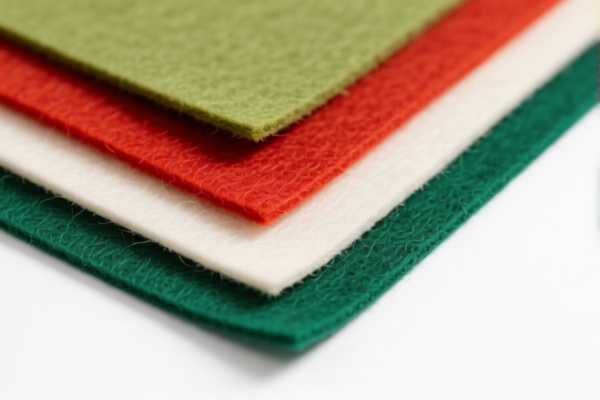
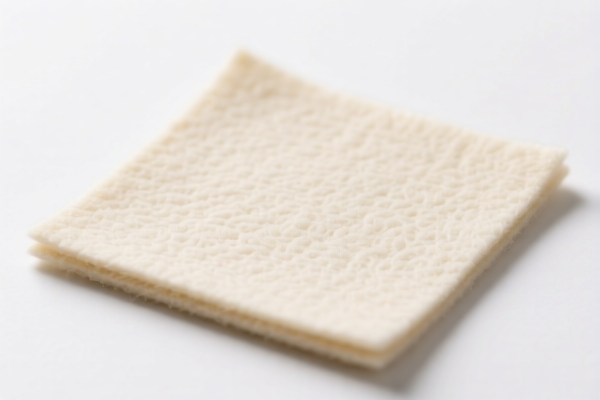
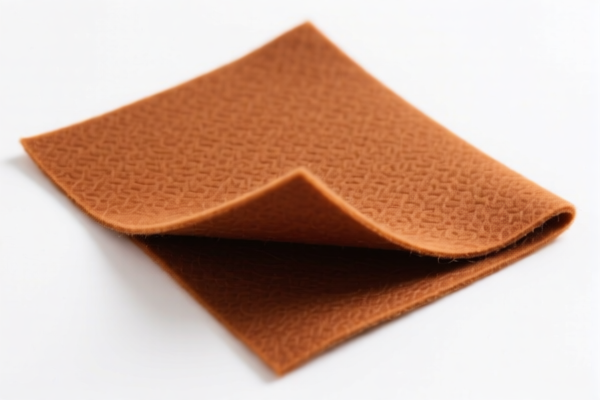
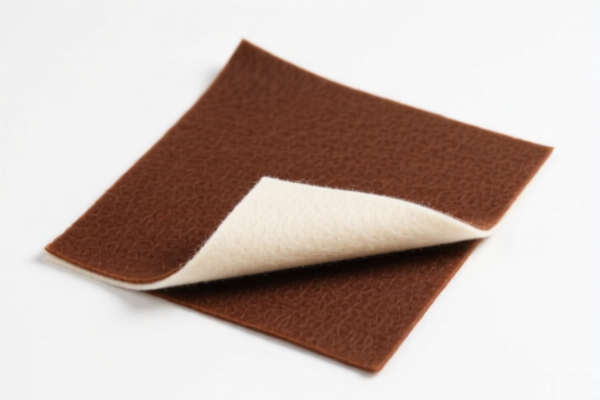
AI Analysis
🧱 Gel Sheets & Adhesive Products (Generic "Gel Sheet")
🌐 HS Code Reference & Customs Clearance Guide | 2026 Latest Tariff Breakdown | Professional Clearance Strategy
📌 I. Product Definition & Classification: What Exactly is a "Gel Sheet"?
The term "Gel Sheet" is a generic descriptor that lacks specificity in international trade. In customs classification, goods are classified based on their material composition, form, and essential function. A "gel sheet" typically falls into one of two main categories:
- Adhesive/Glue Products: If the sheet is primarily a carrier for an adhesive substance (e.g., double-sided tape, pressure-sensitive adhesive sheets, or gel-based glues).
- Plastic/Polymer Articles: If the "gel" refers to a soft, flexible plastic or polymer material formed into a sheet (e.g., gasket sheets, sealing pads, or industrial plastic films).
⚠️ Key Distinction:
- If the product’s primary function is bonding or sticking → It is classified under Chapter 35 (Albuminoidal substances; modified starches; glues; enzymes).
- If the product’s primary function is sealing, insulating, or general plastic utility → It is classified under Chapter 39 (Plastics and articles thereof).
📦 II. HS Code Classification Details (2026 Latest Tariff Authority Mapping)
Based on the provided data, here are the four possible classifications for "Gel Sheets," depending on the exact material and use case.
| HS Code | Product Description & Logic | Key Characteristics |
|---|---|---|
3506.10.50.00 |
Other retail sales glues/adhesives | Material: Based on glue/adhesive nature. Form: Sheet-shaped. Scenario: Retail adhesive tapes, gel stickers, or pre-cut adhesive sheets sold individually. |
3926.90.99.89 |
Plastic articles, other (Residual Clause) | Material: Polymer (Plastic). Form: Sheet-shaped制品. Scenario: General plastic sheets, sealing gels, or non-specific plastic pads not classified elsewhere. |
3506.99.00.00 |
Other prepared adhesives | Material: Adhesive components (Gel). Form: Prepared/Mixed. Scenario: Bulk gel adhesives or industrial adhesive sheets not intended for direct retail sale as a simple tape. |
3926.90.45.90 |
Gaskets, washers, and similar articles | Material: Polymer (Plastic). Form: Thin sheet/plastic. Scenario: Industrial gaskets, sealing pads, or buffer sheets made of plastic/polymer. |
🔍 Critical Note:
- Retail vs. Industrial:3506.10.50.00is specifically for retail sales. If you are selling bulk adhesive sheets to manufacturers, you might fall under3506.99.00.00.
- Function Over Form: If the "gel" is used primarily as a sealant or gasket (even if made of plastic),3926.90.45.90may be more accurate than the generic plastic clause.
- Misclassification Risk: Calling a plastic gasket "adhesive gel" to avoid higher tariffs is a common audit trigger. The primary function dictates the code.
💰 III. 2026 Latest Tariff Rate Breakdown (Including Surcharges & Policy Add-ons)
✅ Applicable Country: United States (US)
✅ Origin: China (CN)
✅ Effective Date: From Nov 10, 2025 (and subsequent imports)
🎯 1. 3506.10.50.00 —— Retail Adhesives/Glues (Sheet Form)
| Item | Content |
|---|---|
| Base Tariff | 2.1% |
| Section 301 Surcharge | +25.0% |
| 122 Clause Tariff | +10.0% |
| Total Rate | 37.1% |
| Calculation | CIF Value × 37.1% |
| De Minimis Exemption | ❌ Not Eligible (High tariff rate usually blocks de minimis benefits in strict audits) |
| Legal Basis Path | Base: 2.1% → 301: 25.0% → 122: 10.0% |
📌 Explanation:
- This is the standard retail adhesive classification.
- The 25% Section 301 tariff is the heaviest burden here.
- The 10% "122 Clause" is an additional administrative/customs surcharge often applied to high-risk or specific trade categories.
🎯 2. 3926.90.99.89 —— Plastic Articles (Residual/Generic)
| Item | Content |
|---|---|
| Base Tariff | 5.3% |
| Section 301 Surcharge | +7.5% |
| 122 Clause Tariff | +10.0% |
| Total Rate | 22.8% |
| Calculation | CIF Value × 22.8% |
| De Minimis Exemption | ❌ Not Eligible |
| Legal Basis Path | Base: 5.3% → 301: 7.5% → 122: 10.0% |
📌 Explanation:
- This is the "Best Case Scenario" for tariffs among the options provided.
- Used when the sheet is a general plastic item (not a specialized gasket or adhesive).
- Lower Base Rate (5.3%) and Lower 301 Rate (7.5%) make this the most cost-effective option IF the product qualifies as a general plastic article.
🎯 3. 3506.99.00.00 —— Other Prepared Adhesives
| Item | Content |
|---|---|
| Base Tariff | 2.1% |
| Section 301 Surcharge | +25.0% |
| 122 Clause Tariff | +10.0% |
| Total Rate | 37.1% |
| Calculation | CIF Value × 37.1% |
| De Minimis Exemption | ❌ Not Eligible |
| Legal Basis Path | Base: 2.1% → 301: 25.0% → 122: 10.0% |
📌 Explanation:
- Identical tax burden to3506.10.50.00.
- Use this if the product is not for retail sale (e.g., bulk industrial adhesive sheets).
- Warning: Do not use this to hide retail products; customs officers check packaging and distribution channels.
🎯 4. 3926.90.45.90 —— Gaskets, Washers, etc. (Plastic)
| Item | Content |
|---|---|
| Base Tariff | 3.5% |
| Section 301 Surcharge | +25.0% |
| 122 Clause Tariff | +10.0% |
| Total Rate | 38.5% |
| Calculation | CIF Value × 38.5% |
| De Minimis Exemption | ❌ Not Eligible |
| Legal Basis Path | Base: 3.5% → 301: 25.0% → 122: 10.0% |
📌 Explanation:
- Highest Total Rate (38.5%).
- Although the base rate is low (3.5%), the Section 301 surcharge is 25% (full rate), likely because gaskets/seals are often targeted in industrial supply chain reviews.
- Only use if the product is strictly a gasket or seal and not a general plastic sheet or adhesive.
🛠️ IV. Customs Clearance Practical Advice (Battle-Tested Pitfall Guide)
✅ 1. Preparation Checklist (Must-Haves)
| Document | Required? | Purpose |
|---|---|---|
| ✅ Product Specification Sheet | ✔️ | Must clearly state: Material (Plastic vs. Glue), Thickness, Function (Adhesive vs. Seal). |
| ✅ Photos (Packaged & Unpacked) | ✔️ | Show if it’s a roll, a sheet, or a sticker. Is it in retail packaging? |
| ✅ Composition Breakdown | ✔️ | % of polymer vs. % of adhesive. Critical for Chapter 35 vs. 39. |
| ✅ Commercial Invoice | ✔️ | Description must be precise. Avoid vague terms like "Gel Sheet." Use "Polymer Gasket" or "Pressure-Sensitive Adhesive Sheet." |
| ✅ Origin Certificate | ✔️ | Proof of China origin to apply correct tariffs. |
✅ 2. Declaration Strategy (Key Mantras)
🔥 "Material Dictates Chapter, Function Dictates Code, Retail vs. Bulk Changes Rate!"
| Scenario | Recommended HS Code | Why? |
|---|---|---|
| Selling to consumers (e.g., online stickers, craft adhesives) | 3506.10.50.00 |
Defined as "Retail Sales." |
| Industrial Plastic Sealing Pads | 3926.90.45.90 |
Clearly a gasket/seal. |
| General Plastic Membranes/Films (No adhesive, no gasket shape) | 3926.90.99.89 |
Lowest tax burden (22.8%). |
| Bulk Adhesive Sheets (Factory supply) | 3506.99.00.00 |
Not for retail. |
✅ 3. Special Case Handling
| Situation | Recommendation |
|---|---|
| Ambiguous "Gel" Material | If the product is 90% plastic and 10% glue, try to classify under Chapter 39 (3926.90.99.89) for lower taxes, provided the glue is not the essential character. Consult a customs broker for pre-ruling. |
| Retail Packaging | If packed in small boxes for end-users, customs will likely reject 3506.99.00.00 and force 3506.10.50.00 (37.1%). |
| Gasket vs. Sheet | If the sheet is cut to fit a specific machine part, it may be considered a gasket (3926.90.45.90), triggering the higher 38.5% rate. Generic flat sheets are safer under 3926.90.99.89. |
🌍 V. Global Market Comparison (2026 Context)
| Country/Region | Recommended HS Code | Est. Tariff (China Origin) | Notes |
|---|---|---|---|
| 🇺🇸 USA | 3926.90.99.89 |
22.8% | Best rate. Avoid 3506 codes due to 25% 301 tariff. |
| 🇨🇳 China | 3926.90.99.89 |
~5-10% | Lower base rates; no Section 301. |
| 🇪🇺 EU | 3926.90.99 |
~5-6% | No additional trade war tariffs, but VAT applies. |
| 🇦🇺 Australia | 3926.90.99 |
~5% | GST applies. |
📌 Conclusion:
- The US market is the most challenging due to the叠加 of Base + Section 301 + 122 Clause.
- Strategy: If your "Gel Sheet" is a general plastic item (not a specialized adhesive), aggressively argue for3926.90.99.89to save ~14.3% in taxes compared to adhesive classifications.
📌 VI. Common Errors & Pitfalls (Lessons Learned)
❌ Error 1: Calling a Plastic Gasket an "Adhesive Gel" to get a lower base rate.
👉 Consequence: Customs audits the function. If it seals, it’s a gasket (3926.90.45.90), leading to 38.5% tax + penalties.
❌ Error 2: Declaring Retail Adhesives as "Industrial Adhesives" (3506.99.00.00).
👉 Consequence: If packaging shows individual units for consumers, customs will reclassify to 3506.10.50.00 (37.1%) and charge back-duties + interest.
❌ Error 3: Using vague description "Gel Sheet" on the invoice.
👉 Consequence: Customs may assign a catch-all high-rate code or hold the shipment for inspection due to ambiguity.
✅ Correct Approach:
"Polymer-based Adhesive Pressure-Sensitive Sheet, 1mm thick, Retail Pack, Model GS-100" (If adhesive)
"Flexible Plastic Sealing Gasket Sheet, Non-Adhesive, General Use" (If plastic gasket)
🎯 VII. Conclusion: Precision Saves Money!
🎯 Remember the Mantra:
🔹 "Retail = 37.1%, General Plastic = 22.8%, Gasket = 38.5%."
🔹 "Don't let 'Gel' confuse you. Is it Glue (Ch35) or Plastic (Ch39)?"
🔹 "Aim for3926.90.99.89if possible—it’s the cheapest path."
📌 Pro Tip:
If your product is on the borderline between adhesive and plastic, consider modifying the product design to reduce adhesive content or rebranding as a "sealing pad" rather than an "adhesive sheet" (if functionally accurate) to qualify for the 22.8% rate.
📣 Immediate Action:
📞 Contact a Customs Broker: Submit product specs for an Advance Ruling.
📄 Update Invoice Descriptions: Be specific, accurate, and consistent with the HS Code.
🚀 Optimize your Supply Chain: Use the correct HS Code to calculate landed cost accurately and avoid surprise duties.
✨ Professional Clearance Starts with Accurate Classification!
💼 Every Percentage Point Saved is Pure Profit!
Customer Reviews
About HS Code Classification
The Harmonized System (HS) is an internationally standardized nomenclature developed by the World Customs Organization (WCO) to classify traded products. Over 200 countries use the HS system as the basis for customs tariffs, trade statistics, and import/export regulations.
Each HS code follows a hierarchical structure:
- Chapter (2 digits) — Broad category of goods (e.g., Chapter 84: Machinery and Mechanical Appliances)
- Heading (4 digits) — More specific grouping within the chapter
- Subheading (6 digits) — Internationally standardized breakdown, used by all WCO member countries
- National subdivisions (8-10 digits) — Country-specific extensions for further classification, such as US HTSUS 10-digit codes
Correct HS code classification is essential for smooth customs clearance, accurate duty payment, and compliance with trade regulations. Misclassification can lead to customs delays, overpayment of duties, or penalties.
When importing from CN to US, the applicable tariff rates may include:
- Most-Favored-Nation (MFN) rate — The standard duty rate applied to WTO members
- General rate — Applied to countries without trade agreements
- Trade remedy duties — Additional tariffs such as Section 301 (anti-dumping), Section 232 (national security), or countervailing duties
The information provided on this page is for reference purposes only. For official classification, please consult with your local customs authority or a licensed customs broker.