general purpose horse saddlery competition
CN → US| HS Code | Tariff Rate | Origin | Destination | Doc |
|---|---|---|---|---|
| 4201003000 | 37.4% | CN | US | Official Doc |
| 4201006000 | 37.8% | CN | US | Official Doc |
| 6307909891 | 24.5% | CN | US | Official Doc |
Product Images
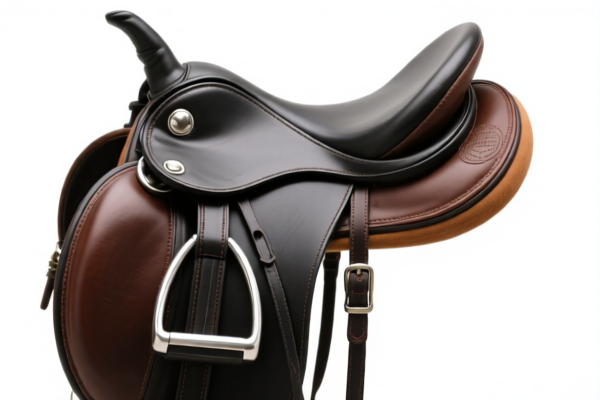
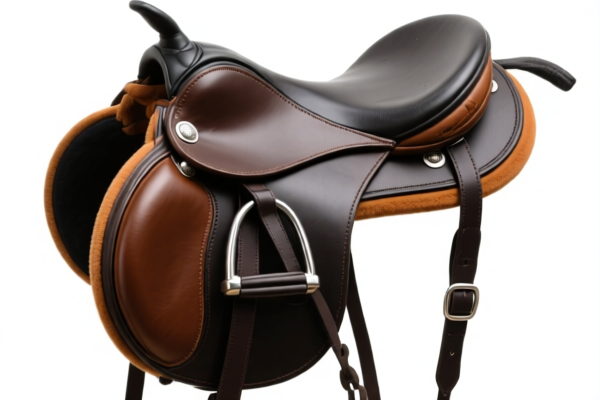
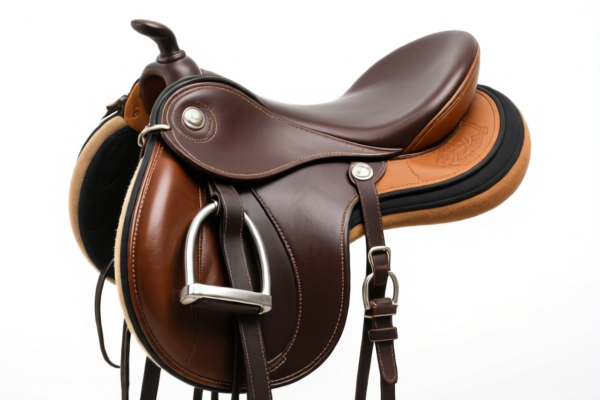
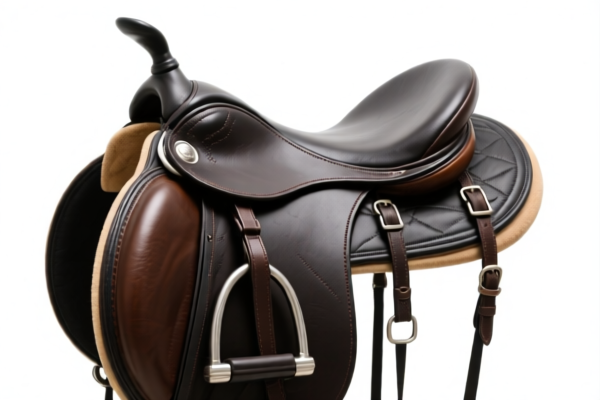
AI Analysis
🐎 通用马具套装(General Purpose Horse Saddlery / Saddles)
🌐 HS Code Reference & Customs Clearance Guide | 2026 Latest Tariff Analysis | Professional Entry Strategy
📌 I. Product Definition & Classification: Do You Truly Understand "Horse Saddlery"?
"Horse Saddlery" (or Saddles and Bridles) refers to equipment used for riding or driving animals. In international trade, classification depends heavily on the material composition, structure (set vs. single item), and specific usage.
Leather Saddlery: Made primarily from leather, often classified under Heading 4201 if it fits the specific definition of "saddlery and harness."
Synthetic/Non-Leather Saddlery: If the item does not meet the strict definition of "saddlery" under Chapter 42 (e.g., certain synthetic webbing or non-harness accessories), it may fall under "Other Made-up Articles" in Chapter 63.
⚠️ Key Distinction Point:
- If the item is a complete set (e.g., saddle + bridle + reins) and fits the general definition of animal gear → Chapter 42.
- If the item is a single component or a "set" that doesn't strictly fit Chapter 42 definitions (e.g., decorative or non-functional harnesses, or specific synthetic goods not listed elsewhere) → Chapter 63.
- Material Matters: Chapter 42 covers articles of leather or composition leather. If the main material is not leather but the item is still "saddlery," check if it qualifies under 4201. If not, 6307 (Other Made-up Articles) is the fallback.
📦 II. HS Code Classification Details (2026 Latest Tariff Authority Comparison)
Based on the provided data, there are three potential HS Codes for "General Purpose Horse Saddlery Sets." The choice depends on how customs authorities interpret the "Set" nature and material.
| HS Code | Product Description | Application Scenario | Material/Structure Notes |
|---|---|---|---|
4201.00.30.00 |
General Purpose Horse Saddlery Set (Articles of Leather/Composition Leather) | Standard leather or composite leather sets. Matches the scope of "saddlery and harness of any material." | ✅ Chapter 42: Primary classification for saddlery. |
4201.00.60.00 |
General Purpose Horse Saddlery Set (Composite/Specific Use) | Sets where the "saddle" component is distinct, or specific combinations where the set nature is emphasized. | ✅ Chapter 42: Matches "saddlery" usage completely. |
6307.90.98.91 |
General Purpose Horse Saddlery Set (Other Made-up Articles) | If the goods are deemed "other made-up articles" rather than strict "saddlery" under Ch 42 (e.g., synthetic fabrics not meeting Ch 42 definitions). | ❌ Chapter 63: Fallback "catch-all" for made-up goods. |
🔍 Critical Reminder:
- HS 4201 is the primary category for saddlery. It includes saddles, bridles, harnesses, etc.
- HS 6307 is the secondary/fallback category. It is used if the product does not fit the specific legal definition of "saddlery" in Chapter 42 (e.g., some synthetic accessories or non-functional sets).
- Tax Difference: Chapter 42 items currently face higher additional tariffs (due to Section 301/122 clauses) compared to Chapter 63 in some contexts, but here both are heavily taxed. However, 6307 has a lower base rate.
💰 III. 2026 Latest Tariff Rate Details (Including Surtaxes, Policy Surcharges)
✅ Applicable Country: United States (US)
✅ Country of Origin: China (CN)
✅ Effective Date: 2025/2026 (Current Active Clauses)
🎯 1. 4201.00.30.00 —— Horse Saddlery (Set, Any Material, Leather/Composition)
| Item | Content |
|---|---|
| Base Tariff | 2.4% (Ad Valorem) |
| Section 301 Surcharge | +25.0% (List 4 Items) |
| Section 122 Tariff | +10.0% (Specific clause for certain textiles/apparel/accessories) |
| Total Tariff | 37.4% |
| Tax Calculation | CIF Value × 37.4% |
| De Minimis Eligibility | ❌ NO (Deemed too high for $800 exemption) |
| Legal Pathway | USITC:4201.00.30.00 → Footnote:301 → Footnote:122 |
📌 Explanation:
- 2.4% is the standard MFN (Most Favored Nation) rate for saddlery.
- +25% is the standard Section 301 tariff on Chinese goods.
- +10% is the Section 122 tariff (often applied to broader categories or specific imports).
- Total 37.4% is significant. Importers must factor this into landed cost.
🎯 2. 4201.00.60.00 —— Horse Saddlery (Set, Specific Use/Composite)
| Item | Content |
|---|---|
| Base Tariff | 2.8% (Ad Valorem) |
| Section 301 Surcharge | +25.0% (List 4 Items) |
| Section 122 Tariff | +10.0% |
| Total Tariff | 37.8% |
| Tax Calculation | CIF Value × 37.8% |
| De Minimis Eligibility | ❌ NO |
| Legal Pathway | USITC:4201.00.60.00 → Footnote:301 → Footnote:122 |
📌 Note:
- Very similar to 4201.00.30.00. The slight difference in base rate (2.8% vs 2.4%) may depend on specific sub-classification of the "set" content.
- Total 37.8% is the highest standard rate for this product.
🎯 3. 6307.90.98.91 —— Other Made-up Articles (Fallback Category)
| Item | Content |
|---|---|
| Base Tariff | 7.0% (Ad Valorem) |
| Section 301 Surcharge | +7.5% (Note: Lower surcharge here, possibly due to different list or calculation) |
| Section 122 Tariff | +10.0% |
| Total Tariff | 24.5% |
| Tax Calculation | CIF Value × 24.5% |
| De Minimis Eligibility | ❌ NO (Generally, goods under 6307 are not eligible for de minimis if total value > $800, but the rate is lower) |
| Legal Pathway | USITC:6307.90.98.91 → Footnote:301 → Footnote:122 |
📌 Critical Insight:
- Although 24.5% is significantly lower than 37.4-37.8%, this classification is riskier.
- Risk: Customs may reclassify the goods to Chapter 42 if they determine the item is indeed "saddlery" (which is the primary intent). Rejection of 6307 classification can lead to audits, penalties, and back-taxes of ~13%.
- Recommendation: Only use 6307 if the product strictly does not meet the definition of saddlery under Ch 42 (e.g., non-leather, non-harness, decorative items). For "competition saddlery," Chapter 42 is more legally sound despite the higher tax.
🛠️ IV. Customs Clearance Practical Advice (Real-World Pitfall Guide)
✅ 1. Document Checklist (Non-Negotiable)
| Document | Required | Explanation |
|---|---|---|
| ✅ Product Specification Sheet | ✔️ | Must detail materials (leather/synthetic), parts included (saddle, bridle, reins), and weight. |
| ✅ Product Photos | ✔️ | Clear images of the complete set. Show labels, stitching, and hardware. |
| ✅ Commercial Invoice | ✔️ | Must explicitly state "Horse Saddlery Set" or "Saddle and Bridle Set." Avoid vague terms like "Animal Accessories." |
| ✅ Packing List | ✔️ | Itemize each component of the set. |
| ✅ Origin Certificate | ✔️ | Proves CN origin (subject to tariffs). |
| ✅ HS Code Pre-Ruling Request | ✔️ | Highly Recommended for large shipments to confirm 4201 vs 6307. |
✅ 2. Declaration Tips (Key Mantra)
🔥 “Describe the Set, Declare the Use, Match the Material, Avoid the 6307 Trap!”
| Scenario | Correct Declaration | Wrong Practice |
|---|---|---|
| Complete Leather Set | 4201.00.30.00 - Horse Saddlery Set, Leather |
Declare as "Leather Bag" or "Other Goods" |
| Synthetic Set | 4201.00.60.00 or 4201.00.30.00 (if it fits "any material") |
Declaring as 6307 without strong justification |
| Single Saddle | 4201.00.30.00 |
Declaring as "Sporting Equipment" (9506) - Wrong! |
| Decorative Tack (Non-functional) | 6307.90.98.91 (if truly non-functional) |
Declaring as 4201 - Misclassification Risk |
⚠️ Warning:
- Do NOT split a set into individual items (e.g., declare saddle separately from bridle) if they are sold as one unit. Customs views them as one article.
- If you declare6307to save tax, be prepared to prove the item is not "saddlery" as defined in Chapter 42. For "competition" gear, this is difficult to prove.
✅ 3. Special Circumstances
| Situation | Handling Advice |
|---|---|
| OEM/Private Label | Ensure the invoice matches the brand. Customs may check for counterfeit marks. |
| Used Saddlery | Tariffs still apply. Ensure it is declared as "Used" if applicable, but duty rate is the same. |
| High-Value Competition Saddles | Consider Section 321 (De Minimis) NOT available for CN origin. Plan for full duty payment. |
| Partial Sets | If selling saddle and bridle separately, declare separately. If together, declare as a set. |
🌍 V. Global Market Comparison (2026 Latest)
| Country/Region | Recommended HS Code | Tariff (CN Origin) | Certification/Notes |
|---|---|---|---|
| 🇺🇸 USA | 4201.00.30.00 / 6307.90.98.91 |
37.4% (Ch 42) or 24.5% (Ch 63) | High risk of audit. 301/122 tariffs apply. |
| 🇨🇳 China | 4201.00.30.00 |
0% - 10% | Import duty varies. VAT 13%. |
| 🇪🇺 EU | 4201.00.00 |
12% | Standard EU duty. No Section 301. |
| 🇬🇧 UK | 4201.00.00 |
12% | Post-Brexit rules apply. |
| 🇨🇦 Canada | 4201.00.00 |
0% (if CUSMA compliant, but CN origin not eligible) | 5% - 12% for CN. |
📌 Conclusion:
- USA is the most expensive market for horse saddlery due to Section 301 and 122 tariffs.
- EU and UK have stable, lower duties (~12%) without surcharges.
- Consider Supply Chain Diversification: If shipping to the US, consider sourcing from Vietnam, Mexico, or Thailand to avoid CN tariffs (if feasible).
📌 VI. Common Errors & Pitfall Guide (Lessons Learned)
❌ Error 1: Classifying under 9506 (Articles for general physical exercise)
👉 Consequence: Incorrect. Saddlery is specific to animals. Customs will reclassify to 4201 + 37.4% duty.
❌ Error 2: Using 6307 to evade tariffs without justification
👉 Consequence: High audit risk. If customs determines it is saddlery, they will charge the 13% difference + penalties.
❌ Error 3: Not declaring the "Set" nature
👉 Consequence: If a saddle and bridle are shipped together but declared separately, it may be seen as evasion. Declare as one unit.
❌ Error 4: Vague Description ("Animal Gear")
👉 Consequence: Customs may assign a random code with higher duty or hold the shipment for inspection.
✅ Correct Declaration Example:
"Horse Saddlery Set, Competition Use, Leather and Synthetic Materials, Including Saddle, Bridle, and Reins, HS Code 4201.00.30.00"
🎯 VII. Conclusion: Professional Declaration, Cost Optimization
🎯 Key Takeaways:
🔹 Chapter 42 is the correct legal home for horse saddlery.
🔹 Tariff 37.4% is unavoidable for CN origin under 4201.
🔹 Chapter 63 (24.5%) is a risky alternative only for non-saddlery items.
🔹 De Minimis ($800) does NOT apply to China-origin goods.
📌 Pro Tip:
For high-volume shipments, consider Section 321 exemption NOT available for China.
Explore Free Trade Agreements (FTAs) if sourcing from non-CN countries (e.g., CUSMA, USMCA, ASEAN).
📣 Immediate Action:
📞 Consult a Customs Broker for a Pre-Ruling on HS Code 4201 vs 6307.
📸 Provide Detailed Photos of your product set.
📦 Optimize Packaging to ensure the set is declared as one unit.
✨ Precision in Classification, Profit in Customs!
💼 Don't let 37% tariffs eat your margin. Plan Ahead.
Customer Reviews
About HS Code Classification
The Harmonized System (HS) is an internationally standardized nomenclature developed by the World Customs Organization (WCO) to classify traded products. Over 200 countries use the HS system as the basis for customs tariffs, trade statistics, and import/export regulations.
Each HS code follows a hierarchical structure:
- Chapter (2 digits) — Broad category of goods (e.g., Chapter 84: Machinery and Mechanical Appliances)
- Heading (4 digits) — More specific grouping within the chapter
- Subheading (6 digits) — Internationally standardized breakdown, used by all WCO member countries
- National subdivisions (8-10 digits) — Country-specific extensions for further classification, such as US HTSUS 10-digit codes
Correct HS code classification is essential for smooth customs clearance, accurate duty payment, and compliance with trade regulations. Misclassification can lead to customs delays, overpayment of duties, or penalties.
When importing from CN to US, the applicable tariff rates may include:
- Most-Favored-Nation (MFN) rate — The standard duty rate applied to WTO members
- General rate — Applied to countries without trade agreements
- Trade remedy duties — Additional tariffs such as Section 301 (anti-dumping), Section 232 (national security), or countervailing duties
The information provided on this page is for reference purposes only. For official classification, please consult with your local customs authority or a licensed customs broker.