general rubber plasticizer
CN → US| HS Code | Tariff Rate | Origin | Destination | Doc |
|---|---|---|---|---|
| 3824994900 | 41.5% | CN | US | Official Doc |
| 3824999330 | 40.0% | CN | US | Official Doc |
| 381310 | 0.0% | CN | US | Official Doc |
| 381390 | 0.0% | CN | US | Official Doc |
Product Images
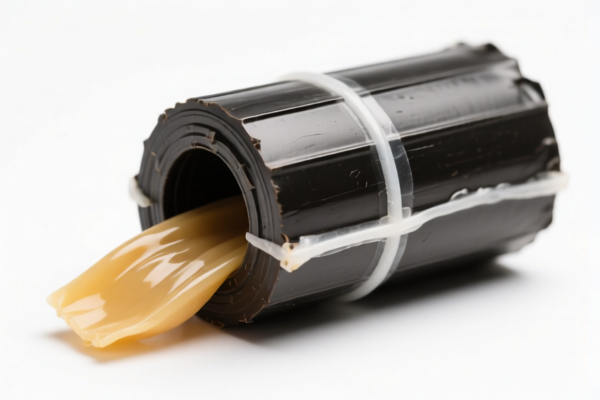

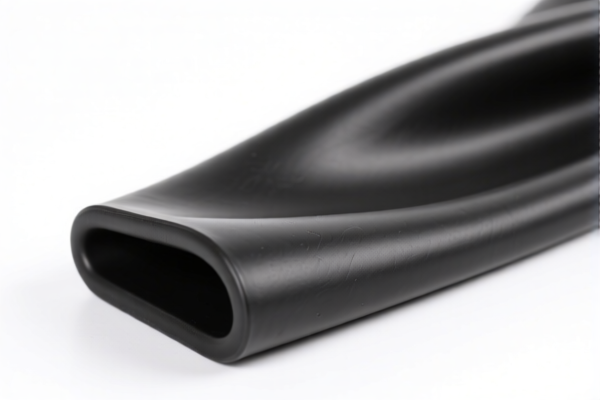
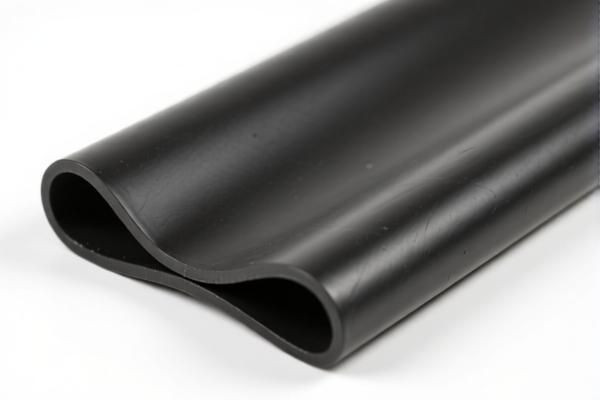
AI Analysis
🧪 General Rubber & Plastic Chemical Additives (Plasticizers & Binders)
🌐 HS Code Reference & Customs Clearance Guide | 2026 Latest Tariff Analysis | Professional Clearance Strategy
📌 I. Product Definition & Classification: What are "General Rubber Plasticizers"?
In international trade, "General Rubber Plasticizers" is a broad commercial term, not a precise legal classification. These chemicals are used primarily to increase the flexibility, workability, and distensibility of rubber or plastics. Due to the variety of chemical compositions (hydrocarbon-based, alcohol-based, or complex mixtures), they fall into two main HS Code categories based on their specific composition and primary use.
⚠️ Critical Distinction Point:
- If the product is a preparation/mixture specifically designed as a plasticizer for rubber/plastics → Falls under Chapter 38.13.
- If the product is a chemical mixture (e.g., hydrocarbon mixtures or alcohol mixtures) that functions as a plasticizer but is classified under "Other Chemical Products" → Falls under Chapter 38.24.
📦 II. HS Code Classification Details (2026 Latest Tariff Authority Comparison)
| HS Code | Product Description | Applicable Scenario | Tax Status (China→US) |
|---|---|---|---|
3813.10 |
Prepared plasticizers for rubber or plastics; mixtures based on such additives. | Specific plasticizer formulations (e.g., phthalates, adipates) where the primary function is plasticizing. | ❌ Failed to Retrieve Tax Information |
3813.90 |
Other chemical products used primarily as plasticizers for rubber or plastics. | Other plasticizing agents not specified in 3813.10. | ❌ Failed to Retrieve Tax Information |
3824.99.49.00 |
Other mixtures: Hydrocarbons derived from petroleum, shale oil, or natural gas. | Plasticizer-like mixtures that are essentially hydrocarbon blends. | ✅ 31.5% (Base 6.5% + Surcharge 25.0%) |
3824.99.93.30 |
Other mixtures: Acyclic, monohydric, unsubstituted alcohols. | Plasticizer-like mixtures that are essentially alcohol blends. | ✅ 30.0% (Base 5.0% + Surcharge 25.0%) |
🔍 Key Insight:
- Many traders mistakenly classify all "plasticizers" under 3813. However, if the product is a mixture of hydrocarbons or alcohols, customs may reclassify it under 3824 if it doesn't meet the specific definition of "preparation" in 3813. - 3813 codes have missing tax data in the provided dataset. This poses a high risk of customs valuation disputes or delays. - 3824 codes have clear, high surcharges (25% USITC 301 Tariff).
💰 III. 2026 Latest Tariff Rate Breakdown (Including Additional Taxes)
✅ Applicable Country: USA (US)
✅ Country of Origin: China (CN)
✅ Effective Date: 2025/2026 (Subject to current USITC/IEEPA rulings)
🎯 1. 3813.10 & 3813.90 — Prepared Plasticizers
| Item | Content |
|---|---|
| Tax Detail | Failed to retrieve tax information |
| Total Tax | Error |
| Implication | ⚠️ High Compliance Risk: The absence of tax data suggests these HS codes may require manual verification or advance ruling. Do not rely on this data for cost calculation without expert confirmation. |
📌 Explanation:
- Chapter 38.13 is reserved for "Prepared plasticizers." If your product is a standard phthalate or non-phthalate plasticizer, it likely belongs here. - Action Required: Consult a customs broker to verify if tax exemptions or specific rates apply, as the dataset shows an error.
🎯 2. 3824.99.49.00 — Hydrocarbon-Based Mixtures
| Item | Content |
|---|---|
| Base Duty | 6.5% |
| USITC Surcharge (301) | +25.0% |
| Total Tax Rate | 31.5% |
| Calculation | CIF Value × 31.5% |
| De Minimis Exemption | ❌ Not Eligible (Standard for China-origin goods >$800) |
📌 Explanation:
- This code applies if your "plasticizer" is a mixture of hydrocarbons (e.g., mineral oils, paraffinic mixtures) used for plasticizing. - The 25% surcharge is mandatory for China-origin goods under Section 301.
🎯 3. 3824.99.93.30 — Alcohol-Based Mixtures
| Item | Content |
|---|---|
| Base Duty | 5.0% |
| USITC Surcharge (301) | +25.0% |
| Total Tax Rate | 30.0% |
| Calculation | CIF Value × 30.0% |
| De Minimis Exemption | ❌ Not Eligible |
📌 Explanation:
- This code applies if your "plasticizer" is a mixture of acyclic, monohydric, unsubstituted alcohols (e.g., certain alcohol-based plasticizers). - Slightly lower base duty (5%) than hydrocarbon mixtures (6.5%), but the 25% surcharge remains the same.
🛠️ IV. Customs Clearance Practical Advice (Avoid Pitfalls)
✅ 1. Document Checklist (Non-Negotiable)
| Document | Mandatory? | Purpose |
|---|---|---|
| ✅ SDS (Safety Data Sheet) | ✔️ Essential | Must clearly list chemical composition (e.g., % of alcohols, hydrocarbons) to determine HS Code. |
| ✅ Technical Specification | ✔️ Essential | Confirm primary function: "Plasticizer for Rubber/Plastics" vs. "Solvent" or "Fuel." |
| ✅ Commercial Invoice | ✔️ Essential | Must state "Rubber Plasticizer" and specify chemical nature (e.g., "Hydrocarbon Mixture"). |
| ✅ Certificate of Analysis (COA) | ✔️ Recommended | Proves chemical identity (alcohol vs. hydrocarbon) to avoid misclassification. |
| ✅ Form 445 (if applicable) | ✔️ For 3813 | If claiming tax exemption or special treatment, additional forms may be needed. |
✅ 2. Classification Strategy (Key Rules)
🔥 "Function Dictates Chapter, Composition Dictates Subheading!"
| Scenario | Correct HS Code | Reason |
|---|---|---|
| Standard Plasticizer (e.g., DOP, DINP) | 3813.10 |
Specific preparation for plasticizing. ⚠️ Verify Tax! |
| Mineral Oil-Based Plasticizer | 3824.99.49.00 |
Mixture of hydrocarbons; not a "preparation" in 3813. |
| Alcohol-Based Plasticizer | 3824.99.93.30 |
Mixture of alcohols; classified under 3824. |
| Multi-Component Mix | 3824.99.93.30 or 3824.99.49.00 |
Depends on the dominant chemical component. |
📌 Critical Note:
- If the product is a blend of alcohols and hydrocarbons, customs will classify based on the essential character (usually the largest volume component). - Do not assume "Plasticizer" =3813. If it’s a simple mixture, it may fall under3824.
✅ 3. Special Handling Tips
| Situation | Recommendation |
|---|---|
| Uncertain Tax for 3813 | Apply for a Harmonized Tariff Schedule (HTS) Advance Ruling from USCBP before shipping. |
| High Surcharge Avoidance | If possible, source from non-China origins (e.g., Vietnam, Thailand) to avoid the 25% surcharge. |
| Chemical Composition Change | Ensure the SDS matches the HS Code. A change from 60% alcohol to 60% hydrocarbon changes the HS Code entirely. |
🌍 V. Global Market Comparison (2026)
| Region | Recommended HS Code | Estimated Duty (China Origin) | Key Requirement |
|---|---|---|---|
| 🇺🇸 USA | 3824.99.49.00 / 3824.99.93.30 |
30–31.5% | SDS + Chemical ID |
| 🇪🇺 EU | 3824.99 (varies by country) |
Varies (0–6.5%) | REACH Registration |
| 🇨🇳 China | 3813.10 / 3824.99 |
5–6.5% | No surcharge |
| 🇮🇳 India | 3824.99 |
Varies | BIS Certification |
📌 Conclusion:
- USA has the highest effective duty due to the 25% Section 301 surcharge. - EU and China have significantly lower duties but stricter chemical regulations (REACH).
📌 VI. Common Mistakes & Pitfalls (Lessons Learned)
❌ Mistake 1: Classifying all plasticizers under 3813 without verifying composition.
👉 Consequence: Customs reclassifies to 3824 + assesses 25% surcharge + penalties.
❌ Mistake 2: Ignoring the "Failed to Retrieve Tax" warning for 3813.
👉 Consequence: Unexpected duties, shipment delays, or audits.
❌ Mistake 3: Submitting a generic "Plasticizer" description on the invoice.
👉 Consequence: Customs demands detailed chemical breakdown, causing clearance delays.
✅ Correct Action:
"Specify Chemical Nature: 'Hydrocarbon Mixture for Rubber Plasticizing, 95% Paraffinic' → HS 3824.99.49.00 → 31.5% Duty."
🎯 VII. Final Recommendations
🎯 Remember:
🔹 "Plasticizer" is a function, not a chemical identity.
🔹 "3813" needs verification; "3824" has clear, high taxes.
🔹 "Composition is King": Alcohols vs. Hydrocarbons determine the code.
📌 Pro Tip:
If your plasticizer is 100% alcohol-based, you save 1.5% in base duty compared to hydrocarbon-based (30% vs 31.5%). However, the 25% surcharge is unavoidable for China-origin goods.
📣 Immediate Action:
📞 Contact a Customs Broker to verify the tax status for
3813codes.
📄 Prepare Detailed SDS showing chemical percentages.
🚀 Consider Advance Ruling to lock in the HS Code and duty rate.
✨ Professional Clearance, Start with Precise Classification!
💼 Every Percent Matters in Chemical Trade!
Customer Reviews
About HS Code Classification
The Harmonized System (HS) is an internationally standardized nomenclature developed by the World Customs Organization (WCO) to classify traded products. Over 200 countries use the HS system as the basis for customs tariffs, trade statistics, and import/export regulations.
Each HS code follows a hierarchical structure:
- Chapter (2 digits) — Broad category of goods (e.g., Chapter 84: Machinery and Mechanical Appliances)
- Heading (4 digits) — More specific grouping within the chapter
- Subheading (6 digits) — Internationally standardized breakdown, used by all WCO member countries
- National subdivisions (8-10 digits) — Country-specific extensions for further classification, such as US HTSUS 10-digit codes
Correct HS code classification is essential for smooth customs clearance, accurate duty payment, and compliance with trade regulations. Misclassification can lead to customs delays, overpayment of duties, or penalties.
When importing from CN to US, the applicable tariff rates may include:
- Most-Favored-Nation (MFN) rate — The standard duty rate applied to WTO members
- General rate — Applied to countries without trade agreements
- Trade remedy duties — Additional tariffs such as Section 301 (anti-dumping), Section 232 (national security), or countervailing duties
The information provided on this page is for reference purposes only. For official classification, please consult with your local customs authority or a licensed customs broker.