generic unit
CN → US| HS Code | Tariff Rate | Origin | Destination | Doc |
|---|---|---|---|---|
| 8538903000 | 38.5% | CN | US | Official Doc |
| 8538901000 | 35.0% | CN | US | Official Doc |
| 8487100080 | 35.0% | CN | US | Official Doc |
| 8487900080 | 88.9% | CN | US | Official Doc |
Product Images
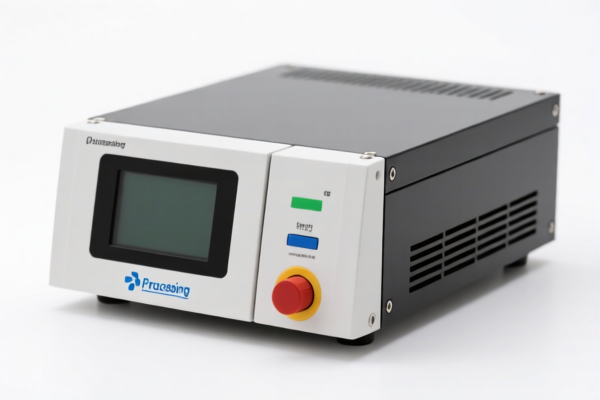
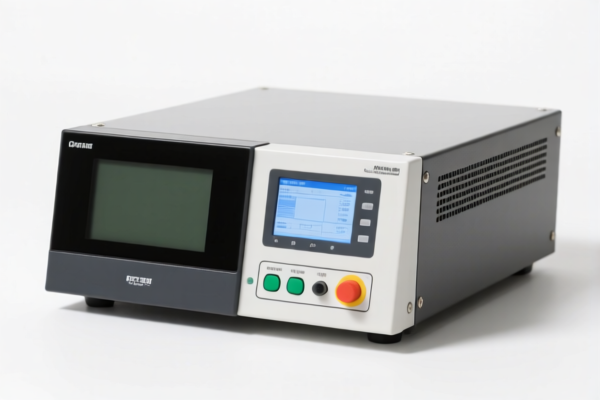
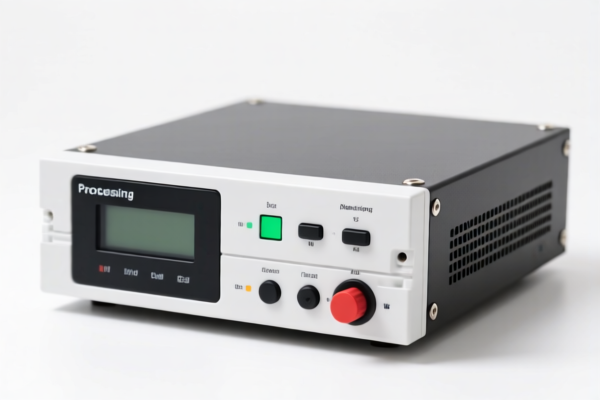
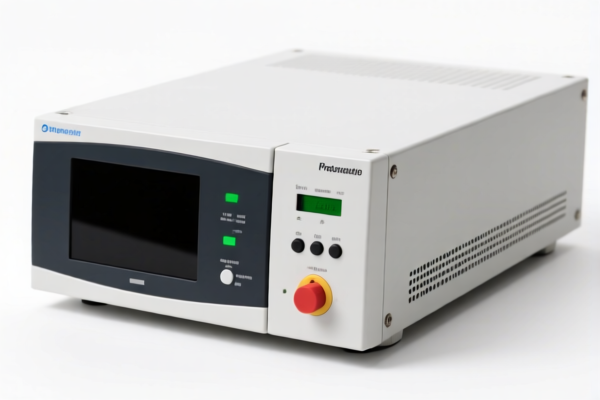
AI Analysis
📦 Generic Unit (Machinery Parts & Electrical Components)
🌐 HS Code Reference & Customs Clearance Guide | 2026 Latest Tariff Analysis | Professional Clearance Strategy
📌 I. Product Definition & Classification: What is a "Generic Unit"?
In international trade, the term "Generic Unit" is vague and risky. It usually refers to mechanical parts or electrical components that are not explicitly named elsewhere in the Harmonized System. The correct HS Code depends entirely on the material composition, electrical features, and specific application.
Based on the provided data, these units fall into two main categories: 1. Pure Mechanical Parts (No electrical features like connectors, coils, or contacts). 2. Electrical Parts/PCBs (Printed Circuit Assemblies for specific apparatus).
⚠️ Critical Distinction:
- If the part is purely mechanical (no wires, no circuits) → Look at Chapter 84 (specifically8487.90).
- If the part contains electrical features (PCBs, connectors) → Look at Chapter 85 (specifically8538.90).
- Misclassification is highly likely if you simply declare "Generic Unit" without specifying function or composition.
📦 II. HS Code Classification Details (2026 Latest Tariff Authority Comparison)
Based on the provided dataset, here are the specific HS Codes for "Generic Units" categorized by their nature:
| HS Code | Product Description | Applicable Scenario | Key Feature |
|---|---|---|---|
| 8487.10.00.80 | Ships' or boats' propellers and blades therefor | Marine equipment parts | Purely mechanical; No electrical features |
| 8487.90.00.80 | Machinery parts, not specified elsewhere, not containing electrical features | General industrial machinery parts | Purely mechanical; No connectors/coils/contacts |
| 8538.90.30.00 | Printed Circuit Assemblies (PCA) for apparatus of heading 8535-8537 | Electrical control panels, switchgear components | Contains electrical features (PCBs) |
| 8538.90.10.00 | Printed Circuit Assemblies for articles of Heading 8537 (per Additional U.S. Note 11) | Specific electrical apparatus parts (e.g., power distribution boards) | Contains electrical features (PCBs); Specific legal note applies |
🔍 Key Reminders:
- 8487 Series: Applies ONLY if there are NO electrical connectors, insulators, coils, or contacts. If there is even one copper wire, it may not qualify.
- 8538 Series: Applies to Printed Circuit Assemblies (PCAs) used with apparatus of headings 8535 (high-voltage apparatus), 8536 (switches, relays), or 8537 (boards for electric control).
- "Generic Unit" is NOT a valid HS Code description. You must specify "Machinery Part" or "PCB Assembly."
💰 III. 2026 Latest Tariff Rate Details (Including Surcharge, Policy Surcharge)
✅ Applicable Country: United States (US)
✅ Origin: China (CN) (Implied by "Additional Tax" and specific steel/aluminum notes)
✅ Effective Time: Current Trade Policies (Section 301 & IEEPA)
🎯 1. 8487.10.00.80 – Ships' Propellers & Blades
| Item | Content |
|---|---|
| Base Tariff | 0.0% |
| Additional Tariff (Section 301) | +25.0% |
| Total Tax Rate | 25.0% |
| Tax Calculation | CIF Value × 25% |
| De Minimis Exemption | ❌ Not Eligible (Section 301 goods are strictly scrutinized) |
| Legal Basis | USITC:8487.10.00.80 → Footnote: Section 301 |
📌 Explanation:
- Although the base tariff is 0%, the 25% Section 301 surcharge applies to machinery parts from China.
- This is a purely mechanical part (propellers), so it does not trigger the higher steel/aluminum surcharge.
🎯 2. 8487.90.00.80 – Other Machinery Parts (Non-Electrical)
| Item | Content |
|---|---|
| Base Tariff | 3.9% |
| Additional Tariff (Section 301) | +25.0% |
| Steel/Aluminum Surcharge | +50.0% (If applicable) |
| Total Tax Rate | 78.9% (If Steel/Aluminum) or 28.9% (Standard)* |
| Tax Calculation | CIF Value × (3.9% + 25% + 50%) |
| De Minimis Exemption | ❌ Not Eligible |
| Legal Basis | USITC:8487.90.00.80 → Footnote: Section 301 + Steel/Aluminum Footnotes |
📌 Critical Warning:
- Standard Rate: 3.9% Base + 25% Surcharge = 28.9%.
- Steel/Aluminum Rate: If the part is made of steel or aluminum and fits the specific definition, an additional 50% is applied, bringing the total to 78.9%!
- Action: Verify material composition. If it's steel/aluminum, budget for nearly 80% tax.
🎯 3. 8538.90.30.00 – Printed Circuit Assemblies (General)
| Item | Content |
|---|---|
| Base Tariff | 3.5% |
| Additional Tariff (Section 301) | +25.0% |
| Total Tax Rate | 28.5% |
| Tax Calculation | CIF Value × 28.5% |
| De Minimis Exemption | ❌ Not Eligible |
| Legal Basis | USITC:8538.90.30.00 → Footnote: Section 301 |
📌 Explanation:
- This covers general PCAs for high/low voltage apparatus (8535-8537).
- No steel/aluminum surcharge applies here because it's an electronic assembly, not a raw metal product.
🎯 4. 8538.90.10.00 – Printed Circuit Assemblies (Specific Legal Note)
| Item | Content |
|---|---|
| Base Tariff | 0.0% |
| Additional Tariff (Section 301) | +25.0% |
| Total Tax Rate | 25.0% |
| Tax Calculation | CIF Value × 25.0% |
| De Minimis Exemption | ❌ Not Eligible |
| Legal Basis | USITC:8538.90.10.00 → Additional U.S. Note 11 to Chapter 85 |
📌 Explanation:
- This is a specific subheading for PCAs related to articles described in Additional U.S. Note 11 to Chapter 85 (often relating to specific power control apparatus).
- Base tariff is 0%, but the 25% surcharge still applies.
🛠️ IV. Customs Clearance Practical Advice (Battle-Tested Pitfall Avoidance)
✅ 1. Required Documentation Checklist (Non-Negotiable)
| Document | Must Provide | Explanation |
|---|---|---|
| ✅ Product Specification Sheet | ✔️ | Must detail material (Steel? Aluminum? Plastic?) and function. |
| ✅ Bill of Materials (BOM) | ✔️ | Critical for 8487.90 to prove NO electrical components. |
| ✅ Circuit Diagrams (if PCB) | ✔️ | For 8538.90, diagrams prove it's a PCA, not a finished appliance. |
| ✅ Product Photos | ✔️ | Clear shots of labeling, connectors, and overall structure. |
| ✅ Commercial Invoice | ✔️ | Must specify "Machinery Part" or "PCB Assembly," NOT "Generic Unit." |
| ✅ Country of Origin Certificate | ✔️ | To confirm China origin (for surcharge calculation). |
| ✅ Packing List | ✔️ | Must separate mechanical parts from electrical parts if mixed. |
✅ 2. Declaration Tips (Key Mantra)
🔥 "No Electricity? Use 8487. Has Circuit? Use 8538. Steel? Pay 50% Extra!"
| Scenario | Correct Declaration | Wrong Practice |
|---|---|---|
| Metal Shaft/Gear (No wires) | 8487.90.00.80 |
Misdeclare as "Electrical Part" → Higher scrutiny |
| Steel Propeller | 8487.10.00.80 |
Misdeclare as "General Machinery" → Misses specific note |
| PCB Board | 8538.90.30.00 or 8538.90.10.00 |
Misdeclare as "Machinery Part" → Class 84 rate (wrong) |
| Steel Mechanical Part | 8487.90.00.80 |
Forget to declare steel → 50% Surcharge Triggered! |
✅ 3. Special Circumstances Handling
| Situation | Handling Advice |
|---|---|
| Mixed Shipment (Parts + PCBs) | Split the declaration. Do not mix 8487 and 8538 in one line item. Use separate line items. |
| Steel/Aluminum Content | If 8487.90, declare material precisely. If it's steel, expect 78.9% total tax. Consider alloying or sourcing from non-China origins if possible. |
| "Generic" Description | NEVER use "Generic Unit" on the invoice. Customs will reject or classify at the highest applicable rate (often worst-case scenario). Use "Machinery Part" or "PCB Assembly." |
| Pre-Ruling Request | For high-value shipments, request an HTSUS Pre-Ruling from CBP to confirm if your part is "Steel/Aluminum" under the 50% surcharge rule. |
🌍 V. Global Market Comparison (2026 Latest)
| Country/Region | Recommended HS Code | Tariff Rate (China Origin) | Certification Requirement | Notes |
|---|---|---|---|---|
| 🇺🇸 USA | 8487.90 / 8538.90 |
25% - 78.9% | N/A | High risk of steel/aluminum surcharge |
| 🇨🇳 China | 8487.90 / 8538.90 |
0% - 13% | CCC (if electrical) | No additional Section 301 tax |
| 🇪🇺 EU | 8487.90 / 8538.90 |
0% - 4.5% | CE / RoHS | No major political surcharges |
| 🇨🇦 Canada | 8487.90 / 8538.90 |
0% - 6.5% | N/A | CUSMA preferential rates possible |
| 🇬🇧 UK | 8487.90 / 8538.90 |
0% - 6% | UKCA / CE | Post-Brexit tariff structure |
📌 Conclusion:
- The USA imposes the highest barrier due to Section 301 and potential steel/aluminum surcharges.
- EU and Canada are more tariff-friendly, but certification (CE/UKCA) is stricter.
- China Origin is the key driver for high taxes in the US.
📌 VI. Common Errors & Pitfall Guide (Lessons from Blood)
❌ Error 1: Declaring "Generic Unit" on the Invoice
👉 Consequence: CBP rejects or assigns a higher duty rate manually → Delays + Fines.
❌ Error 2: Missing Steel/Aluminum for 8487.90
👉 Consequence: You pay 28.9% instead of 78.9%. If audited, you owe back taxes + penalties.
👉 Fix: Explicitly state "Stainless Steel Part" or "Aluminum Housing" on the packing list.
❌ Error 3: Mixing Electrical and Mechanical Parts in One Line Item
👉 Consequence: Customs may classify the entire shipment under the higher-tariff electrical code (8538) or reject the partial classification.
👉 Fix: Split Line Items. One line for Propellers (8487.10), one for PCBs (8538.90).
❌ Error 4: Ignoring Additional U.S. Note 11 for 8538.90.10
👉 Consequence: Misclassification leads to incorrect tax application.
👉 Fix: Consult legal counsel to determine if your PCB falls under Note 11 (specialized power control).
✅ Correct Action:
"Machinery Part, Stainless Steel, Non-Electrical, Model XYZ" OR
"Printed Circuit Assembly, for Control Panel, Model ABC, FCC Certified"
🎯 VII. Conclusion: Precise Classification Saves Money!
🎯 Remember the Mantra:
🔹 "No Electricity = 8487. Has Circuit = 8538. Steel? Pay Extra!"
🔹 "Be Specific: 'Generic Unit' Gets You Taxed High."
📌 Pro Tip:
If your parts are made of steel or aluminum, consider the 78.9% total tax rate for 8487.90.00.80. This is a massive cost.
- Strategy: Evaluate if sourcing from Vietnam/Mexico (with proper transformation) can reduce the 50% steel surcharge.
- Strategy: For PCBs, the rate is lower (25-28.5%), but ensure the BOM is documented to prove they are not "finished appliances."
📣 Immediate Action:
📞 Contact a Licensed Customs Broker + Provide Detailed BOM + Request HTSUS Pre-Ruling
🚀 Avoid the 78.9% Trap, Ensure Smooth Clearance, Protect Your Margins!
✨ Professional Clearance Starts with Precise Classification!
💼 Every Percent of Duty Saved is Pure Profit!
Customer Reviews
About HS Code Classification
The Harmonized System (HS) is an internationally standardized nomenclature developed by the World Customs Organization (WCO) to classify traded products. Over 200 countries use the HS system as the basis for customs tariffs, trade statistics, and import/export regulations.
Each HS code follows a hierarchical structure:
- Chapter (2 digits) — Broad category of goods (e.g., Chapter 84: Machinery and Mechanical Appliances)
- Heading (4 digits) — More specific grouping within the chapter
- Subheading (6 digits) — Internationally standardized breakdown, used by all WCO member countries
- National subdivisions (8-10 digits) — Country-specific extensions for further classification, such as US HTSUS 10-digit codes
Correct HS code classification is essential for smooth customs clearance, accurate duty payment, and compliance with trade regulations. Misclassification can lead to customs delays, overpayment of duties, or penalties.
When importing from CN to US, the applicable tariff rates may include:
- Most-Favored-Nation (MFN) rate — The standard duty rate applied to WTO members
- General rate — Applied to countries without trade agreements
- Trade remedy duties — Additional tariffs such as Section 301 (anti-dumping), Section 232 (national security), or countervailing duties
The information provided on this page is for reference purposes only. For official classification, please consult with your local customs authority or a licensed customs broker.