glow wire test equipment
CN → USProduct Images
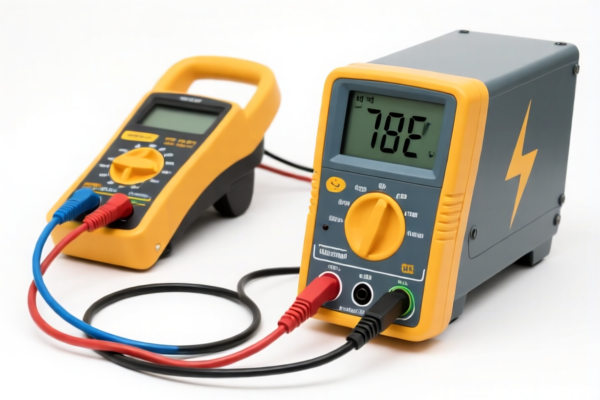


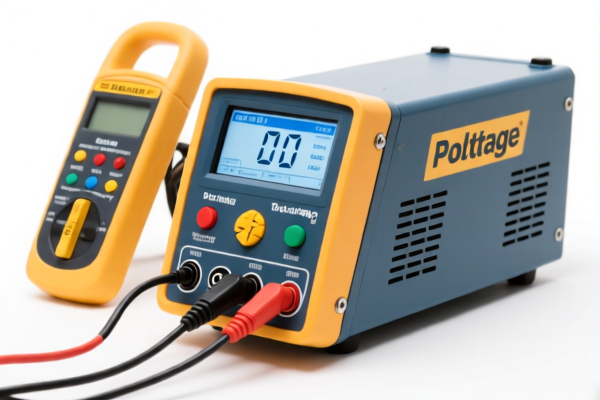
AI Analysis
🔥 Glow Wire Test Equipment (Glow-Wire Flammability Testers)
🌐 HS Code Reference & Customs Clearance Guide | 2026 Latest Tariff Analysis | Professional Compliance Strategy
📌 I. Product Definition & Classification: What Exactly Is "Glow Wire Equipment"?
Glow Wire Test Equipment, formally known as Glow-Wire Flammability Test Apparatus, is a specialized safety testing device used to simulate the ignition effect of overheated electrical components (such as resistors or contacts) in low-voltage electrical appliances, electronic equipment, and accessories.
It is NOT a consumer appliance, nor is it simple electronic data processing machinery. It falls under the category of scientific, control, or laboratory instruments designed for material safety assessment (IEC 60695-2-10 / IEC 60695-2-11 standards).
⚠️ Critical Distinction:
- If the device is a complete, calibrated instrument with heating elements, thermocouples, gas supply connections, and ignition detection systems → It is a Testing Instrument.
- If the device is merely a heating element component (wire/coil) without control systems → It might be considered a part, but commercial "Glow Wire Testers" are almost always complete instruments.
📦 II. HS Code Classification Details (2026 Latest Tariff Authority Comparison)
| HS Code | Product Description | Applicability Scenario | Key Components |
|---|---|---|---|
| 9031.80.40.00 | Measuring or checking instruments, appliances and machines, not specified or included elsewhere in this chapter (e.g., for testing electrical properties) | Primary Classification for Glow Wire Testers. Used for flammability, ignition, and electrical safety testing. | Heating block, thermocouple, timer, gas valve, ignition sensor. |
| 9031.80.90.00 | Other instruments and appliances for physical or chemical analysis | Alternative classification if the device is deemed a general material analyzer (less common for glow wire). | Similar to above, but lacks specific "electrical safety" branding. |
| 8538.90.00.00 | Parts suitable for use solely or principally with the apparatus of heading 85.35, 85.36, or 85.37 | Incorrect for the main unit. Only applies if shipping replacement glow wires or isolated heater blocks without control electronics. | Replacement heater coils, isolation transformers (if sold separately). |
| 8543.70.90.00 | Electrical machines and apparatus, having individual functions, not specified elsewhere | Rarely used. Might apply if the device has significant proprietary software/AI analysis features beyond standard testing. | Advanced data logging units with custom algorithms. |
🔍 Key Reminder:
- The standard Glow Wire Tester (compliant with IEC/UL standards) is classified under 9031.80.40.00 because it is an instrument for testing the safety characteristics (flammability) of materials.
- Do NOT classify as "Parts of Electrical Machinery" (8538) unless you are shipping spare parts only.
💰 III. 2026 Latest Tariff Rate Detailed Explanation (Including Surtaxes & Policy Add-ons)
✅ Applicable Country: United States (US)
✅ Country of Origin: China (CN)
✅ Effective Date: November 10, 2025 (and subsequent imports)
🎯 1. 9031.80.40.00 — Glow Wire Test Equipment (Testing Instruments)
| Item | Content |
|---|---|
| Base Duty Rate | 0% (ad valorem) |
| USITC Surcharge | +15% (Section 301 Surcharge for Heading 9031 items not explicitly exempted) |
| IEEPA Surcharge | +10% (On China/ Hong Kong products, effective Nov 10, 2025) |
| Total Rate | 25% |
| Tax Calculation | CIF Value × 25% |
| De Minimis Exemption | ❌ Not Applicable (deny_de_minimis) |
| Legal Basis Path | IEEPA:9903.01.25 → IEEPA:9903.01.24 → USITC:9031.80.40.00 → FOOTNOTE:9903.78.01 |
📌 Explanation:
- While "scientific instruments" often enjoy lower base tariffs, Section 301 and IEEPA surcharges apply to most Chinese-origin testing equipment.
- The 15% Section 301 rate is standard for many items in Chapter 90 that are not medical or specific lab equipment exempted.
- Total 25% is significantly lower than display panels (45%) or electronics (20%+), making this a relatively "safer" classification if done correctly.
🛠️ IV. Customs Clearance Practical Advice (Combat Pitfall Guide)
✅ 1. Required Documentation Checklist (None Can Be Omitted)
| Document | Must Provide | Description |
|---|---|---|
| ✅ Product Manual | ✔️ | Must explicitly state it is a "Flammability Testing Apparatus" per IEC 60695-2-10. |
| ✅ Technical Specs | ✔️ | Temperature range, heating rate, gas type (Methane/Ethane), voltage, power. |
| ✅ Product Photos | ✔️ | Clear view of the heating block, thermocouple, timer, and branding. |
| ✅ Certificate of Compliance | ✔️ | CE, UL, or ISO 17025 calibration certificate (adds credibility). |
| ✅ Commercial Invoice | ✔️ | Description: "Glow Wire Flammability Test Machine, Model XYZ, for Testing Electrical Component Ignition, New." |
| ✅ HS Code Ruling | ✔️ | If available, include previous US CBP ruling for similar models. |
✅ 2. Declaration Tips (Key Mantra)
🔥 "Test Machine, Not Appliance; IEC Standard, Not Consumer Good!"
| Scenario | Correct Declaration | Wrong Practice |
|---|---|---|
| Complete Glow Wire Tester | 9031.80.40.00 |
Misclassifying as 8543.70.90.00 or 8538.90.00.00 |
| Replacement Glow Wire (No electronics) | 8538.90.00.00 |
Declaring as part of a machine → Risk of misclassification |
| Bundle: Tester + Spare Parts | Split Declaration | Bundling as one item → May trigger higher scrutiny on the whole shipment |
| Software for Data Analysis | 9031.80.40.00 |
Declaring separately as 8523.49.00.00 (Software) → May incur different duty |
⚠️ Warning:
- Do NOT describe the product as "Electric Heater" or "Industrial Oven."
- Do NOT describe it as "Computer" or "Data Processing Equipment."
- Use keywords: "Flammability Tester," "Ignition Temperature Test," "IEC 60695," "Safety Testing Instrument."
✅ 3. Special Case Handling
| Scenario | Handling Advice |
|---|---|
| OEM/White Label | Provide a letter stating the model is identical to the referenced IEC standard device. Avoid branding that might confuse customs (e.g., "Home Appliance Tester"). |
| Used/Refurbished | High Risk! Used testing equipment may require additional sanitation or inspection. Declare as "Used" and provide maintenance records. |
| With Gas Supply System | If the unit includes a compressed gas cylinder, it may be classified as Hazardous Material (Hazmat). Ensure UN 1075/1971 compliance if gas is included. |
| High-Temperature Variants | If the device exceeds standard limits, ensure it is still classified under 9031 and not 8419 (Industrial Heating Equipment), which has different duties. |
🌍 V. Global Market Customs Comparison (2026 Latest)
| Country/Region | Recommended HS Code | Duty Rate | Certification Requirement | Notes |
|---|---|---|---|---|
| 🇺🇸 USA | 9031.80.40.00 |
25% (CN Origin) | NIST Traceable Calibration | High scrutiny on "Testing Equipment" vs "Heaters". |
| 🇨🇳 China | 9031.80.40.00 |
0% | CNAS Accreditation | Zero duty for importing test equipment into China. |
| 🇪🇺 EU | 9031 80 80 |
0% (if EORI valid) | CE Marking, ISO 17025 | No Section 301/IEEPA equivalent, but strict CE compliance. |
| 🇦🇺 Australia | 9031.80.90.00 |
5% | RCM (if electrical) | Lower duty than US, but requires accurate description. |
| 🇮🇳 India | 9031.80.90 |
10-15% | BIS Certification | High barriers to entry; BIS certification often required. |
📌 Conclusion:
- USA is the most challenging market due to IEEPA/Section 301 surcharges, but the 25% total rate is manageable for industrial equipment.
- EU and China offer 0% or near-0% duty, making them more cost-effective for global distribution centers.
📌 VI. Common Errors & Pitfall Guide (Lessons Learned)
❌ Error 1: Classifying as 8419.89.00.00 (Industrial Heating Equipment)
👉 Consequence: Higher duty (3-7%) + FDA/USDA scrutiny if misinterpreted as food processing equipment.
👉 Correction: It is a test instrument, not a production heater.
❌ Error 2: Classifying as 8538.90.00.00 (Parts)
👉 Consequence: If customs determines it is a "complete machine," they may reassess under 9031, leading to penalties for misdeclaration.
👉 Correction: Ensure the device has all necessary control components to function as a standalone tester.
❌ Error 3: Ignoring the "Gas" Component
👉 Consequence: If shipped with a methane tank, it may be delayed as Hazmat (Class 2).
👉 Correction: Ship the tester dry (no gas). Require the end-user to install the gas line locally.
❌ Error 4: Vague Description ("Electric Test Box")
👉 Consequence: Customs may classify under catch-all categories with higher duties.
👉 Correction: Use precise terminology: "Glow Wire Flammability Tester per IEC 60695-2-10."
✅ Correct Declaration Example:
"Glow Wire Flammability Test Apparatus, Model GW-100, New, Unassembled, Designed to Test Electrical Components for Ignition Temperature per IEC 60695-2-10 Standard, Includes Heating Block, Thermocouple, Timer, and Gas Connection Port, No Gas Included."
🎯 VII. Conclusion: Precision Classification Saves Cost!
🎯 Remember the Mantra:
🔹 "It's a Tester, Not a Heater! 9031 is the Key, 25% Duty for US!"
🔹 "No Gas in the Box, Keep it Hazmat-Free!"
🔹 "IEC Standard Mentioned, Avoids Customs Re-Scrutiny!"
📌 Pro Tip:
If you are exporting to multiple markets, consider using modular packaging. Ship the main instrument body (HS 9031) and optional accessories (e.g., specific probes) separately if their duty rates differ significantly. Always request a Binding Tariff Information (BTI) or US CBP Ruling for large, recurring shipments to mitigate risk.
📣 Immediate Action:
📞 Consult a Licensed Customs Broker + Provide IEC Standard Docs + Pre-Classify HS Code
🚀 Ensure Smooth Clearance, Avoid Delays, Protect Your Margins!
✨ Professional Clearance Starts with Accurate Classification!
💼 Your Duty Bill is Your Bottom Line! Optimize It!
Customer Reviews
About HS Code Classification
The Harmonized System (HS) is an internationally standardized nomenclature developed by the World Customs Organization (WCO) to classify traded products. Over 200 countries use the HS system as the basis for customs tariffs, trade statistics, and import/export regulations.
Each HS code follows a hierarchical structure:
- Chapter (2 digits) — Broad category of goods (e.g., Chapter 84: Machinery and Mechanical Appliances)
- Heading (4 digits) — More specific grouping within the chapter
- Subheading (6 digits) — Internationally standardized breakdown, used by all WCO member countries
- National subdivisions (8-10 digits) — Country-specific extensions for further classification, such as US HTSUS 10-digit codes
Correct HS code classification is essential for smooth customs clearance, accurate duty payment, and compliance with trade regulations. Misclassification can lead to customs delays, overpayment of duties, or penalties.
When importing from CN to US, the applicable tariff rates may include:
- Most-Favored-Nation (MFN) rate — The standard duty rate applied to WTO members
- General rate — Applied to countries without trade agreements
- Trade remedy duties — Additional tariffs such as Section 301 (anti-dumping), Section 232 (national security), or countervailing duties
The information provided on this page is for reference purposes only. For official classification, please consult with your local customs authority or a licensed customs broker.