glue dispensing machine
CN → US| HS Code | Tariff Rate | Origin | Destination | Doc |
|---|---|---|---|---|
| 8479820040 | 35.0% | CN | US | Official Doc |
| 8479820080 | 35.0% | CN | US | Official Doc |
Product Images
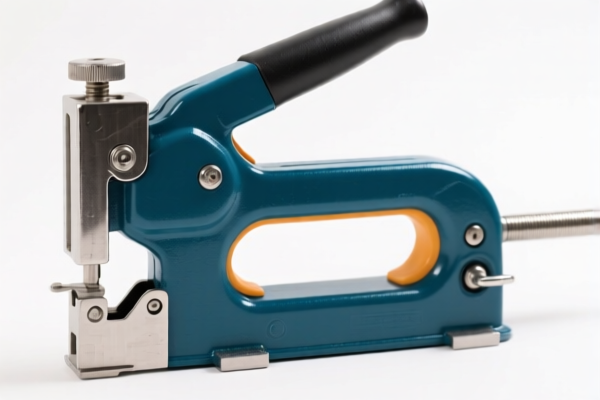
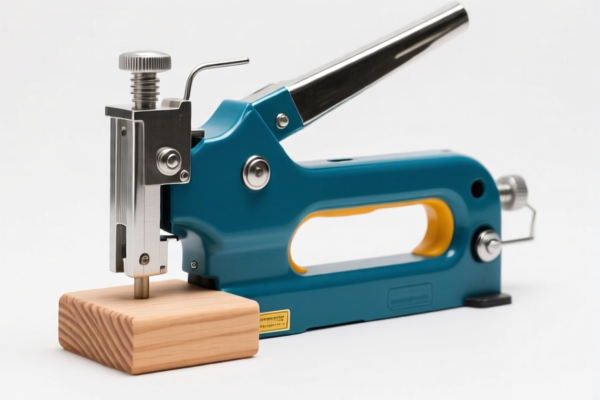
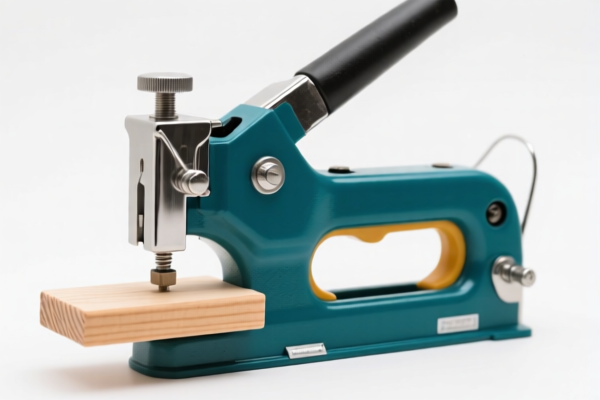
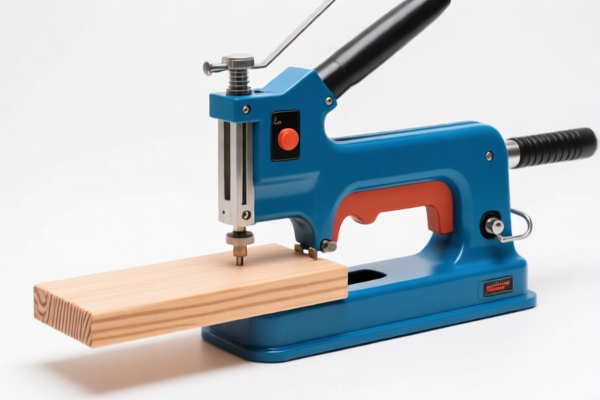
AI Analysis
🧴 Glue Dispensing Machine (Industrial Adhesive Application Equipment)
🌐 HS Code Reference & Customs Clearance Guide | 2026 Latest Tariff Analysis | Professional Strategy for US-China Trade
📌 I. Product Definition & Classification: What Exactly Is a "Glue Dispensing Machine"?
In international trade, "Glue Dispensing Machines" fall under the broader category of Machines and Mechanical Appliances Having Individual Functions. They are specifically classified under Chapter 84, Heading 8479. These devices are used for mixing, kneading, stirring, homogenizing, or stirring substances (including adhesives) before or during application.
It is crucial to distinguish between: * Simple Manual/Pneumatic Dispensers: Often classified as parts of machines or other apparatus (Chapter 84 or 90). * Automated/Industrial Dispensing Systems: Machines that perform mixing, kneading, or stirring functions as their primary individual purpose.
⚠️ Key Distinction Point:
- If the machine’s primary function is mixing, kneading, or stirring the glue/adhesive before dispensing, it falls under 8479.82.00.
- If it is merely a nozzle or a simple valve without mechanical mixing/stirring capability, it may be considered a part or a different apparatus.
- Note: The provided data specifically highlights machines with individual functions for "Mixing, kneading, crushing, grinding, screening, sifting, homogenizing, emulsifying or stirring."
📦 II. HS Code Classification Details (2026 Latest Tariff Authority)
Based on the provided data, the relevant HS Codes for Glue Dispensing Machines (specifically those involving mixing/stirring/homogenizing functions) are:
| HS Code | Product Description | Applicable Scenario | Primary Function |
|---|---|---|---|
8479.82.00.40 |
Mixing, kneading or stirring machines | Industrial glue mixers, dual-component epoxy dispensers with mixing chambers, homogenizers for adhesives | ✅ Mixing/Kneading |
8479.82.00.80 |
Other machines and mechanical appliances | General industrial stirring devices, non-specific mechanical mixers used in chemical/adhesive processing | ✅ Stirring/Homogenizing |
🔍 Key Reminder:
- These codes apply to machines where the individual function is mixing, kneading, or stirring.
- If the machine is purely a "dispensing" head without any internal mechanical mixing/kneading mechanism, it might not fit these specific sub-headings and could require a different classification (e.g., 8479.89.00). However, based on the provided data, we focus on the 8479.82 series for machines with mixing/stirring functions.
- Do not misclassify as simple parts (Chapter 8484 or 9031) if the machine itself performs the mechanical action of mixing/stirring.
💰 III. 2026 Latest Tariff Rate Detailed Explanation (Including Surcharges)
✅ Applicable Country: United States (US)
✅ Country of Origin: China (CN)
✅ Effective Date: 2025 onwards (Current Trade War Context)
🎯 1. 8479.82.00.40 — Mixing, Kneading, or Stirring Machines
| Item | Content |
|---|---|
| Base Tariff | 0.0% (ad valorem) |
| Section 301 Surcharge | +25.0% (Additional Duty on Chinese Goods) |
| Total Tariff Rate | 25.0% |
| Tax Calculation | CIF Value × 25% |
| De Minimis Exemption | ❌ Not Applicable |
| Legal Basis | USITC 8479.82.00.40 + Section 301 Footnotes |
📌 Explanation:
- The base tariff is 0%, meaning there is no standard WTO duty for these machines.
- However, due to Section 301 Trade Actions, an additional 25% tariff is applied to all goods from China under this HS code.
- Total Cost Impact: Importers must budget for a 25% duty on the CIF value. This is a significant cost driver.
🎯 2. 8479.82.00.80 — Other Machines and Mechanical Appliances
| Item | Content |
|---|---|
| Base Tariff | 0.0% (ad valorem) |
| Section 301 Surcharge | +25.0% (Additional Duty on Chinese Goods) |
| Total Tariff Rate | 25.0% |
| Tax Calculation | CIF Value × 25% |
| De Minimis Exemption | ❌ Not Applicable |
| Legal Basis | USITC 8479.82.00.80 + Section 301 Footnotes |
📌 Explanation:
- Similar to the above, this "catch-all" subheading for other mixing/stirring machines also carries a 0% base rate but is subject to the 25% Section 301 surcharge.
- Total Duty: 25% of the CIF value.
- No Exemptions: There are no current general exemptions for glue dispensing/mixing machines from China under this heading.
🛠️ IV. Customs Clearance Practical Advice (Pitfall Avoidance Guide)
✅ 1. Required Documentation Checklist
| Document | Must Provide | Explanation |
|---|---|---|
| ✅ Detailed Product Description | ✔️ | Must explicitly state: "Industrial Glue Dispensing Machine with Mixing/Stirring Function." Avoid vague terms like "Machine." |
| ✅ Technical Specifications | ✔️ | Include details on mixing mechanism, stirring speed, tank capacity, and power rating. |
| ✅ Photos of the Machine | ✔️ | Show the entire unit, control panel, and internal mixing components if visible. |
| ✅ Commercial Invoice | ✔️ | Clearly list the HS Code 8479.82.00.40 or 8479.82.00.80. |
| ✅ Packing List | ✔️ | Ensure dimensions and weight match the declared value. |
| ✅ CE/UL Certificates | ✔️ | Electrical safety certifications are mandatory for US customs and ports of entry. |
| ✅ Declaration of Origin | ✔️ | Confirm Country of Origin is China to accurately apply the 25% surcharge. |
✅ 2. Declaration Strategies (Key Tips)
🔥 "Specify Function, Clarify Origin, Declare Accurately!"
| Scenario | Correct Declaration | Incorrect Practice |
|---|---|---|
| Machine with Internal Mixer | 8479.82.00.40 - Glue Dispensing Machine with Mixing Function |
Misdeclaring as "Part" → Higher scrutiny |
| Simple Stirrer Unit | 8479.82.00.80 - Mechanical Stirring Machine |
Misdeclaring as "Electrical Appliance" → Wrong HTS |
| Complete Kit (Machine + Glue) | Declare machine separately; glue is a separate product | Combining duty-free glue with taxed machine → Smuggling Risk |
| Parts Only (Nozzles, Valves) | Check if classified as parts (e.g., 8479.90.00) | Declaring parts as a full machine → Overpayment |
✅ 3. Special Handling Instructions
| Situation | Recommendation |
|---|---|
| OEM Custom Machines | Provide design drawings and client agreements. If the machine is unique, ensure the description highlights the "individual function" (mixing/stirring). |
| Used/Refurbished Machines | US Customs may require additional inspections for used machinery. Ensure it is clean and free of hazardous residue. |
| Dual-Use Equipment | If the machine can also be used for chemical processing beyond glue, declare it as such to avoid misclassification. |
| High-Value Machines | Consider Section 301 Exclusions if applicable. Check if your specific model was granted an exclusion (though rare for general industrial equipment). |
🌍 V. Global Market Comparison (2026 Latest)
| Country/Region | Recommended HS Code | Tariff Rate (China Origin) | Certification Requirements | Notes |
|---|---|---|---|---|
| 🇺🇸 USA | 8479.82.00.40 / .80 |
25.0% (Base 0% + 25% Surcharge) | UL, CE, FCC (if electrical) | High duty cost. No de minimis. |
| 🇨🇳 China | 8479.82.00.40 / .80 |
0% - 5% (Typically low for machinery) | CCC (if applicable) | Lower duty cost for domestic sales. |
| 🇪🇺 EU | 8479.82.00 |
0% (Most FTA benefits apply) | CE, RoHS, REACH | Generally duty-free under many FTAs. |
| 🇬🇧 UK | 8479.82.00 |
0% | UKCA | Post-Brexit, similar to EU. |
| 🇯🇵 Japan | 8479.82.00 |
0% | PSE, JIS | No additional tariffs. |
📌 Conclusion:
- The US is the most challenging market for importing glue dispensing machines from China due to the 25% Section 301 surcharge.
- Europe, Japan, and other markets offer significantly lower or zero tariffs, making them more cost-effective for Chinese manufacturers.
- Cost Optimization: Consider shipping to a non-US warehouse in Asia or Europe for redistribution to avoid the 25% US duty.
📌 VI. Common Errors & Pitfall Guide (Lessons Learned)
❌ Error 1: Declaring a "Glue Dispensing Machine" as a "Part" (e.g., 8479.90)
👉 Consequence: Customs may reject the classification, leading to re-assessment at 25% + penalties.
❌ Error 2: Not specifying the "Mixing/Stirring" function
👉 Consequence: Incorrect HS code assignment (e.g., 8479.89), leading to audits and delays.
❌ Error 3: Ignoring the 25% Surcharge
👉 Consequence: Budgeting errors, leading to cash flow issues at customs.
❌ Error 4: Mixing "Glue" (Chemical) with "Machine" (Machinery) in one HS Code
👉 Consequence: Illegal declaration. Glue and machines must be declared separately. Glue may have different tariffs and regulations (e.g., DOT for hazardous materials).
✅ Correct Practice:
"Industrial Automatic Glue Dispensing Machine with In-Line Mixing Function, Model XYZ, 220V, CE/UL Certified, Made in China"
🎯 VII. Conclusion: Smart Classification, Cost Savings!
🎯 Key Takeaways:
🔹 "Function is King": If it mixes, kneads, or stirs, it’s 8479.82.
🔹 "US Tariff Shock": Prepare for a 25% total duty on Chinese-origin machines.
🔹 "Separate Goods": Declare glue and machines separately.
🔹 "Document Thoroughly": Technical specs and photos are your best defense.
📌 Pro Tip:
If your glue dispensing machine is not made in China (e.g., from Vietnam, Thailand, or Germany), you can avoid the 25% surcharge.
Consider supply chain diversification to reduce costs.
📣 Immediate Action:
📞 Consult a Customs Broker: Verify the exact function of your machine.
📄 Pre-Audit Your Declaration: Ensure the HS Code matches the machine’s primary function.
💼 Budget for 25% Duty: Include this in your landed cost calculation for US imports.
✨ Professional Clearance, Accurate Classification!
💼 Every Percent Saved is Pure Profit!
Customer Reviews
About HS Code Classification
The Harmonized System (HS) is an internationally standardized nomenclature developed by the World Customs Organization (WCO) to classify traded products. Over 200 countries use the HS system as the basis for customs tariffs, trade statistics, and import/export regulations.
Each HS code follows a hierarchical structure:
- Chapter (2 digits) — Broad category of goods (e.g., Chapter 84: Machinery and Mechanical Appliances)
- Heading (4 digits) — More specific grouping within the chapter
- Subheading (6 digits) — Internationally standardized breakdown, used by all WCO member countries
- National subdivisions (8-10 digits) — Country-specific extensions for further classification, such as US HTSUS 10-digit codes
Correct HS code classification is essential for smooth customs clearance, accurate duty payment, and compliance with trade regulations. Misclassification can lead to customs delays, overpayment of duties, or penalties.
When importing from CN to US, the applicable tariff rates may include:
- Most-Favored-Nation (MFN) rate — The standard duty rate applied to WTO members
- General rate — Applied to countries without trade agreements
- Trade remedy duties — Additional tariffs such as Section 301 (anti-dumping), Section 232 (national security), or countervailing duties
The information provided on this page is for reference purposes only. For official classification, please consult with your local customs authority or a licensed customs broker.