gold foil
CN → US| HS Code | Tariff Rate | Origin | Destination | Doc |
|---|---|---|---|---|
| 3921190010 | 41.5% | CN | US | Official Doc |
| 3919905060 | 40.8% | CN | US | Official Doc |
| 3919905040 | 40.8% | CN | US | Official Doc |
| 3920991000 | 41.0% | CN | US | Official Doc |
| 3920992000 | 39.2% | CN | US | Official Doc |
Product Images



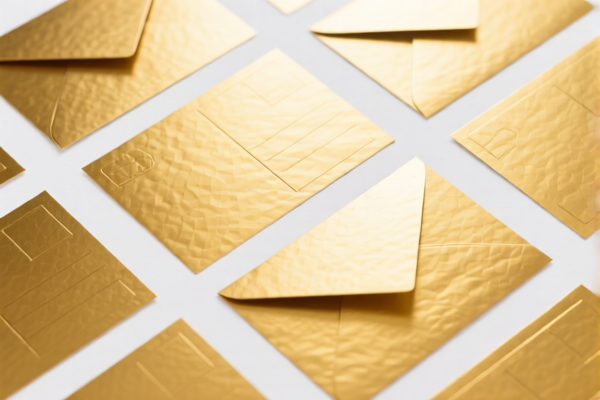
AI Analysis
🥇 Gold Foil (Protective Films & Applications)
🌐 HS Code Reference & Clearance Guide | 2026 Latest Tariff Analysis | Professional Clearance Strategy
📌 I. Product Definition & Classification: What is "Gold Foil" in International Trade?
Gold foil, in the context of customs classification, is rarely classified as precious metal jewelry or bullion. Instead, it is typically categorized based on its packaging, protective layers, and substrate material. The most common form imported is Gold Foil with Protective Film, which consists of ultra-thin gold leaf sandwiched between protective plastic films (PET, PP, PE) to prevent damage during transport.
Key Classification Distinctions: * Protective Film + Gold Leaf: Classified primarily under Chapter 39 (Plastics) because the plastic film defines the shape and protection mechanism. * Loose Gold Leaf (No Film): Would fall under Chapter 71 (Precious Metals), but this is rare for commercial imports due to high loss rates. * Decorative Items: If processed into jewelry or tableware, it falls under Chapter 71 or 73/82, but the query specifically points to the film-protected variant.
⚠️ Critical Distinction:
- If the item is primarily a plastic film (even if coated with gold or holding gold leaf) → Chapter 39 (Plastics).
- If the item is a finished decorative product (e.g., framed gold foil art) → Chapter 70/71.
- Most "Gold Foil" imports are actually "Plastic Films with Gold Leaf Sandwiched", leading to HS Codes in 3919, 3920, or 3921.
📦 II. HS Code Classification Details (2026 Latest Tariff Alignment)
Based on the provided data, here are the 5 most relevant HS Codes for Gold Foil with Protective Film, categorized by material structure and tariff impact.
| HS Code | Product Description | Material/Structure | Primary Use Case |
|---|---|---|---|
| 3921.19.00.10 | Protective Film for Gold Foil | Polyethylene (PE) or Polypropylene (PP) Plastic Film | Standard self-adhesive protective film; thick, durable packaging. |
| 3919.90.50.60 | Other Plastic Self-Adhesive Films | Plastic (General), Flat Form | Non-specific plastic films, often used for general wrapping or non-specialized gold foil protection. |
| 3919.90.50.40 | Self-Adhesive Plastic Films | Plastic (PET/PP), Flat Form | High-quality protective films, often PET-based, for premium gold leaf preservation. |
| 3920.99.10.00 | Other Plastic Plates/Sheets/Films | Plastic (PET/PE), Composite/Laminated | Used when the film is part of a composite structure or specialized for layering/lamination. |
| 3920.99.20.00 | Other Plastic Sheets/Films | Plastic (PET/BOPP), Non-cellular/Non-reinforced | Generic plastic films for gold foil protection, often BOPP (Biaxially Oriented Polypropylene). |
🔍 Key Insight:
All codes above fall under Chapter 39 (Plastics). This is because the protective film is the dominant component by weight and function. The gold content is negligible in terms of customs valuation for classification purposes, so the plastic material dictates the HS code.
💰 III. 2026 Latest Tariff Rate Breakdown (US Import from China)
✅ Applicable Country: United States (US)
✅ Origin: China (CN)
✅ Effective Date: Current (2025-2026 period)
The tariff structure for these plastic films is high due to US-China trade tensions. The total tax rate includes: 1. Base Tariff: Standard Most Favored Nation (MFN) rate. 2. Section 301 Tariff (25%): Additional duty on Chinese goods. 3. Section 122 Tariff (10%): Additional duty under specific trade provisions (often related to reciprocal trade measures).
🎯 1. 3921.19.00.10 – Protective Film (PE/PP)
| Item | Detail |
|---|---|
| Base Tariff | 6.5% |
| Section 301 Tariff | +25.0% |
| Section 122 Tariff | +10.0% |
| Total Tax Rate | 41.5% |
| Tax Calculation | CIF Value × 41.5% |
| De Minimis Exemption | ❌ Not Eligible (Section 301 and 122 tariffs apply regardless of value) |
| Legal Basis | USITC HTS 3921.19.00.10 → Section 301 Footnote 9903.88.01 → Section 122 Provisions |
📌 Explanation:
- This code is for thicker, more durable plastic films (PE/PP).
- Total Cost Impact: For every $1,000 of goods, you pay $415 in tariffs.
- Risk: High scrutiny on "protective film" claims to ensure it's not disguised industrial adhesive.
🎯 2. 3919.90.50.60 – Other Plastic Self-Adhesive Films
| Item | Detail |
|---|---|
| Base Tariff | 5.8% |
| Section 301 Tariff | +25.0% |
| Section 122 Tariff | +10.0% |
| Total Tax Rate | 40.8% |
| Tax Calculation | CIF Value × 40.8% |
| De Minimis Exemption | ❌ Not Eligible |
| Legal Basis | USITC HTS 3919.90.50.60 → Section 301 → Section 122 |
📌 Explanation:
- A catch-all category for self-adhesive plastic films not specified elsewhere.
- Savings: 0.7% lower than 3921.19.00.10, but still extremely high.
🎯 3. 3919.90.50.40 – Self-Adhesive Plastic Films (PET/PP)
| Item | Detail |
|---|---|
| Base Tariff | 5.8% |
| Section 301 Tariff | +25.0% |
| Section 122 Tariff | +10.0% |
| Total Tax Rate | 40.8% |
| Tax Calculation | CIF Value × 40.8% |
| De Minimis Exemption | ❌ Not Eligible |
| Legal Basis | USITC HTS 3919.90.50.40 → Section 301 → Section 122 |
📌 Explanation:
- Often used for high-clarity PET films (common for gold foil to preserve shine).
- Same tax burden as 3919.90.50.60.
🎯 4. 3920.99.10.00 – Other Plastic Sheets (Composite)
| Item | Detail |
|---|---|
| Base Tariff | 6.0% |
| Section 301 Tariff | +25.0% |
| Section 122 Tariff | +10.0% |
| Total Tax Rate | 41.0% |
| Tax Calculation | CIF Value × 41.0% |
| De Minimis Exemption | ❌ Not Eligible |
| Legal Basis | USITC HTS 3920.99.10.00 → Section 301 → Section 122 |
📌 Explanation:
- Used if the gold foil is laminated between plastic layers (composite structure).
- Slightly higher base tariff than 3919 series, but similar total impact.
🎯 5. 3920.99.20.00 – Other Plastic Sheets (Non-Cellular)
| Item | Detail |
|---|---|
| Base Tariff | 4.2% |
| Section 301 Tariff | +25.0% |
| Section 122 Tariff | +10.0% |
| Total Tax Rate | 39.2% |
| Tax Calculation | CIF Value × 39.2% |
| De Minimis Exemption | ❌ Not Eligible |
| Legal Basis | USITC HTS 3920.99.20.00 → Section 301 → Section 122 |
📌 Explanation:
- Lowest Total Tax Rate (39.2%) among the options.
- Applies to non-cellular, non-reinforced plastic films (e.g., BOPP).
- Best Option if your product structure allows classification here.
🛠️ IV. Practical Clearance Advice (Avoiding Pitfalls)
✅ 1. Document Checklist (Essential for Customs)
| Document | Required | Purpose |
|---|---|---|
| ✅ Product Description | ✔️ | Must specify "Gold Foil with Protective Plastic Film" |
| ✅ Material Composition | ✔️ | Detail % of Plastic (PE/PET/BOPP) vs. Gold Leaf |
| ✅ Photos | ✔️ | Show film layers, gold leaf sandwich, and packaging |
| ✅ Commercial Invoice | ✔️ | Clearly state value of plastic film vs. gold (if separable) |
| ✅ Origin Certificate | ✔️ | To confirm Chinese origin (triggering 301/122 tariffs) |
| ✅ HS Code Pre-Ruling | ✔️ | Highly Recommended to avoid misclassification penalties |
✅ 2. Classification Strategy (Key Tips)
🔥 “Plastic Dominates, Gold is Negligible” Rule
| Scenario | Recommended HS Code | Reason |
|---|---|---|
| Standard Protective Film | 3921.19.00.10 or 3919.90.50.40 |
Most common for self-adhesive films. |
| Non-Adhesive Plastic Wrapper | 3920.99.20.00 |
Lowest tax (39.2%) if non-adhesive and non-composite. |
| Composite Lamination | 3920.99.10.00 |
If gold is fully enclosed in plastic layers. |
| Loose Gold Leaf (No Film) | Not in Data | Would be Chapter 71, but rarely imported this way. |
⚠️ Warning:
- Do NOT classify as "Jewelry" or "Precious Metals" unless it's a finished product.
- Misclassification can lead to 100% penalty and seizure.
✅ 3. Special Cases
| Case | Advice |
|---|---|
| Small Quantities (< $800) | ❌ No De Minimis Exemption for Section 301/122 goods. Taxes still apply. |
| Re-export to Third Country | If re-exported under same form, no additional US duties, but ensure proper documentation. |
| Plastic Film Only (No Gold) | Same HS codes apply, but tax rate may be lower if not "China-specific" (verify origin). |
🌍 V. Global Market Comparison (2026)
| Country | Recommended HS Code | Total Tax (China Origin) | Notes |
|---|---|---|---|
| 🇺🇸 USA | 3920.99.20.00 |
39.2% | Includes 301 (25%) + 122 (10%) + Base. Highest burden. |
| 🇨🇳 China | 3920.99.20.00 |
~4-6% | No Section 301/122. Low import duty. |
| 🇪🇺 EU | 3920.99 |
~6-12% | No additional punitive tariffs. Standard MFN applies. |
| 🇬🇧 UK | 3920.99 |
~6-12% | Similar to EU post-Brexit. |
📌 Conclusion:
- US is the most expensive market for gold foil products due to 301/122 tariffs.
- Consider supply chain diversification (e.g., manufacture in Vietnam/Thailand) if exporting to US to avoid 35%+ total duties.
📌 VI. Common Mistakes & Pitfalls
❌ Mistake 1: Classifying as "Jewelry" (Chapter 71)
👉 Consequence: Wrong HS code, potential audit, fines, and delays. Gold content is too low to justify Chapter 71.
❌ Mistake 2: Ignoring Section 122 Tariff
👉 Consequence: Underpayment of 10% → Back taxes + Interest.
❌ Mistake 3: Assuming De Minimis ($800) Exemption
👉 Consequence: Taxes still apply to Section 301/122 goods, even for small packages.
❌ Mistake 4: Using "Gold Foil" as the only description
👉 Consequence: Customs may detain for classification review. Always specify "Plastic Protective Film".
✅ Correct Description Example:
"Plastic Protective Film for Gold Foil Application, Made of BOPP, Self-Adhesive, 10um Thickness, Imported from China"
🎯 VII. Conclusion: Cost Optimization & Compliance
🎯 Key Takeaway:
🔹 Gold Foil with Film = Plastic Product (Chapter 39)
🔹 US Tariff = Base + 25% (301) + 10% (122)
🔹 Best Code =3920.99.20.00(39.2% Total)
🔹 Avoid Misclassification = No Fines, No Delays
📌 Pro Tip:
If your gold foil products are not made in China, you avoid Section 301 and 122 tariffs. Consider sourcing from Southeast Asia to reduce tax burden from ~40% to ~6-12%.
📣 Immediate Action:
📞 Apply for HS Code Pre-Ruling from US CBP for your specific product structure.
📦 Verify Material Composition (PE, PP, PET, BOPP) to select the lowest tax code.
💼 Consult Customs Broker to ensure accurate declaration and avoid penalties.
✨ Professional Clearance, Start with Accurate Classification!
💼 Your Every Dollar Saved Counts!
Customer Reviews
About HS Code Classification
The Harmonized System (HS) is an internationally standardized nomenclature developed by the World Customs Organization (WCO) to classify traded products. Over 200 countries use the HS system as the basis for customs tariffs, trade statistics, and import/export regulations.
Each HS code follows a hierarchical structure:
- Chapter (2 digits) — Broad category of goods (e.g., Chapter 84: Machinery and Mechanical Appliances)
- Heading (4 digits) — More specific grouping within the chapter
- Subheading (6 digits) — Internationally standardized breakdown, used by all WCO member countries
- National subdivisions (8-10 digits) — Country-specific extensions for further classification, such as US HTSUS 10-digit codes
Correct HS code classification is essential for smooth customs clearance, accurate duty payment, and compliance with trade regulations. Misclassification can lead to customs delays, overpayment of duties, or penalties.
When importing from CN to US, the applicable tariff rates may include:
- Most-Favored-Nation (MFN) rate — The standard duty rate applied to WTO members
- General rate — Applied to countries without trade agreements
- Trade remedy duties — Additional tariffs such as Section 301 (anti-dumping), Section 232 (national security), or countervailing duties
The information provided on this page is for reference purposes only. For official classification, please consult with your local customs authority or a licensed customs broker.