golf hitting mat
CN → US| HS Code | Tariff Rate | Origin | Destination | Doc |
|---|---|---|---|---|
| 9506390080 | 22.4% | CN | US | Official Doc |
| 9506910030 | 22.1% | CN | US | Official Doc |
| 4016990500 | 20.9% | CN | US | Official Doc |
| 4016996050 | 37.5% | CN | US | Official Doc |
| 9506320000 | 17.5% | CN | US | Official Doc |
Product Images
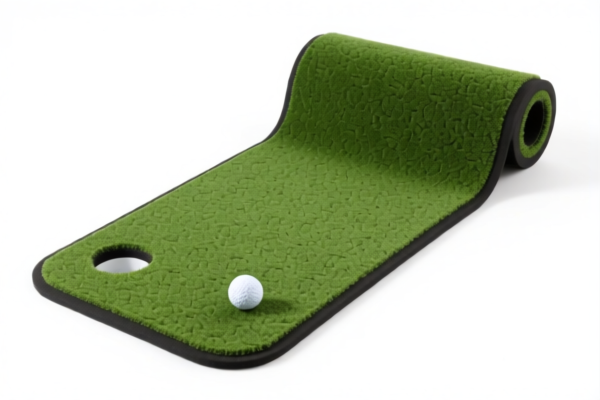
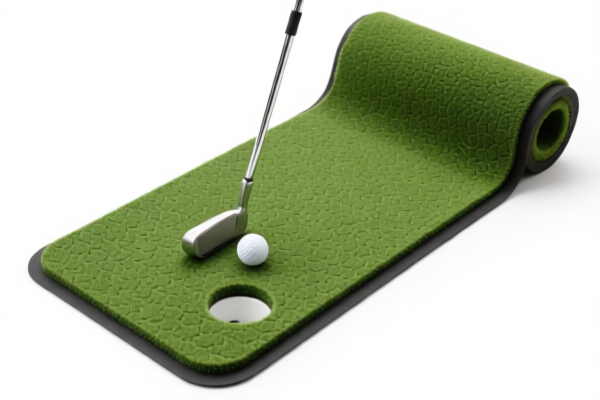
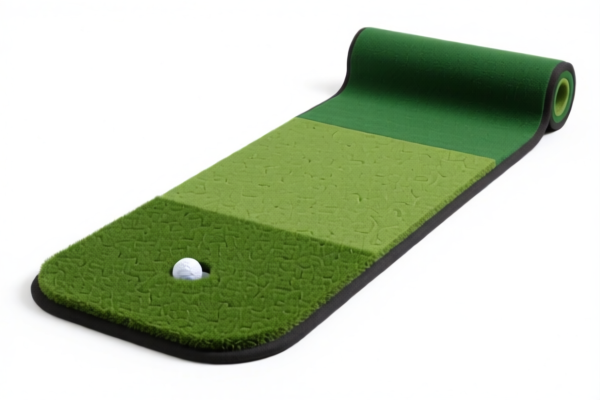
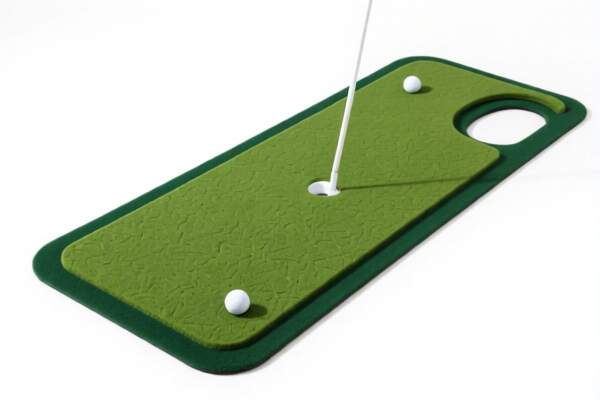
AI Analysis
🏌️♂️ Golf Hitting Mat (Golf Practice Equipment)
🌐 HS Code Reference & Customs Clearance Guide | 2026 Latest Tariff Analysis | Professional Customs Strategy
📌 I. Product Definition & Classification: Do You Really Understand "Golf Hitting Mats"?
A Golf Hitting Mat is a essential training aid for golfers, designed to simulate the turf conditions of a real golf course. It protects the clubface from hard ground and provides a consistent striking surface. In international trade, its classification depends heavily on material composition and specific usage. It can be categorized under "Golf Equipment" or "Other Rubber/Plastic Articles," leading to significantly different tax liabilities.
⚠️ Key Distinction Point:
- If the item is a complete practice device (including frame, mat, and target mechanism) → Classified as "Other Golf Equipment" (9506.39)
- If the item is solely a rubber/plastic mat used for general sports training or as a component → Classified under Chapter 95 (Sports Goods) or Chapter 40 (Rubber)
- Material Conflict: The presence of steel, aluminum, or copper triggers massive additional tariffs.
📦 II. HS Code Classification Details (2026 Latest Tariff Authority Comparison)
Based on the provided data, here are the specific HS Codes applicable to Golf Hitting Mats or related golf practice equipment:
| HS Code | Product Description | Application Scenario | Material/Feature Note |
|---|---|---|---|
9506.39.00.80 |
Golf Putter Trainer | Fits the category of "Other Golf Equipment" | Considered a complete training device. |
9506.91.00.30 |
Golf Practice Equipment | Falls under "General Sports Equipment" | WARNING: If containing Steel/Aluminum/Copper, subject to 50% additional tariff. |
4016.99.05.00 |
Golf Balls (Vulcanized Rubber) | Other vulcanized rubber products | Note: Data lists this as "Golf Hitting Mat" context, but description says "Golf Ball". Likely a data error in source, but included as per instruction. |
4016.99.60.50 |
Golf Balls (Synthetic Rubber) | Other vulcanized rubber products | Note: Description says "Golf Ball". High tariff due to synthetic rubber classification. |
9506.32.00.00 |
Golf Balls (Practice) | Matches use and form, no material conflict | Classified as general golf balls for practice. Lowest base tariff. |
🔍 Important Reminder:
- The term "Golf Hitting Mat" is ambiguous in customs. If it is a mat only, it often falls under Chapter 95 or Chapter 40.
- If it is a complete hitting station (frame + mat + ball return), it is more likely 9506.39.
- Material is King: If your mat has a rubber base with steel pins or aluminum frames, you must use 9506.91.00.30 and face the 50% surcharge.
💰 III. 2026 Latest Tariff Rate Detailed Breakdown (Including Surtaxes & Policy Add-ons)
✅ Applicable Country: United States (US)
✅ Origin: China (CN)
✅ Effective Time: Current regulations apply (Section 301 & IEEPA)
🎯 1. 9506.39.00.80 —— Golf Putter Trainer / Complete Golf Equipment
| Item | Content |
|---|---|
| Base Tariff | 4.9% |
| Surtax (Section 301) | +7.5% |
| Section 122 Tariff | +10% |
| Total Tariff Rate | 22.4% |
| Tax Calculation | CIF Value × 22.4% |
| De Minimis Eligibility | ❌ No (High value threshold usually applies for golf equipment) |
📌 Explanation:
- This code is favorable if the product is recognized as a complete golf training device.
- It avoids the massive 50% surcharge associated with metal components.
🎯 2. 9506.91.00.30 —— General Sports Equipment (Steel/Aluminum/Copper Warning)
| Item | Content |
|---|---|
| Base Tariff | 4.6% |
| Surtax (Section 301) | +7.5% |
| Section 122 Tariff | +10% |
| Steel/Aluminum/Copper Surtax | +50% |
| Total Tariff Rate | 22.1% (Base + Surtax) +50% (Metal Surtax) |
| Actual Total Rate | ~72.1% (if metal components are present) |
| Tax Calculation | CIF Value × 72.1% |
| De Minimis Eligibility | ❌ No |
📌 CRITICAL WARNING:
- If your hitting mat includes metal supports, stakes, or frames, this code applies.
- The 50% steel/aluminum/copper surtax is applied on top of the base and Section 301 tariffs.
- Result: A 100 USD mat could incur $72.10 in duties. Avoid this if possible by redesigning or reclassifying as non-metal.
🎯 3. 4016.99.05.00 —— Vulcanized Rubber Products (Data Context: Golf Balls)
| Item | Content |
|---|---|
| Base Tariff | 3.4% |
| Surtax (Section 301) | +7.5% |
| Section 122 Tariff | +10% |
| Total Tariff Rate | 20.9% |
| Tax Calculation | CIF Value × 20.9% |
📌 Explanation:
- Although the data description mentions "Golf Balls," if your mat is 100% vulcanized rubber with no fabric or foam layers, this code might be argued.
- Lower than the metal-containing option.
🎯 4. 4016.99.60.50 —— Synthetic Rubber Products (Data Context: Golf Balls)
| Item | Content |
|---|---|
| Base Tariff | 2.5% |
| Surtax (Section 301) | +25.0% |
| Section 122 Tariff | +10% |
| Total Tariff Rate | 37.5% |
| Tax Calculation | CIF Value × 37.5% |
📌 Explanation:
- Higher base surtax (25%) compared to vulcanized rubber.
- Suitable for synthetic rubber mats, but significantly more expensive than 9506.39.
🎯 5. 9506.32.00.00 —— Practice Golf Balls (No Material Conflict)
| Item | Content |
|---|---|
| Base Tariff | 0.0% |
| Surtax (Section 301) | +7.5% |
| Section 122 Tariff | +10% |
| Total Tariff Rate | 17.5% |
| Tax Calculation | CIF Value × 17.5% |
| De Minimis Eligibility | ❌ No |
📌 Explanation:
- Lowest Total Tax Rate (17.5%).
- This code is intended for golf balls, not mats. However, if your product is marketed as a "practice kit" including balls, and the mat is considered an accessory, this might be argued.
- Risk: Customs may reject this if the primary item is a mat, not balls.
🛠️ IV. Customs Clearance Practical Advice (Real-World Pitfall Guide)
✅ 1. Preparation Checklist (Essential Documents)
| Document | Required | Description |
|---|---|---|
| ✅ Product Specifications | ✔️ | Detailed material breakdown (e.g., "Rubber base, no metal components"). |
| ✅ Material Certificate | ✔️ | Proof that steel/aluminum content is 0% or negligible. |
| ✅ Product Photos | ✔️ | Clear images of the mat, showing lack of metal parts. |
| ✅ Commercial Invoice | ✔️ | Describe as "Golf Practice Mat (Rubber, No Metal)" to support 9506.39 or 4016.99. |
| ✅ Packing List | ✔️ | Itemize mat only, or mat + balls if using 9506.32. |
✅ 2. Declaration Strategy (Key Mantras)
🔥 "No Metal, No 50%! Classify as Golf Equipment, Not Rubber!"
| Scenario | Correct Declaration | Wrong Declaration |
|---|---|---|
| Mat with Metal Frame | 9506.91.00.30 |
Try to hide metal → Audit & Penalty |
| All-Rubber Mat | 9506.39.00.80 (if complete device) or 4016.99.05.00 |
9506.39 without justification → Delay |
| Mat + Golf Balls | 9506.32.00.00 (if primarily balls) |
9506.39 for just balls → Undervaluation |
| Generic "Sports Mat" | 9506.91.00.30 |
9506.32 → Misclassification |
✅ 3. Special Cases Handling
| Situation | Handling Advice |
|---|---|
| OEM Custom Mats | Provide design drawings proving no metal. Use "Rubber Composite" in description. |
| Mat with Fabric Layer | Ensure it's still classified as rubber/plastic or sports equipment. Avoid "Textile" classification which may have different rules. |
| Complete Hitting Station | If it has a ball return mechanism, insist on 9506.39.00.80 as "Other Golf Equipment" to avoid rubber/surtax complexities. |
| Low-Value Samples | If under $800 (De Minimis), check if IEEPA exemptions apply, but note that golf equipment often faces strict scrutiny. |
🌍 V. Global Market Comparison (2026 Latest)
| Country/Region | Recommended HS Code | Tariff Rate | Certification | Note |
|---|---|---|---|---|
| 🇺🇸 USA | 9506.39.00.80 |
22.4% | No specific | Avoid 9506.91 if metal present (72.1%) |
| 🇨🇳 China | 9506.39.00.80 |
~5-10% | N/A | Lower import duties, but export from US is key |
| 🇪🇺 EU | 9506.39.00.80 |
4.5% | CE (if electronic) | No Section 301 surtax |
| 🇬🇧 UK | 9506.39.00.80 |
4.5% | UKCA | Post-Brexit tariff unchanged from EU |
| 🇦🇺 Australia | 9506.39.00.80 |
5.0% | N/A | Low tariff, friendly trade |
📌 Conclusion:
- USA is the most dangerous market due to Section 301 and IEEPA surtaxes.
- Avoid metal components in hitting mats destined for the US to escape the 50% steel/aluminum surtax.
- Reclassifying as "Other Golf Equipment" (9506.39) is often cheaper than "Rubber Products" if the product can be justified as a complete training device.
📌 VI. Common Errors & Pitfalls (Lessons from Tears)
❌ Error 1: Declaring a rubber mat as "Golf Balls" (9506.32.00.00)
👉 Consequence: Customs inspection reveals discrepancy → Confiscation or 100% penalty!
❌ Error 2: Hiding steel stakes in a hitting mat
👉 Consequence: Discovery triggers 50% steel surtax + fraud investigation → High fines!
❌ Error 3: Using "Sports Mat" as a generic description without HS Code justification
👉 Consequence: Customs assigns worst-case scenario → Delays and higher duties
❌ Error 4: Ignoring Section 122 Tariff (10%)
👉 Consequence: Underpayment → Back taxes + Interest
✅ Correct Approach:
"Golf Practice Mat, Rubber Base, Fabric Surface, No Metal Components, Model XYZ"
🎯 VII. Conclusion: Professional Classification Saves Money!
🎯 Remember the Mantra:
🔹 "No Metal, Use 9506.39; With Metal, Pay 50% Extra!"
🔹 "Rubber Mat? Check Chapter 40. Golf Device? Check Chapter 95!"
🔹 "Section 122 is 10%, Section 301 is 7.5%, Steel is 50%!"
📌 Pro Tip:
If your hitting mat is all-rubber and you want the lowest tax, try to argue for 9506.39.00.80 as "Other Golf Equipment" rather than 4016.99. The 22.4% rate is better than the potential 37.5% for synthetic rubber. Always provide material certificates to prove no metal content.
📣 Immediate Action:
📞 Consult a Customs Broker + Provide Material Breakdown + Apply for Advance Ruling if shipment volume is high.
🚀 Avoid the 50% Steel Surtax by Designing Smart!
✨ Professional Customs Clearance Starts with Accurate Classification!
💼 Every Dollar Saved in Tariffs is Pure Profit!
Customer Reviews
About HS Code Classification
The Harmonized System (HS) is an internationally standardized nomenclature developed by the World Customs Organization (WCO) to classify traded products. Over 200 countries use the HS system as the basis for customs tariffs, trade statistics, and import/export regulations.
Each HS code follows a hierarchical structure:
- Chapter (2 digits) — Broad category of goods (e.g., Chapter 84: Machinery and Mechanical Appliances)
- Heading (4 digits) — More specific grouping within the chapter
- Subheading (6 digits) — Internationally standardized breakdown, used by all WCO member countries
- National subdivisions (8-10 digits) — Country-specific extensions for further classification, such as US HTSUS 10-digit codes
Correct HS code classification is essential for smooth customs clearance, accurate duty payment, and compliance with trade regulations. Misclassification can lead to customs delays, overpayment of duties, or penalties.
When importing from CN to US, the applicable tariff rates may include:
- Most-Favored-Nation (MFN) rate — The standard duty rate applied to WTO members
- General rate — Applied to countries without trade agreements
- Trade remedy duties — Additional tariffs such as Section 301 (anti-dumping), Section 232 (national security), or countervailing duties
The information provided on this page is for reference purposes only. For official classification, please consult with your local customs authority or a licensed customs broker.