graphene based gel
CN → US| HS Code | Tariff Rate | Origin | Destination | Doc |
|---|---|---|---|---|
| 381190 | 0.0% | CN | US | Official Doc |
| 381200 | 0.0% | CN | US | Official Doc |
| 3910000000 | 38.0% | CN | US | Official Doc |
| 3811900000 | 41.5% | CN | US | Official Doc |
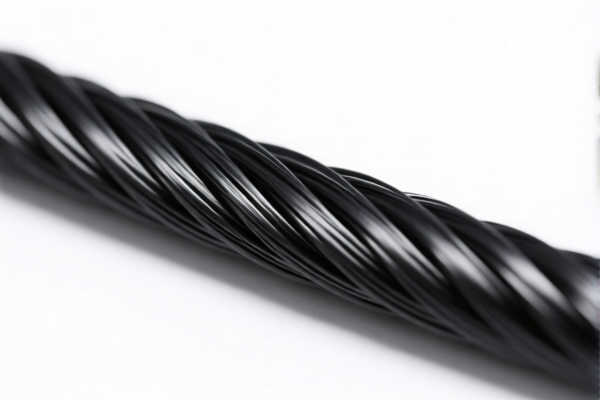
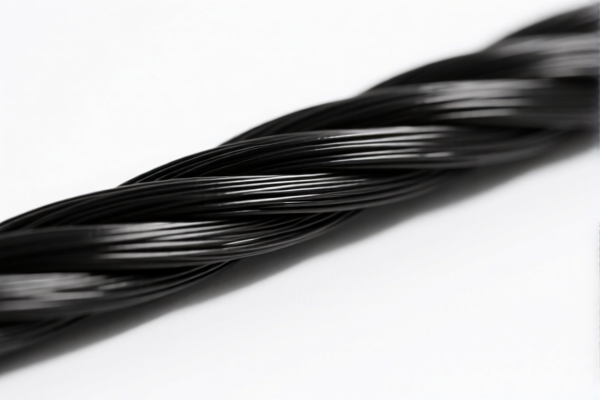
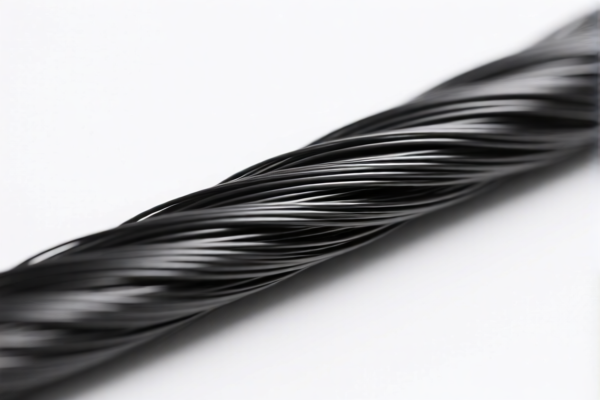
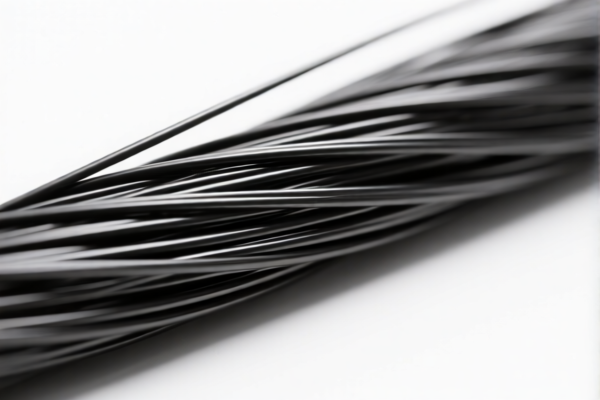
Product Images
AI Analysis
🔬 Graphene-Based Gel (Advanced Conductive Materials & Chemical Preparations)
🌐 HS Code Reference & Customs Clearance Guide | 2026 Latest Tariff Analysis | Professional Strategy for Specialized Chemicals
📌 I. Product Definition & Classification: What is "Graphene-Based Gel"?
Graphene-based gel refers to advanced functional materials that combine graphene (a single layer of carbon atoms with exceptional electrical and thermal conductivity) with a gel matrix. These materials are typically used in specialized high-tech applications, such as:
- Conductive Gels: For electronic interconnects, electromagnetic interference (EMI) shielding, or thermal management in semiconductors.
- Energy Storage Materials: Components for next-generation batteries or supercapacitors.
- Advanced Composite Materials: Used in aerospace, sensors, or flexible electronics.
⚠️ Key Classification Distinction:
- The classification depends heavily on the primary function and composition of the product.
- If it is a pure silicone matrix modified with graphene, it may fall under Silicones.
- If it is a complex chemical mixture/preparation not specified elsewhere, it likely falls under Other Chemical Products.
- Crucial Note: Some specific descriptions in the data indicate "graphene-based gels" for electronic/energy applications may face tax retrieval errors, requiring careful manual verification or pre-ruling.
📦 II. HS Code Classification Details (Based on Provided Data)
| HS Code | Product Description | Applicable Scenario | Tax Status |
|---|---|---|---|
3910.00.00.00 |
Silicones in primary forms | Graphene-infused silicone gels used as sealants, adhesives, or basic insulating materials where the silicone matrix is the defining characteristic. | ✅ Clear |
3811.90.00.00 |
Other chemical products and preparations not elsewhere specified or included | Complex chemical mixtures, conductive pastes, or specialized gel preparations not classified as silicones or other specific chemical headings. | ✅ Clear |
3811.90 |
Other chemical products not elsewhere specified or included (Includes mixtures based on graphene) | Specialized applications such as conductive gels or advanced materials where the graphene content is a key functional ingredient but doesn't fit other specific sub-headings. | ⚠️ Error |
3812.00 |
Chemical products and preparations of the chemical or allied industries (Includes graphene-based gels for electronic/energy storage) | Highly specialized graphene-based gels intended for use in electronic circuits or energy storage devices (batteries/supercaps). | ⚠️ Error |
🔍 Critical Observation:
- The last two HS codes (3811.90and3812.00) have "Failed to retrieve tax information" and show Total Tax: Error.
- This indicates that while these codes may be technically appropriate for specific graphene applications, the automated tax lookup system cannot provide a definitive rate.
- Risk: Using these codes without manual verification could lead to customs delays, additional inspections, or incorrect duty calculations.
💰 III. Detailed Tax Rate Analysis (2026 Latest Tariff)
✅ Applicable Country: United States (US)
✅ Origin: China (CN) (Assumed based on typical high-tariff context for such goods)
✅ Effective Time: Current rates as per provided data
🎯 1. 3910.00.00.00 —— Silicones in Primary Forms
| Item | Content |
|---|---|
| Basic Tariff | 3.0% (ad valorem) |
| Additional Tariff (Section 301) | +25.0% (against Chinese goods) |
| Total Tax Rate | 28.0% |
| Tax Calculation | CIF Value × 28% |
| Legal Basis | Standard HS tariff + USITC Section 301 list |
📌 Explanation:
- This is the most predictable classification if the product is primarily a silicone-based gel.
- The total duty is 28%, which is moderate compared to other high-tech goods.
- Recommendation: If your graphene gel is silicone-based, this is the safest and most cost-effective classification path.
🎯 2. 3811.90.00.00 —— Other Chemical Products and Preparations
| Item | Content |
|---|---|
| Basic Tariff | 6.5% (ad valorem) |
| Additional Tariff (Section 301) | +25.0% (against Chinese goods) |
| Total Tax Rate | 31.5% |
| Tax Calculation | CIF Value × 31.5% |
| Legal Basis | Standard HS tariff + USITC Section 301 list |
📌 Explanation:
- This applies if the product is a chemical preparation not primarily defined as silicone.
- The total duty is 31.5%, slightly higher than the silicone classification.
- Recommendation: Use this if the graphene content significantly alters the chemical nature, making it distinct from standard silicones.
🎯 3. & 4. 3811.90 & 3812.00 —— Specialized Graphene Gels (Electronic/Energy)
| Item | Content |
|---|---|
| Basic Tariff | Unknown/Error |
| Additional Tariff | Unknown/Error |
| Total Tax Rate | Error |
| Risk Level | 🔴 HIGH |
⚠️ Critical Warning:
- Do NOT rely on automated systems for these codes.
- The "Error" status means customs may flag the shipment for manual review.
- Consequence: Potential for delays, additional fees, or penalties if the correct rate is not determined manually.
- Recommendation: Obtain a Binding Ruling from CBP before shipping. Do not guess the tax rate.
🛠️ IV. Customs Clearance Practical Advice (Avoid Pitfalls)
✅ 1. Preparation Checklist (Mandatory)
| Document | Required | Notes |
|---|---|---|
| ✅ Technical Data Sheet | ✔️ | Must specify: Composition (%, graphene content, base polymer), Physical State, Primary Function. |
| ✅ Safety Data Sheet (SDS) | ✔️ | Required for chemical products. |
| ✅ Product Photos | ✔️ | Show packaging, labels, and the gel itself. |
| ✅ Letter of Explanation | ✔️ | Explain why you chose a specific HS Code (e.g., "Primary material is silicone, graphene is an additive"). |
| ✅ Commercial Invoice | ✔️ | Clearly describe the product as "Graphene-Infused Silicone Gel" or "Conductive Chemical Preparation". |
| ✅ Pre-Ruling Document | ✔️ | Essential if using 3811.90 or 3812.00. |
✅ 2. Classification Strategy (Key Decision Tree)
| Scenario | Recommended HS Code | Tax Rate | Why? |
|---|---|---|---|
| Silicone-based gel with graphene | 3910.00.00.00 |
28% | Silicone is the primary component; graphene is an additive. Lowest risk and cost. |
| Non-silicone chemical mix | 3811.90.00.00 |
31.5% | General chemical preparation. Clear tax rate, but slightly higher. |
| Specialized electronic/energy gel | 3811.90 or 3812.00 |
Unknown | High risk. Only use if no other classification fits. Must get pre-ruling. |
🔥 "Silicone First" Rule:
If your product is 90% silicone and 10% graphene, classify it as Silicone (3910.00.00.00) to avoid the "Error" status and lower tax rate.
✅ 3. Special Handling for "Error" Codes
If you must use 3811.90 or 3812.00:
- Submit an Advance Ruling Request to US Customs and Border Protection (CBP) before shipping.
- Provide detailed chemical analysis and intended use documentation.
- Budget for potential delays (1–4 weeks) while CBP reviews the classification.
- Do not assume the tax rate is zero or standard. It could be higher if CBP reclassifies it.
🌍 V. Global Market Comparison (2026)
| Market | Recommended HS Code | Est. Tax Rate | Notes |
|---|---|---|---|
| 🇺🇸 USA | 3910.00.00.00 |
28% | Best option if silicone-based. |
| 🇪🇺 EU | 3910.00 |
~2.5% | Lower base tariff, but VAT applies. No Section 301. |
| 🇨🇳 China | 3910.00 |
~3–10% | Depends on exact sub-classification. |
| 🇯🇵 Japan | 3910.00 |
~3–8% | Stable rates, no additional tariffs. |
📌 Conclusion:
- USA is the most challenging market due to Section 301 tariffs.
- EU and Japan offer more stable and lower tax rates for similar chemical/silicone products.
- Avoid3811.90/3812.00in the USA unless you have a binding ruling.
📌 VI. Common Mistakes & Pitfalls
❌ Mistake 1: Classifying a silicone-based gel as "Other Chemical Products" (3811.90.00.00) unnecessarily.
👉 Result: Higher tax (31.5% vs. 28%) with no benefit.
❌ Mistake 2: Using 3811.90 or 3812.00 without a pre-ruling.
👉 Result: Customs hold, delay, potential penalty, and unknown tax liability.
❌ Mistake 3: Vague product description ("Graphene Gel") on the invoice.
👉 Result: Customs may classify it as a higher-risk category or request extensive additional documentation.
✅ Correct Approach:
"Conductive Silicone Gel, Graphene-Infused, for Thermal Management, HS Code 3910.00.00.00"
🎯 VII. Conclusion: Precision is Key!
🎯 Key Takeaways:
🔹 Silicone First: If graphene is an additive in a silicone base, use
3910.00.00.00(28% tax).
🔹 Avoid Errors: Do not use3811.90or3812.00without a CBP Pre-Ruling.
🔹 Document Thoroughly: Provide technical specs and SDS to justify your classification.
🔹 Cost Impact: The difference between 28% and 31.5% may seem small, but the risk of "Error" codes is far more costly in delays and compliance issues.
📌 Pro Tip:
If your graphene gel is intended for high-value electronics, consider if the added cost of customs delays outweighs the potential tax savings of a different classification. Stability is more valuable than a few percentage points.
📣 Immediate Action:
📞 Consult a Customs Broker to determine if your product qualifies as "Silicone in Primary Forms" (
3910.00.00.00).
📄 Request a Binding Ruling if you must use specialized graphene codes.
🚀 Ensure Clear Product Descriptions on all shipping documents to avoid ambiguity.
✨ Customs Clearance, Simplified!
💼 Smart Classification = Lower Costs + Faster Clearance!
Customer Reviews
About HS Code Classification
The Harmonized System (HS) is an internationally standardized nomenclature developed by the World Customs Organization (WCO) to classify traded products. Over 200 countries use the HS system as the basis for customs tariffs, trade statistics, and import/export regulations.
Each HS code follows a hierarchical structure:
- Chapter (2 digits) — Broad category of goods (e.g., Chapter 84: Machinery and Mechanical Appliances)
- Heading (4 digits) — More specific grouping within the chapter
- Subheading (6 digits) — Internationally standardized breakdown, used by all WCO member countries
- National subdivisions (8-10 digits) — Country-specific extensions for further classification, such as US HTSUS 10-digit codes
Correct HS code classification is essential for smooth customs clearance, accurate duty payment, and compliance with trade regulations. Misclassification can lead to customs delays, overpayment of duties, or penalties.
When importing from CN to US, the applicable tariff rates may include:
- Most-Favored-Nation (MFN) rate — The standard duty rate applied to WTO members
- General rate — Applied to countries without trade agreements
- Trade remedy duties — Additional tariffs such as Section 301 (anti-dumping), Section 232 (national security), or countervailing duties
The information provided on this page is for reference purposes only. For official classification, please consult with your local customs authority or a licensed customs broker.