graphite plastic composite material
CN → US| HS Code | Tariff Rate | Origin | Destination | Doc |
|---|---|---|---|---|
| 3801105090 | 35.0% | CN | US | Official Doc |
| 6815190000 | 35.0% | CN | US | Official Doc |
| 3801105010 | 35.0% | CN | US | Official Doc |
| 6815130000 | 35.0% | CN | US | Official Doc |
| 3921905050 | 39.8% | CN | US | Official Doc |
Product Images
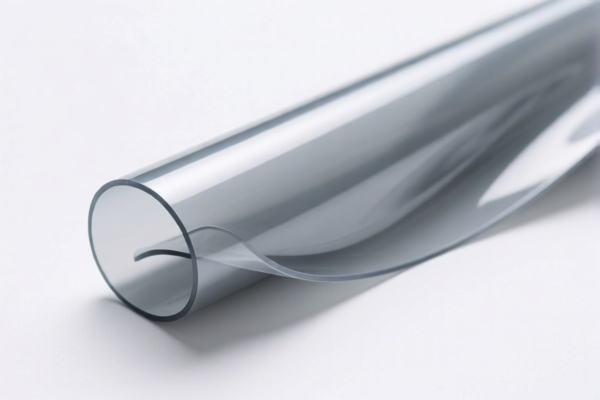
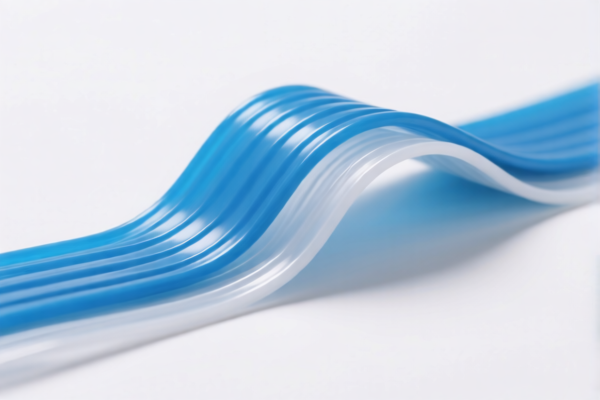
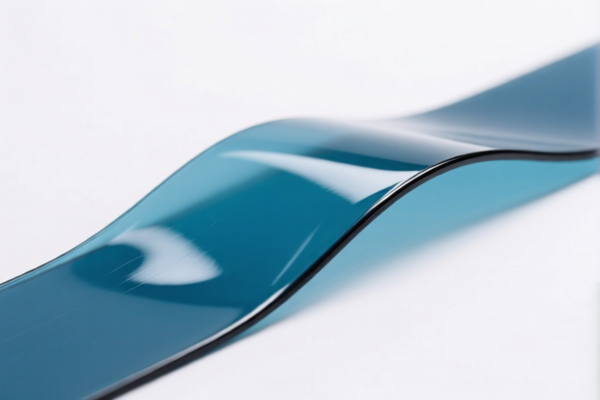
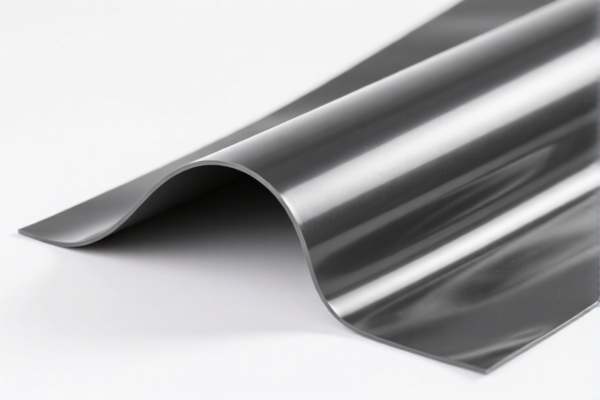
AI Analysis
🖥️ Graphite Plastic Composite Material
🌐 HS Code Reference & Customs Clearance Guide | 2026 Latest Tariff Analysis | Professional Clearance Strategy
📌 Part 1: Product Definition & Classification: Do You Really Understand "Graphite Plastic Composite Material"?
Graphite plastic composite materials are high-performance engineering materials that combine the electrical conductivity, thermal stability, and lubricity of graphite with the lightweight, corrosion-resistant, and moldable properties of plastics. In international trade, they are often referred to as "Carbon/Graphite Composites" or "Polymer Matrix Composites (PMC)."
Depending on the matrix material, manufacturing process, and final application, these materials are classified into different categories:
Graphite-based Composites (HS 3801/6815): Primarily composed of artificial graphite with other binders, often used for electrodes, brushes, or non-electrical structural parts. Plastic-Based Graphite Composites (HS 3921): Graphite fibers or flakes embedded in a plastic resin (epoxy, PEEK, nylon, etc.), often in sheet, film, or board form.
⚠️ Key Distinction Point:
- If the primary material is graphite (natural or artificial) with minimal plastic binding, it may fall under 3801 or 6815.
- If the primary material is plastic reinforced with graphite fibers (structural composite), it falls under 3921.
📦 Part 2: HS Code Classification Details (2026 Latest Tariff Authority Cross-Reference)
| HS Code | Product Description | Application Scenario | Main Material Basis |
|---|---|---|---|
3801.10.50.90 |
Graphite composite materials, falling under artificial graphite, used as a residual category | Non-specific graphite compounds, binders, or lubricants | ✅ Graphite (Artificial) |
6815.19.00.00 |
Graphite composite materials, non-electrical carbon/graphite articles | Seals, gaskets, bearings, structural components not used for electricity | ✅ Carbon/Graphite |
3801.10.50.10 |
Graphite composite materials, material match without conflict, residual category | General-purpose graphite composites, often for industrial lubrication or thermal management | ✅ Graphite (Artificial) |
6815.13.00.00 |
Graphite composite materials, other carbon/graphite articles | Miscellaneous carbon/graphite parts not specified elsewhere | ✅ Carbon/Graphite |
3921.90.50.50 |
Graphite fiber reinforced composite materials, plastic-based composites, often in sheet/film/board form | Structural parts, aerospace components, automotive lightweighting, EMI shielding | ✅ Plastic (Graphite-Reinforced) |
🔍 Key Reminder:
- If the product is a finished structural part made of plastic reinforced with graphite fibers (e.g., a car bumper, drone arm), it is likely 3921.90.50.50.
- If it is raw graphite compound, powder, or non-electrical graphite制品 (like seals), it falls under 3801 or 6815.
- Do not mix electrical and non-electrical graphite products in classification.
💰 Part 3: 2026 Latest Tariff Rate Details (Including Surtaxes, Policy Add-ons)
✅ Applicable Country: United States (US)
✅ Origin: China (CN)
✅ Effective Date: November 10, 2025 (and subsequent imports)
🎯 1. 3801.10.50.90 / 3801.10.50.10 — Graphite Composite Materials (Artificial Graphite Category)
| Item | Content |
|---|---|
| Base Tariff | 0% (ad valorem) |
| USITC Surtax (Section 301) | +25% |
| IEEPA Surtax | +10% (Targeting China/HK products, effective Nov 10, 2025) |
| Total Tariff Rate | 35.0% |
| Tax Calculation | CIF Value × 35% |
| De Minimis Exemption | ❌ Not Eligible (deny_de_minimis) |
| Legal Basis Path | IEEPA:9903.01.25 → IEEPA:9903.01.24 → USITC:3801.10.50.90 → FOOTNOTE:3801.10.50.90 |
📌 Explanation:
- The "25% USITC surtax" is under Section 301 of the Trade Act.
- The "10% IEEPA surtax" is under the International Emergency Economic Powers Act.
- Total 35% is a high tariff, must be factored into cost structures.
🎯 2. 6815.19.00.00 / 6815.13.00.00 — Graphite Composite Materials (Non-Electrical Carbon/Graphite Articles)
| Item | Content |
|---|---|
| Base Tariff | 0% |
| USITC Surtax | +25% |
| IEEPA Surtax | +10% |
| Total Tariff Rate | 35.0% |
| Tax Calculation | CIF × 35% |
| De Minimis Exemption | ❌ Not Eligible |
| Legal Basis Path | IEEPA:9901.25 → IEEPA:9903.01.24 → USITC:6815.19.00.00 → FOOTNOTE:6815.19.00.00 |
📌 Note:
- Same tariff structure as 3801 category.
- Applies to graphite seals, bearings, brushes, and other non-electrical graphite parts.
🎯 3. 3921.90.50.50 — Graphite Fiber Reinforced Plastic Composite Materials
| Item | Content |
|---|---|
| Base Tariff | 4.8% |
| USITC Surtax | +25% |
| IEEPA Surtax | +10% |
| Total Tariff Rate | 39.8% |
| Tax Calculation | CIF × 39.8% |
| De Minimis Exemption | ❌ Not Eligible |
| Legal Basis Path | IEEPA:9903.01.25 → IEEPA:9903.01.24 → USITC:3921.90.50.50 → FOOTNOTE:3921.90.50.50 |
📌 Note:
- Higher base tariff (4.8%) because it is classified under plastic products.
- Applies to composite sheets, films, and boards where plastic is the matrix.
🛠️ Part 4: Customs Clearance Practical Advice (Combat Pitfalls Guide)
✅ 1. Required Documentation List (Missing One Will Cause Delays)
| Document | Required | Description |
|---|---|---|
| ✅ Product Specification Sheet | ✔️ | Must include material composition (e.g., "70% Graphite Fiber, 30% Epoxy Resin"), density, tensile strength |
| ✅ Composition Analysis Report | ✔️ | Third-party lab report confirming material makeup to distinguish between 3801/6815 vs. 3921 |
| ✅ Product Photos (Including Labels) | ✔️ | Clear images showing shape, form (sheet, block, powder), and any markings |
| ✅ Technical Data Sheet (TDS) | ✔️ | Explains end-use (electrical vs. structural vs. lubrication) |
| ✅ Commercial Invoice | ✔️ | Must accurately describe goods as "Graphite Plastic Composite" or "Carbon Fiber Reinforced Plastic" |
| ✅ Packing List | ✔️ | Shows weight, dimensions, and packaging type |
✅ 2. Declaration Tips (Key Mantra)
🔥 "Material Basis Determines Code, Electrical Use Changes Path, Accurate Name Avoids Audit!"
| Scenario | Correct Declaration | Wrong Practice |
|---|---|---|
| Graphite powder/compound (lubricant/electrode material) | 3801.10.50.xx |
Misdeclare as plastic composite → 39.8% vs 35% |
| Graphite seals/gaskets (non-electrical) | 6815.19.00.00 |
Misdeclare as plastic → 39.8% vs 35% |
| Plastic sheets reinforced with graphite fibers | 3921.90.50.50 |
Misdeclare as pure graphite → 35% vs 39.8% |
| Finished composite parts (e.g., drone frame) | 3921.90.50.50 (if plastic matrix) |
Misdeclare as "machine parts" → Higher complexity |
✅ 3. Special Cases Handling
| Case | Handling Advice |
|---|---|
| OEM Custom Composites | Provide customer order + design specs to prove intended use |
| Mixed Materials | If product has both graphite and plastic layers, declare based on dominant material or composite nature |
| Electrical vs. Non-Electrical | If graphite is used for conductivity (electrodes), consider 3801. If for structure/sealing, consider 6815 |
| High-Value Aerospace Parts | Consider applying for Advance Ruling to confirm HS Code before shipment |
🌍 Part 5: Global Major Market Clearance Comparison (2026 Latest)
| Country/Region | Recommended HS Code | Tariff (China Origin) | Certification Requirements | Notes |
|---|---|---|---|---|
| 🇺🇸 USA | 3921.90.50.50 / 6815.19.00.00 |
35.0% - 39.8% | N/A | High tariffs due to Section 301 & IEEPA |
| 🇨🇳 China | 3921.90.50.50 / 6815.19.00.00 |
~1-13% | CCC (if applicable) | No surtaxes |
| 🇪🇺 EU | 3921.90.50.50 / 6815.19.00.00 |
0-6.5% | CE (if applicable) | No additional surtaxes |
| 🇯🇵 Japan | 3921.90.50.50 / 6815.19.00.00 |
0-5% | PSE (if applicable) | Low tariffs |
📌 Conclusion:
- USA is the most challenging market for graphite composites due to high combined tariffs (35-40%).
- China, EU, and Japan have significantly lower or zero tariffs.
- Supply Chain Strategy: Consider sourcing or assembling in non-China countries (e.g., Vietnam, Mexico) if exporting to the US to avoid surtaxes, subject to rules of origin.
📌 Part 6: Common Errors & Pitfalls Guide (Blood & Tears Lessons)
❌ Error 1: Declaring "Graphite Composite" without specifying material basis
👉 Consequence: Customs may classify under highest tariff (39.8%) or request additional documents → Delay & Audit
❌ Error 2: Confusing "Graphite" (3801/6815) with "Plastic Composite" (3921)
👉 Consequence: Wrong HS Code → Underpayment/Overpayment of Taxes + Penalties
❌ Error 3: Ignoring IEEPA 10% Surcharge
👉 Consequence: Unexpected 10% additional cost at customs → Profit Erosion
❌ Error 4: Using vague names like "Composite Material" on Invoice
👉 Consequence: Customs cannot determine tariff → Holding & Inspection
✅ Correct Practice:
"Graphite Fiber Reinforced Plastic Sheet, Epoxy Matrix, 2mm Thick, Model ABC, for Aerospace Use"
OR
"Artificial Graphite Lubricant Powder, 99% Purity, Bagged"
🎯 Part 7: Conclusion: Professional Declaration Saves Time, Money, and Stress!
🎯 Remember the Mantra:
🔹 "Base Material First, Electrical Use Second, IEEPA Surcharge Adds 10%, 301 Surtax Adds 25%!"
🔹 "HS Code is Life, Tariff Difference is Huge, One Wrong Code, Thousands Lost!"
📌 Tips:
- If your graphite composites are originating from Vietnam, Mexico, Thailand, or Malaysia, you may apply for IEEPA Exemption, reducing tariffs to 0-5%.
- Apply for Advance Ruling (Pre-classification) before shipping high-value goods to the US to avoid clearance risks.
📣 Take Action Now:
📞 Contact Professional Customs Broker + Provide Product Specs + Apply for HS Code Advance Ruling
🚀 Let Your Graphite Composites Clear Customs Smoothly, Export Efficiently, and Maximize Profits!
✨ Professional Clearance Starts with Accurate Classification!
💼 Every Cent of Your Cost Deserves Precise Calculation!
Customer Reviews
About HS Code Classification
The Harmonized System (HS) is an internationally standardized nomenclature developed by the World Customs Organization (WCO) to classify traded products. Over 200 countries use the HS system as the basis for customs tariffs, trade statistics, and import/export regulations.
Each HS code follows a hierarchical structure:
- Chapter (2 digits) — Broad category of goods (e.g., Chapter 84: Machinery and Mechanical Appliances)
- Heading (4 digits) — More specific grouping within the chapter
- Subheading (6 digits) — Internationally standardized breakdown, used by all WCO member countries
- National subdivisions (8-10 digits) — Country-specific extensions for further classification, such as US HTSUS 10-digit codes
Correct HS code classification is essential for smooth customs clearance, accurate duty payment, and compliance with trade regulations. Misclassification can lead to customs delays, overpayment of duties, or penalties.
When importing from CN to US, the applicable tariff rates may include:
- Most-Favored-Nation (MFN) rate — The standard duty rate applied to WTO members
- General rate — Applied to countries without trade agreements
- Trade remedy duties — Additional tariffs such as Section 301 (anti-dumping), Section 232 (national security), or countervailing duties
The information provided on this page is for reference purposes only. For official classification, please consult with your local customs authority or a licensed customs broker.