grass nest
CN → US| HS Code | Tariff Rate | Origin | Destination | Doc |
|---|---|---|---|---|
| 4421919880 | 38.3% | CN | US | Official Doc |
| 4421999880 | 38.3% | CN | US | Official Doc |
| 4602191800 | 39.5% | CN | US | Official Doc |
| 4602191700 | 35.0% | CN | US | Official Doc |
Product Images
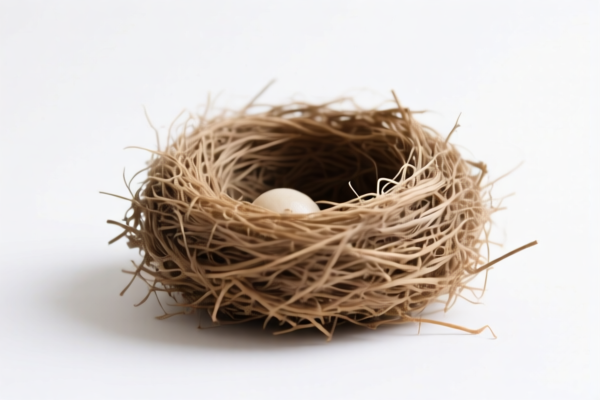
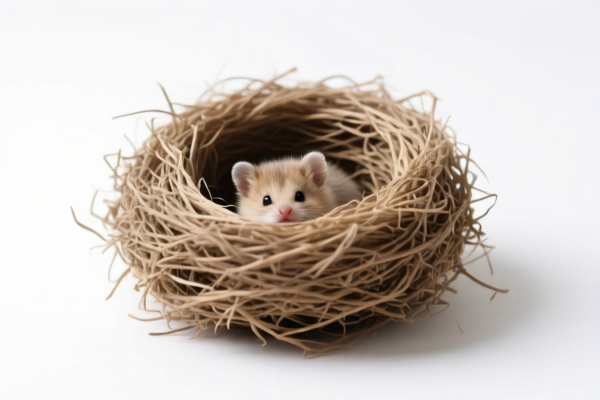
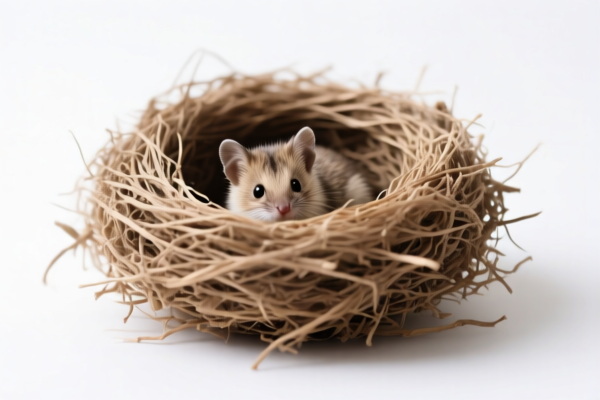

AI Analysis
🌿 Grass Nest (Plant Fiber Woven Products)
🌐 HS Code Reference & Customs Clearance Guide | 2026 Latest Tariff Analysis | Strategic Classification for Natural Fibers
📌 I. Product Definition & Classification: What is a "Grass Nest"?
A Grass Nest is a handcrafted or machine-made item constructed from plant-based fibers (such as straw, reed, rush, or dried grass). In international trade, these items are generally categorized under Chapter 46 (Vegetable Plaiting Materials; Basketry and Wickerwork Articles) or Chapter 44 (Wood and Articles of Wood), depending on the specific processing and material density.
The core distinction lies in the woven nature of the product: * Woven/Plaited: If the grass is braided, woven, or interlaced, it typically falls under HS 4602 (Wickerwork, basketry, and plaited goods). * Non-Woven/Compressed: If the grass is bound, glued, or processed into a solid fiber board/structure without distinct weaving, it may fall under HS 4421 (Other articles of wood or other vegetable materials).
⚠️ Key Distinction Point:
- If the item is clearly woven/plaited (basketry style) →归入 4602.19.17.00 or 4602.19.18.00
- If the item is a composite fiber product or loose fiber bundle →归入 4421.91.98.80 or 4421.99.98.80
📦 II. HS Code Classification Details (2026 Tariff Authority Comparison)
| HS Code | Product Description | Applicability Logic | Material Type |
|---|---|---|---|
4421.91.98.80 |
Other articles of wood or other vegetable materials, based on grass material attributes, falling under the "other" category fallback logic. | Loose grass, bound fibers, non-woven structures. | Vegetable Fiber (Non-Woven) |
4421.99.98.80 |
Other articles of wood or other vegetable materials, not elsewhere specified, based on common sense inference that grass nests are plant fiber derivatives. | General plant fiber derivative products. | Vegetable Fiber (Derivative) |
4602.19.18.00 |
Wickerwork, basketry, and plaited goods: Other: Other, of vegetable materials. Logic: Grass nests are woven products of plant materials, fitting the basket/bag classification. | Woven grass, braided nests, basketry-style structures. | Vegetable Fiber (Woven) |
4602.19.17.00 |
Wickerwork, basketry, and plaited goods: Other: Other, of willow or other plant materials. Logic: Grass nests fit the logic of "other plant materials" in willow weaving categories. | Fine woven grass, decorative nesting items. | Vegetable Fiber (Woven/Fine) |
🔍 Critical Reminder:
- Woven products (HS 4602) often have lower base tariffs (0% or 4.5%) but are subject to additional duties.
- Non-woven/Fiber products (HS 4421) may have slightly higher base tariffs (3.3%) but are grouped under "other vegetable materials."
- The classification must match the physical structure of the goods declared. Misclassifying a woven nest as a non-woven fiber product can lead to penalties.
💰 III. 2026 Latest Tariff Rate Breakdown (Including Surcharges & Policy Add-ons)
✅ Applicable Country: United States (US)
✅ Country of Origin: China (CN)
✅ Effective Date: From November 10, 2025 (and subsequent imports)
🎯 1. 4421.91.98.80 & 4421.99.98.80 —— Other Vegetable Material Articles (Non-Woven/Fiber)
| Item | Details |
|---|---|
| Base Tariff | 3.3% (ad valorem) |
| Section 301 Surcharge | +25.0% (USITC Footnote related to Chinese goods) |
| Section 122 Tariff | +10.0% (Specific policy add-on for certain Chinese imports) |
| Total Tariff Rate | 38.3% |
| Tax Calculation | CIF Value × 38.3% |
| De Minimis Eligibility | ❌ Not Eligible (Deny De Minimis) |
| Legal Basis Path | Base Tariff: 4421 → Section 301: 25% → Section 122: 10% |
📌 Explanation:
- The 3.3% base rate applies to "other articles of vegetable materials."
- The 25% Section 301 tariff is the major burden on Chinese-origin goods in this chapter.
- The 10% Section 122 tariff is an additional layer, bringing the total to 38.3%.
- Warning: This is a high-cost category. Ensure your invoice clearly describes the material to avoid being classified under higher-tariff "wood" products.
🎯 2. 4602.19.18.00 —— Wickerwork, Basketry, Plaited Goods (Woven)
| Item | Details |
|---|---|
| Base Tariff | 4.5% (ad valorem) |
| Section 301 Surcharge | +25.0% (USITC Footnote related to Chinese goods) |
| Section 122 Tariff | +10.0% (Specific policy add-on for certain Chinese imports) |
| Total Tariff Rate | 39.5% |
| Tax Calculation | CIF Value × 39.5% |
| De Minimis Eligibility | ❌ Not Eligible (Deny De Minimis) |
| Legal Basis Path | Base Tariff: 4602 → Section 301: 25% → Section 122: 10% |
📌 Note:
- Although the base rate (4.5%) is higher than4421.91, the total rate is still 39.5%.
- This classification is for woven/braided grass items. If your product is visibly woven, this is the correct HS Code.
- The Section 301 and Section 122 tariffs remain constant for Chinese origin goods.
🎯 3. 4602.19.17.00 —— Wickerwork, Basketry, Plaited Goods (Willow/Other Plant)
| Item | Details |
|---|---|
| Base Tariff | 0.0% (ad valorem) |
| Section 301 Surcharge | +25.0% (USITC Footnote related to Chinese goods) |
| Section 122 Tariff | +10.0% (Specific policy add-on for certain Chinese imports) |
| Total Tariff Rate | 35.0% |
| Tax Calculation | CIF Value × 35.0% |
| De Minimis Eligibility | ❌ Not Eligible (Deny De Minimis) |
| Legal Basis Path | Base Tariff: 4602.17 → Section 301: 25% → Section 122: 10% |
📌 Advantage:
- This is the most cost-effective classification among the options, with a total rate of 35.0%.
- The 0% base tariff makes this attractive for high-value woven goods.
- Caution: You must prove the item is a woven/plaited basketry item to qualify for this lower base rate. It cannot be used for non-woven fiber bundles.
🛠️ IV. Customs Clearance Practical Advice (Real-World Pitfall Guide)
✅ 1. Required Documentation Checklist (Non-Negotiable)
| Document | Mandatory | Description |
|---|---|---|
| ✅ Product Specification Sheet | ✔️ | Must detail material (e.g., "Dried Rush Grass," "Willow," "Straw"), dimensions, and weaving method. |
| ✅ High-Resolution Photos | ✔️ | Clear images showing the weave pattern (if applicable) and overall structure. |
| ✅ Commercial Invoice | ✔️ | Must describe item as "Woven Grass Nest" or "Plant Fiber Article," not generic "Home Decor." |
| ✅ Packing List | ✔️ | Specify gross/net weight. Volume matters for freight calculation. |
| ✅ Origin Certificate | ✔️ | If not China-origin, may qualify for different duties. |
✅ 2. Declaration Tips (Key Mnemonic)
🔥 "Weave is Key, Fiber is Base, Describe Clearly, Avoid the Chase!"
| Scenario | Correct Declaration | Incorrect Practice |
|---|---|---|
| Clearly Woven/Braided | 4602.19.17.00 or 4602.19.18.00 |
Declare as "Plastic Fiber" → High Penalty |
| Loose/Bound Grass | 4421.91.98.80 or 4421.99.98.80 |
Declare as "Basket" → Misclassification |
| Mixed Materials (Grass + Wood Frame) | Classify by Essential Character (usually Wood/HS 4421) | Split declaration → Delay & Inspection |
| Artificial/Plastic Grass | Check HS 57 (Rugs) or 39 (Plastics) | Claim "Natural Grass" → Fraud Risk |
✅ 3. Special Case Handling
| Situation | Handling Advice |
|---|---|
| OEM Custom Nests | Provide design sketches to prove "woven" nature if using HS 4602. |
| Grass + Decorative Beads/Plastic | If plastic/grass ratio >50% by weight/value, might be misclassified. Be cautious. |
| High-Value Decorative Items | Consider if 4602.19.17.00 (35% total) is achievable vs. 4421 (38.3%). A 3.3% difference adds up on large shipments. |
| Re-export from 3rd Country | Verify if "Substantial Transformation" occurred to avoid US anti-circumvention rules. |
🌍 V. Global Market Comparison (2026 Latest)
| Country/Region | Recommended HS Code | Tariff (China Origin) | Certification | Notes |
|---|---|---|---|---|
| 🇺🇸 USA | 4602.19.17.00 |
35.0% | None specific | Highest Cost Market due to Section 301 & 122 |
| 🇨🇳 China | 4602.19.17.00 |
0% - 5% | None | No Section 301 applies domestically |
| 🇪🇺 EU | 4602.19.00 |
0% - 6.5% | None | Lower tariffs, but strict phytosanitary rules |
| 🇬🇧 UK | 4602.19.00 |
0% - 6.5% | None | Post-Brexit tariffs align closely with EU |
📌 Conclusion:
- USA is the most challenging market due to the 35%~39.5% total tariff burden.
- EU/UK are more favorable tariff-wise but require strict phytosanitary certificates for natural grass materials to prevent pest intrusion.
📌 VI. Common Errors & Pitfalls (Lessons Learned)
❌ Error 1: Declaring "Woven Grass Nest" as "Artificial Plastic Fiber" to avoid phytosanitary checks
👉 Consequence: Customs seizure, fines for misrepresentation, and potential fraud investigation.
❌ Error 2: Using HS 4602 (Woven) for a non-woven, glued grass mat
👉 Consequence: Re-classification by Customs, retroactive tax adjustment, and storage fees.
❌ Error 3: Ignoring Section 122 Tariff in cost calculation
👉 Consequence: Underestimating landed cost by 10%, eroding profit margins unexpectedly.
❌ Error 4: Failing to declare "Plant Material" origin clearly
👉 Consequence: Delay in clearance for inspection (phytosanitary check).
✅ Correct Practice:
"Hand-woven Grass Nest, Made from Natural Dried Rush, Diameter 30cm, for Pet Bedding, HS 4602.19.17.00, Origin: China"
🎯 VII. Conclusion: Professional Classification, Cost Optimization!
🎯 Remember the Mnemonic:
🔹 "Weave wins on base rate, Fiber falls on 3.3%, Section 301 hits all at 25%, Section 122 adds 10%!"
🔹 "HS Code determines destiny, 5% difference equals thousands in savings!"
📌 Pro Tip:
If your grass nests are shipped to the US, prioritize classification under 4602.19.17.00 (35.0% total) if the product is genuinely woven. This saves 3.3%~4.5% compared to other categories.
For non-woven items, 4421.91.98.80 (38.3%) is the standard.
📣 Immediate Action:
📞 Consult a licensed customs broker to confirm the physical weave structure.
🚀 Ensure your invoice and photos match the declared HS Code precisely.
💼 Calculate landed cost using 35%~39.5% to protect your profit margin.
✨ Professional clearance starts with accurate classification!
💼 Every percent saved is pure profit!
Customer Reviews
About HS Code Classification
The Harmonized System (HS) is an internationally standardized nomenclature developed by the World Customs Organization (WCO) to classify traded products. Over 200 countries use the HS system as the basis for customs tariffs, trade statistics, and import/export regulations.
Each HS code follows a hierarchical structure:
- Chapter (2 digits) — Broad category of goods (e.g., Chapter 84: Machinery and Mechanical Appliances)
- Heading (4 digits) — More specific grouping within the chapter
- Subheading (6 digits) — Internationally standardized breakdown, used by all WCO member countries
- National subdivisions (8-10 digits) — Country-specific extensions for further classification, such as US HTSUS 10-digit codes
Correct HS code classification is essential for smooth customs clearance, accurate duty payment, and compliance with trade regulations. Misclassification can lead to customs delays, overpayment of duties, or penalties.
When importing from CN to US, the applicable tariff rates may include:
- Most-Favored-Nation (MFN) rate — The standard duty rate applied to WTO members
- General rate — Applied to countries without trade agreements
- Trade remedy duties — Additional tariffs such as Section 301 (anti-dumping), Section 232 (national security), or countervailing duties
The information provided on this page is for reference purposes only. For official classification, please consult with your local customs authority or a licensed customs broker.