gray plastic blinds
CN → US| HS Code | Tariff Rate | Origin | Destination | Doc |
|---|---|---|---|---|
| 3916200020 | 40.8% | CN | US | Official Doc |
| 3925305000 | 22.8% | CN | US | Official Doc |
| 3925301000 | 20.8% | CN | US | Official Doc |
| 3926305000 | 22.8% | CN | US | Official Doc |
| 3926909989 | 22.8% | CN | US | Official Doc |
Product Images
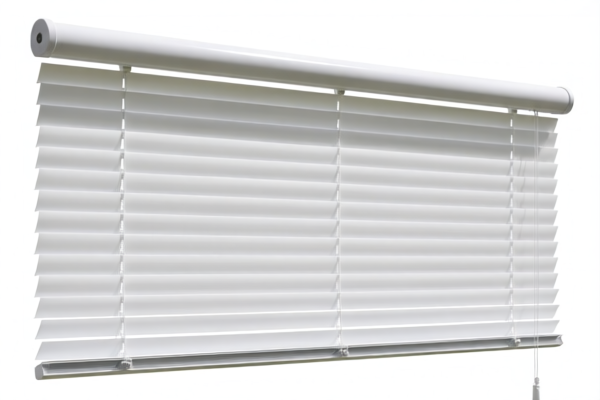


AI Analysis
🪟 Gray Plastic Blinds: The Ultimate HS Code & Customs Clearance Guide 2026
🌐 HS Code Reference & Customs Strategy | 2026 Latest Tariff Analysis | Professional Entry Strategy
📌 I. Product Definition & Classification: Do You Really Understand "Gray Plastic Blinds"?
"Gray Plastic Blinds" (Plastic External Window Blinds) are architectural accessories used for light control, privacy, and decoration. In international trade, the classification depends heavily on their structural definition and functional purpose. They are generally categorized as either "Plastic Profiles/Extrusions" or "Plastic Building Accessories/Other Plastic Articles."
⚠️ Key Distinction Point:
- If the product is primarily viewed as a construction material/profile (similar to PVC window frames) → Classify under 3916.
- If the product is viewed as a functional accessory/component (slats, vanes, or installed louvers) → Classify under 3925 or 3926.
📦 II. HS Code Classification Details (2026 Latest Tariff Authority Comparison)
| HS Code | Product Description | Applicability Scenario | Primary Basis for Classification |
|---|---|---|---|
3916.20.00.20 |
Plastic Window Blinds (Profile Type) | Classified as "Plastic Profiles" for windows; fits the definition of vinyl polymer profiles. | 3916: Plastic rods, sticks, and profiles, extruded, whether or not surface-worked, but not otherwise worked. |
3925.30.50.00 |
Plastic External Window Blinds (Accessory) | Classified as "Other Building Accessories" specifically including blinds/louvers. | 3925: Builders' work of plastics (e.g., doors, windows, blinds). |
3925.30.10.00 |
Plastic External Window Blinds (Exact Match) | Classification explanation is completely consistent with "Plastic Blinds/Louvers" as building accessories. | 3925: Specific subheading for plastic blinds/louvers in building contexts. |
3926.30.50.00 |
Plastic Window Blinds (Component/Fixture) | Classified as "Other Plastic Articles" – specifically as window connections or components. | 3926: Other articles of plastics (furniture, fittings, etc.). |
3926.90.99.89 |
Plastic Blinds/Curtains (Fallback/Other) | Classified as "Other Plastic Articles" – a residual category for plastic blinds or blinds curtains. | 3926: Residual category for plastic articles not specified elsewhere. |
🔍 Key Reminder:
- 3916.20.00.20 is often used if the blinds are sold as extruded profiles to be assembled later.
- 3925.30.x0.00 is preferred if the blinds are finished goods (slats already cut/assembled) acting as building accessories.
- 3926 codes are typically fallbacks or used for specific components or decorative items not clearly fitting the "building accessory" definition of 3925.
💰 III. 2026 Latest Tariff Rate Breakdown (Including Surtaxes & Policy Add-ons)
✅ Applicable Country: United States (US)
✅ Origin: China (CN)
✅ Effective Time: 2025 onwards (including subsequent imports)
🎯 1. 3916.20.00.20 —— Plastic Profiles for Windows (High Tariff Scenario)
| Item | Content |
|---|---|
| Base Tariff | 5.8% (Ad Valorem) |
| Section 301 Surcharge | +25.0% |
| Section 122 Tariff | +10.0% |
| Total Rate | 40.8% |
| Tax Calculation | CIF Value × 40.8% |
| De Minimis Exemption? | ❌ No (deny_de_minimis) |
| Legal Basis Path | USITC:3916.20.00.20 → FOOTNOTE:301 → IEEPA:122 |
📌 Explanation:
- This code carries the highest tariff burden in this set.
- The 25% Section 301 tariff is mandatory for Chinese-origin goods in this category.
- The 10% Section 122 tariff adds further cost, making this the most expensive classification.
🎯 2. 3925.30.50.00 —— Plastic Building Accessories (Blinds)
| Item | Content |
|---|---|
| Base Tariff | 5.3% (Ad Valorem) |
| Section 301 Surcharge | +7.5% |
| Section 122 Tariff | +10.0% |
| Total Rate | 22.8% |
| Tax Calculation | CIF Value × 22.8% |
| De Minimis Exemption? | ❌ No |
| Legal Basis Path | USITC:3925.30.50.00 → FOOTNOTE:301 → IEEPA:122 |
📌 Note:
- A significant saving compared to3916.
- The Section 301 rate is only 7.5% (not 25%) for many "building accessories" under 3925, depending on specific USITC rulings.
- Still subject to the 10% Section 122 tariff.
🎯 3. 3925.30.10.00 —— Plastic Blinds (Optimal Fit)
| Item | Content |
|---|---|
| Base Tariff | 3.3% (Ad Valorem) |
| Section 301 Surcharge | +7.5% |
| Section 122 Tariff | +10.0% |
| Total Rate | 20.8% |
| Tax Calculation | CIF Value × 20.8% |
| De Minimis Exemption? | ❌ No |
| Legal Basis Path | USITC:3925.30.10.00 → FOOTNOTE:301 → IEEPA:122 |
📌 Key Advantage:
- Lowest Base Tariff (3.3%) among all options.
- Classification Consistency: The description matches the HS code explanation exactly ("Plastic Blinds/Louvers").
- Best for Clearance: Reduces audit risk by aligning product description with HS code intent.
🎯 4. 3926.30.50.00 & 3926.90.99.89 —— Other Plastic Articles
| Item | Content |
|---|---|
| Base Tariff | 5.3% (Ad Valorem) |
| Section 301 Surcharge | +7.5% |
| Section 122 Tariff | +10.0% |
| Total Rate | 22.8% |
| Tax Calculation | CIF Value × 22.8% |
| De Minimis Exemption? | ❌ No |
| Legal Basis Path | USITC:3926.x0.x0.x0 → FOOTNOTE:301 → IEEPA:122 |
📌 Warning:
-3926codes are often fallbacks.
- If customs authorities determine the product is clearly a "building accessory" (3925), using 3926 may lead to reclassification and penalties.
-3926.90.99.89is a "catch-all" and carries higher audit risk.
🛠️ IV. Practical Customs Clearance Advice (Real-World Pitfall Guide)
✅ 1. Required Documentation Checklist (All Essential)
| Document | Required | Notes |
|---|---|---|
| ✅ Product Specifications | ✔️ | Include material (PVC/PE/PP), dimensions, color (Gray), and assembly status (slats vs. profiles). |
| ✅ Product Photos | ✔️ | Clear images of the blinds, showing slats, mounting hardware, and overall structure. |
| ✅ Commercial Invoice | ✔️ | Clearly state "Plastic Window Blinds" or "Plastic Louvers," not just "Plastic Parts." |
| ✅ Packing List | ✔️ | Detail contents: Are profiles, slats, and mounting brackets packed together? |
| ✅ Origin Certificate (CO) | ✔️ | Mandatory for China origin to apply 301/122 tariffs. |
| ✅ Structure Diagram | ✔️ | Optional but helpful to prove it's an assembled accessory (3925) vs. raw profile (3916). |
✅ 2. Declaration Tips (Critical Mnemonics)
🔥 "Finish Goods Go to 3925, Profiles Go to 3916, Misclassification Costs More!"
| Scenario | Correct HS Code | Wrong Action | Consequence |
|---|---|---|---|
| Finished Blinds (Slats assembled, ready to install) | 3925.30.10.00 or 3925.30.50.00 |
Declare as 3916.20.00.20 |
Overpay Tax (40.8% vs 20.8%) |
| Extruded Profiles (To be cut/assembled by buyer) | 3916.20.00.20 |
Declare as 3925 |
Misclassification Risk |
| Loose Slats/Components | 3926.90.99.89 (Fallback) |
Declare as 3925 |
Customs Audit (May reject 3925) |
| Decorative Plastic Strips (Not functional blinds) | 3926.90.99.89 |
Declare as 3925 |
Rejection (Not a building accessory) |
✅ 3. Special Cases
| Case | Handling Advice |
|---|---|
| Mixed Materials | If blinds have aluminum pins or cords, ensure the plastic component is the essential character. If metal dominates, check Chapter 83 or 76. |
| Window Frames vs. Blinds | Do not confuse blinds with window frames. Frames are 3906 or 3916. Blinds are 3925. |
| Outdoor vs. Indoor | "External Window Blinds" strongly supports 3925 (Building Accessory). |
| OEM Customization | Provide client specs to prove the product is a finished good, not a raw material. |
🌍 V. Global Market Comparison (2026 Update)
| Country/Region | Recommended HS Code | Tariff (China Origin) | Certification | Notes |
|---|---|---|---|---|
| 🇺🇸 USA | 3925.30.10.00 |
20.8% (Lowest) | No specific | Avoid 3916 unless profiles only. |
| 🇨🇳 China | 3925.30.10.00 |
~5-10% | CCC (if applicable) | Low base tariff. |
| 🇪🇺 EU | 3925.30.00 |
~6.5% | CE (if electrical, but none here) | No Section 301/122. |
| 🇬🇧 UK | 3925.30.90 |
~6.5% | UKCA | Post-Brexit rules apply. |
| 🇨🇦 Canada | 3925.30.00 |
~5% | None | Generally low tariffs. |
📌 Conclusion:
- The US market is the most complex due to Section 301 and 122 tariffs.
- Choosing3925.30.10.00is the optimal strategy for finished gray plastic blinds to minimize tax burden (20.8% vs 40.8%).
- Misclassifying finished blinds as profiles (3916) is a costly error.
📌 VI. Common Errors & Pitfall Guide (Lessons Learned)
❌ Error 1: Declaring finished blinds as 3916.20.00.20 (Plastic Profiles)
👉 Consequence: Pay 40.8% tariff instead of 20.8%. Overpayment of 20%!
❌ Error 2: Declaring extruded profiles as 3925.30.10.00 (Finished Blinds)
👉 Consequence: Customs may reject the declaration, demand reclassification, and impose penalties.
❌ Error 3: Using "Plastic Curtains" or "Generic Plastic Parts" in the description
👉 Consequence: Lack of clarity leads to manual examination, delays, and higher audit risk.
❌ Error 4: Ignoring Section 122 Tariff
👉 Consequence: All codes above include a 10% Section 122 tariff for Chinese goods. Failure to account for this leads to underpayment.
✅ Correct Practice:
"Plastic Window Blinds, Gray, PVC Material, Finished Slats, for External Window Use, Model XYZ, Made in China"
🎯 VII. Conclusion: Professional Declaration, Cost Savings!
🎯 Remember the Mnemonic:
🔹 "Finished Blinds = 3925 (20.8%), Profiles = 3916 (40.8%)!"
🔹 "Misclassification Costs Double! Declare Precisely!"
📌 Pro Tip:
If your blinds are originating from Vietnam, Mexico, or Thailand, you may qualify for IEEPA Exemptions or lower Section 301 rates.
Recommend pre-classification (Advance Ruling) for large shipments to avoid clearance risks.
📣 Immediate Action:
📞 Contact a professional customs broker + Provide Product Photos + Apply for HS Code Advance Ruling
🚀 Let your blinds pass smoothly, maximize profits, and stay compliant!
✨ Professional Customs Clearance Starts with Accurate Classification!
💼 Every Penny of Cost Deserves Precise Calculation!
Customer Reviews
About HS Code Classification
The Harmonized System (HS) is an internationally standardized nomenclature developed by the World Customs Organization (WCO) to classify traded products. Over 200 countries use the HS system as the basis for customs tariffs, trade statistics, and import/export regulations.
Each HS code follows a hierarchical structure:
- Chapter (2 digits) — Broad category of goods (e.g., Chapter 84: Machinery and Mechanical Appliances)
- Heading (4 digits) — More specific grouping within the chapter
- Subheading (6 digits) — Internationally standardized breakdown, used by all WCO member countries
- National subdivisions (8-10 digits) — Country-specific extensions for further classification, such as US HTSUS 10-digit codes
Correct HS code classification is essential for smooth customs clearance, accurate duty payment, and compliance with trade regulations. Misclassification can lead to customs delays, overpayment of duties, or penalties.
When importing from CN to US, the applicable tariff rates may include:
- Most-Favored-Nation (MFN) rate — The standard duty rate applied to WTO members
- General rate — Applied to countries without trade agreements
- Trade remedy duties — Additional tariffs such as Section 301 (anti-dumping), Section 232 (national security), or countervailing duties
The information provided on this page is for reference purposes only. For official classification, please consult with your local customs authority or a licensed customs broker.