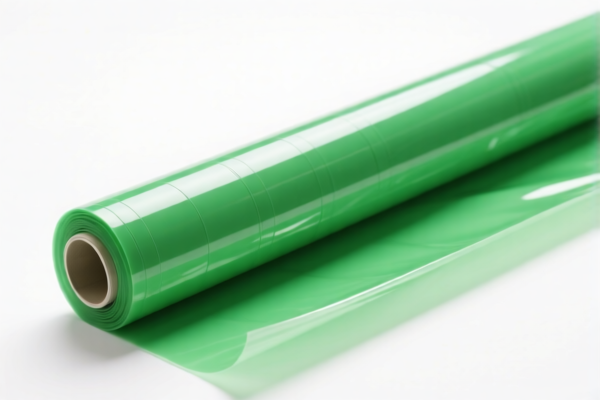
greenhouse film
CN → US| HS Code | Tariff Rate | Origin | Destination | Doc |
|---|---|---|---|---|
| 5903902000 | 35.0% | CN | US | Official Doc |
| 3919905060 | 40.8% | CN | US | Official Doc |
| 5903102090 | 35.0% | CN | US | Official Doc |
| 3919102055 | 40.8% | CN | US | Official Doc |
| 3920100000 | 39.2% | CN | US | Official Doc |
Product Images


AI Analysis
🚜 Greenhouse Film (Agricultural Plastic Sheeting)
🌐 HS Code Reference & Clearance Guide | 2026 Latest Tariff Analysis | Professional Customs Strategy
📌 I. Product Definition: What Exactly is "Greenhouse Film"?
Greenhouse film, technically known as agricultural plastic mulch or covering film, is a specialized plastic sheeting used in agriculture to create microclimates, retain heat, protect crops from pests, and manage moisture. Unlike industrial packaging films, these products often contain UV stabilizers, anti-drip additives, and infrared transmission modifiers.
In international trade, the classification hinges on two critical factors: 1. Material Composition: Is it pure polyethylene (PE), polyvinyl chloride (PVC), or polypropylene (PP)? 2. Structural Integrity: Is it a simple single-layer film, or is it coated/laminated with other materials (like aluminum foil or specific chemical layers)?
⚠️ Key Distinction Point:
- If the film is pure plastic without significant coating/lamination → Falls under Chapter 39 (Plastics).
- If the film is coated or laminated with non-plastic materials (or specific chemical layers that change its nature) → Falls under Chapter 59 (Textiles/Impregnated Fabrics).
📦 II. HS Code Classification Details (2026 Latest Tariff Authority Comparison)
Based on the provided data, here are the 5 possible HS Codes and their rationales:
| HS Code | Product Description | Classification Rationale | Applicable Scenario |
|---|---|---|---|
5903.10.20.90 |
Textile fabric impregnated/coated/laminated with plastics (Polyethylene/Polyvinyl Chloride) | Lamination/Coating Focus: The film is classified as a coated/laminated product. It is not just a simple plastic film but has been treated or layered, falling under Chapter 59. | Most Common: Heavy-duty greenhouses, UV-stabilized films with complex multi-layer laminations. |
3919.10.20.55 |
Self-adhesive plates, sheets, film, etc. (Plastic) – Fallback Category | Fallback/General Plastic: Classified as a plastic film under Chapter 39. This code is often used as a "catch-all" for plastic films that don't fit more specific subheadings like 3920/3921. | General-purpose plastic films, self-adhesive greenhouse covers, or generic plastic sheeting. |
3920.10.00.00 |
Plates, sheets, film, etc., of Polyethylene (PE) – Non-cellular, Unlaminated | Material Specific (PE): Identified as a simple, non-cellular polyethylene film. No lamination, just pure PE material in film form. | Standard, single-layer PE greenhouse films (most common for low-cost tunnels). |
3920.20.00.55 |
Plates, sheets, film, etc., of Polypropylene (PP) or Polyolefins – Non-cellular, Unlaminated | Material Specific (PP): Identified as a plastic film made of PP or polyolefin derivatives. Like 3920.10, it is non-cellular and unlaminated. | Specific polypropylene-based greenhouse films, often used for different thermal properties. |
5903.90.20.00 |
Other textile fabric impregnated/coated/laminated with plastics | Lamination Focus (Other): Similar to 5903.10 but categorized under "Other" plastics or materials exceeding 70% plastic content in a laminated structure. | Complex laminated films where the plastic content is high (>70%) but the structure is defined as a laminated textile/fabric base. |
🔍 Critical Reminder:
- Laminated vs. Monolithic: If your film is a single extruded layer of PE/PP, it is Chapter 39 (3920.xxxx).
- If your film has multiple layers (e.g., PE core + EVA adhesive + Aluminum foil + PE outer) or is coated with a significant chemical layer, it likely falls under Chapter 59 (5903.xxxx).
- Misclassifying a laminated film as a simple plastic film can lead to severe penalties.
💰 III. 2026 Latest Tariff Rate Breakdown (Including Surcharges & Policy Add-ons)
✅ Applicable Country: United States (US)
✅ Origin: China (CN)
✅ Effective Date: Current ongoing trade restrictions (Section 301 + IEEPA)
🎯 1. 5903.10.20.90 – Coated/Laminated Greenhouse Film (PE/PVC)
| Item | Content |
|---|---|
| Base Tariff | 0.0% |
| Section 301 Surcharge | +25.0% |
| Section 122 (Bifurcated) Tariff | +10.0% |
| Total Tax Rate | 35.0% |
| Tax Calculation | CIF Value × 35.0% |
| De Minimis Exemption | ❌ Not Eligible (Deny de minimis) |
| Legal Basis Path | USITC:5903.10.20.90 → Section 301: Footnote 9903.01.25 → Section 122: 10% Add-on |
📌 Explanation:
- This category benefits from a 0% base tariff, but the heavy surcharges apply.
- The 10% Section 122 tariff is a specific add-on for certain Chinese goods, combined with the standard 25% Section 301 tariff.
- Total Cost Impact: High, but lower than the 40.8% bracket.
🎯 2. 3919.10.20.55 – Self-Adhesive/General Plastic Film (Fallback)
| Item | Content |
|---|---|
| Base Tariff | 5.8% |
| Section 301 Surcharge | +25.0% |
| Section 122 (Bifurcated) Tariff | +10.0% |
| Total Tax Rate | 40.8% |
| Tax Calculation | CIF Value × 40.8% |
| De Minimis Exemption | ❌ Not Eligible (Deny de minimis) |
| Legal Basis Path | USITC:3919.10.20.55 → Section 301 → Section 122 |
📌 Note:
- This is the highest tariff bracket among the options.
- The 5.8% base tariff makes this significantly more expensive.
- Recommendation: Avoid this classification unless the product is truly self-adhesive or fits no other plastic film category.
🎯 3. 3920.10.00.00 – Polyethylene (PE) Film
| Item | Content |
|---|---|
| Base Tariff | 4.2% |
| Section 301 Surcharge | +25.0% |
| Section 122 (Bifurcated) Tariff | +10.0% |
| Total Tax Rate | 39.2% |
| Tax Calculation | CIF Value × 39.2% |
| De Minimis Exemption | ❌ Not Eligible (Deny de minimis) |
| Legal Basis Path | USITC:3920.10.00.00 → Section 301 → Section 122 |
📌 Explanation:
- Pure PE films are common. The 4.2% base rate is moderate.
- Total 39.2% is slightly lower than the 3919 fallback but higher than the 5903 laminated option.
🎯 4. 3920.20.00.55 – Polypropylene (PP) Film
| Item | Content |
|---|---|
| Base Tariff | 4.2% |
| Section 301 Surcharge | +25.0% |
| Section 122 (Bifurcated) Tariff | +10.0% |
| Total Tax Rate | 39.2% |
| Tax Calculation | CIF Value × 39.2% |
| De Minimis Exemption | ❌ Not Eligible (Deny de minimis) |
| Legal Basis Path | USITC:3920.20.00.55 → Section 301 → Section 122 |
📌 Note:
- Tax rate is identical to the PE film (3920.10).
- Correct classification depends strictly on the resin type (PP vs. PE). Misidentifying the polymer can lead to customs audits.
🎯 5. 5903.90.20.00 – Laminated Plastic Film (>70% Plastic)
| Item | Content |
|---|---|
| Base Tariff | 0.0% |
| Section 301 Surcharge | +25.0% |
| Section 122 (Bifurcated) Tariff | +10.0% |
| Total Tax Rate | 35.0% |
| Tax Calculation | CIF Value × 35.0% |
| De Minimis Exemption | ❌ Not Eligible (Deny de minimis) |
| Legal Basis Path | USITC:5903.90.20.00 → Section 301 → Section 122 |
📌 Explanation:
- Like5903.10, this has a 0% base tariff.
- Total 35.0% is the most tax-efficient classification for complex, multi-layer greenhouse films.
- Condition: Must be clearly demonstrable as a laminated/coated product with >70% plastic content by weight or volume.
🛠️ IV. Customs Clearance Practical Advice (Real-World Pitfall Guide)
✅ 1. Document Checklist (Non-Negotiable)
| Document | Required? | Purpose |
|---|---|---|
| ✅ Technical Data Sheet (TDS) | ✔️ | Specifies resin type (PE/PP/PVC), layer structure, and thickness. Critical for Chapter 39 vs. 59. |
| ✅ Product Photos (Cross-section) | ✔️ | Shows multi-layer structure (if laminated). Proves it's not a simple monolithic film. |
| ✅ Bill of Materials (BOM) | ✔️ | Details each layer (e.g., "Layer 1: PE, Layer 2: EVA, Layer 3: Aluminum"). |
| ✅ Commercial Invoice | ✔️ | Must accurately describe the product (e.g., "Laminated Agricultural Film" vs. "Plastic Sheet"). |
| ✅ Certificate of Origin | ✔️ | Confirms China origin for surcharge calculation. |
✅ 2. Declaration Strategy (Key Mantra)
🔥 "Layered is 59, Pure is 39. 0% Base saves money, but prove the structure!"
| Scenario | Correct HS Code | Risk if Misclassified |
|---|---|---|
| Multi-layer laminated film (e.g., PE/EVA/Al/PE) | 5903.10.20.90 or 5903.90.20.00 |
If declared as 3920, you pay 4% more base rate. If declared as 5903 but is simple PE, you may face classification fraud charges. |
| Single-layer PE film | 3920.10.00.00 |
If declared as 5903, customs may reject it as "not laminated," leading to delays and re-evaluation at 39.2% + penalties. |
| Single-layer PP film | 3920.20.00.55 |
Same risk as PE. Must provide material safety data sheet (MSDS) confirming PP resin. |
| Generic/Unknown Plastic Film | 3919.10.20.55 |
Avoid! Highest tariff (40.8%). Only use if no other fit exists. |
✅ 3. Special Handling Tips
| Situation | Recommendation |
|---|---|
| Multi-layer films | Always choose Chapter 59 (5903.xxxx) if possible. The 0% base rate saves 4-5.8% on the CIF value. |
| Single-layer films | Choose Chapter 39 (3920.xxxx). Be precise: PE is 3920.10, PP is 3920.20. |
| Anti-drip/UV treated films | Treatment does not change Chapter 39 to 59 unless it involves lamination/coating with a distinct material layer. Simple additives do not qualify for Chapter 59. |
| Samples | Even for small samples, declare correctly. De minimis ($800) does not apply to Chinese goods under current restrictions. |
🌍 V. Global Market Comparison (2026 Outlook)
| Country/Region | Recommended HS Code | Estimated Total Tariff | Notes |
|---|---|---|---|
| 🇺🇸 United States | 5903.10.20.90 |
35.0% | Best option for laminated films. Avoid 3919 (40.8%). |
| 🇨🇳 China | 3920.10.00.00 |
5-9% (Import) | Depends on FTA status. No Section 301/122. |
| 🇪🇺 European Union | 3920.10.00.00 |
6-10% (Import) | Check for anti-dumping duties on specific plastic films. |
| 🇦🇺 Australia | 3920.10.00.00 |
5% (Import) | Lower base rate, no major surcharges. |
📌 Conclusion:
- US Market is the most critical. The 3.8% - 5.8% difference between Chapter 59 (0% base) and Chapter 39 (4.2-5.8% base) is significant on large shipments.
- Laminated films MUST be declared under Chapter 59 to maximize tax efficiency.
- Single-layer films MUST be declared under Chapter 39 to avoid rejection.
📌 VI. Common Mistakes & Pitfalls (Lessons Learned)
❌ Mistake 1: Calling a multi-layer laminated film "Plastic Film" and using 3920
👉 Consequence: Paying 4.2% base tariff instead of 0%. Loss: 4.2% of CIF value.
❌ Mistake 2: Calling a single-layer PE film "Laminated Film" and using 5903
👉 Consequence: Customs rejection, delay, potential penalty for misclassification. Cost: Delay + Legal Fees.
❌ Mistake 3: Using 3919 (Self-adhesive/General) as a lazy fallback
👉 Consequence: Highest tariff (40.8%). Loss: 1.6% - 5.8% extra tax compared to other options.
✅ Correct Declaration Example:
"Agricultural Greenhouse Film, Laminated, Multi-layer Structure (PE/EVA/Al/PE), UV Stabilized, 200 Microns Thick, Made in China."
🎯 VII. Conclusion: Optimize Your Tariff, Secure Your Supply Chain
🎯 Remember the Golden Rule:
🔹 "Laminated = Chapter 59 (0% Base). Pure = Chapter 39 (4-5% Base). Never use 3919 if you can help it!"
🔹 "Total Tax is 35% vs 39.2% vs 40.8%. Every percent counts on tonnage shipments!"
📌 Pro Tip:
If your greenhouse film is exclusively single-layer PE/PP, do not try to force it into Chapter 59. It will be rejected. Stick to 3920 codes.
If it is multi-layer, ensure your Technical Data Sheet clearly shows the lamination process to justify Chapter 59.
📣 Immediate Action:
📞 Review your product's layer structure.
📄 Update your Technical Data Sheet to match the HS Code.
🚀 Declare accurately to avoid 25% + 10% + Base Rate surprises at US Customs.
✨ Professional Clearance Starts with Precise Classification!
💼 Your Profit Margin Depends on This 35% vs 40% Decision!
Customer Reviews
About HS Code Classification
The Harmonized System (HS) is an internationally standardized nomenclature developed by the World Customs Organization (WCO) to classify traded products. Over 200 countries use the HS system as the basis for customs tariffs, trade statistics, and import/export regulations.
Each HS code follows a hierarchical structure:
- Chapter (2 digits) — Broad category of goods (e.g., Chapter 84: Machinery and Mechanical Appliances)
- Heading (4 digits) — More specific grouping within the chapter
- Subheading (6 digits) — Internationally standardized breakdown, used by all WCO member countries
- National subdivisions (8-10 digits) — Country-specific extensions for further classification, such as US HTSUS 10-digit codes
Correct HS code classification is essential for smooth customs clearance, accurate duty payment, and compliance with trade regulations. Misclassification can lead to customs delays, overpayment of duties, or penalties.
When importing from CN to US, the applicable tariff rates may include:
- Most-Favored-Nation (MFN) rate — The standard duty rate applied to WTO members
- General rate — Applied to countries without trade agreements
- Trade remedy duties — Additional tariffs such as Section 301 (anti-dumping), Section 232 (national security), or countervailing duties
The information provided on this page is for reference purposes only. For official classification, please consult with your local customs authority or a licensed customs broker.