grid exercise book
CN → US| HS Code | Tariff Rate | Origin | Destination | Doc |
|---|---|---|---|---|
| 4820104000 | 35.0% | CN | US | Official Doc |
| 4810145000 | 35.0% | CN | US | Official Doc |
| 4820200000 | 35.0% | CN | US | Official Doc |
| 4810295000 | 35.0% | CN | US | Official Doc |
| 4823908680 | 35.0% | CN | US | Official Doc |
Product Images
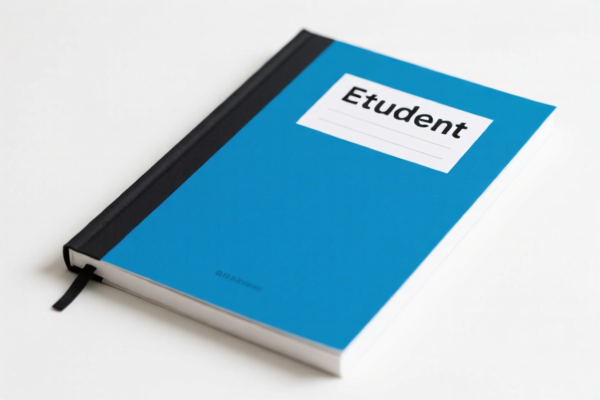
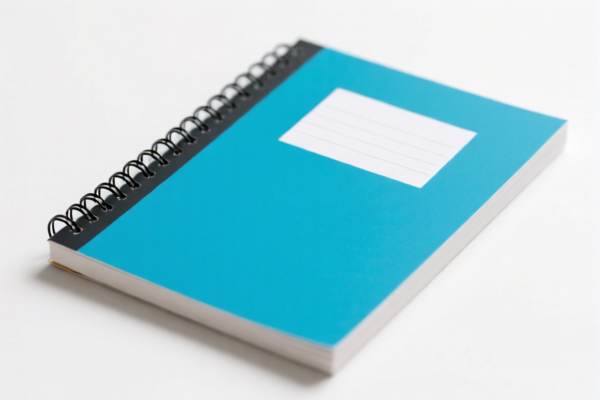
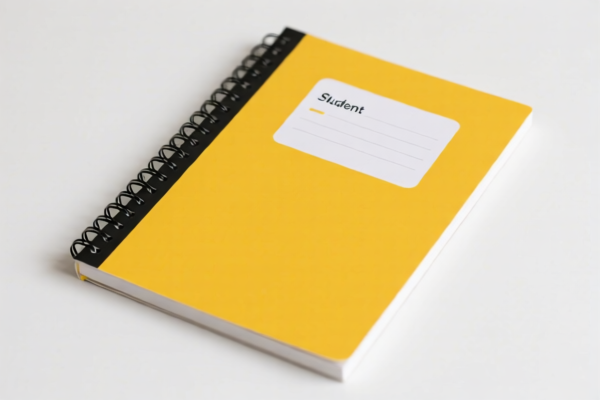

AI Analysis
📓 Grid Exercise Book (Notebooks & Notepads)
🌐 HS Code Reference & Customs Clearance Guide | 2026 Latest Tariff Analysis | Strategic Compliance Strategy
📌 I. Product Definition & Classification: Do You Really Understand "Grid Exercise Books"?
In international trade, Grid Exercise Books are not a single, static product. They are classified based on their physical structure, printing status, and functional intent. Misclassification here is risky because all potential HS codes listed below attract a total tax rate of 35% due to specific trade restrictions on Chinese-origin goods.
Key Distinctions: * Standalone Paper Sheets (4810 Series): If the item is essentially printed paper sheets bound or unbound, primarily defined by the material and printing process. * Specific Notebooks (4820 Series): If the item is a finished "notebook" structure (folded, stitched, or glued pages) with a cover, intended for writing. * Other Paper Articles (4823 Series): If the item falls into a residual category for other paper articles not specified elsewhere.
⚠️ Critical Warning:
Regardless of which specific 10-digit HS code is chosen, ALL codes in the provided dataset share the same total tariff burden. The distinction matters for regulatory compliance, inventory management, and avoiding scrutiny, but not for reducing the duty rate in this specific context.
📦 II. HS Code Classification Details (Based on Provided Data)
| HS Code | Product Description (Summary) | Classification Logic |
|---|---|---|
4820.20.00.00 |
Grid Exercise Book, used as a notebook, material: paper. | Classified under 4820.20 (Notebooks, notepads, and pads of paper or paperboard; carbon sets; manifold tissue sets and other copying sets). This is the most standard classification for a finished, bound notebook with a cover. |
4810.29.50.00 |
Grid Exercise Book, material: paper, form: printed paper. | Classified under 4810.29 (Other paper, paperboard, cellulose wadding and webs of cellulose fibres, coated on one or both sides with mineral substances...). This code is used if the product is viewed primarily as printed paper stock rather than a bound book structure. |
4820.10.40.00 |
Grid Exercise Book, belongs to the notebook category, material: paper. | Classified under 4820.10 (Notebooks, notepads, and pads of paper or paperboard; carbon sets...). Specifically targets the "notebook" aspect. Similar to 4820.20 but may differ slightly by country-specific subheading nuances regarding cover type or binding. |
4810.14.50.00 |
Grid Exercise Book, material: paper, has printing attribute. | Classified under 4810.14 (Paper... coated with calcium carbonate...). If the grid paper has a specific coating (like clay coating) common in high-quality exercise books, this code might be technically applied, viewing it as coated paper with printing. |
4823.90.86.80 |
Grid Exercise Book, belongs to paper products, conforms to other paper product attributes. | Classified under 4823 (Other paper, paperboard, cellulose wadding and webs of cellulose fibres, cut to size or shape; other articles of paper pulp, paper, paperboard, cellulose wadding or webs of cellulose fibres). This is a residual code ("Other") used if the book doesn't fit neatly into the specific "notebook" (4820) or "coated paper" (4810) definitions, often for non-standard formats or loose-leaf grid sheets. |
🔍 重点提醒 (Key Reminder):
- All five codes are valid depending on the exact manufacturing process and packaging.
- 4820.xx is generally preferred for finished, covered notebooks.
- 4810.xx is preferred if the item is essentially printed paper sheets or lightly bound.
- 4823.xx is the fallback for irregular or specific paper articles.
💰 III. 2026 Latest Tariff Rate Details (Including Additional Duties)
✅ Applicable Country: United States (US)
✅ Origin: China (CN)
✅ Total Tax Rate: 35.0% (For ALL codes listed above)
🎯 Comprehensive Tax Breakdown
All HS codes provided (4820.20.00.00, 4810.29.50.00, 4820.10.40.00, 4810.14.50.00, 4823.90.86.80) share the identical tax structure:
| Tax Component | Rate | Legal Basis / Description |
|---|---|---|
| Base Duty (MFN) | 0.0% | Standard Most Favored Nation duty for these paper products is typically 0%. |
| Section 301 Additional Duty | +25.0% | Applied under the US Trade Representative (USTR) List 3/4 due to geopolitical trade tensions with China. |
| Section 122 Tariff (IEEPA) | +10.0% | Specific additional duty often associated with recent executive orders or specific trade enforcement actions (referenced as "122条款关税" in the data). |
| TOTAL EFFECTIVE RATE | 35.0% | Sum of 0% + 25% + 10% |
📌 Explanation:
- 0% Base Rate: Paper products like exercise books generally enjoy low base duties.
- 25% Section 301 Tariff: This is the dominant cost driver. It applies to a vast range of Chinese manufacturing goods, including office supplies.
- 10% "Section 122" Tariff: The data explicitly lists this. This likely refers to a specific enforcement action or a mislabeling of another IEEPA provision (e.g., EO 14014 or similar). Regardless of the name, the cost is real and mandatory.
- No De Minimis Exemption: These goods are not eligible for the $800 de minimis exemption if they are part of a commercial shipment or if the total value exceeds thresholds for certain paper products.
🛠️ IV. Customs Clearance Practical Advice (Real-World Pitfall Avoidance)
✅ 1. Documentation Checklist (Essential for Smooth Clearance)
| Document | Required? | Notes |
|---|---|---|
| Product Description | ✔️ | Must clearly state "Grid Exercise Book," material (Paper), and usage (Education/Office). |
| Composition/Structure | ✔️ | Specify: Cover material (Cardboard/Paper), Binding type (Stitched/Adhesive), Page count, Grid size. |
| Commercial Invoice | ✔️ | Must match the HS code declared. Clearly show value per unit. |
| Packing List | ✔️ | Show total quantity and weight. |
| Certificate of Origin | ✔️ | To prove China origin (which triggers the 35% tax). |
| Photos | ✔️ | Front, back, and spine of the notebook to prove it's a "notebook" (4820) vs. "paper" (4810). |
✅ 2. Classification Strategy (How to Choose the Right Code)
| Scenario | Recommended HS Code | Reasoning |
|---|---|---|
| Standard Bound Notebook (Cover + Bound Pages) | 4820.20.00.00 or 4820.10.40.00 |
These are the most accurate for "Notebooks." Customs officers readily accept this for finished books. |
| Loose Leaf Sheets or Bulk Printed Sheets | 4810.29.50.00 or 4810.14.50.00 |
If the product is not bound into a book format but sold as sheets, use 4810. |
| Non-Standard/Irregular Paper Articles | 4823.90.86.80 |
Use only if the product is unique (e.g., shaped paper, special inserts) and doesn't fit standard notebook definitions. |
🔥 Pro Tip:
"Consistency is Key!"
- If you declare it as a "Notebook" in the invoice description, use a 4820 code.
- If you declare it as "Printed Paper," use a 4810 code.
- Do not mix: Declaring "Notebook" but using a "Paper" code can lead to customs queries about misdeclaration.
✅ 3. Special Circumstances
| Situation | Action |
|---|---|
| High-Value Bulk Orders | Pre-classify with a customs broker. Get an Advance Ruling if possible to lock in the classification and avoid post-entry audits. |
| Samples for Evaluation | Ensure samples are marked "Not for Resale" and verify if they still fall under commercial goods rules. Sometimes samples have different duty treatments. |
| Packaging Included | Ensure the packaging (box, wrap) is not declared as part of the product value unless necessary. Tariffs are applied to the product value (CIF). |
🌍 V. Global Market Comparison (Contextual)
| Market | Typical HS Code for Exercise Book | Base Duty | Additional Taxes (China) | Total Est. Duty |
|---|---|---|---|---|
| 🇺🇸 USA | 4820.10.40.00 / 4820.20.00.00 |
0% | 35% (25% Sec 301 + 10% IEEPA) | 35% |
| 🇪🇺 EU | 4820.10.00 |
0% - 2.5% | None (Generally) | ~0-2.5% |
| 🇨🇳 China | 4820.10.00 |
0% | None | 0% |
| 🇬🇧 UK | 4820.10.00 |
0% | None | 0% |
📌 Conclusion:
- The US market is exceptionally expensive for Chinese-made exercise books due to the 35% total tariff.
- Competitors from Vietnam, Thailand, or the EU enjoy significantly lower duties.
- Strategy: Consider sourcing from non-China origins for US-bound orders to save 35% on landed cost.
📌 VI. Common Mistakes & Pitfalls (Blood and Tears Lessons)
❌ Mistake 1: Assuming "Paper Products" have 0% tax.
👉 Result: Ignoring the 25% + 10% additional tariffs leads to massive unexpected costs and customs holds.
❌ Mistake 2: Using 4823 for a standard notebook.
👉 Result: Customs may view this as an attempt to misclassify, leading to audits or penalties for inaccurate declaration.
❌ Mistake 3: Not declaring "Grid" or "Printed."
👉 Result: If the product is blank paper but declared as "Grid," it can be flagged for fraud. Accuracy is vital.
❌ Mistake 4: Ignoring the "122 Clause" or "Section 122" reference.
👉 Result: If your customs broker misses this 10% component, you will owe back duties + interest + penalties.
✅ Correct Approach:
"100% Paper Grid Exercise Book, Soft Cover, 100 Sheets, 70gsm Paper. HS Code: 4820.20.00.00. Value: $X."
🎯 VII. Conclusion: Professional Clearance, Cost Control
🎯 Remember the Rule:
🔹 "Notebooks are 35% Taxed in the US."
🔹 "0% Base + 25% Sec 301 + 10% IEEPA = 35% Total."
🔹 "HS Code choice affects compliance, not price (in this dataset)."
📌 Pro Tip:
If your exercise books are manufactured in Vietnam, Malaysia, or India, you can avoid the 35% US tariff.
- Strategy: Shift supply chain to non-China origins for US-bound goods.
- Benefit: Save 35% on landed cost, making your product competitive.
📣 Immediate Action:
📞 Consult a customs broker for an Advance Ruling.
📦 Verify your supplier's country of origin.
🧮 Calculate the Landed Cost including the 35% duty before pricing.
✨ Professional Customs Clearance Starts with Accurate Classification!
💼 Your Profit Margin is Determined by Compliance and Strategy!
Customer Reviews
About HS Code Classification
The Harmonized System (HS) is an internationally standardized nomenclature developed by the World Customs Organization (WCO) to classify traded products. Over 200 countries use the HS system as the basis for customs tariffs, trade statistics, and import/export regulations.
Each HS code follows a hierarchical structure:
- Chapter (2 digits) — Broad category of goods (e.g., Chapter 84: Machinery and Mechanical Appliances)
- Heading (4 digits) — More specific grouping within the chapter
- Subheading (6 digits) — Internationally standardized breakdown, used by all WCO member countries
- National subdivisions (8-10 digits) — Country-specific extensions for further classification, such as US HTSUS 10-digit codes
Correct HS code classification is essential for smooth customs clearance, accurate duty payment, and compliance with trade regulations. Misclassification can lead to customs delays, overpayment of duties, or penalties.
When importing from CN to US, the applicable tariff rates may include:
- Most-Favored-Nation (MFN) rate — The standard duty rate applied to WTO members
- General rate — Applied to countries without trade agreements
- Trade remedy duties — Additional tariffs such as Section 301 (anti-dumping), Section 232 (national security), or countervailing duties
The information provided on this page is for reference purposes only. For official classification, please consult with your local customs authority or a licensed customs broker.