grinding ball
CN → US| HS Code | Tariff Rate | Origin | Destination | Doc |
|---|---|---|---|---|
| 6804221000 | 0.0% | CN | US | Official Doc |
| 6804224000 | 35.0% | CN | US | Official Doc |
| 8205595560 | 40.3% | CN | US | Official Doc |
| 8205901000 | 35.0% | CN | US | Official Doc |
| 8466939840 | 39.7% | CN | US | Official Doc |
Product Images
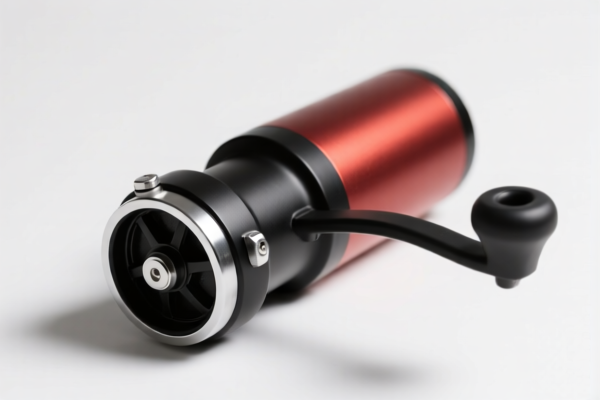
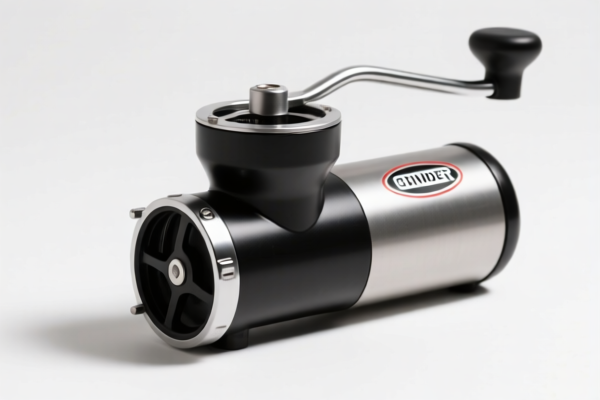
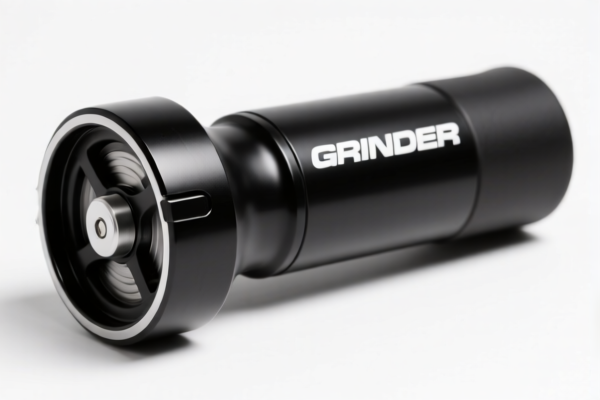

AI Analysis
⚙️ Grinding Balls: The Hidden Engine of Industrial Efficiency
🌐 HS Code Reference & Customs Clearance Guide | 2026 Latest Tariff Analysis | Professional-Grade Entry Strategy
📌 One: Product Definition & Classification: Do You Truly Understand "Grinding Balls"?
Grinding balls, primarily used in mineral processing, power plants, and cement industries, are the core wear parts in ball mills. In international trade, their classification is highly complex and depends heavily on material composition (steel, ceramic, chrome) and specific application logic. They are not simply "steel balls"; they are classified based on their function as abrasives, hand tools, or machinery parts.
⚠️ Key Distinction Points:
- If the ball is made of ceramic or abrasive material used for grinding/polishing → It falls under Chapter 68 (Articles of Stone, Plaster, Cement, Asbestos...).
- If the ball is metal (steel/iron) and considered a general hand tool or part of a machine → It may fall under Chapter 82 (Tools) or 84 (Machinery).
- Crucial Warning: Misclassification leads to massive tax penalties (up to 40%+). You must match the material and function precisely.
📦 Two: HS Code Classification Details (2026 Latest Tariff Authority Comparison)
Based on the provided data, here are the five potential HS Codes for "Grinding Balls" (研磨器/Grinding Apparatus/Balls) with their specific tax implications.
| HS Code | Product Description | Application Scenario | Material/Logic |
|---|---|---|---|
6804.22.10.00 |
Grinding Tools (Abrasive/Ceramic): Matches the description of whetstones, grinding stones, and wheels. | Used for manual grinding, sharpening, or polishing where the ball acts as an abrasive medium. | Ceramic/Abrasive Material. Function: Grinding/Polishing. |
6804.22.40.00 |
Other Grinding Tools: Other bonded abrasives or ceramics. | Similar to above, but for other types of bonded abrasive materials not specified in 10.00. | Other Bonded Abrasive/Ceramic. |
8205.59.55.60 |
Metal Hand Tools: Metal grinding tools classified as other hand tools. | If the grinding ball is small, metallic, and treated as a manual tool rather than a machine part. | Metal (Steel/Iron). Logic: Hand Tool Category. |
8205.90.10.00 |
Grinding Machines/Parts: Manual or foot-operated grinding wheels with frames. | Rare for "balls," but applies if the ball is part of a framed grinding apparatus. | Frame/Assembly. Logic: Grinding Wheel Category. |
8466.93.98.40 |
Machine Tool Parts: Parts suitable for use solely or principally with the machines of heading 84.64-84.66. | Most Common for Industrial Mills: Balls used specifically for gear grinding or precision machining in CNC machines. | Machine Accessory. Logic: CNC/Machine Tool Part. |
🔍 Key Reminder:
- Industrial Milling Balls (Cement/Mineral): Often face difficulties in clear classification. If they are steel, they might be argued as8205(tools) or8466(machine parts). If ceramic, they fall under6804.
- Do Not assume all grinding balls are the same. A steel ball for a cement mill is different from a ceramic ball for a laboratory grinder.
- The "Metal" Trap: If you declare a steel grinding ball as a simple "iron ball," it might be misclassified. It must be described as a "grinding tool" or "machine part" to avoid being taxed as generic hardware.
💰 Three: 2026 Latest Tariff Rate Breakdown (Including Surtaxes & Policy Add-ons)
✅ Applicable Country: USA (US)
✅ Country of Origin: China (CN)
✅ Effective Date: November 10, 2025 (and subsequent imports)
🎯 1. 6804.22.10.00 & 6804.22.40.00 —— Ceramic/Abrasive Grinding Tools
| Item | Content |
|---|---|
| Base Tariff | 5¢/kg + 2% (for 10.00) OR 0.0% (for 40.00) |
| Section 301 Surcharge | +25.0% |
| Section 122 Tariff | +10.0% |
| Total Tariff | Approx. 35.0% - 39.7% (See detailed calculation below) |
| Tax Calculation | (CIF Value × 2% + Weight × $0.05) × 1.35 OR CIF Value × 35.0% |
| De Minimis Eligibility | ❌ NO (Deny) |
| Legal Basis Path | Section 301: 9903.01.25 → Section 122: 9903.01.24 → USITC: 6804.22.xx.xx → FOOTNOTE: 9903.88.01 |
📌 Interpretation:
- For6804.22.10.00: The base is 5 cents per kg plus 2%. Add 35% total surcharge (25% Sec 301 + 10% Sec 122). The effective rate is complex due to the specific duty.
- For6804.22.40.00: Base is 0%. Total surcharge is 35%. Total Rate = 35.0%.
- These categories are very high tax if ceramic/abrasive. Ensure your product is truly ceramic. If it's steel, this classification is wrong.
🎯 2. 8205.59.55.60 —— Metal Hand Tools (Steel Grinding Balls)
| Item | Content |
|---|---|
| Base Tariff | 5.3% |
| Section 301 Surcharge | +25.0% |
| Section 122 Tariff | +10.0% |
| Total Tariff | 40.3% |
| Tax Calculation | CIF Value × 40.3% |
| De Minimis Eligibility | ❌ NO (Deny) |
| Legal Basis Path | Section 301: 9903.01.25 → Section 122: 9903.01.24 → USITC: 8205.59.55.60 → FOOTNOTE: 9903.88.01 |
📌 Interpretation:
- If your steel grinding ball is classified as a "metal hand tool," the base tariff is already 5.3%.
- Adding 25% (Sec 301) and 10% (Sec 122) results in a flat 40.3% total rate.
- This is the HIGHEST rate among the options. Only use this if the product is definitively a hand tool.
🎯 3. 8205.90.10.00 —— Framed Grinding Wheels/Tools
| Item | Content |
|---|---|
| Base Tariff | 0.0% |
| Section 301 Surcharge | +25.0% |
| Section 122 Tariff | +10.0% |
| Total Tariff | 35.0% |
| Tax Calculation | CIF Value × 35.0% |
| De Minimis Eligibility | ❌ NO (Deny) |
| Legal Basis Path | Section 301: 9903.01.25 → Section 122: 9903.01.24 → USITC: 8205.90.10.00 → FOOTNOTE: 9903.88.01 |
📌 Interpretation:
- Similar to the ceramic category, the base is 0%.
- Total rate is 35.0%.
- Use this only if the grinding ball is part of a framed apparatus (rare for loose balls).
🎯 4. 8466.93.98.40 —— Machine Tool Parts (CNC/Gear Grinding)
| Item | Content |
|---|---|
| Base Tariff | 4.7% |
| Section 301 Surcharge | +25.0% |
| Section 122 Tariff | +10.0% |
| Total Tariff | 39.7% |
| Tax Calculation | CIF Value × 39.7% |
| De Minimis Eligibility | ❌ NO (Deny) |
| Legal Basis Path | Section 301: 9903.01.25 → Section 122: 9903.01.24 → USITC: 8466.93.98.40 → FOOTNOTE: 9903.88.01 |
📌 Interpretation:
- If the grinding ball is a part of a machine tool (e.g., for gear grinding), the base is 4.7%.
- Total rate is 39.7%.
- This is a common classification for high-end industrial balls. It is slightly cheaper than the hand tool classification (40.3%) but still very high.
🛠️ Four: Customs Clearance Practical Advice (Battle-Tested Pitfall Guide)
✅ 1. Required Documentation Checklist (Non-Negotiable)
| Document | Mandatory | Description |
|---|---|---|
| ✅ Product Spec Sheet | ✔️ | Must specify Material (Ceramic, Steel, Chrome), Diameter, Weight, Hardness. |
| ✅ Usage Statement | ✔️ | Explicitly state: "Used in ball mills for mineral processing" OR "Used in CNC gear grinding machines." |
| ✅ Product Photos | ✔️ | Clear images showing the ball's surface, packaging, and any markings. |
| ✅ Commercial Invoice | ✔️ | Describe as "Grinding Balls, [Material], for [Machine Name]." Do not just write "Steel Ball." |
| ✅ Certificate of Origin | ✔️ | Critical for determining origin and potential duty drawbacks. |
| ✅ Packaging List | ✔️ | Show net/gross weight. Specific duties (5¢/kg) depend on accurate weight declaration. |
✅ 2. Declaration Tips (Key Mantra)
🔥 "Material Defines Code, Function Defines Rate, Be Specific or Pay the Price!"
| Scenario | Correct Declaration | Wrong Practice |
|---|---|---|
| Ceramic Grinding Media | 6804.22.40.00 - "Ceramic Grinding Balls for Ball Mill" |
Misclassified as steel → Tax dispute + Penalty |
| Steel Grinding Balls (Industrial) | 8466.93.98.40 - "Steel Grinding Balls, Part for Machine Tool" |
Classified as general hardware → Higher tax |
| Small Steel Grinding Tools | 8205.59.55.60 - "Metal Grinding Hand Tools" |
Classified as machine part → Incorrect duty |
| Loose Steel Balls | Ask for Pre-Ruling | Guessing between 8205 and 8466 → Risk of audit |
📌 Note:
- Do not use generic terms like "Iron Balls" or "Steel Spheres." Use "Grinding Balls" or "Grinding Media."
- If the product is used in a cement mill, it is often considered a machine part (8466) rather than a hand tool (8205).
- If the product is ceramic, it is never8205or8466. It must be6804.
✅ 3. Special Circumstances Handling
| Situation | Handling Advice |
|---|---|
| OEM Custom Sizes | Provide custom order details. Ensure the spec sheet matches the declared HS Code. |
| Mixed Shipments (Ceramic & Steel) | Declare Separately. Do not mix HS Codes in one line item. Use two different line items. |
| Used Grinding Balls | If used, they may still be classified the same, but wear and tear should be declared to justify lower CIF value. |
| Small Sample Quantities | Still subject to de minimis denial. Declare accurately. |
🌍 Five: Global Market Comparison (2026 Latest)
| Country/Region | Recommended HS Code | Tariff Rate (China Origin) | Certification Requirements | Notes |
|---|---|---|---|---|
| 🇺🇸 USA | 8466.93.98.40 or 6804.22.40.00 |
35.0% - 40.3% | No specific certification, but Accurate HS is Critical | High Tax. Pre-ruling recommended. |
| 🇨🇳 China | 6804.22.40.00 or 8466.93.98.40 |
Low (0-5%) | None | Domestic consumption has low barriers. |
| 🇪🇺 EU | 6804.22.40.00 or 8466.93.98.40 |
0% - 4.5% | CE (if part of machine) | No Section 301/122 equivalents. |
| 🇦🇺 Australia | 6804.22.40.00 |
5% | WARR (if chemical related) | Moderate tariff. |
| 🇯🇵 Japan | 6804.22.40.00 |
0% - 2% | PSE (if electrical) | Low tariff, strict quality checks. |
📌 Conclusion:
- The USA is the most expensive market due to Section 301 (25%) and Section 122 (10%) tariffs.
- Europe and Asia offer significantly lower tariffs, but strict quality and material compliance is required.
- Strategy: If exporting to the US, consider supply chain diversification (e.g., from Vietnam or Mexico) to avoid the 35%+ tariff, if possible.
📌 Six: Common Errors & Pitfall Guide (Lessons Learned)
❌ Error 1: Declaring ceramic grinding balls as steel
👉 Consequence: Customs may seize the goods for misdeclaration, or you may pay the wrong tax.
👉 Fix: Always specify material in the description.
❌ Error 2: Using "Steel Ball" as the product name
👉 Consequence: Customs may classify it under a generic hardware code with a different tax rate, leading to audits.
👉 Fix: Use "Grinding Balls" or "Grinding Media."
❌ Error 3: Mixing HS Codes in one invoice line
👉 Consequence: Customs will reject the declaration or audit the entire shipment.
👉 Fix: Use separate line items for different materials or classifications.
❌ Error 4: Ignoring Section 122 Tariff
👉 Consequence: Underpayment of 10% + interest.
👉 Fix: Always add 10% Sec 122 to the calculation for China-origin goods.
✅ Correct Practice:
"Ceramic Grinding Balls, 20mm Diameter, for Use in Ball Mills, HS 6804.22.40.00"
🎯 Seven: Conclusion: Precision Classification Saves Costs
🎯 Remember the Mantra:
🔹 "Ceramic is 6804, Steel is 8205/8466, Don't Guess, Get Pre-Ruled!"
🔹 "35% Tax is the Floor, 40% is the Ceiling, Precision is the Key!"
📌 Pro Tip:
If your grinding balls are originating from Vietnam, Mexico, Thailand, or Malaysia, you may be eligible for IEEPA Exemptions or lower tariffs.
Recommendation: Apply for a Pre-Ruling (Advance Ruling) from US Customs before shipping. This protects you from unexpected audits and penalties.
📣 Take Action Now:
📞 Contact a Professional Customs Broker + Provide Product Specs + Apply for HS Code Pre-Ruling
🚀 Ensure your Grinding Balls Clear Customs Smoothly, Efficiently, and Profitably!
✨ Professional Clearance Starts with Precise Classification!
💼 Every Cent Saved is a Cent Earned!
Customer Reviews
About HS Code Classification
The Harmonized System (HS) is an internationally standardized nomenclature developed by the World Customs Organization (WCO) to classify traded products. Over 200 countries use the HS system as the basis for customs tariffs, trade statistics, and import/export regulations.
Each HS code follows a hierarchical structure:
- Chapter (2 digits) — Broad category of goods (e.g., Chapter 84: Machinery and Mechanical Appliances)
- Heading (4 digits) — More specific grouping within the chapter
- Subheading (6 digits) — Internationally standardized breakdown, used by all WCO member countries
- National subdivisions (8-10 digits) — Country-specific extensions for further classification, such as US HTSUS 10-digit codes
Correct HS code classification is essential for smooth customs clearance, accurate duty payment, and compliance with trade regulations. Misclassification can lead to customs delays, overpayment of duties, or penalties.
When importing from CN to US, the applicable tariff rates may include:
- Most-Favored-Nation (MFN) rate — The standard duty rate applied to WTO members
- General rate — Applied to countries without trade agreements
- Trade remedy duties — Additional tariffs such as Section 301 (anti-dumping), Section 232 (national security), or countervailing duties
The information provided on this page is for reference purposes only. For official classification, please consult with your local customs authority or a licensed customs broker.