guitar parts
CN → US| HS Code | Tariff Rate | Origin | Destination | Doc |
|---|---|---|---|---|
| 7326200090 | 88.9% | CN | US | Official Doc |
| 9209928000 | 22.1% | CN | US | Official Doc |
| 7326908688 | 87.9% | CN | US | Official Doc |
| 9209998000 | 22.8% | CN | US | Official Doc |
| 3926909989 | 22.8% | CN | US | Official Doc |
Product Images
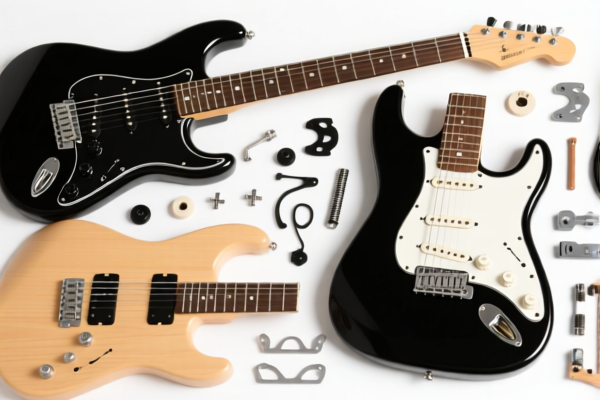
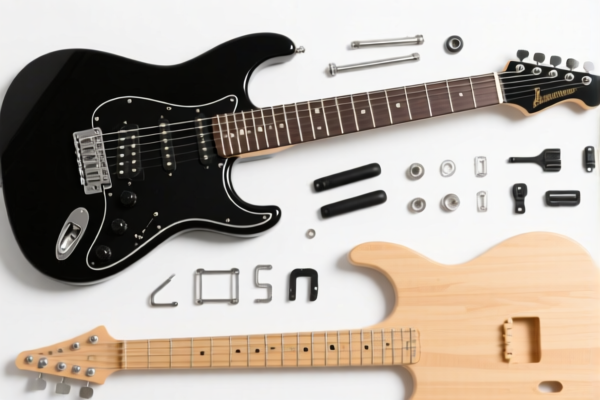
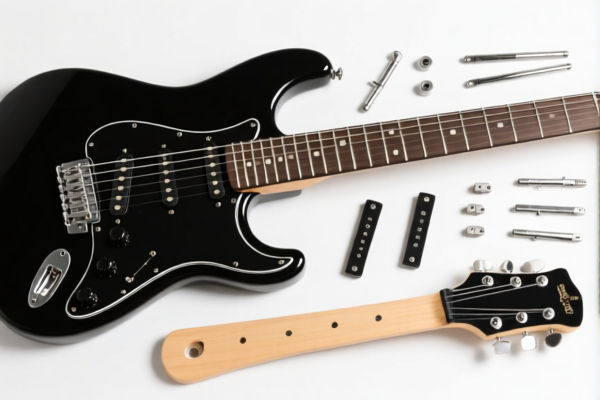
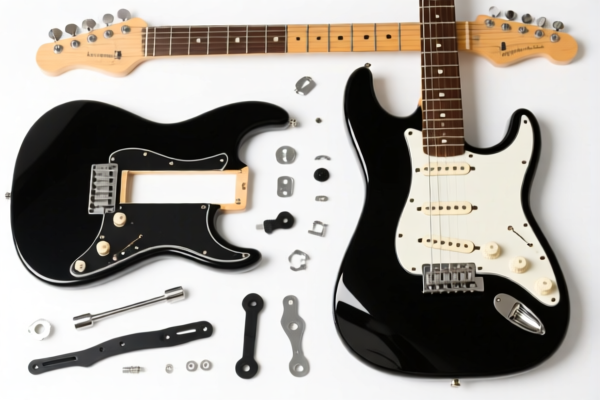
AI Analysis
🎸 Guitar Parts (Musical Instrument Accessories)
🌐 HS Code Reference & Customs Clearance Guide | 2026 Latest Tariff Analysis | Professional Compliance Strategy
📌 I. Product Definition & Classification: What Are "Guitar Parts"?
Guitar parts are components used for the repair, assembly, or enhancement of stringed musical instruments. In international trade, they are generally categorized into two types:
1. Dedicated Instrument Parts (Wood, Plastic, Nylon, Specific Hardware):
Components specifically designed for musical instruments, such as tuning pegs, bridges, frets, picks, straps, and plastic/wooden bodies. These typically fall under Chapter 92 (Musical Instruments).
2. General Material Parts (Steel, Aluminum, Copper):
Hardware items that are not unique to instruments (e.g., generic steel screws, aluminum brackets, copper wires) or parts made primarily of raw metal materials. These often fall under Chapter 73 (Articles of Iron or Steel) or Chapter 39 (Plastics) if they don’t meet the specific definition of “instrument parts.”
⚠️ Key Distinction Point:
- If the item is specifically identifiable as a part of a musical instrument (e.g., a guitar neck, bridge, or pickguard) and is not primarily classified as raw metal/plastic →归入 Chapter 92 (Lower Tax Rate).
- If the item is generic hardware (e.g., steel screws, aluminum brackets) or the material definition overrides the use →归入 Chapter 73 or 39 (Higher Tax Rate due to 122 Clause & Section 301 tariffs).
📦 II. HS Code Classification Details (2026 Latest Tariff Authority Comparison)
| HS Code | Product Description | Application Scenario | Material Conflict? | Total Tax Rate |
|---|---|---|---|---|
9209.92.80.00 |
Parts and accessories of stringed instruments (Wood/Plastic/Specific) | Guitar bodies, necks, fretboards, plastic pickups, wood bridges | ❌ No Conflict | 22.1% |
9209.99.80.00 |
Parts and accessories of musical instruments (N/Other) | Generic instrument accessories, non-specific hardware | ❌ No Conflict | 22.8% |
7326.20.00.90 |
Articles of iron or steel (Other) | Generic steel screws, steel brackets, metal rods | ✅ Yes (Steel) | 88.9% |
7326.90.86.88 |
Other articles of iron or steel | Generic steel hardware, metal fasteners | ✅ Yes (Steel) | 87.9% |
3926.90.99.89 |
Other articles of plastic | Plastic screws, generic plastic clips | ✅ Yes (Plastic) | 22.8% |
🔍 Key Reminder:
- Chapter 92 Items (9209) are the ideal classification for guitar parts, as they carry significantly lower tariffs (22-23%) compared to Chapter 73 items (87-89%).
- Chapter 73 Items (7326) incur extreme tariffs (~88-89%) due to the combination of base duties, Section 301 tariffs, and 122 Clause tariffs (Steel/Aluminum/Copper).
- Do NOT misclassify dedicated instrument parts as "steel articles" just because they contain metal hardware. If the principal character is that of a musical instrument part, it must go to Chapter 92.
💰 III. 2026 Latest Tariff Rate Details (Including Surcharges & Policy Add-ons)
✅ Applicable Country: United States (US)
✅ Origin: China (CN)
✅ Effective Time: 2025/2026 (Current enforcement of Section 301 and 122 Clauses)
🎯 1. 9209.92.80.00 & 9209.99.80.00 —— Dedicated Musical Instrument Parts
| Item | Content |
|---|---|
| Base Tariff | 4.6% - 5.3% (ad valorem) |
| Section 301 Surcharge | +7.5% (USITC Footnote for Chapter 92) |
| 122 Clause Surcharge | 0% (Not steel/aluminum/copper raw material) |
| Total Effective Tax Rate | 22.1% - 22.8% |
| Tax Calculation | CIF Value × 22.1% ~ 22.8% |
| De Minimis Eligibility | ❌ No (Deny de minimis for Chinese origin under current rules) |
| Legal Basis Path | Section 301: 9209.92.80 → USITC: 9209.92.80.00 → FOOTNOTE: 9903.01.24 |
📌 Explanation:
- This is the most favorable classification for guitar parts.
- The total tax is only ~22%, making it highly competitive for exporters.
- No 122 Clause applies because these are considered "finished parts" or non-raw material items.
🎯 2. 7326.20.00.90 & 7326.90.86.88 —— Steel Articles (High Risk)
| Item | Content |
|---|---|
| Base Tariff | 2.9% - 3.9% (ad valorem) |
| Section 301 Surcharge | +25.0% (USITC Footnote for Steel/Aluminum) |
| 122 Clause Surcharge | +50% (10% Standard + 50% Additional for Steel/Aluminum/Copper) |
| Total Effective Tax Rate | 87.9% - 88.9% |
| Tax Calculation | CIF Value × 87.9% ~ 88.9% |
| De Minimis Eligibility | ❌ No |
| Legal Basis Path | IEEPA: 9903.01.25 → Section 301: 7326 → 122 Clause: 9903.01.25 |
📌 Warning:
- This extreme tax rate (~88-89%) is caused by the 122 Clause (Steel/Aluminum/Copper Additional Tariff).
- Many importers mistakenly declare "steel guitar screws" as7326, triggering this penalty.
- Avoid this classification if possible by proving the item is an "instrument part" (9209).
🎯 3. 3926.90.99.89 —— Plastic Articles (Moderate Risk)
| Item | Content |
|---|---|
| Base Tariff | 5.3% (ad valorem) |
| Section 301 Surcharge | +7.5% |
| 122 Clause Surcharge | 0% |
| Total Effective Tax Rate | 22.8% |
| Tax Calculation | CIF Value × 22.8% |
| De Minimis Eligibility | ❌ No |
| Legal Basis Path | Section 301: 3926 → USITC: 3926.90.99.89 |
📌 Note:
- Plastic guitar parts (e.g., pickguards, plastic tuning keys) fall here if not classified under Chapter 92.
- Tax rate is similar to Chapter 92, but Chapter 92 is preferred for "instrument-specific" items to avoid future disputes.
🛠️ IV. Customs Clearance Practical Advice (Pitfall Avoidance Guide)
✅ 1. Required Documentation Checklist (Non-Negotiable)
| Document | Must Provide | Description |
|---|---|---|
| ✅ Product Specifications | ✔️ | Detailed list: material, dimensions, function (e.g., "Guitar Bridge, Steel, Model XYZ") |
| ✅ Photos (Clear) | ✔️ | Show the item in context (e.g., installed on a guitar or with packaging labeled "Guitar Parts") |
| ✅ Commercial Invoice | ✔️ | Clearly state "Parts of Musical Instruments" not "Steel Hardware" |
| ✅ Organizational Chart/Structure | ✔️ | If claiming Chapter 92, explain how it fits into the instrument |
| ✅ Third-Party Test Report | ✔️ | If applicable (e.g., material composition to prove it’s not raw steel) |
| ✅ Packing List | ✔️ | Ensure quantity and value match invoice |
✅ 2. Declaration Tips (Key Mantras)
🔥 “Specific Over General, Instrument Over Metal!”
| Situation | Correct Declaration | Incorrect Declaration |
|---|---|---|
| Guitar Bridge, Tuning Peg, Pickguard | 9209.92.80.00 (Instrument Part) |
7326.20.00.90 (Steel Article) |
| Steel Screws for Guitar | 9209.99.80.00 (If dedicated) OR 7326 (If generic) |
Misdeclaring as 9209 without proof |
| Plastic Pick | 3926.90.99.89 OR 9209.92.80.00 (If branded/specific) |
7326 (Wrong material) |
| Guitar Strap (Leather/Fabric) | 4202.32.00.00 (Accessory) |
9209 (Not a part) |
⚠️ Critical Warning:
- Do NOT declare "Steel Guitar Strings" or "Steel Guitar Nut" as7326.20.00.90if they are specifically designed for instruments. Try to argue under9209.99.80.00to save ~65% in taxes.
- If the item is a generic steel screw not unique to guitars, it MUST go to7326, and you must accept the ~88% tax.
✅ 3. Special Case Handling
| Scenario | Handling Advice |
|---|---|
| Mixed Containers | Separate "Dedicated Instrument Parts" (9209) from "Generic Hardware" (7326). Declare separately to minimize tax on the high-tax items. |
| OEM Custom Parts | Provide design drawings to prove the item is specifically designed for musical instruments, supporting 9209 classification. |
| Kit Sets (Body + Hardware) | Declare as "Parts of Musical Instruments" (9209) for the whole kit, not as individual steel parts. |
| Disputed Classification | If customs challenges 9209, provide commercial invoices from other buyers showing the same item is sold as "guitar parts" globally. |
🌍 V. Global Market Comparison (2026 Latest)
| Country/Region | Recommended HS Code | Tariff Rate | Notes |
|---|---|---|---|
| 🇺🇸 USA | 9209.92.80.00 |
22.1% | Avoid 7326 (~88%) |
| 🇨🇳 China | 9209.92.80.00 |
0% - 5% | Low import duty |
| 🇪🇺 EU | 9209.92.80.00 |
0% - 2.5% | CE/FCC may be required |
| 🇬🇧 UK | 9209.92.80.00 |
0% - 2.5% | Post-Brexit rules apply |
| 🇯🇵 Japan | 9209.92.80.00 |
0% - 3.5% | Low tariff region |
📌 Conclusion:
- USA is the highest-cost market for guitar parts due to Section 301 and 122 Clauses.
- Correct Classification is Critical: A shift from7326to9209saves ~65-67% in tariffs.
- EU/UK/JP are much more favorable, with no significant surcharges for instrument parts.
📌 VI. Common Errors & Pitfall Guide (Blood-Teaching Lessons)
❌ Error 1: Declaring "Steel Guitar Tuning Keys" as 7326.20.00.90
👉 Consequence: Tax jumps from 22% to 89% → Loss of competitiveness!
❌ Error 2: Declaring "Plastic Pickguard" as 3926 when it’s specific to guitars
👉 Consequence: Risk of reclassification to 9209 (similar tax, but dispute costs) or penalty for incorrect declaration.
❌ Error 3: Mixing "Generic Steel Screws" with "Guitar Parts" in one line item
👉 Consequence: Customs may audit the entire line, applying 88% tax to all items if deemed "instrument parts made of steel."
✅ Correct Approach:
“Guitar Parts Kit, including steel bridge, tuning pegs, and plastic pickguard, Model XYZ, for Acoustic Guitar”
HS Code:9209.92.80.00(If predominantly instrument-specific)
OR Split declaration:9209.92.80.00for dedicated parts,7326.20.00.90for generic hardware.
🎯 VII. Conclusion: Professional Declaration, Cost Savings, Efficient Clearance!
🎯 Remember the Mantra:
🔹 “Instrument Part Over Steel Part, 22% Over 88%, Save Money!”
🔹 “Specific Design Proves Chapter 92, Generic Hardware Triggers 122 Clause!”
📌 Pro Tip:
- If your guitar parts are made in Vietnam, Mexico, or Malaysia, you may be exempt from Section 301 tariffs, reducing the rate to Base Tariff Only (~5%).
- Apply for Advance Ruling if importing large volumes to lock in the 9209 classification and avoid audit risks.
📣 Immediate Action:
📞 Contact a Certified Customs Broker + Provide Product Photos + Request HS Code Advance Ruling
🚀 Let Your Guitar Parts Clear Smoothly, Reduce Costs, and Maximize Profit!
✨ Professional Customs Clearance Starts with Precise Classification!
💼 Every Dollar Saved in Tariffs is Pure Profit!
Customer Reviews
About HS Code Classification
The Harmonized System (HS) is an internationally standardized nomenclature developed by the World Customs Organization (WCO) to classify traded products. Over 200 countries use the HS system as the basis for customs tariffs, trade statistics, and import/export regulations.
Each HS code follows a hierarchical structure:
- Chapter (2 digits) — Broad category of goods (e.g., Chapter 84: Machinery and Mechanical Appliances)
- Heading (4 digits) — More specific grouping within the chapter
- Subheading (6 digits) — Internationally standardized breakdown, used by all WCO member countries
- National subdivisions (8-10 digits) — Country-specific extensions for further classification, such as US HTSUS 10-digit codes
Correct HS code classification is essential for smooth customs clearance, accurate duty payment, and compliance with trade regulations. Misclassification can lead to customs delays, overpayment of duties, or penalties.
When importing from CN to US, the applicable tariff rates may include:
- Most-Favored-Nation (MFN) rate — The standard duty rate applied to WTO members
- General rate — Applied to countries without trade agreements
- Trade remedy duties — Additional tariffs such as Section 301 (anti-dumping), Section 232 (national security), or countervailing duties
The information provided on this page is for reference purposes only. For official classification, please consult with your local customs authority or a licensed customs broker.