hair dryer with 2 brushes
CN → US| HS Code | Tariff Rate | Origin | Destination | Doc |
|---|---|---|---|---|
| 8509805095 | 14.2% | CN | US | Official Doc |
| 8543709860 | 37.6% | CN | US | Official Doc |
| 8509805080 | 14.2% | CN | US | Official Doc |
| 8543706000 | 35.0% | CN | US | Official Doc |
Product Images
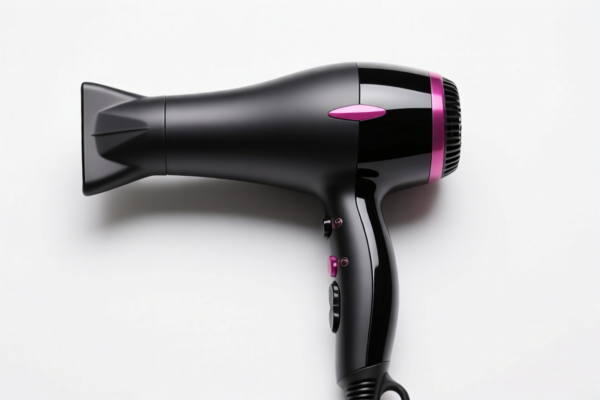
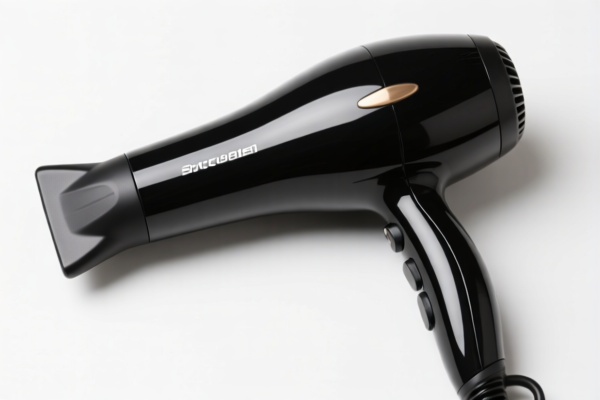
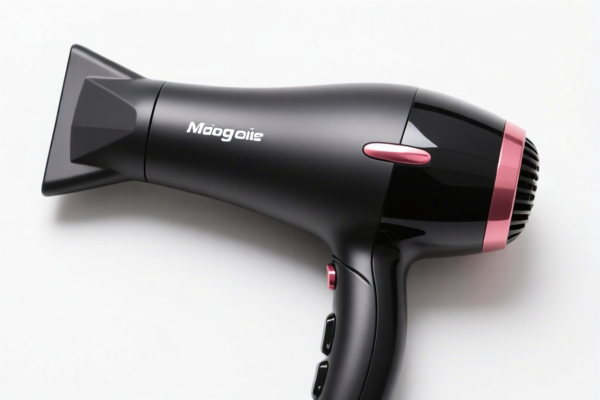
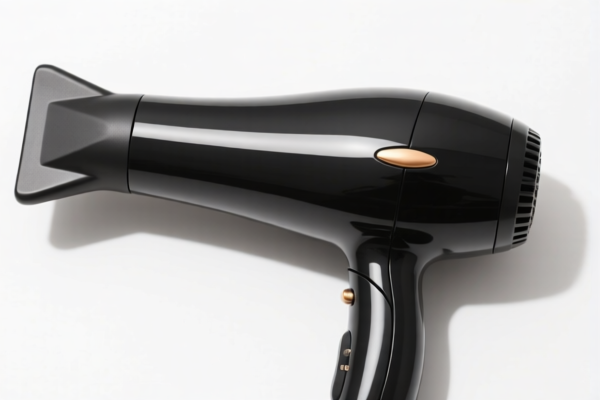
AI Analysis
💨 Hair Dryer with 2 Brushes: HS Code Classification & Customs Clearance Strategy (2026 Update)
🌐 HS Code Reference & Customs Clearance Guide | 2026 Latest Tariff Analysis | Professional Compliance Strategy
📌 1. Product Definition & Classification: What Exactly Is a "Hair Dryer with 2 Brushes"?
A "Hair Dryer with 2 Brushes" typically refers to a multifunctional hair styling tool, often marketed as a "3-in-1" or "4-in-1" hair styler. It combines: - A hair dryer (blows hot/cold air), - One or more brushes/cylinders for volume/straightening, - Sometimes a curling wand or smoothing nozzle.
⚠️ Key Customs Classification Issue:
The critical question for customs is: Is it a "domestic appliance with self-contained electric motor" (Headnote 8509) OR an "electric machine with individual function" (Headnote 8543)?
Why does this matter? - HS 8509 = Lower base tariff (4.2%) → Total duty 14.2% (for China-origin under 122-section tariffs) - HS 8543 = Higher base tariff (0–2.6%) → Total duty 35.0–37.6% due to heavy 301/IEEPA surcharges
📦 2. HS Code Classification Breakdown (2026 U.S. Tariff Schedule)
| HS Code | Product Description | Total Tax Rate | Tax Detail |
|---|---|---|---|
8509.80.50.95 |
Hair dryer: Other domestic appliances with self-contained electric motor, other | 14.2% | Base: 4.2%, Section 301: 0.0%, Section 122: 10% |
8509.80.50.80 |
Hair dryer: Other domestic appliances with self-contained electric motor, other | 14.2% | Base: 4.2%, Section 301: 0.0%, Section 122: 10% |
8543.70.60.00 |
Electric machines & apparatus with individual function, n.e.s. in 85.43 | 35.0% | Base: 0.0%, Section 301: 25.0%, Section 122: 10% |
8543.70.98.60 |
Electric machines & apparatus with individual function, n.e.s. in 85.43 | 37.6% | Base: 2.6%, Section 301: 25.0%, Section 122: 10% |
🔍 Key Takeaway: - HS 8509 codes (
.50.80and.50.95) classify the product as a domestic appliance with a self-contained electric motor, which is the preferred and lower-duty classification. - HS 8543 codes (.70.60and.70.98) classify it as an independent-function electric machine, triggering higher Section 301 tariffs (25%).
💰 3. 2026 U.S. Tariff Rate Breakdown (China-Origin Products)
🎯 Case 1: Classification under HS 8509.80.50.95 / .80 → Total Duty: 14.2%
| Item | Detail |
|---|---|
| Base Tariff | 4.2% (Ad Valorem) |
| Section 301 Tariff | 0.0% (Exempt or Not Applicable) |
| Section 122 Tariff | 10.0% (Under 19 U.S.C. § 1677j) |
| Total Effective Rate | 14.2% |
| Calculation Basis | CIF Value × 14.2% |
| De Minimis Eligibility | ❌ Not Eligible (Deny de minimis for Section 122 items) |
| Legal Authority | U.S. Harmonized Tariff Schedule (HTSUS) § 8509.80.50.95/.80; Section 122 Authority |
📌 Explanation: - Section 122 (19 U.S.C. § 1677j) imposes a 10% tariff on certain imported goods that violate intellectual property rights or are produced in violation of certain labor laws. However, for hair dryers, it is often applied as a general safeguard. - No Section 301 tariff applies to HS 8509 hair dryers, making this the most favorable classification.
🎯 Case 2: Classification under HS 8543.70.60.00 → Total Duty: 35.0%
| Item | Detail |
|---|---|
| Base Tariff | 0.0% |
| Section 301 Tariff | 25.0% |
| Section 122 Tariff | 10.0% |
| Total Effective Rate | 35.0% |
| Calculation Basis | CIF Value × 35.0% |
| De Minimis Eligibility | ❌ Not Eligible |
| Legal Authority | HTSUS § 8543.70.60.00; Section 301 (U.S. Note 20 to Subchapter III, Chapter 99); Section 122 |
📌 Explanation: - Classified as an "electric machine with individual function," triggering full Section 301 tariffs (25%). - Higher duty burden significantly impacts profitability.
🎯 Case 3: Classification under HS 8543.70.98.60 → Total Duty: 37.6%
| Item | Detail |
|---|---|
| Base Tariff | 2.6% |
| Section 301 Tariff | 25.0% |
| Section 122 Tariff | 10.0% |
| Total Effective Rate | 37.6% |
| Calculation Basis | CIF Value × 37.6% |
| De Minimis Eligibility | ❌ Not Eligible |
| Legal Authority | HTSUS § 8543.70.98.60; Section 301; Section 122 |
📌 Explanation: - Similar to Case 2, but with a slightly higher base tariff (2.6% vs. 0.0%). - Highest duty rate among all options.
🛠️ 4. Customs Clearance Best Practices (Avoiding Pitfalls)
✅ 1. Documentation Checklist (Required for Smooth Clearance)
| Document | Mandatory? | Notes |
|---|---|---|
| ✅ Product Specifications Sheet | ✔️ | Must include wattage, voltage, motor type, accessories |
| ✅ Product Photos (With All Attachments) | ✔️ | Show dryer + brushes assembled |
| ✅ Commercial Invoice | ✔️ | Clearly state "Hair Dryer with Brush Attachments" |
| ✅ Packing List | ✔️ | List all components (dryer, 2 brushes, cables, box) |
| ✅ FCC Certificate (If for U.S. Market) | ✔️ | Required for electrical appliances |
| ✅ UL/ETL Safety Certification | ✔️ | Highly recommended for U.S. customs |
| ✅ Origin Certificate (CO) | ✔️ | To prove China origin |
✅ 2. Declaration Strategy (Critical Tips)
🔥 Golden Rule: "Classify as Domestic Appliance (8509), NOT Independent Machine (8543)!"
| Scenario | Recommended HS Code | Risk if Misclassified |
|---|---|---|
| Hair dryer with brush attachments | 8509.80.50.95 or 8509.80.50.80 |
Avoids 25% Section 301 tariff |
| Hair dryer sold without brushes | 8509.80.50.95 |
Same as above |
| Hair dryer + brush sold separately | Declare separately | Each item classified independently |
| Kit with multiple attachments | 8509.80.50.95 |
Still classified as dryer |
| Standalone heating brush (no dryer) | 8543.70.98.60 |
Higher duty applies |
📌 Why 8509 is Preferred: - The primary function is drying hair (blowing air), which is a classic domestic appliance. - The brushes are attachments/accessories, not separate machines. - U.S. Customs Ruling Letters (e.g., NY N276588, NY F97787) support classifying hair dryers with attachments under 8509.
✅ 3. Special Cases & Edge Scenarios
| Scenario | Classification Advice |
|---|---|
| OEM Custom Branding | Same classification (8509); provide branding agreement |
| Gift Set (Dryer + Brushes + Box) | Declare as single unit; classify as dryer (8509) |
| Replacement Brushes Only | Classify separately; may fall under 8543.70.98.60 if standalone |
| Hair Dryer + Curling Iron Combo | Still 8509 if dryer is primary function |
| Professional Salon Unit | May require additional certifications; still 8509 |
🌍 5. Global Market Comparison (2026)
| Country/Region | Recommended HS Code | Duty Rate | Certification Requirements | Notes |
|---|---|---|---|---|
| 🇺🇸 U.S. | 8509.80.50.95 |
14.2% | FCC + UL/ETL | Avoid 8543 (35–37.6%) |
| 🇨🇳 China | 8509.80.50.95 |
4.2% | CCC | No Section 301/122 |
| 🇪🇺 EU | 8509.80.50.95 |
4.0% | CE + RoHS | Lower duties than U.S. |
| 🇬🇧 UK | 8509.80.50.95 |
4.0% | UKCA + RoHS | Post-Brexit standards |
| 🇯🇵 Japan | 8509.80.50.95 |
6.0% | PSE + JIS | Moderate duties |
| 🇦🇺 Australia | 8509.80.50.95 |
5.0% | RCM | No Section 301 |
📌 Key Insight: - U.S. is the most challenging market due to Section 122 and potential Section 301 risks. - EU, UK, Japan, Australia offer significantly lower duties (4–6%) with no punitive surcharges.
📌 6. Common Mistakes & How to Avoid Them (Lessons Learned)
❌ Mistake 1: Classifying hair dryer with brushes as "electric machine" (8543)
👉 Consequence: Pay 35–37.6% instead of 14.2% → Loss of 20–23% profit margin
❌ Mistake 2: Declaring brushes as separate items when sold as a kit 👉 Consequence: Customs may reclassify entire set as independent machines → Higher duties + delays
❌ Mistake 3: Using vague descriptions like "hair styling tool" 👉 Consequence: Customs may apply default higher-duty classification → Audit risk
❌ Mistake 4: Ignoring FCC/UL requirements 👉 Consequence: Goods held at port, returned, or destroyed → Complete loss
✅ Correct Approach:
"Hair Dryer, 1800W, 110V, with 2 Brush Attachments, Model XYZ, FCC & UL Certified, HS 8509.80.50.95"
🎯 7. Conclusion: Optimize Classification, Maximize Profit
🎯 Remember the Golden Rule:
🔹 "Dryer with brushes = Domestic Appliance (8509) → 14.2% duty"
🔹 "Standalone heater/brush = Independent Machine (8543) → 35–37.6% duty"
📌 Action Items: 1. ✅ Classify under HS 8509.80.50.95 or 8509.80.50.80 for lowest duty (14.2%). 2. ✅ Provide full documentation (specs, photos, FCC/UL certificates). 3. ✅ Avoid vague declarations; be specific: "Hair Dryer with Brush Attachments." 4. ✅ Apply for Advance Ruling from U.S. Customs if uncertain.
📣 Immediate Action Required:
📞 Engage a licensed customs broker to file a Pre-Ruling Application with U.S. CBP.
📄 Submit product images, specifications, and assembly diagrams.
🚀 Save 20–23% in duties by correct classification.
✨ Professional customs clearance starts with accurate HS Code classification!
💼 Every dollar saved in duties is pure profit!
Customer Reviews
About HS Code Classification
The Harmonized System (HS) is an internationally standardized nomenclature developed by the World Customs Organization (WCO) to classify traded products. Over 200 countries use the HS system as the basis for customs tariffs, trade statistics, and import/export regulations.
Each HS code follows a hierarchical structure:
- Chapter (2 digits) — Broad category of goods (e.g., Chapter 84: Machinery and Mechanical Appliances)
- Heading (4 digits) — More specific grouping within the chapter
- Subheading (6 digits) — Internationally standardized breakdown, used by all WCO member countries
- National subdivisions (8-10 digits) — Country-specific extensions for further classification, such as US HTSUS 10-digit codes
Correct HS code classification is essential for smooth customs clearance, accurate duty payment, and compliance with trade regulations. Misclassification can lead to customs delays, overpayment of duties, or penalties.
When importing from CN to US, the applicable tariff rates may include:
- Most-Favored-Nation (MFN) rate — The standard duty rate applied to WTO members
- General rate — Applied to countries without trade agreements
- Trade remedy duties — Additional tariffs such as Section 301 (anti-dumping), Section 232 (national security), or countervailing duties
The information provided on this page is for reference purposes only. For official classification, please consult with your local customs authority or a licensed customs broker.