hair pins
CN → US| HS Code | Tariff Rate | Origin | Destination | Doc |
|---|---|---|---|---|
| 9615903000 | 15.1% | CN | US | Official Doc |
| 9615114000 | 15.3% | CN | US | Official Doc |
| 7117909000 | 28.5% | CN | US | Official Doc |
| 3926908500 | 24.0% | CN | US | Official Doc |
| 3926909989 | 22.8% | CN | US | Official Doc |
Product Images
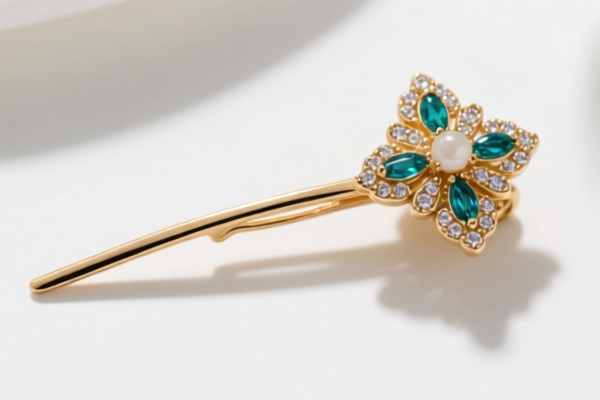
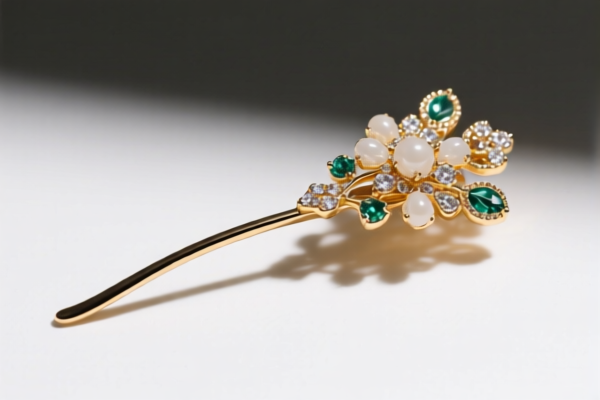
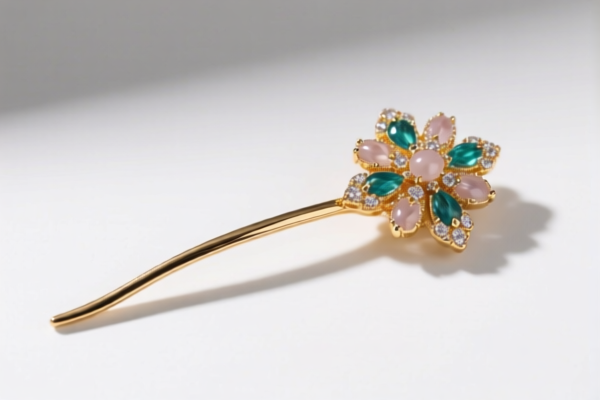
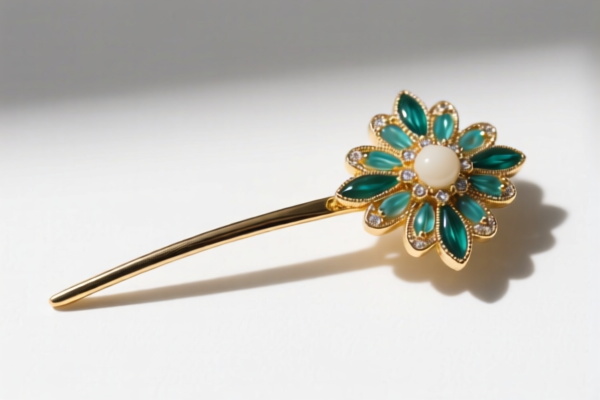
AI Analysis
💇♀️ Hair Pins (Hair Clips/Barrettes)
🌐 HS Code Reference & Customs Clearance Guide | 2024 Latest Tariff Analysis | Professional Entry Strategy
📌 I. Product Definition and Classification: What Exactly Are "Hair Pins"?
Hair pins, often referred to as hair clips, barrettes, or slide clips in international trade, are accessories designed to hold hair in place. While they appear simple, their classification depends heavily on material composition and function. In the Harmonized System (HS), they generally fall under two main chapters: 1. Chapter 96: Manufactured articles of various materials (specifically hair accessories). 2. Chapter 71: Imitation jewelry (if made of base metals or plastics designed as fashion jewelry). 3. Chapter 39: Plastic articles (if classified as general plastic fasteners).
⚠️ Key Distinction:
- If the item is explicitly recognized as a hair accessory (clips, barrettes, hairpins) regardless of material (plastic, metal, rubber), it typically falls under HS 9615.
- If the item is ambiguous, or deemed a fastener/clamp rather than a cosmetic accessory, it may fall under plastics (Ch 39) or imitation jewelry (Ch 71).
- Material matters: The total tax rate varies significantly based on whether customs classifies them as hair accessories (lower duty) or general goods/plastics/jewelry (higher duty).
📦 II. HS Code Classification Details (Based on Provided Data)
The following HS Codes are derived from the specific analysis of your product's potential classification. Note that the "Summary" indicates the reasoning for each code.
| HS Code | Product Description & Reasoning | Key Characteristics | Total Tax Rate |
|---|---|---|---|
| 9615.90.30.00 | Hair Accessories (Primary Classification) Summary: Fully consistent with "hair pins" in the nomenclature explanation; purpose matches. |
Standard hair clips, barrettes, bobby pins. Recognized specifically as hair care accessories. | 15.1% |
| 9615.11.40.00 | Hard Rubber/Plastic Hair Accessories Summary: Consistent form and purpose; inferred to be made of hard rubber or plastic. |
Hard plastic clips, comb-style hair bars. | 15.3% |
| 7117.90.90.00 | Imitation Jewelry Summary: Inferred as metal or plastic imitation jewelry accessories; falls under "other imitation jewelry." |
Decorative hair pins that look like fine jewelry (metal/plastic mix). | 28.5% |
| 3926.90.85.00 | Plastic Fasteners Summary: Inferred as plastic material; classified as clip-type fasteners within the plastics category. |
Industrial-style plastic clips, simple hair clamps not clearly "fashion" items. | 24.0% |
| 3926.90.99.89 | Other Plastic Articles Summary: Inferred as plastic or resin; classified as unspecified other plastic articles. |
Generic plastic hair accessories, resin clips. | 22.8% |
🔍 Critical Insight:
- HS 9615 is the preferred and most accurate classification for standard hair pins, resulting in the lowest tax burden (15.1% - 15.3%).
- Classifying as Imitation Jewelry (7117) or Plastics (3926) leads to significantly higher duties (22.8% - 28.5%) due to additional "Section 301" or "122" tariffs.
- The difference between the best (15.1%) and worst (28.5%) case is 13.4 percentage points on the CIF value.
💰 III. 2024 Latest Tariff Rate Breakdown (Detailed Tax Clauses)
✅ Applicable Country: United States (US)
✅ Country of Origin: China (CN)
✅ Effective Time: Current (Based on Section 301 & 122 tariffs)
🎯 1. HS 9615.90.30.00 – Hair Accessories (Best Case)
| Item | Content |
|---|---|
| Base Tariff | 5.1% |
| Section 301 / 122 Additional Tariff | 10.0% |
| Total Tariff | 15.1% |
| Calculation | CIF Value × 15.1% |
| De Minimis Eligibility | ❌ No (Generally, hair accessories are not exempt from Section 301 tariffs if imported directly from China) |
| Legal Basis | USITC:9615.90.30.00 → Section 301 Tariff List |
📌 Explanation:
- This is the optimal classification. It recognizes the item’s primary function as a hair accessory.
- The total duty is 15.1%, which is relatively low compared to other classifications.
- Note: Even though the base duty is low, the 10% additional tariff applies to most Chinese-origin goods under current trade policies.
🎯 2. HS 9615.11.40.00 – Hard Rubber/Plastic Hair Accessories
| Item | Content |
|---|---|
| Base Tariff | 5.3% |
| Section 301 / 122 Additional Tariff | 10.0% |
| Total Tariff | 15.3% |
| Calculation | CIF Value × 15.3% |
| De Minimis Eligibility | ❌ No |
| Legal Basis | USITC:9615.11.40.00 → Section 301 Tariff List |
📌 Note:
- Very similar to 9615.90.30.00. The slight difference (0.2%) comes from the specific sub-heading for hard rubber/plastic materials.
- Still a strong recommendation for classification.
🎯 3. HS 7117.90.90.00 – Imitation Jewelry (High Cost)
| Item | Content |
|---|---|
| Base Tariff | 11.0% |
| Section 301 / 122 Additional Tariff | 10.0% (122 Clause) |
| Additional 301 Tariff | 7.5% (Section 301 List) |
| Total Tariff | 28.5% |
| Calculation | CIF Value × 28.5% |
| De Minimis Eligibility | ❌ No |
| Legal Basis | USITC:7117.90.90.00 → Section 301 + 122 Clause |
⚠️ Warning:
- If customs deems your hair pins as "imitation jewelry" (e.g., decorative metal clips), the duty jumps to 28.5%.
- This includes both the standard Section 301 tariff and the additional 122 Clause tariff.
- Cost Impact: 13.4% higher than the optimal classification.
🎯 4. HS 3926.90.85.00 – Plastic Fasteners (High Cost)
| Item | Content |
|---|---|
| Base Tariff | 6.5% |
| Section 301 / 122 Additional Tariff | 10.0% |
| Additional 301 Tariff | 7.5% |
| Total Tariff | 24.0% |
| Calculation | CIF Value × 24.0% |
| De Minimis Eligibility | ❌ No |
| Legal Basis | USITC:3926.90.85.00 → Section 301 + 122 Clause |
⚠️ Warning:
- Classified as a "plastic fastener" rather than a cosmetic accessory.
- High duty rate due to the combination of base tariff and multiple additional tariffs.
🎯 5. HS 3926.90.99.89 – Other Plastic Articles (High Cost)
| Item | Content |
|---|---|
| Base Tariff | 5.3% |
| Section 301 / 122 Additional Tariff | 10.0% |
| Additional 301 Tariff | 7.5% |
| Total Tariff | 22.8% |
| Calculation | CIF Value × 22.8% |
| De Minimis Eligibility | ❌ No |
| Legal Basis | USITC:3926.90.99.89 → Section 301 + 122 Clause |
⚠️ Warning:
- Catch-all category for plastic items.
- Still significantly more expensive than HS 9615.
🛠️ IV. Customs Clearance Practical Advice (Pitfall Avoidance Guide)
✅ 1. Documentation Checklist (Essential)
| Document | Must Provide | Notes |
|---|---|---|
| ✅ Product Photos | ✔️ | Clear images showing the item being used in hair. Show the clip mechanism. |
| ✅ Product Description | ✔️ | Use terms like "Hair Clip," "Barrette," "Bobby Pin," "Hair Accessory." Avoid "Plastic Fastener" or "Jewelry." |
| ✅ Material Composition | ✔️ | Specify if it’s plastic, metal, or rubber. This helps support the HS 9615 classification. |
| ✅ Function Description | ✔️ | State clearly: "Used to hold hair in place." Do not say "used for clothing or industrial fastening." |
| ✅ Commercial Invoice | ✔️ | Ensure the description matches the HS code intent. |
✅ 2. Declaration Tips (Key Mnemonic)
🔥 "Hair Accessory, Not Jewelry or Fastener; HS 9615 is the Winner!"
| Scenario | Correct Declaration | Incorrect Declaration |
|---|---|---|
| Standard Hair Clip | "Plastic Hair Clip/Barrette" | "Plastic Fastener" |
| Decorative Hair Pin | "Fashion Hair Accessory" | "Imitation Jewelry" |
| Metal Hair Pin | "Metal Hair Barrette" | "Base Metal Jewelry" |
✅ 3. Special Case Handling
| Situation | Recommendation |
|---|---|
| OEM Custom Designs | Provide design sketches to prove the item is intended for hair, not general use. |
| Mixed Materials | If it’s plastic with metal parts, still argue for HS 9615 as the essential character is a hair accessory. |
| High-Value Jewelry Pins | If the item is expensive and jewel-like, customs may push for 7117. Prepare counter-evidence (e.g., mass-produced, low-cost, specific hair-use design). |
| B2B vs B2C | For bulk imports, emphasize the utility (hair styling) over the material. |
🌍 V. Global Market Comparison (2024 Latest)
| Country/Region | Recommended HS Code | Tariff Rate | Certification Requirements | Notes |
|---|---|---|---|---|
| 🇺🇸 USA | 9615.90.30.00 |
15.1% | None specific | Avoid 7117/3926 to save 10%+ |
| 🇨🇳 China | 9615.90.30.00 |
~5-10% | GB Standards | Lower impact from US tariffs |
| 🇪🇺 EU | 9615.90.00 |
0-6% | CE (if applicable) | Generally favorable |
| 🇬🇧 UK | 9615.90.00 |
0-6% | UKCA | Post-Brexit rules apply |
| 🇦🇺 Australia | 9615.90.00 |
5% | None | Competitive |
📌 Conclusion:
- USA is the most critical market for tariff optimization.
- HS 9615 is the only code among the options that avoids the higher "122 Clause" and "301" additional tariffs that hit plastics and jewelry harder.
- Strategy: Always declare as "Hair Accessory" with photos showing hair use.
📌 VI. Common Mistakes & Pitfall Guide (Lessons Learned)
❌ Mistake 1: Declaring as "Plastic Parts" or "Fasteners"
👉 Consequence: Duty jumps from 15.1% to 24.0% or 22.8%.
👉 Reason: Customs applies additional 301/122 tariffs to general plastic goods.
❌ Mistake 2: Declaring as "Imitation Jewelry" for decorative clips
👉 Consequence: Duty jumps to 28.5%.
👉 Reason: Jewelry faces higher base duties and multiple additional tariffs.
❌ Mistake 3: Vague Description ("Accessory")
👉 Consequence: Customs may select a random code (often the highest).
👉 Solution: Be specific: "Hair Clip, Plastic, Used for Hairstyling."
❌ Mistake 4: Ignoring Material Composition
👉 Consequence: If material is ambiguous, customs may default to a higher-tariff category.
👉 Solution: Clearly state "Plastic," "Metal," or "Rubber" and link it to hair use.
✅ Correct Practice:
"Plastic Hair Clip/Barrette, Model XYZ, Used for Hairstyling, Material: ABS Plastic, Color: Red"
🎯 VII. Conclusion: Precise Classification Saves Money!
🎯 Remember the Golden Rule:
🔹 "Hair Accessory = HS 9615 = Lowest Duty (15.1%)"
🔹 "Plastic/Jewelry = HS 3926/7117 = High Duty (22.8%-28.5%)"
🔹 "Describe by Function, Not Just Material!"
📌 Pro Tip:
- If your hair pins are decorative and high-end, prepare a Pre-Ruling Application with Customs to confirm HS 9615 classification before shipment.
- Always include photos of the product in use (in hair) with your commercial invoice to prevent misclassification.
📣 Immediate Action:
📞 Consult your customs broker with the HS 9615.90.30.00 recommendation.
📸 Provide clear product photos showing hair usage.
🚀 Secure the 15.1% rate and avoid the 28.5% trap!
✨ Professional Clearance Starts with Accurate Classification!
💼 Every percentage point saved is pure profit!
Customer Reviews
About HS Code Classification
The Harmonized System (HS) is an internationally standardized nomenclature developed by the World Customs Organization (WCO) to classify traded products. Over 200 countries use the HS system as the basis for customs tariffs, trade statistics, and import/export regulations.
Each HS code follows a hierarchical structure:
- Chapter (2 digits) — Broad category of goods (e.g., Chapter 84: Machinery and Mechanical Appliances)
- Heading (4 digits) — More specific grouping within the chapter
- Subheading (6 digits) — Internationally standardized breakdown, used by all WCO member countries
- National subdivisions (8-10 digits) — Country-specific extensions for further classification, such as US HTSUS 10-digit codes
Correct HS code classification is essential for smooth customs clearance, accurate duty payment, and compliance with trade regulations. Misclassification can lead to customs delays, overpayment of duties, or penalties.
When importing from CN to US, the applicable tariff rates may include:
- Most-Favored-Nation (MFN) rate — The standard duty rate applied to WTO members
- General rate — Applied to countries without trade agreements
- Trade remedy duties — Additional tariffs such as Section 301 (anti-dumping), Section 232 (national security), or countervailing duties
The information provided on this page is for reference purposes only. For official classification, please consult with your local customs authority or a licensed customs broker.