hand bag
CN → US| HS Code | Tariff Rate | Origin | Destination | Doc |
|---|---|---|---|---|
| 4202224030 | 42.4% | CN | US | Official Doc |
| 4602112100 | 41.2% | CN | US | Official Doc |
| 4202224020 | 42.4% | CN | US | Official Doc |
| 4202228980 | 52.6% | CN | US | Official Doc |
| 4602192920 | 40.3% | CN | US | Official Doc |
Product Images
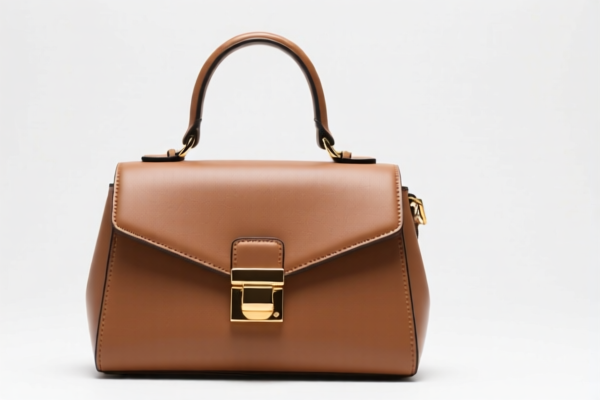
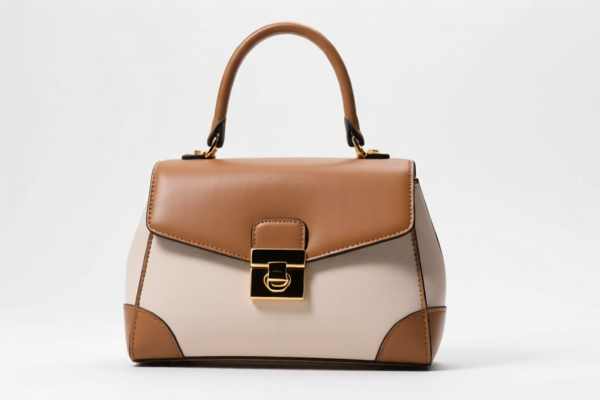
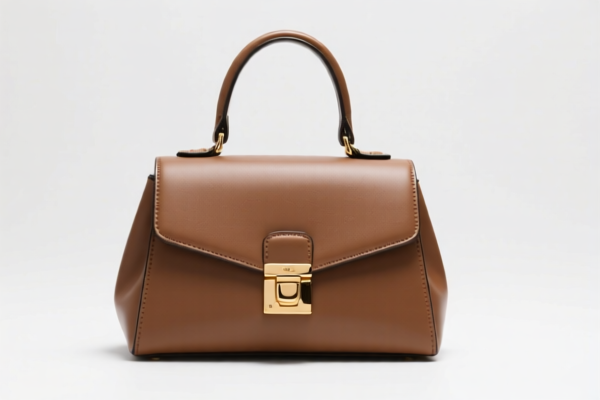
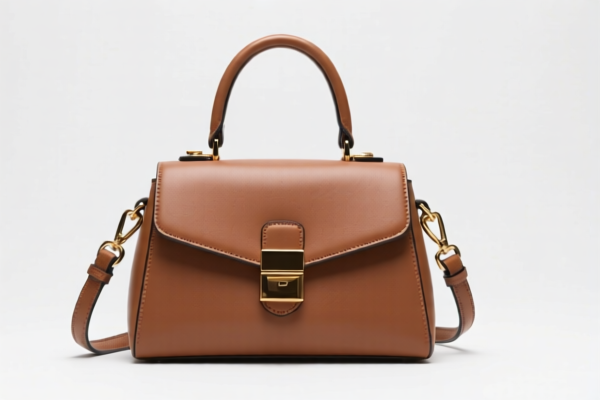
AI Analysis
👜 Hand Bags (Handbags & Purses)
🌐 HS Code Reference & Customs Clearance Guide | 2026 Latest Tariff Analysis | Professional Clearance Strategy
📌 I. Product Definition and Classification: Do You Really Understand "Hand Bags"?
Hand bags, the essential accessory for daily life and fashion, are classified in international trade based on their material composition. The tariff rates vary significantly depending on whether the material is synthetic fibers, vegetable materials (bamboo, rattan), or other textiles.
In the context of US Customs (assuming imports from China based on the provided data), the classification determines the Base Tariff, the Section 301 Additional Tariff (25%), and the Section 122 Tariff (10%).
⚠️ Key Distinction Point:
- Artificial Fiber/Synthetic: Often carries a higher base tariff (7.4%) compared to some natural or other textile materials.
- Vegetable Materials (Bamboo/Rattan): Generally have the lowest base tariff (5.3%-6.2%).
- Other Textiles/Specific Materials: May have a high base tariff (17.6%) if classified under specific "other" subheadings.
📦 II. HS Code Classification Details (2026 Latest Tariff Authority)
Based on the provided <DATA>, here is the precise breakdown for hand bags:
| HS Code | Product Description | Material Basis | Total Tax Rate |
|---|---|---|---|
4202.22.40.30 |
Cartoon hand bags | Artificial Fiber (Synthetic) | 42.4% |
4602.11.21.00 |
Hand bags, woven | Vegetable Materials (Bamboo, Rattan, etc.) | 41.2% |
4202.22.40.20 |
Hand bags, woven | Woven Materials (General) | 42.4% |
4202.22.89.80 |
Hand bags or ladies' purses | Textile Materials or Other Non-Specific Materials | 52.6% |
4602.19.29.20 |
Hand bags, woven | Plant Material Woven Products | 40.3% |
🔍 Key Insight:
- Chapter 42 covers articles of leather, travel goods, etc., but includes specific subheadings for hand bags of textile materials or other materials.
- Chapter 46 covers articles of plant materials (weaving materials).
- The "Section 122 Tariff" (10%) applies to all items in this dataset, likely referring to specific trade remedies or new tariff lines effective in 2026.
💰 III. 2026 Latest Tariff Rate Breakdown (Including Surcharges)
✅ Applicable Country: United States (US)
✅ Origin: China (CN)
✅ Effective Time: Current 2026 Trade Regulations
🎯 1. 4202.22.40.30 & 4202.22.40.20 —— Hand Bags of Artificial Fiber / Woven Materials
| Item | Content |
|---|---|
| Base Tariff | 7.4% (Ad Valorem) |
| Additional Tariff (Section 301) | +25.0% |
| Section 122 Tariff | +10.0% |
| Total Tax Rate | 42.4% |
| Tax Calculation | CIF Value × 42.4% |
| De Minimis Exemption | ❌ Not Applicable (High tariff items usually excluded from $800 de minimis relief if not specified, but generally high tariffs discourage small parcel entry without proper duty payment) |
📌 Explanation:
- The 7.4% base tariff applies to hand bags made of artificial fibers or woven materials under specific subheadings.
- The 25% Section 301 tariff is the standard additional tariff on Chinese goods.
- The 10% Section 122 tariff is a specific additional levy.
- Total: 42.4%. This is a high-cost category.
🎯 2. 4602.11.21.00 —— Hand Bags, Woven (Vegetable Materials)
| Item | Content |
|---|---|
| Base Tariff | 6.2% (Ad Valorem) |
| Additional Tariff (Section 301) | +25.0% |
| Section 122 Tariff | +10.0% |
| Total Tax Rate | 41.2% |
| Tax Calculation | CIF Value × 41.2% |
📌 Note:
- Vegetables materials (bamboo, rattan) have a slightly lower base tariff (6.2%) compared to artificial fibers (7.4%).
- However, the total rate (41.2%) is still very high due to the 35% in surcharges.
🎯 3. 4602.19.29.20 —— Hand Bags, Woven (Plant Materials)
| Item | Content |
|---|---|
| Base Tariff | 5.3% (Ad Valorem) |
| Additional Tariff (Section 301) | +25.0% |
| Section 122 Tariff | +10.0% |
| Total Tax Rate | 40.3% |
| Tax Calculation | CIF Value × 40.3% |
📌 Key Advantage:
- This is the lowest total tax rate (40.3%) among all listed hand bags.
- The base tariff is only 5.3%. If your product can be classified as "plant material woven products" (not specifically bamboo/rattan but other plants), this is the most cost-effective classification.
🎯 4. 4202.22.89.80 —— Hand Bags, Other Textile/Non-Specific Materials
| Item | Content |
|---|---|
| Base Tariff | 17.6% (Ad Valorem) |
| Additional Tariff (Section 301) | +25.0% |
| Section 122 Tariff | +10.0% |
| Total Tax Rate | 52.6% |
| Tax Calculation | CIF Value × 52.6% |
⚠️ Warning:
- This classification has the highest base tariff (17.6%).
- Total rate: 52.6%.
- Risk: If your hand bag is made of common textiles (polyester, nylon) but doesn't fit the specific "artificial fiber" or "woven" subheadings, it may fall into this "Other" category, significantly increasing costs.
- Strategy: Ensure your product documentation clearly specifies the material to avoid being misclassified into this high-tariff bucket.
🛠️ IV. Customs Clearance Practical Advice (Avoid Pitfalls)
✅ 1. Documentation Checklist (Mandatory)
| Document | Required? | Notes |
|---|---|---|
| ✅ Product Specification Sheet | ✔️ | Must clearly state material composition (e.g., 100% Polyester, Bamboo Woven). |
| ✅ Photos of Product | ✔️ | Show texture, weaving style, lining, and hardware. |
| ✅ Commercial Invoice | ✔️ | Must describe goods accurately (e.g., "Woven Bamboo Hand Bag" not just "Bag"). |
| ✅ Packing List | ✔️ | Include weight, dimensions, and quantity. |
| ✅ Material Certificate | ✔️ | If claiming vegetable material, provide proof to support lower base tariff. |
✅ 2. Declaration Tips (Key Rules)
🔥 “Material Defines Tariff, Description Defines Accuracy!”
| Scenario | Correct Declaration | Incorrect Action | Consequence |
|---|---|---|---|
| Bamboo/Rattan Hand Bag | 4602.11.21.00 or 4602.19.29.20 |
Declare as "Textile Bag" | Higher tariff (42.4% or 52.6%) |
| Artificial Fiber Hand Bag | 4202.22.40.30 |
Declare as "Vegetable Material" | Audit, penalty, retroactive tax |
| Other Textile Bag | 4202.22.89.80 |
Try to force a lower tariff code | High risk of seizure or fines |
| Mixed Material Bag | Consult customs broker | Guess the material | Classification error |
📌 Critical Note:
- Section 122 Tariff (10%) applies to all these items. Do not assume any exemption.
- Base Tariff varies: 5.3% to 17.6%. The difference is 12.3%, which is significant for large shipments.
✅ 3. Special Handling
| Situation | Advice |
|---|---|
| OEM/Private Label | Ensure the supplier's declaration matches your product exactly. |
| Seasonal Items | Plan inventory early to avoid customs delays due to high valuation scrutiny. |
| High-Value Fashion Bags | Consider using a Tariff Engineering strategy to ensure correct material classification (e.g., ensuring bamboo content is >50% if required). |
🌍 V. Global Market Comparison (2026)
| Country/Region | Recommended HS Code | Approx. Tariff (Base) | Notes |
|---|---|---|---|
| 🇺🇸 USA | See Above | 40.3% - 52.6% | Includes 25% + 10% surcharges |
| 🇨🇳 China | 4202.22 or 4602.11 | 0% - 10% | Low base tariff, no US surcharges |
| 🇪🇺 EU | 4202.22 or 4602.11 | 12% - 17% | No 25% Section 301, but VAT applies |
| 🇯🇵 Japan | 4202.22 or 4602.11 | 15% - 20% | No additional surcharges |
📌 Conclusion:
- The US market is the most expensive for hand bags from China due to 35% additional tariffs.
- Cost-Saving Tip: If possible, source or assemble in Vietnam, Mexico, or Thailand to potentially avoid Section 301 and Section 122 tariffs (subject to current trade rules).
📌 VI. Common Mistakes & Pitfalls (Lessons Learned)
❌ Mistake 1: Declaring a "Polyester Hand Bag" as "Bamboo Hand Bag" to get a lower tariff.
👉 Result: Customs audit, penalty, and back taxes.
❌ Mistake 2: Ignoring the 10% Section 122 Tariff.
👉 Result: Underpayment, leading to interest and penalties.
❌ Mistake 3: Misclassifying "Other Textile" into "Artificial Fiber" subheadings.
👉 Result: Base tariff drops from 17.6% to 7.4%, but if caught, fraud charges may apply.
✅ Correct Practice:
"Hand Bag, Woven Bamboo, 12x10 inches, with cotton lining, Model XYZ"
🎯 VII. Conclusion: Professional Classification Saves Money!
🎯 Remember the Rule:
🔹 "Vegetable = 5.3% Base | Synthetic = 7.4% Base | Other Textile = 17.6% Base"
🔹 "Plus 25% + 10% = Total 40%+ Tax!"📌 Tip:
For high-volume shipments, consider Advance Rulings from US Customs and Border Protection (CBP) to confirm the correct HS Code and avoid surprises.
📣 Immediate Action:
📞 Contact a Licensed Customs Broker
📦 Provide Detailed Material Specifications
🚀 Optimize Your Supply Chain to Avoid High Tariffs!
✨ Professional Clearance Starts with Accurate Classification!
💼 Every Percentage Point of Tariff Matters!
Customer Reviews
About HS Code Classification
The Harmonized System (HS) is an internationally standardized nomenclature developed by the World Customs Organization (WCO) to classify traded products. Over 200 countries use the HS system as the basis for customs tariffs, trade statistics, and import/export regulations.
Each HS code follows a hierarchical structure:
- Chapter (2 digits) — Broad category of goods (e.g., Chapter 84: Machinery and Mechanical Appliances)
- Heading (4 digits) — More specific grouping within the chapter
- Subheading (6 digits) — Internationally standardized breakdown, used by all WCO member countries
- National subdivisions (8-10 digits) — Country-specific extensions for further classification, such as US HTSUS 10-digit codes
Correct HS code classification is essential for smooth customs clearance, accurate duty payment, and compliance with trade regulations. Misclassification can lead to customs delays, overpayment of duties, or penalties.
When importing from CN to US, the applicable tariff rates may include:
- Most-Favored-Nation (MFN) rate — The standard duty rate applied to WTO members
- General rate — Applied to countries without trade agreements
- Trade remedy duties — Additional tariffs such as Section 301 (anti-dumping), Section 232 (national security), or countervailing duties
The information provided on this page is for reference purposes only. For official classification, please consult with your local customs authority or a licensed customs broker.