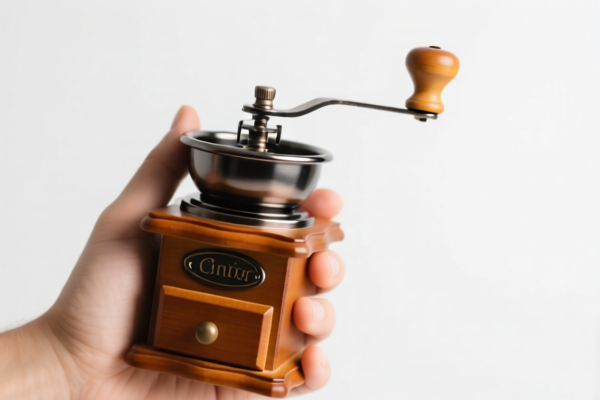
hand grinder
CN → US| HS Code | Tariff Rate | Origin | Destination | Doc |
|---|---|---|---|---|
| 8467290010 | 17.5% | CN | US | Official Doc |
| 8467290025 | 17.5% | CN | US | Official Doc |
Product Images
AI Analysis
🛠️ Hand Grinder (Handheld Power Tools)
🌐 HS Code Reference & Clearance Guide | 2026 Latest Tariff Analysis | Professional Customs Strategy
📌 I. Product Definition & Classification: What Exactly Is a "Hand Grinder"?
In international trade, "Hand Grinder" is a broad term that generally refers to power tools for working in the hand, driven by self-contained electric motors. However, the specific HS Code and resulting Tax Rate depend entirely on the mechanical structure and specific function of the tool.
Two primary categories dominate the market for this user input: 1. Angle Grinders, Sanders, and Polishers: Tools using rotating discs or pads for cutting, grinding, or polishing surfaces. 2. Belt Sanders: Tools using a continuous loop of abrasive material for sanding flat surfaces.
⚠️ Key Distinction Point: - If the tool uses a disc (flat or angled) for grinding/cutting/polishing → It falls under Angle Grinders/Sanders/Polishers. - If the tool uses a moving belt for sanding → It falls under Belt Sanders. - Note: Pneumatic or Hydraulic tools are NOT included in this specific set, which focuses on "Self-contained Electric Motor" tools.
📦 II. HS Code Classification Details (2026 Latest Tariff Authority Comparison)
| HS Code | Product Description | Application Scenario | Drive Mechanism |
|---|---|---|---|
8467.29.00.10 |
Angle Grinders, Sanders, and Polishers | Disc grinders (cutting metal), angle sanders, orbital polishers | ✅ Electric Motor (Disc/Pad based) |
8467.29.00.25 |
Belt Sanders | Surface sanding for wood/metal, belt-driven sanding machines | ✅ Electric Motor (Belt-based) |
🔍 Key Reminder: - Both codes fall under Heading 8467: Tools for working in the hand, pneumatic, hydraulic or with self-contained electric or nonelectric motor, and parts thereof. - Specific subheading 8467.29.00 covers Other Grinders, polishers and sanders. - The distinction is purely mechanical: Disc vs. Belt.
💰 III. 2026 Latest Tariff Rate Detailed Analysis
✅ Applicable Country: United States (US)
✅ Origin: China (CN) (Assumed based on typical trade context for these HS codes; rates are subject to specific origin rules)
✅ Effective Time: Current Rates (Includes Section 301 Add-on)
🎯 1. 8467.29.00.10 —— Angle Grinders, Sanders, and Polishers
| Item | Content |
|---|---|
| Base Tariff | 0.0% (Ad valorem) |
| Additional Tariff (Section 301) | +7.5% |
| Total Tax Rate | 7.5% |
| Tax Calculation | CIF Value × 7.5% |
| De Minimis Eligibility | ❌ Not Applicable (Generally, power tools >$800 are not eligible for de minimis; tools < $800 may be, but verify current CBP rules) |
| Legal Basis Path | HTSUS:8467.29.00.10 → Section 301:8467.29.00.10 |
📌 Explanation: - The Base Tariff for handheld power tools under Chapter 84 is often 0% due to duty-free agreements for certain industrial equipment. - The 7.5% additional tariff is the current Section 301 rate for specific Chinese-origin power tools. - Total Cost Impact: You pay 7.5% on top of the CIF value. This is relatively low compared to electronics or steel products, but still significant for high-volume shipments.
🎯 2. 8467.29.00.25 —— Belt Sanders
| Item | Content |
|---|---|
| Base Tariff | 0.0% (Ad valorem) |
| Additional Tariff (Section 301) | +7.5% |
| Total Tax Rate | 7.5% |
| Tax Calculation | CIF Value × 7.5% |
| De Minimis Eligibility | ❌ Not Applicable (Same as above) |
| Legal Basis Path | HTSUS:8467.29.00.25 → Section 301:8467.29.00.25 |
📌 Note: - Similar to angle grinders, belt Sanders benefit from the 0% base rate. - The 7.5% Section 301 surcharge applies equally. - Total Rate: 7.5%.
🛠️ IV. Customs Clearance Practical Advice (实战避坑指南)
✅ 1. Preparation Checklist (Non-negotiable)
| Document | Must Provide | Explanation |
|---|---|---|
| ✅ Product Specifications | ✔️ | Must specify: Type (Angle Grinder vs. Belt Sander), Voltage, RPM, Disc/Belt Size |
| ✅ Photographs | ✔️ | Clear images showing the tool in use, nameplate, and key components (motor, disc/belt) |
| ✅ Commercial Invoice | ✔️ | Must clearly state: "Handheld Power Grinder/Sander, Electric Motor, Model XYZ" |
| ✅ Packing List | ✔️ | Detail contents: Main unit, accessories (discs/belts, handles, guards) |
| ✅ Certifications | ✔️ | UL, ETL, or CE marks (Safety standards are critical for electrical tools) |
✅ 2. Declaration Tips (Key Mnemonics)
🔥 “Disc is 10, Belt is 25, Both 7.5% Total!”
| Scenario | Correct Declaration | Wrong Practice |
|---|---|---|
| Tool uses a rotating disc | 8467.29.00.10 (Angle Grinder/Sander) |
Misclassify as "Sander" without specifying type |
| Tool uses a moving belt | 8467.29.00.25 (Belt Sander) |
Misclassify as "Angle Grinder" → Potential audit |
| Tool is Pneumatic | NOT in | Do NOT use 8467.29.00.10/25 |
| Tool parts only | 8467.90.00.00 (Parts) |
Declare parts as complete tool → Overpay/Underpay |
📌 Critical Note: - Accessories (e.g., extra grinding discs) should be declared separately or bundled appropriately. If bundled, the main tool's HS code usually dictates the classification of the bundle. - Ensure the HS Code matches the primary function. If a tool is a "multi-function" grinder/sander, classify based on its principal use.
✅ 3. Special Cases Handling
| Situation | Handling Advice |
|---|---|
| OEM Custom Tools | Provide customer design specs to confirm it’s not a "specialized" industrial machine (which might have different duties) |
| Battery-Powered Tools | If it’s a Cordless tool, the HS Code remains the same (8467.29.00.10/25), but ensure batteries are declared correctly (often separate HS for lithium batteries) |
| Kit Sets | If sold as a "Grinder Kit" with multiple accessories, declare the main tool as the primary item. Accessories may be valued separately for duty calculation if possible |
🌍 V. Global Market Clearance Comparison (2026 Latest)
| Country/Region | Recommended HS Code | Tariff Rate (China Origin) | Certification Requirements | Remarks |
|---|---|---|---|---|
| 🇺🇸 USA | 8467.29.00.10 / .25 |
7.5% (0% Base + 7.5% Sec 301) | UL, ETL, OSHA Compliance | High scrutiny on electrical safety |
| 🇨🇳 China | 8467.29.00.10 / .25 |
0%~7% (Varies by FTA) | CCC (if applicable) | Free trade agreements may reduce duty |
| 🇪🇺 EU | 8467.29 (General) |
0%~4% | CE Mark, Low Voltage Directive | No Section 301 equivalent |
| 🇨🇦 Canada | 8467.29.00.10 / .25 |
0% (MFN) + CUSMA Benefits | CSA, UL | CUSMA can eliminate duty for Canadian-made |
📌 Conclusion: - The US market is the most impacted by Section 301 tariffs (7.5%). - Base rates are 0%, so the entire tax burden comes from the additional tariffs. - Safety Certifications (UL/ETL) are mandatory for US clearance; lack thereof will cause rejection.
📌 VI. Common Mistakes & Pitfalls (Blood Lessons)
❌ Mistake 1: Classifying Pneumatic Grinders as 8467.29.00.10
👉 Consequence: Wrong HS Code. Pneumatic tools fall under 8467.22. Correct classification is vital for accurate duty assessment.
❌ Mistake 2: Ignoring Battery Packs in Cordless Models
👉 Consequence: If the battery is declared separately, it may be classified under 8507.60 (Lithium-ion batteries), which has different duties. Bundled declaration is usually better if they are sold together.
❌ Mistake 3: Vague Description: "Hand Tool"
👉 Consequence: Customs may classify under the "catch-all" or highest duty rate. Be specific: "Electric Angle Grinder, 4.5 inch, 120V".
✅ Correct Declaration Example:
"Electric Handheld Angle Grinder, 7-inch, 120V, 10A, with Guard, Model XYZ, UL Listed"
🎯 VII. Conclusion: Professional Declaration, Cost Control, Efficiency!
🎯 Remember the Mnemonic:
🔹 "Disc 10, Belt 25, Both 7.5% Total!"
🔹 "Base 0, Add-on 7.5, Safe Certs Key, Clear Description Best!"
📌 Pro Tip:
If your Hand Grinder is originating from Vietnam, Mexico, or Canada, you may qualify for preferential tariffs (e.g., CUSMA for Canada, USMCA for Mexico) which could reduce the 7.5% additional tariff to 0%.
Action: Apply for Certificate of Origin and request Advance Ruling if unsure.
📣 Immediate Action:
📞 Contact a licensed customs broker
📸 Provide clear photos + Spec Sheets
🚀 Ensure UL/ETL Certification is valid for US market
✨ Professional Customs Clearance Starts with Accurate Classification!
💼 Every Percent Counts! Optimize Your Tariff Structure Today!
Customer Reviews
About HS Code Classification
The Harmonized System (HS) is an internationally standardized nomenclature developed by the World Customs Organization (WCO) to classify traded products. Over 200 countries use the HS system as the basis for customs tariffs, trade statistics, and import/export regulations.
Each HS code follows a hierarchical structure:
- Chapter (2 digits) — Broad category of goods (e.g., Chapter 84: Machinery and Mechanical Appliances)
- Heading (4 digits) — More specific grouping within the chapter
- Subheading (6 digits) — Internationally standardized breakdown, used by all WCO member countries
- National subdivisions (8-10 digits) — Country-specific extensions for further classification, such as US HTSUS 10-digit codes
Correct HS code classification is essential for smooth customs clearance, accurate duty payment, and compliance with trade regulations. Misclassification can lead to customs delays, overpayment of duties, or penalties.
When importing from CN to US, the applicable tariff rates may include:
- Most-Favored-Nation (MFN) rate — The standard duty rate applied to WTO members
- General rate — Applied to countries without trade agreements
- Trade remedy duties — Additional tariffs such as Section 301 (anti-dumping), Section 232 (national security), or countervailing duties
The information provided on this page is for reference purposes only. For official classification, please consult with your local customs authority or a licensed customs broker.