hand rope
CN → US| HS Code | Tariff Rate | Origin | Destination | Doc |
|---|---|---|---|---|
| 5609001000 | 37.9% | CN | US | Official Doc |
| 6117808500 | 32.1% | CN | US | Official Doc |
| 5609004000 | 38.9% | CN | US | Official Doc |
| 7117191500 | 25.5% | CN | US | Official Doc |
| 7117192000 | 28.5% | CN | US | Official Doc |
Product Images
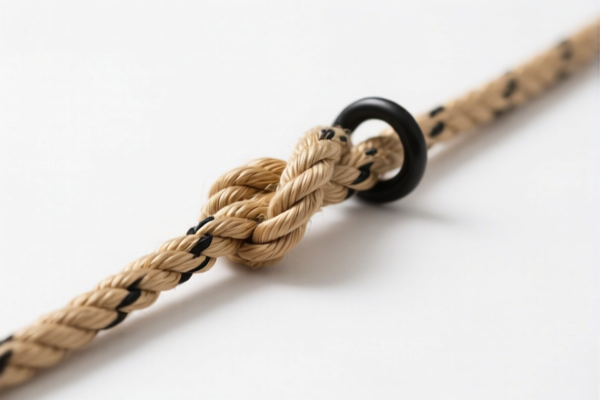



AI Analysis
🧶 Hand Ropes / Bracelets (Jewelry & Cordage Accessories)
🌐 HS Code Reference & Customs Clearance Guide | 2026 Latest Tariff Analysis | Professional Clearance Strategy 📌 I. Product Definition & Classification: Do You Really Understand “Hand Rope”?
“Hand Rope” is a broad term in international trade that generally refers to items worn around the wrist. However, in customs classification, the HS Code depends entirely on the material and functional nature of the item. It is not a single product category but spans across cordage, textile accessories, and base metal jewelry.
Misclassification here leads to significant tariff discrepancies (from 25.5% to 38.9%).
⚠️ Key Distinction Criteria: - Material: Is it cotton, synthetic fiber, base metal, or plastic? - Structure: Is it a twisted rope (cordage), a knitted garment part, or a rigid chain/link? - Function: Is it primarily for decoration (jewelry) or utility (tie/cord)?
📦 II. HS Code Classification Details (2026 Latest Tariff Authority Comparison)
Based on the provided data, there are 5 distinct classification paths for “Hand Rope” depending on its specific composition.
| HS Code | Product Description & Rationale | Material/Structure | Key Feature |
|---|---|---|---|
5609.00.10.00 |
Cords/Ropes: Hand ropes made of cotton or fibrous materials. | Cotton/Fiber | Classed as Cordage/Thin Rope, not clothing. |
5609.00.40.00 |
Cords/Ropes: Hand ropes made of yarn, fibers, or strips. | Yarn/Fiber/Strip | Broadest Cordage category; higher base tariff. |
6117.80.85.00 |
Knitted/Crocheted Accessories: Hand ropes made from knitted or crocheted yarn. | Knitted/Crocheted | Classed as Wearable Accessory (Textile Apparel chapter). |
7117.19.15.00 |
Imitation Jewelry: Hand ropes made of base metal or composite materials. | Base Metal | Classed as Jewelry-like Articles. |
7117.19.20.00 |
Chains/Cords: Hand ropes in the form of chains, cords, or similar items made of base metal. | Base Metal | Specific sub-category for Chain/Cord styles in jewelry. |
🔍 Critical Reminder: - If it’s fabric/cotton, it goes to Chapter 56 or 61 (Cordage/Textiles). - If it’s metal, it goes to Chapter 71 (Jewelry). - Do not classify metal hand ropes as “Jewelry” if they are primarily structural cords, or vice versa. The description must match the physical form.
💰 III. 2026 Latest Tariff Rate Breakdown (Including Additional Taxes & Policy Surcharges)
✅ Applicable Country: United States (US)
✅ Origin: China (CN)
✅ Effective Date: Current policies apply (Section 301 + IEEPA)
🎯 1. 5609.00.10.00 & 5609.00.40.00 —— Cordage & Rope Articles
These codes classify hand ropes as non-wearable cords or general rope articles, not as apparel.
| Item | Content |
|---|---|
| Base Tariff | 2.9% (5609.00.10) / 3.9% (5609.00.40) |
| Section 301 Surcharge | +25.0% |
| IEEPA Surcharge (122) | +10.0% |
| Total Effective Rate | 37.9% (5609.00.10) / 38.9% (5609.00.40) |
| De Minimis Exemption | ❌ Not Eligible (Deny De Minimis for Section 301 goods) |
| Legal Basis Path | USITC:5609.00.10.00 → SECTION301:Footnote → IEEPA:122 |
📌 Explanation: - These are the highest tax brackets in the dataset. - Even though the base rate is low (~3%), the 25% Section 301 tariff applies because these are Chinese-origin textiles/cordage. - Warning: Do not assume “small value” shipments are exempt; IEEPA 122 rules often restrict de minimis for certain Chinese imports.
🎯 2. 6117.80.85.00 —— Knitted/Crocheted Accessories
This code classifies hand ropes as wearable textile accessories (Chapter 61).
| Item | Content |
|---|---|
| Base Tariff | 14.6% |
| Section 301 Surcharge | +7.5% |
| IEEPA Surcharge (122) | +10.0% |
| Total Effective Rate | 32.1% |
| De Minimis Exemption | ❌ Not Eligible (Likely denied due to Section 301 thresholds) |
| Legal Basis Path | USITC:6117.80.85.00 → SECTION301:Footnote → IEEPA:122 |
📌 Advantage: - This is the lowest total tax rate (32.1%) among all options for fabric-based hand ropes. - Requirement: Must be proven to be knitted or crocheted (e.g., macrame, knit bracelets). Simple woven cotton ropes may not qualify.
🎯 3. 7117.19.15.00 & 7117.19.20.00 —— Base Metal Jewelry/Chains
These codes classify hand ropes as imitation jewelry made of base metal.
| HS Code | Base Tariff | Section 301 | IEEPA 122 | Total Rate |
|---|---|---|---|---|
7117.19.15.00 |
8.0% | +7.5% | +10.0% | 25.5% |
7117.19.20.00 |
11.0% | +7.5% | +10.0% | 28.5% |
📌 Analysis: - Lowest Risk/Cost: These are the cheapest options (25.5% – 28.5%). - Requirement: The product must contain base metal (copper, zinc, aluminum, etc.) or have metal components. Pure plastic or fabric hand ropes cannot use these codes. - Sub-classification: -
15: General “similar articles” (e.g., metal beads, clasps, composite cords). -20: Specific “chains, cords, and similar” forms.
🛠️ IV. Customs Clearance Practical Advice (Real-World Pitfall Avoidance)
✅ 1. Documentation Checklist (Essential for Clearance)
| Document | Must Provide | Explanation |
|---|---|---|
| ✅ Product Specification Sheet | ✔️ | Must clearly state Material Composition (e.g., “100% Cotton Cord” vs. “Stainless Steel Chain”). |
| ✅ Material Declaration | ✔️ | Specify if it is Knitted (for 6117) vs. Woven/Knotted (for 5609). |
| ✅ Product Photos | ✔️ | Clear images showing texture (knit vs. twisted rope) and metal components. |
| ✅ Commercial Invoice | ✔️ | Description must match HS Code logic: - “Knitted Bracelet” for 6117 - “Cotton Cordage” for 5609 - “Metal Chain Bracelet” for 7117 |
| ✅ Origin Certificate | ✔️ | Crucial for Section 301 verification. |
✅ 2. Strategic Classification Tips (The “Golden Rules”)
🔥 Rule of Thumb: “Material Dictates Code, Structure Dictates Tariff!”
| Scenario | Recommended HS Code | Why? |
|---|---|---|
| Cotton Fabric Hand Rope | 6117.80.85.00 |
If knitted/crocheted → 32.1% (Best for textiles) |
| Simple Cotton Twisted Rope | 5609.00.10.00 |
If not knit → 37.9% (Worse, but correct for cordage) |
| Metal Bead/Chain Bracelet | 7117.19.15.00 |
Base metal jewelry → 25.5% (Best overall) |
| Plastic/Resin Hand Rope | (Not in Data) | Check other chapters! Likely 3926 or 7117 if metal-clad. |
| Mixed Material (Fabric + Metal Clasp) | Consult Customs Broker | May lean towards 6117 (Textile) or 7117 (Jewelry) depending on essential character. |
✅ 3. Critical Warnings
| Risk | Consequence | Mitigation |
|---|---|---|
| Misclassifying Metal as Textile | Severe Penalty | If it has metal beads/chains, it’s likely 7117. Don’t call it “Cotton Rope” if it’s metal. |
| Misclassifying Knit as Cordage | Higher Tax | A knitted bracelet at 37.9% vs 32.1% saves ~6% if classified correctly as 6117. |
| Ignoring Section 301 | 25% Surcharge Surprise | All HS Codes listed here are subject to additional duties. Budget accordingly. |
| De Minimis Misconception | Shipment Held | Many IEEPA/Section 301 items are excluded from $800 de minimis entry. Plan for formal entry. |
🌍 V. Global Market Comparison (2026 Outlook)
| Market | Recommended HS Code | Est. Total Duty | Notes |
|---|---|---|---|
| 🇺🇸 USA | 7117.19.15.00 |
25.5% | Best for metal; 6117 is 32.1%. High tariffs on all Chinese origins. |
| 🇺🇸 USA | 5609.00.10.00 |
37.9% | High cost for basic cotton cords. |
| 🇪🇺 EU | Varies | Varies | EU has different HS structure. Metal jewelry often 2.5-4% + VAT. Textiles vary. |
| 🇨🇳 China | Varies | Low/Zero | China imposes duties on imports, but exports from China face US/EU duties. |
📌 Conclusion for US Importers: - Metal Hand Ropes are the most tax-efficient (
7117at 25.5–28.5%). - Textile Hand Ropes are expensive due to Section 301. Try to optimize the description to6117.80.85.00(Knitted) if possible, to save 5-6% over cordage classifications.
📌 VI. Common Errors & Pitfalls (Blood & Tears Lessons)
❌ Error 1: Calling a metal chain bracelet a “Hand Rope” and classifying it under 5609 (Cordage).
👉 Result: Customs will reclassify to 7117 and apply Jewelry Tariffs (which might be higher or lower depending on structure), plus penalties for misdeclaration.
❌ Error 2: Claiming a woven cotton rope is “Knitted” to get 6117 (32.1%) instead of 5609 (37.9%).
👉 Result: If inspected and found woven, you face back taxes + fines. Knitting requires a visible loop structure; weaving is interlaced threads.
❌ Error 3: Ignoring Section 301 for small parcels.
👉 Result: Even under $800, if the HS Code is flagged under IEEPA 122 or Section 301, the package may be seized or returned, and duties assessed retroactively.
✅ Correct Practice:
“Stainless Steel Beaded Bracelet” →
7117.19.15.00
“Cotton Knit Friendship Bracelet” →6117.80.85.00
“Cotton Twisted Cord Tie” →5609.00.10.00
🎯 VII. Conclusion: Professional Classification Saves Money
🎯 Remember the Golden Rule:
🔹 Metal First: If it’s metal, use
7117→ Cheapest (25.5–28.5%).
🔹 Textile Second: If it’s fabric, “Knitted” (6117) beats “Cordage” (5609) → Saves ~6%.
🔹 Never Assume: “Hand Rope” is not an HS Code. Material is King.
📌 Pro Tip:
- For bulk imports, apply for an Advance Ruling (CBP Ruling) to lock in the classification and avoid audits.
- For dropshipping/small parcels, ensure your supplier provides a Material Declaration to justify
7117or6117over5609.
📣 Immediate Action:
📞 Audit Your Inventory: Separate metal vs. textile hand ropes. 🚀 Optimize Packaging: Clearly label material content to match HS Code logic. 💼 Consult a Broker: For mixed-material items, get a professional opinion before shipping.
✨ Precision in Classification is Profitability in Logistics!
💼 Don’t let a 5% tax difference eat your margin.
Customer Reviews
About HS Code Classification
The Harmonized System (HS) is an internationally standardized nomenclature developed by the World Customs Organization (WCO) to classify traded products. Over 200 countries use the HS system as the basis for customs tariffs, trade statistics, and import/export regulations.
Each HS code follows a hierarchical structure:
- Chapter (2 digits) — Broad category of goods (e.g., Chapter 84: Machinery and Mechanical Appliances)
- Heading (4 digits) — More specific grouping within the chapter
- Subheading (6 digits) — Internationally standardized breakdown, used by all WCO member countries
- National subdivisions (8-10 digits) — Country-specific extensions for further classification, such as US HTSUS 10-digit codes
Correct HS code classification is essential for smooth customs clearance, accurate duty payment, and compliance with trade regulations. Misclassification can lead to customs delays, overpayment of duties, or penalties.
When importing from CN to US, the applicable tariff rates may include:
- Most-Favored-Nation (MFN) rate — The standard duty rate applied to WTO members
- General rate — Applied to countries without trade agreements
- Trade remedy duties — Additional tariffs such as Section 301 (anti-dumping), Section 232 (national security), or countervailing duties
The information provided on this page is for reference purposes only. For official classification, please consult with your local customs authority or a licensed customs broker.