hand tools hs code 8205
CN → US| HS Code | Tariff Rate | Origin | Destination | Doc |
|---|---|---|---|---|
| 8205400000 | 41.2% | CN | US | Official Doc |
| 8205100000 | 41.2% | CN | US | Official Doc |
| 8203206060 | 0.0% | CN | US | Official Doc |
| 8203206030 | 0.0% | CN | US | Official Doc |
Product Images
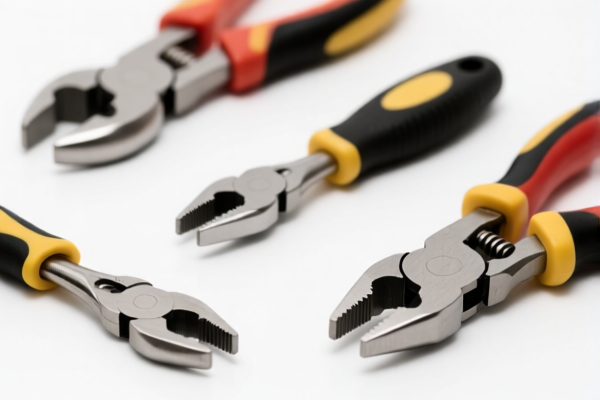
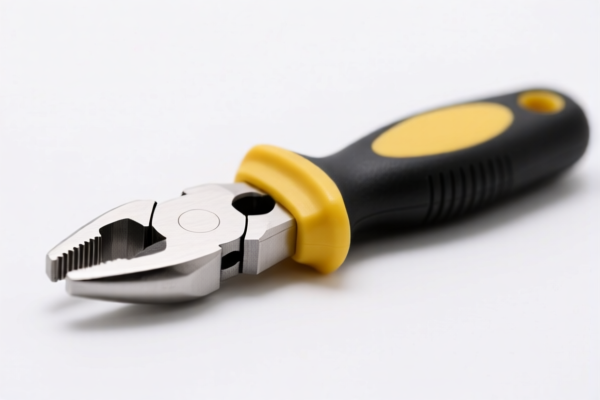


AI Analysis
🛠️ Hand Tools (HS Code 8205 Series): The Ultimate Classification & Tax Guide
🌐 HS Code Reference & Customs Clearance Guide | 2026 Latest Tariff Analysis | Professional-Level Clearance Strategy
📌 I. Product Definition & Classification: Do You Really Understand "Hand Tools"?
"Hand Tools" in international trade is a broad category under Chapter 82. Specifically, heading 8205 covers hand tools that are not specifically enumerated elsewhere (like pliers or wrenches, which fall under 8203 or 8204).
In the context of U.S. imports from China, these tools are subject to a complex web of tariffs, including Base Rates, Section 301 tariffs, and Section 122 tariffs. Misclassification can lead to significant cost discrepancies or customs delays.
⚠️ Key Distinction:
- Heading 8205: "Other hand tools; bladed tools... not elsewhere specified" (e.g., files, rasps, axes, hatchets, scissors).
- Heading 8203: "Tools for drilling, cutting, shaping... other hand tools" (e.g., pliers, wrenches, screwdrivers).
- Why it matters: 8205 often attracts a flat ad valorem rate plus specific surcharges, while 8203 may have mixed compound rates (specific + ad valorem).
📦 II. HS Code Classification Details (2026 Latest Tariff Authority Comparison)
Based on the provided data, here are the specific classifications for HS Code 8205 and closely related items:
| HS Code | Product Description | Classification Logic | Tax Implication |
|---|---|---|---|
8205.40.00.00 |
Hand Tools (General/Other) | Exact Match: Fully aligns with the purpose description of hand tools in HS 8205. Represents standard "other" hand tools not listed in 8203/8204. | 41.2% Total |
8205.10.00.00 |
Hand Tools (Files/Rasps etc.) | Exact Match: Directly corresponds to the "files and rasps" sub-category within 8205. Fits the "other" category matching rule perfectly. | 41.2% Total |
8203.20.60.60 |
Manual Tools (Metal) | Inference: Classified under 8203 (e.g., pliers/wrenches). Based on common sense, inferred as metal. No conflict with metal tool attributes. | 12¢/doz + 40.5% Total* |
8203.20.60.30 |
Tools (Related Category) | Association: 8205 is an associated category of 8203 tools. No material or form conflict. Often used for similar manual instruments. | 12¢/doz + 40.5% Total* |
🔍 Crucial Note on 8203 vs. 8205:
- Although your query is for 8205, the data includes 8203 codes.
- 8205 tools (like files, axes, scrapers) generally have simpler tax structures in this dataset.
- 8203 tools (like pliers, wrenches) often have compound duties (Specific + Ad Valorem), which can be confusing during clearance.
💰 III. 2026 Latest Tariff Rate Breakdown (Including Surcharges & Policy Add-ons)
✅ Applicable Country: United States (US)
✅ Origin: China (CN)
✅ Effective Time: Current rates as per 2025/2026 data
🎯 1. HS Code 8205.40.00.00 & 8205.10.00.00
Category: Standard Hand Tools (Files, Rasps, Other Hand Tools)
| Item | Detail |
|---|---|
| Base Tariff (MFN) | 6.2% (Ad Valorem) |
| Section 301 Surcharge | +25.0% (Against China) |
| Section 122 Surcharge | +10.0% (Specific U.S. Trade Law Provision) |
| Total Effective Rate | 41.2% |
| Tax Calculation | CIF Value × 41.2% |
| Legal Basis Path | Base Rate → USITC Footnote 301 → IEEPA/Section 122 Authority |
📌 Explanation:
- The 6.2% is the standard Most Favored Nation (MFN) rate for hand tools.
- The 25% is the standard Section 301 tariff on Chinese imports.
- The 10% is a specific Section 122 tariff (often related to national security or specific trade remedies for steel/iron products, which hand tools frequently fall under).
- Total: 41.2% is a very high cost burden. This must be factored into pricing strategies.
🎯 2. HS Code 8203.20.60.60 & 8203.20.60.30
Category: Manual Tools (Pliers, Wrenches, Metal)
| Item | Detail |
|---|---|
| Base Tariff | 12¢/doz. + 5.5% (Compound Duty) |
| Section 301 Surcharge | +25.0% |
| Section 122 Surcharge | +10.0% |
| Total Effective Rate | 12¢/doz. + 40.5% (Compound) |
| Tax Calculation | (Specific Duty per Dozen) + (CIF Value × 40.5%) |
| Legal Basis Path | Base Rate → USITC Footnote 301 → IEEPA/Section 122 Authority |
📌 Explanation:
- Compound Duty: Unlike 8205, these codes have a specific duty (12 cents per dozen) PLUS an ad valorem (5.5%) base.
- Surcharge Calculation: The 25% + 10% surcharges typically apply to the total assessable value (including the specific duty in some interpretations, but often calculated on CIF).
- Total Load: Effectively 40.5% + 12¢/doz. This is slightly lower than the flat 41.2% of 8205 but more complex to calculate.
🛠️ IV. Customs Clearance Practical Advice (Real-World Pitfall Guide)
✅ 1. Preparation Checklist (Non-Negotiable)
| Document | Required? | Notes |
|---|---|---|
| ✅ Product Specification Sheet | ✔️ | Must detail material (e.g., carbon steel, stainless steel), usage, and dimensions. |
| ✅ Commercial Invoice | ✔️ | Must clearly state "Hand Tools" and not vague terms like "Hardware." |
| ✅ Packing List | ✔️ | Itemize by SKU to justify HS Code selection. |
| ✅ Country of Origin Certificate | ✔️ | Mandatory for claiming/charging Section 301 & 122 tariffs. |
| ✅ Product Photos | ✔️ | Clear images of the tool, handle, and blade/head to distinguish between 8205 (files/axes) and 8203 (pliers/wrenches). |
✅ 2. Classification Strategy (Key Rules)
🔥 “Identify the Action, Then the Form.”
| Tool Type | Likely HS Code | Reasoning |
|---|---|---|
| Files, Rasps, Scrapers | 8205.10.00.00 |
Specific list in 8205.10. |
| Axes, Hatchets, Adzes | 8205.40.00.00 |
Falls under "other" hand tools in 8205.40. |
| Pliers, Tweezers | 8203.20... |
Specifically listed in 8203.20. |
| Spanners/Wrenches | 8203.20... |
Specifically listed in 8203.20. |
| Scissors | 8205.20... |
Note: Not in your data, but typically 8205.20. |
⚠️ Critical Warning:
- Do NOT group all "hand tools" under one code.
- Using8205for pliers (8203) is a misclassification that can lead to penalties.
- Using8203for files (8205) is also incorrect.
- Accuracy saves money: Ensure the product’s primary function and physical form match the HS Code description exactly.
✅ 3. Special Cases & Mitigation
| Scenario | Advice |
|---|---|
| High-Value Precision Tools | Verify if they qualify for HTS 8205.90 (other) vs. specific subheadings. Some precision instruments may have different tariff treatment. |
| Set of Tools | If sold as a set, classify based on the component that gives the set its essential character. Usually, the most expensive or defining tool determines the code. |
| Origin Marking | Ensure all tools are physically marked "Made in China" to comply with U.S. Customs marking requirements for Section 301/122 applicability. |
| Section 122 Exemptions | Currently, few exemptions exist. However, monitor USTR notices for potential exclusions or changes in Section 122 implementation. |
🌍 V. Global Market Comparison (2026 Overview)
| Market | HS Code 8205 Tariff | Section 301/122 Impact | Clearance Difficulty |
|---|---|---|---|
| 🇺🇸 USA | ~6.2% Base + 41.2% Total | HIGH (301 + 122 Apply) | High (Strict scrutiny on origin) |
| 🇨🇳 China (Import) | 6.2% - 9% | None | Low |
| 🇪🇺 EU | 2.7% - 4.5% | No Section 301 | Medium (Requires CE/Marking) |
| 🇬🇧 UK | 2.7% - 4.5% | No Section 301 | Medium |
| 🇨🇦 Canada | 0% - 5% | No Section 301 | Low (CUSMA eligible if regional value content met) |
📌 Conclusion:
- The USA is the most expensive market for Chinese hand tools due to the 41.2% combined tariff rate.
- EU/UK/Canada are significantly more cost-effective, but require different certifications (CE, UKCA, etc.).
📌 VI. Common Errors & Pitfalls (Blood Lessons)
❌ Error 1: Classifying pliers as 8205.40.00.00 ("Other hand tools").
👉 Consequence: Misclassification. Pliers are 8203.20. While rates might be similar, it triggers customs audit for inconsistency.
❌ Error 2: Ignoring the 12¢/doz specific duty in 8203 codes.
👉 Consequence: Underpayment. If you have 1,000 dozens, you owe an extra $120 in base duties, plus taxes on that amount.
❌ Error 3: Assuming Section 122 is included in the 25% Section 301.
👉 Consequence: Major Underpayment. Section 122 is additional. You must pay 25% + 10%, not just 25%.
❌ Error 4: Vague Invoice Description ("Hardware").
👉 Consequence: Customs may select for examination, delay shipment, and assign a higher duty rate by default.
✅ Correct Approach:
"Carbon Steel Hand File, HS 8205.10.00.00, Made in China, Subject to 301 & 122 Tariffs."
🎯 VII. Conclusion: Precision in Classification, Profit in Clearance
🎯 Remember the Mantra:
🔹 "8205 is Files/Axes (6.2% Base + 35% Surcharges = 41.2%)."
🔹 "8203 is Pliers/Wrenches (12¢/doz + 5.5% Base + 35% Surcharges = ~40.5% + Specific)."
🔹 "Never Mix Them Up!"📌 Pro Tip:
- Always request a Binding Ruling from U.S. Customs and Border Protection (CBP) if your product is borderline between 8203 and 8205.
- Factor the 41.2% total tax into your landed cost calculation immediately.
- Monitor USTR Exclusion Lists for any potential tariff relief on specific hand tool categories.
📣 Immediate Action:
📞 Verify your HS Code with a licensed customs broker.
📄 Ensure your invoice clearly states the HS Code and Origin.
📊 Calculate your Landed Cost including 41.2% tax for 8205 items.
✨ Professional Customs Clearance Starts with Accurate Classification!
💼 Your Profit Margin Depends on Your Tariff Strategy!
Customer Reviews
About HS Code Classification
The Harmonized System (HS) is an internationally standardized nomenclature developed by the World Customs Organization (WCO) to classify traded products. Over 200 countries use the HS system as the basis for customs tariffs, trade statistics, and import/export regulations.
Each HS code follows a hierarchical structure:
- Chapter (2 digits) — Broad category of goods (e.g., Chapter 84: Machinery and Mechanical Appliances)
- Heading (4 digits) — More specific grouping within the chapter
- Subheading (6 digits) — Internationally standardized breakdown, used by all WCO member countries
- National subdivisions (8-10 digits) — Country-specific extensions for further classification, such as US HTSUS 10-digit codes
Correct HS code classification is essential for smooth customs clearance, accurate duty payment, and compliance with trade regulations. Misclassification can lead to customs delays, overpayment of duties, or penalties.
When importing from CN to US, the applicable tariff rates may include:
- Most-Favored-Nation (MFN) rate — The standard duty rate applied to WTO members
- General rate — Applied to countries without trade agreements
- Trade remedy duties — Additional tariffs such as Section 301 (anti-dumping), Section 232 (national security), or countervailing duties
The information provided on this page is for reference purposes only. For official classification, please consult with your local customs authority or a licensed customs broker.