hcfc制冷剂膨胀阀
CN → US| HS Code | Tariff Rate | Origin | Destination | Doc |
|---|---|---|---|---|
| 8479899599 | 87.5% | CN | US | Official Doc |
| 8481809015 | 37.0% | CN | US | Official Doc |
| 8479909596 | 85.0% | CN | US | Official Doc |
| 8415908085 | 68.9% | CN | US | Official Doc |
| 8415908025 | 68.9% | CN | US | Official Doc |
Product Images
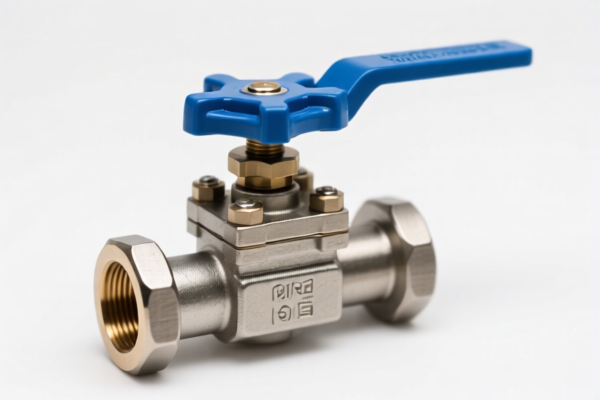
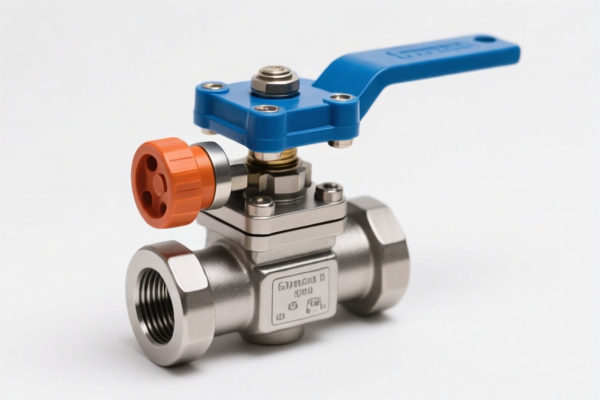
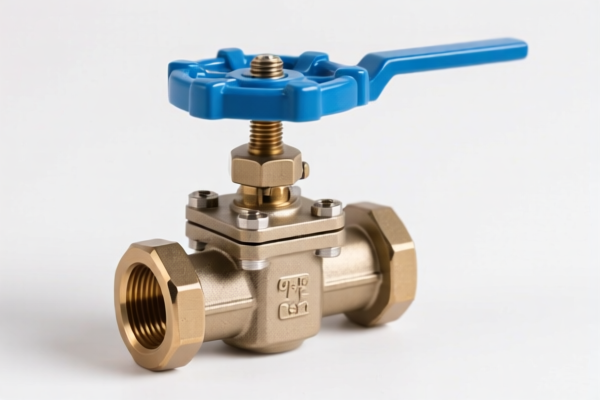
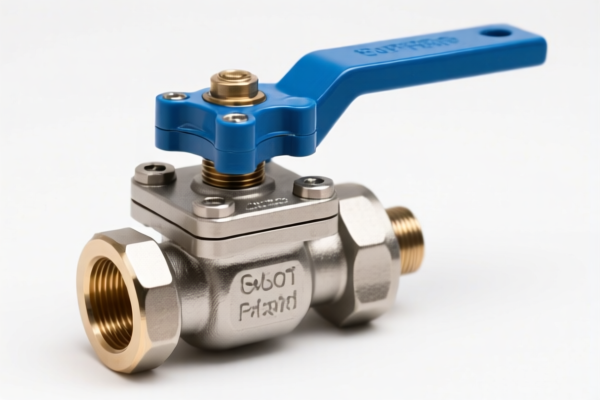
AI Analysis
❄️ HCFC Refrigerant Expansion Valve | HFC/HCFC HVAC Component
🌐 HS Code Reference & Customs Clearance Guide | 2026 Latest Tariff Analysis | Professional Compliance Strategy
📌 I. Product Definition & Classification: Do You Truly Understand "Expansion Valves"?
The HCFC Refrigerant Expansion Valve is a critical control component in refrigeration and air conditioning systems. It regulates the flow of refrigerant into the evaporator. In international trade, its classification depends heavily on its primary function (flow control vs. mechanical structure) and material composition.
International trade distinguishes between:
1. Flow Control Valves (Regulators):
If the device is primarily designed to regulate pressure or flow rate, it falls under HS Chapter 84.81 (Valves). This is the most common classification for standard thermostatic expansion valves (TXVs) used in HVAC systems.
2. Mechanical Components/Parts:
If the item is classified as a generic mechanical part or accessory without a specific valve function, it may fall under HS Chapter 84.79 (Machinery). This is a higher-risk category often attracting significant additional tariffs.
⚠️ Key Distinction Point:
- If the primary function is flow/pressure control → Classify as Valve (84.81)
- If it is a generic mechanical part or part of a larger machine system without specific valve classification → Classify as Machine Part (84.79)
- Material Check: Steel, Aluminum, or Copper content triggers specific additional tariffs under Section 122 and USITC Footnotes.
📦 II. HS Code Classification Details (2026 Latest Tariff Authority对照)
Based on the provided data, there are two distinct classification paths. The choice depends on the specific product design and customs interpretation.
| HS Code | Product Description | Application Scenario | Primary Function |
|---|---|---|---|
8481.80.90.45 |
Valves, other (Refrigeration System) | General refrigeration piping, standard TXVs | ✅ Flow Control (Valve) |
8481.80.90.15 |
Valves, other (Regulating Type) | Precision flow control, metal body regulators | ✅ Flow Control (Regulator) |
8479.89.95.99 |
Machinery Parts, Other (Function Specific) | Specific functional components not classified as valves | ❌ Mechanical Part (High Risk) |
8479.90.95.96 |
Refrigeration System Control Parts | Control components for refrigeration, non-valve specific | ❌ Refrigeration Part (High Risk) |
🔍 Critical Reminder:
- Valves (84.81) are generally preferred for expansion valves as they reflect the function of regulating flow.
- Parts (84.79) often attract much higher additional tariffs (up to 87.5%).
- Misclassification from 84.81 to 84.79 can result in a 50%+ increase in total tax burden.
💰 III. 2026 Latest Tariff Rate Breakdown (Including Additional Taxes & Policies)
✅ Applicable Country: United States (US)
✅ Origin: China (CN)
✅ Effective Date: Post-November 2025 (Including subsequent imports)
🎯 1. 8481.80.90.45 & 8481.80.90.15 —— Refrigeration Expansion Valves (Valve Category)
This is the standard and recommended classification for HCFC/HFC expansion valves.
| Item | Content |
|---|---|
| Base Duty Rate | 2.0% (ad valorem) |
| Section 301 Additional Duty | +25.0% (Standard USITC Footnote) |
| Section 122 Duty (Steel/Alu/Cu) | +10.0% (Applicable if metal content triggers this) |
| Total Effective Rate | 37.0% |
| Tax Calculation | CIF Value × 37% |
| De Minimis Exemption | ❌ Not Applicable (High value items usually exceed $800 threshold) |
| Legal Basis Path | USITC:8481.80.90 → Section 301: 25% → Section 122: 10% |
📌 Explanation:
- Base Duty (2.0%): Standard MFN rate for other valves.
- Section 301 (25%): Applies to all Chinese-origin goods in this category.
- Section 122 (10%): Specific additional duty for certain steel, aluminum, or copper products. Note: Even if the valve is plastic/brass, customs may apply this if metal components are significant.
- Total 37% is significantly lower than the 84.79 classification.
🎯 2. 8479.89.95.99 & 8479.90.95.96 —— Machine Parts / Refrigeration Control Parts (Part Category)
⚠️ WARNING: These classifications carry extremely high tariffs.
| Item | Content |
|---|---|
| Base Duty Rate | 0.0% - 2.5% |
| Section 301 Additional Duty | +25.0% |
| Section 122 Duty (Steel/Alu/Cu) | +50.0% (Crucial Difference!) |
| Total Effective Rate | 85.0% - 87.5% |
| Tax Calculation | CIF Value × 85-87.5% |
| De Minimis Exemption | ❌ Not Applicable |
| Legal Basis Path | USITC:8479.89.95 → Section 301: 25% → Section 122: 50% |
📌 Why is it so high?
- The Section 122 duty jumps to 50% for machinery parts made of steel, aluminum, or copper.
- Even if the base duty is 0%, the combination of 25% (301) + 50% (122) + 2.5% (Base) results in 87.5%.
- Risk: If you declare an expansion valve as a "mechanical part" instead of a "valve," you pay more than double the tax.
🛠️ IV. Customs Clearance Operational Advice (Practical Pitfall Avoidance)
✅ 1. Document Preparation Checklist (Mandatory)
| Document | Required | Description |
|---|---|---|
| ✅ Product Specification Sheet | ✔️ | Must explicitly state "Expansion Valve" or "Refrigerant Regulator" |
| ✅ Material Declaration | ✔️ | Detail composition (e.g., Brass body, Copper capillary, Stainless steel spring). Proves whether Section 122 applies. |
| ✅ Function Description | ✔️ | "Used to control flow rate of HCFC/HFC refrigerant in HVAC system." |
| ✅ Product Photos (Label & Structure) | ✔️ | Show model number, brand, and connection types |
| ✅ Commercial Invoice | ✔️ | Use precise terminology: "Thermostatic Expansion Valve" NOT "HVAC Part" |
| ✅ Packing List | ✔️ | List all items together to avoid split classification |
✅ 2. Declaration Tips (Key Mnemonics)
🔥 "Function First, Valve Preferred, Parts are Pain!"
| Scenario | Correct Declaration | Error to Avoid |
|---|---|---|
| Standard TXV Valve | 8481.80.90.45 (Valve) |
Calling it "Refrigeration Part" → 87.5% tax |
| Regulating Valve | 8481.80.90.15 (Valve) |
Splitting parts for shipping → Each part taxed separately |
| Valve + Actuator (One Unit) | Declare as Valve Assembly | Splitting into "Motor" + "Valve Body" → High combined tax |
| Generic Fitting/Connector | Might be 8479 (Part) |
Mislabeling a simple valve as a "fitting" to hide function |
✅ 3. Special Case Handling
| Situation | Handling Advice |
|---|---|
| Mixed Material (Plastic Body + Metal Spring) | Still likely 8481 if control function is primary. However, Section 122 may still apply if metal value is significant. |
| OEM Custom Valves | Provide client PO and technical drawings to prove function as "flow regulator." |
| Small Samples (<$800) | May qualify for De Minimis (Section 321) if shipped via postal service, but verify carrier compliance. |
| Used/Remanufactured Valves | Higher scrutiny. Ensure no contamination (HCFC phase-out regulations). |
🌍 V. Global Market Comparison (2026 Latest)
| Country/Region | Recommended HS Code | Duty Rate | Certification | Notes |
|---|---|---|---|---|
| 🇺🇸 USA | 8481.80.90.45 |
37% | None specific | Avoid 84.79 (87.5%) |
| 🇨🇳 China | 8481.80.90 |
5-10% | CCC (if applicable) | Lower base duty |
| 🇪🇺 EU | 8481.80 |
3-4% | CE, F-Gas Regulation | No Section 301 equivalent |
| 🇨🇦 Canada | 8481.80 |
3.5-5% | CSA | Stable rates |
| 🇲🇽 Mexico | 8481.80 |
0-5% | NOM | Check USMCA eligibility |
📌 Conclusion:
- USA is the most challenging market due to Section 301 and Section 122 tariffs.
- Correct classification as a "Valve" (84.81) is critical to save ~50% in taxes.
- EU and Canada offer much lower risk and cost structures.
📌 VI. Common Errors & Pitfalls (Lessons Learned)
❌ Error 1: Declaring Expansion Valve as "HVAC Part" or "Refrigerator Accessory"
👉 Result: Customs classifies as 8479.89.95.99 → 87.5% Tax instead of 37%.
❌ Error 2: Ignoring Section 122 Metal Content
👉 Result: If the valve is brass/copper, you must declare metal content. Failure may lead to post-audit penalties.
❌ Error 3: Splitting Shipment (Valve + Controller)
👉 Result: Each item taxed separately. Controller might be 8537 (Electric Control) with its own tariff. Better to declare as assembly if functionally integrated.
❌ Error 4: Vague Description "Valve for AC"
👉 Result: Customs officer may assign incorrect code. Be Specific: "Thermostatic Expansion Valve for HCFC/HFC Refrigeration."
✅ Correct Declaration Example:
"Thermostatic Expansion Valve, Type TXV, for HCFC/HFC Refrigerant Systems, Brass Body, Steel Spring, Model XYZ"
🎯 VII. Conclusion: Precise Classification Saves Millions!
🎯 Remember the Mnemonic:
🔹 "Valve is 37%, Part is 87%, Think Before You Ship!"
🔹 "Function over Form, Control is Key, Metal Triggers Section 122!"
📌 Pro Tip:
If your product contains significant steel/aluminum/copper content, ensure your material breakdown is accurate. While Section 122 adds 10-50%, misclassification as a "Part" adds an extra 40-50% on top.
Always request a Pre-Ruling (Advance Ruling) from US CBP if shipping high volumes.
📣 Immediate Action:
📞 Contact a Licensed Customs Broker + Provide Technical Specs + Declare as "Valve" (84.81)
🚀 Secure Your Supply Chain, Minimize Tax Liability, Ensure Smooth Clearance!
✨ Professional Customs Clearance Starts with Accurate Classification!
💼 Every Percent of Duty Saved is Pure Profit Added!
Customer Reviews
About HS Code Classification
The Harmonized System (HS) is an internationally standardized nomenclature developed by the World Customs Organization (WCO) to classify traded products. Over 200 countries use the HS system as the basis for customs tariffs, trade statistics, and import/export regulations.
Each HS code follows a hierarchical structure:
- Chapter (2 digits) — Broad category of goods (e.g., Chapter 84: Machinery and Mechanical Appliances)
- Heading (4 digits) — More specific grouping within the chapter
- Subheading (6 digits) — Internationally standardized breakdown, used by all WCO member countries
- National subdivisions (8-10 digits) — Country-specific extensions for further classification, such as US HTSUS 10-digit codes
Correct HS code classification is essential for smooth customs clearance, accurate duty payment, and compliance with trade regulations. Misclassification can lead to customs delays, overpayment of duties, or penalties.
When importing from CN to US, the applicable tariff rates may include:
- Most-Favored-Nation (MFN) rate — The standard duty rate applied to WTO members
- General rate — Applied to countries without trade agreements
- Trade remedy duties — Additional tariffs such as Section 301 (anti-dumping), Section 232 (national security), or countervailing duties
The information provided on this page is for reference purposes only. For official classification, please consult with your local customs authority or a licensed customs broker.