heart keyring
CN → US| HS Code | Tariff Rate | Origin | Destination | Doc |
|---|---|---|---|---|
| 7326908688 | 87.9% | CN | US | Official Doc |
| 8301500000 | 20.6% | CN | US | Official Doc |
| 7326903500 | 92.8% | CN | US | Official Doc |
Product Images
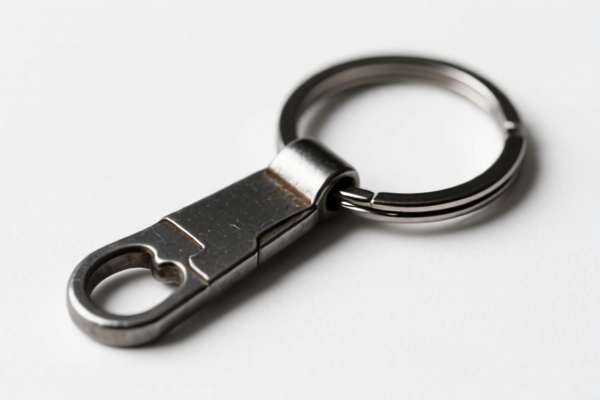

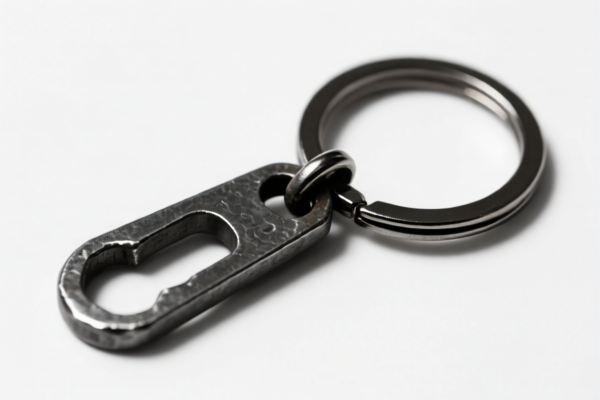
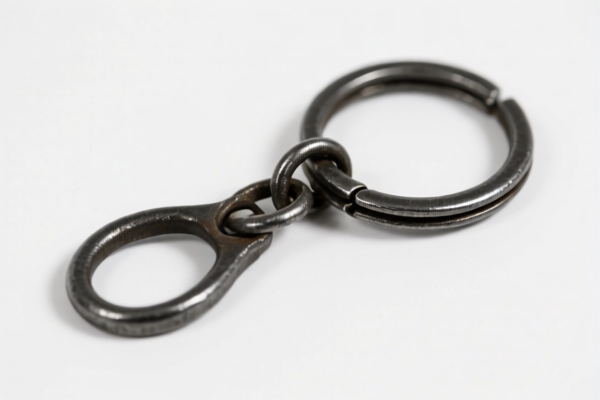
AI Analysis
🔑 Heart Keyring (Key Rings and Keychains)
🌐 HS Code Reference & Customs Clearance Guide | 2026 Latest Tariff Analysis | Professional Clearance Strategy
📌 I. Product Definition & Classification: Do You Really Understand "Keyrings"?
A heart keyring is a small accessory used to organize keys, typically made of base metal (steel/iron) or other materials. In international trade, its classification depends heavily on its material, function, and construction.
⚠️ Key Distinction Points: - If it is a simple metal loop or frame with no specific container function → Often classified under 8301 (Base Metal Fittings) or 7326 (Other Steel/Iron Articles). - If it is marketed as a "small vessel" or "pocket item" with specific utility → May fall under 7326.90.35.00. - Crucial Note: Material inference is critical. If the material is not explicitly stated, customs may infer it as metal (steel/iron), leading to significantly higher tariffs due to "Section 301" and "122 Clauses."
📦 II. HS Code Classification Details (2026 Latest Tariff Authoritative Comparison)
Based on the provided data, here are the three possible HS Codes for a Heart Keyring, along with their descriptions and tax implications.
| HS Code | Product Description | Application Scenario | Material Inference | Total Tax Rate |
|---|---|---|---|---|
7326.90.86.88 |
Other articles of iron or steel | General keyrings, no specific function beyond holding keys | Iron/Steel | 87.9% |
8301.50.00.00 |
Key rings, keyrings, key rings, etc. | Standard keyrings classified as base metal fittings/accessories | Base Metal | 20.6% |
7326.90.35.00 |
Metal small containers/pendants | Keyrings considered as items carried in pockets/bags | Iron/Steel | 92.8% |
🔍 Important Reminder: -
7326Codes carry extremely high tariffs (87.9% - 92.8%) due to additional duties on steel/aluminum/copper products under Section 122 and Section 301. -8301.50.00.00offers the lowest tariff burden (20.6%) but requires the product to be clearly classified as a "key ring/fitting" rather than a generic steel article. - Misclassification Risk: If customs inspectors determine the keyring is primarily a "steel article" rather than a "key ring fitting," they may shift the classification from8301to7326, increasing your tax burden by ~67-72%.
💰 III. 2026 Latest Tariff Rate Details (Including Additional Taxes & Policy Add-ons)
✅ Applicable Country: United States (US)
✅ Origin: China (CN)
✅ Effective Time: Current rates apply
🎯 1. 7326.90.86.88 – Other Articles of Iron or Steel
| Item | Content |
|---|---|
| Basic Duty | 2.9% |
| Additional Duty (Section 301) | +25.0% |
| Section 122 Duty | +50.0% (for Steel/Aluminum/Copper articles) |
| Total Tax Rate | 87.9% |
| Tax Calculation | CIF Value × 87.9% |
| De Minimis Exemption | ❌ Not Eligible |
| Legal Basis | USITC:7326.90.86.88 → Section 301: 25% → Section 122: 50% |
📌 Explanation: - The 50% Section 122 duty is the killer here. It applies to certain steel/aluminum/copper articles. - Combined with the 25% Section 301 duty, the total tax is nearly 90%. - Result: This classification is prohibitively expensive for keyrings unless specific exemptions apply (which are rare for consumer goods like this).
🎯 2. 8301.50.00.00 – Key Rings, Keyrings, Key Rings, etc.
| Item | Content |
|---|---|
| Basic Duty | 3.1% |
| Additional Duty (Section 301) | +7.5% |
| Section 122 Duty | +10.0% (Note: Data states 10% here, possibly due to different product category interpretation) |
| Total Tax Rate | 20.6% |
| Tax Calculation | CIF Value × 20.6% |
| De Minimis Exemption | ❌ Not Eligible |
| Legal Basis | USITC:8301.50.00.00 → Section 301: 7.5% → Section 122: 10% |
📌 Note: - This is the most favorable classification among the three options. - Total Tax: 20.6%, which is significantly lower than the
7326codes. - Condition: The product must be clearly described and documented as a "Key Ring" or "Key Fitting" made of base metal, not just "Steel Accessories."
🎯 3. 7326.90.35.00 – Metal Small Containers/Pendants
| Item | Content |
|---|---|
| Basic Duty | 7.8% |
| Additional Duty (Section 301) | +25.0% |
| Section 122 Duty | +50.0% |
| Total Tax Rate | 92.8% |
| Tax Calculation | CIF Value × 92.8% |
| De Minimis Exemption | ❌ Not Eligible |
| Legal Basis | USITC:7326.90.35.00 → Section 301: 25% → Section 122: 50% |
📌 Note: - This is the highest tax rate (92.8%). - Customs may classify keyrings as "small containers" or "pendants" if they have a specific decorative or container-like function, triggering the maximum Section 122 duty. - Avoid this classification if possible.
🛠️ IV. Customs Clearance Practical Advice (Battle-Tested Pitfall Guide)
✅ 1. Preparation Checklist (Must-Have Documents)
| Document | Must Provide | Explanation |
|---|---|---|
| ✅ Product Specifications | ✔️ | Include dimensions, weight, material (e.g., Zinc Alloy, Steel), and function. |
| ✅ High-Resolution Photos | ✔️ | Show the keyring clearly, including any branding or design elements. |
| ✅ Commercial Invoice | ✔️ | Crucial: Use precise terminology. Use "Key Ring" or "Key Fob" instead of "Steel Accessory." |
| ✅ Packing List | ✔️ | Clearly state the number of units and total weight. |
| ✅ Material Declaration | ✔️ | Explicitly state the base metal composition to avoid "inferred material" penalties. |
✅ 2. Declaration Tips (Key Mantras)
🔥 "Call it a Key Ring, Not Steel; Specify Material, Avoid Pitfalls!"
| Situation | Correct Declaration | Wrong Approach |
|---|---|---|
| Standard Metal Keyring | HS 8301.50.00.00 |
Describing as "Steel Art Object" → 7326 (87-92% tax) |
| Keyring with Leather Strap | HS 8301.50.00.00 |
Splitting into leather and steel parts → Complexity & risk |
| Keyring with Light/LED | HS 8301.50.00.00 or Electronics HS |
Declaring as "Steel Toy" → Misclassification |
| Heart-Shaped Design | Still 8301.50.00.00 |
Using "Decorative Item" → May trigger 7326 |
📌 Key Insight:
- The shape (heart) does not change the HS code from8301to7326if it is still a functional keyring. - The material is the key factor. If it is "Zinc Alloy," it may still fall under8301(Base Metal Fittings) rather than7326(Steel Articles), depending on specific customs rulings. Always confirm with a customs broker.
✅ 3. Special Case Handling
| Situation | Recommendation |
|---|---|
| OEM Custom Keyrings | Provide design drawings and material specs to prove it is a "keyring," not a generic steel part. |
| Mixed Material (e.g., Metal + Plastic) | Declare the primary material. If base metal dominates, 8301 may still apply. |
| High-Value Luxury Keyrings | Ensure proper valuation to avoid over-taxation on CIF value. |
| Small Quantity (Under $800) | De Minimis Exemption? ❌ Data shows "deny_de_minimis" for these HS codes, so no exemption applies even for small shipments. |
🌍 V. Global Market Customs Comparison (2026 Latest)
| Country/Region | Recommended HS Code | Tax Rate | Certification Requirements | Notes |
|---|---|---|---|---|
| 🇺🇸 USA | 8301.50.00.00 |
20.6% | None | High risk of reclassification to 7326 (87.9%+) if not documented well. |
| 🇨🇳 China | 8301.50.00.00 |
~5% | None | Low tax, but export controls may apply. |
| 🇪🇺 EU | 7326.90.90 |
~2.7% | REACH, RoHS | No Section 301/122 equivalent; much lower tax. |
| 🇬🇧 UK | 8301.40 |
~0-5% | UKCA, CE | Post-Brexit rules apply. |
| 🇯🇵 Japan | 8301.40 |
~0% | None | Generally low tariffs. |
📌 Conclusion: - The US market is the most challenging due to Section 301 and Section 122 duties. - EU and other markets are far more favorable, with taxes under 5%. - Strategy: If targeting the US, ensure precise documentation to secure
8301.50.00.00. For other markets, the tax burden is minimal.
📌 VI. Common Mistakes & Pitfall Guide (Lessons Learned)
❌ Mistake 1: Declaring Keyrings as "Steel Accessories" or "Metal Parts"
👉 Consequence: Customs reclassifies to 7326 → Tax jumps from 20.6% to 87.9%+!
❌ Mistake 2: Ignoring Section 122 Duties
👉 Consequence: Assuming only Section 301 applies → Underpaid taxes, penalties, and delays.
❌ Mistake 3: Using Generic Terms like "Keychain" without Material Details
👉 Consequence: Customs infers material as steel → Higher tax bracket.
✅ Correct Approach:
"Key Ring, Base Metal (Zinc Alloy), Heart Shape, No Electronic Components, Model XYZ"
🎯 VII. Conclusion: Precise Classification Saves Money!
🎯 Remember the Mantra:
🔹 "Call it a Key Ring, Not Steel; Secure 20.6%, Avoid 90%!"
🔹 "Document Material, Specify Function, Stay Clear of7326!"
📌 Pro Tip:
If your keyrings are made of Zinc Alloy or Brass, explicitly state this in the declaration. While 8301 covers base metals, some customs officers may still apply 7326 if the distinction isn't clear. Pre-ruling (Advance Ruling) is highly recommended for large shipments to the US.
📣 Immediate Action:
📞 Consult a Customs Broker: Provide product photos and material specs.
📄 Apply for Advance Ruling: If shipping large volumes, get a binding ruling from CBP.
🚀 Optimize Your Supply Chain: Consider shipping to non-US markets if US taxes are too high.
✨ Professional Clearance Starts with Accurate Classification!
💼 Every Percentage Point Saved is Pure Profit!
Customer Reviews
About HS Code Classification
The Harmonized System (HS) is an internationally standardized nomenclature developed by the World Customs Organization (WCO) to classify traded products. Over 200 countries use the HS system as the basis for customs tariffs, trade statistics, and import/export regulations.
Each HS code follows a hierarchical structure:
- Chapter (2 digits) — Broad category of goods (e.g., Chapter 84: Machinery and Mechanical Appliances)
- Heading (4 digits) — More specific grouping within the chapter
- Subheading (6 digits) — Internationally standardized breakdown, used by all WCO member countries
- National subdivisions (8-10 digits) — Country-specific extensions for further classification, such as US HTSUS 10-digit codes
Correct HS code classification is essential for smooth customs clearance, accurate duty payment, and compliance with trade regulations. Misclassification can lead to customs delays, overpayment of duties, or penalties.
When importing from CN to US, the applicable tariff rates may include:
- Most-Favored-Nation (MFN) rate — The standard duty rate applied to WTO members
- General rate — Applied to countries without trade agreements
- Trade remedy duties — Additional tariffs such as Section 301 (anti-dumping), Section 232 (national security), or countervailing duties
The information provided on this page is for reference purposes only. For official classification, please consult with your local customs authority or a licensed customs broker.