heat press machine
CN → US| HS Code | Tariff Rate | Origin | Destination | Doc |
|---|---|---|---|---|
| 8477400100 | 38.1% | CN | US | Official Doc |
| 8479300000 | 35.0% | CN | US | Official Doc |
| 8462110055 | 39.4% | CN | US | Official Doc |
| 8477590100 | 38.1% | CN | US | Official Doc |
| 8462618090 | 39.4% | CN | US | Official Doc |
Product Images
AI Analysis
🔥 Heat Press Machine (Thermal Press / Hot Press)
🌐 HS Code Reference & Customs Clearance Guide | 2026 Latest Tariff Analysis | Professional Clearance Strategy
📌 I. Product Definition & Classification: What Exactly is a "Heat Press"?
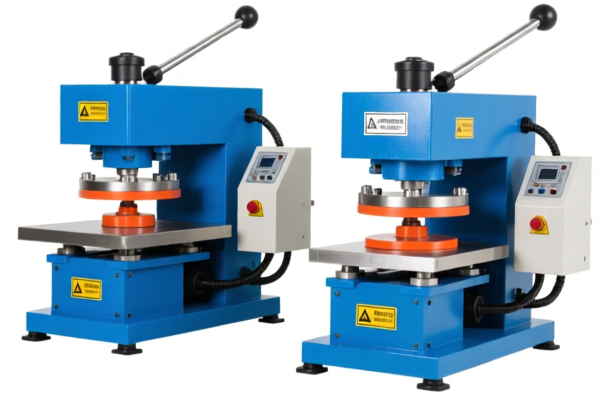
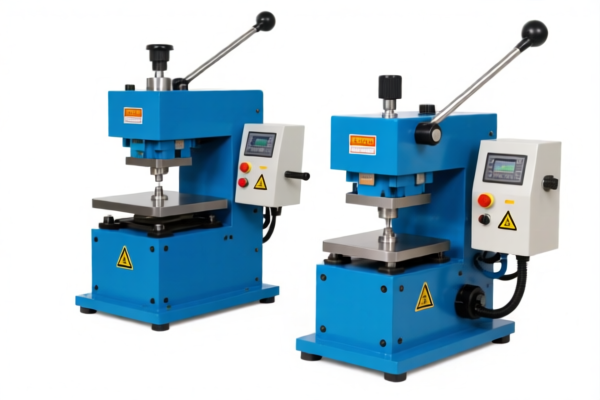
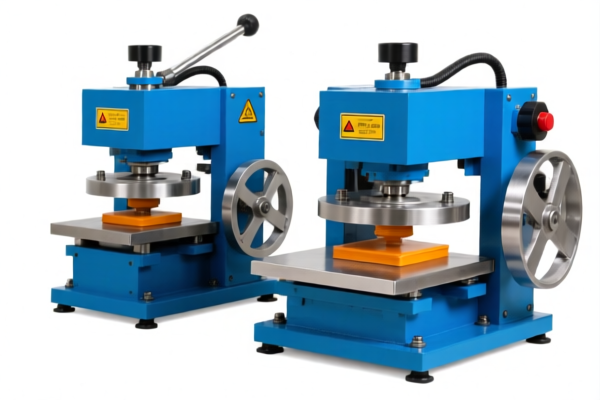
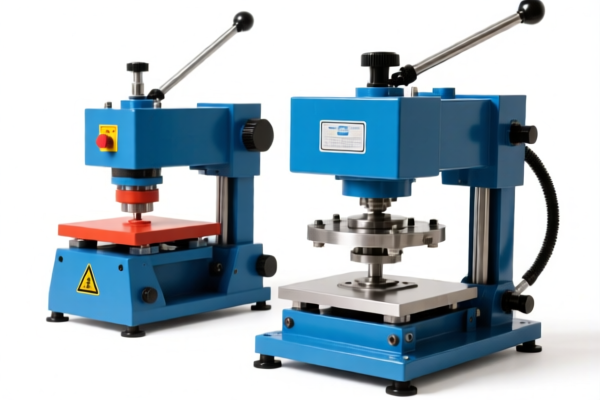
A Heat Press Machine is a versatile industrial device used primarily for transferring designs onto substrates via heat and pressure. It is widely used in garment printing (T-shirts, caps), industrial plastic processing, and composite material manufacturing.
In international trade, the classification is highly contested because the machine can be interpreted as:
1. Molding Machinery (for plastics/rubber) → Chapter 8477
2. Pressing Machinery (metal/hydraulic pressure) → Chapter 8462
3. Hot Forming Machinery (specifically for thermoplastics) → Chapter 8477
4. General Purpose Presses (making plates/sheets) → Chapter 8479
⚠️ Critical Distinction Point:
- If it is explicitly designed for rubber or plastic molding (shaping raw material) → 8477 Series
- If it is a hydraulic/mechanical press applying force (regardless of heat) → 8462 Series
- If it is for hot forming of plastic sheets (like vacuum forming) → 8477.40
- If it is a general press for making plates (not specific to plastic/rubber) → 8479.30
📦 II. HS Code Classification Details (2026 Latest Tariff Authority Comparison)
Based on the provided data, here are the five potential HS Code classifications for Heat Press Machines, ranked by tax efficiency.
| HS Code | Product Description | Applicable Scenario | Reason for Classification | Total Tax Rate (China to US) |
|---|---|---|---|---|
8479.30.00.00 |
Most Efficient Option: Presses for making plates, sheets, or profile shapes | General industrial pressing, metal/plastic plate formation | Fits the broad description of "presses for making plates"; no specific plastic/rubber molding focus | 35.0% |
8477.59.01.00 |
Other molding machinery for rubber or plastic | Garment heat transfer (textiles treated as plastic-like substrate), rubber molding | Classified as "Other" molding machinery for plastics/rubber | 38.1% |
8477.40.01.00 |
Other hot-forming machinery | Plastic sheet heating and forming, thermal transfer for plastics | Specifically defined as "Hot Forming" machinery for plastics/rubber | 38.1% |
8462.61.80.90 |
Other hydraulic pressing machines | Heavy-duty hydraulic heat presses, metal forging with heat | Classified as a hydraulic press; heat is secondary to the pressing function | 39.4% |
8462.11.00.55 |
Closed-die forging presses (hot forging) | Metal hot forging presses (less common for general "heat press" devices) | Classified as "Other" closed-die forging presses (hot forming) | 39.4% |
🔍 Key Reminder:
-8479.30.00.00offers the lowest total tax rate (35%) among all options. It is best for general-purpose presses that do not exclusively fit "molding" or "hot forming" definitions.
-8477Series is common for garment/soft-goods heat presses but carries a higher tax (38.1%) due to specific "plastic/rubber" classifications.
-8462Series is typically for heavier industrial hydraulic presses and incurs the highest tax (39.4%).
💰 III. 2026 Latest Tariff Rate Breakdown (Including Surcharges & Policy Add-ons)
✅ Applicable Country: United States (US)
✅ Country of Origin: China (CN)
✅ Effective Date: 2025 November 10 onwards (including subsequent imports)
🎯 1. 8479.30.00.00 —— Presses for Making Plates (Lowest Tax Option)
| Item | Content |
|---|---|
| Base Tariff | 0.0% (ad valorem) |
| Section 301 Surcharge (Add-on) | +25.0% (USITC Footnote related to Chinese goods) |
| 122 Clause Surcharge | +10.0% (Specific policy clause for certain machinery/goods) |
| Total Tax Rate | 35.0% |
| Tax Calculation | CIF Value × 35% |
| De Minimis Eligibility | ❌ Not Eligible (deny_de_minimis applies to these machinery categories) |
| Legal Basis Path | USITC:8479.30.00.00 → Section 301: 25% → 122 Clause: 10% |
📌 Explanation:
- "Base Tariff 0%": This code has a preferential base rate, unlike molding codes which start at 3.1% or 4.4%.
- "Section 301 25%": Standard tariff for Chinese-origin machinery under trade war provisions.
- "122 Clause 10%": Additional tariff applied to specific industrial machinery categories.
- Total 35% is the most competitive rate for Heat Press Machines among the given options.
🎯 2. 8477.59.01.00 —— Other Molding Machinery for Rubber/Plastic
| Item | Content |
|---|---|
| Base Tariff | 3.1% (ad valorem) |
| Section 301 Surcharge (Add-on) | +25.0% |
| 122 Clause Surcharge | +10.0% |
| Total Tax Rate | 38.1% |
| Tax Calculation | CIF Value × 38.1% |
| De Minimis Eligibility | ❌ Not Eligible |
| Legal Basis Path | USITC:8477.59.01.00 → Section 301: 25% → 122 Clause: 10% |
📌 Note:
- 3.1% Base + 25% + 10% = 38.1%.
- Common for garment heat presses if declared as "plastic molding" equipment.
- 3.1% difference higher than8479.30.
🎯 3. 8477.40.01.00 —— Other Hot-Forming Machinery
| Item | Content |
|---|---|
| Base Tariff | 3.1% |
| Section 301 Surcharge (Add-on) | +25.0% |
| 122 Clause Surcharge | +10.0% |
| Total Tax Rate | 38.1% |
| Tax Calculation | CIF Value × 38.1% |
| De Minimis Eligibility | ❌ Not Eligible |
| Legal Basis Path | USITC:8477.40.01.00 → Section 301: 25% → 122 Clause: 10% |
📌 Note:
- Same tax structure as8477.59. Applies if the machine is strictly for hot forming plastic sheets (e.g., thermoforming packaging).
🎯 4. 8462.61.80.90 —— Other Hydraulic Pressing Machines
| Item | Content |
|---|---|
| Base Tariff | 4.4% |
| Section 301 Surcharge (Add-on) | +25.0% |
| 122 Clause Surcharge | +10.0% |
| Total Tax Rate | 39.4% |
| Tax Calculation | CIF Value × 39.4% |
| De Minimis Eligibility | ❌ Not Eligible |
| Legal Basis Path | USITC:8462.61.80.90 → Section 301: 25% → 122 Clause: 10% |
📌 Note:
- 4.4% Base + 25% + 10% = 39.4%.
- Applies to hydraulic heat presses used in heavy industry.
- Highest tax among common heat press classifications.
🎯 5. 8462.11.00.55 —— Closed-Die Forging Presses (Hot)
| Item | Content |
|---|---|
| Base Tariff | 4.4% |
| Section 301 Surcharge (Add-on) | +25.0% |
| 122 Clause Surcharge | +10.0% |
| Total Tax Rate | 39.4% |
| Tax Calculation | CIF Value × 39.4% |
| De Minimis Eligibility | ❌ Not Eligible |
| Legal Basis Path | USITC:8462.11.00.55 → Section 301: 25% → 122 Clause: 10% |
📌 Note:
- Same tax as8462.61.
- Niche application: Metal hot forging presses. Rarely used for general "heat press" goods.
🛠️ IV. Customs Clearance Practical Advice (Real-World Pitfall Avoidance)
✅ 1. Documentation Checklist (Mandatory)
| Document | Must Provide | Description |
|---|---|---|
| ✅ Product Specification Sheet | ✔️ | Include dimensions, max temperature, max pressure, heating method (electric/oil) |
| ✅ User Manual / Circuit Diagram | ✔️ | To prove if it’s a "molding" device (8477) or a "general press" (8479) |
| ✅ Product Photos (with Nameplate) | ✔️ | Clear view of model number, brand, voltage, and power rating |
| ✅ Third-Party Test Report | ✔️ | CE, UL, or safety certifications if applicable |
| ✅ Commercial Invoice | ✔️ | Describe as "Heat Press Machine for Industrial Use" or "Thermal Transfer Press" |
| ✅ Packing List | ✔️ | List all accessories (press plates, timers, cooling fans) |
| ✅ Origin Certificate (CO) | ✔️ | If shipped from China, this triggers the 25% + 10% surcharge |
✅ 2. Declaration Strategy (Key Mnemonic)
🔥 "Plate Making = 35%, Molding = 38%, Hydraulic = 39%! Choose Wisely!"
| Scenario | Recommended HS Code | Risk if Misdeclared |
|---|---|---|
| General Purpose Heat Press (e.g., for signs, plastics, non-rubber molding) | 8479.30.00.00 |
Misclassified as 8477 → +3.1% extra tax |
| Garment Heat Press (T-shirt printing) | 8477.59.01.00 or 8477.40.01.00 |
Misclassified as 8479 → Possible audit, but 8479 is cheaper for general use |
| Heavy Industrial Hydraulic Press | 8462.61.80.90 |
Misclassified as 8477 → Lower tax but incorrect function description |
| Metal Forging Press | 8462.11.00.55 |
Rare for heat presses; do not use unless for metal |
📌 Critical Tip:
- If your heat press is used for T-shirts, bags, or caps, you can argue it is for "plastic-based textile printing" → 8477 (38.1%).
- However, if it is a general-purpose press that can press metal, plastic, or composite plates without specific molding functions,8479.30.00.00(35%) is the legally safer and cheaper option.
- Do not split components (e.g., declare "heating element" separately). Declare as a complete machine.
✅ 3. Special Case Handling
| Scenario | Handling Advice |
|---|---|
| OEM Heat Press for Brands | Provide purchase order + design specs. Avoid "generic" descriptions that trigger 301 clause audits. |
| Heat Press with Touchscreen Control | Still classified under 8477 or 8479. The control panel does not change the machine’s primary function. |
| Used Heat Press | Must declare as "Used." Provide proof of age. No additional tax, but higher inspection risk. |
| Shipped from 3rd Country (e.g., Vietnam) | If transshipped from Vietnam, ensure Substantial Transformation occurs. Otherwise, Origin remains China → Same tariffs apply. |
🌍 V. Global Market Comparison (2026 Latest)
| Country/Region | Recommended HS Code | Tariff (China Origin) | Certification Requirements | Notes |
|---|---|---|---|---|
| 🇺🇸 USA | 8479.30.00.00 |
35.0% | UL, FCC (if electrical) | Best rate. Avoid 8462 (39.4%). |
| 🇨🇳 China | 8479.30.00.00 |
5% (Import Duty) | CCC (if applicable) | No 301/122 clauses. |
| 🇪🇺 EU | 8479.80.99 |
0% - 2% | CE, RoHS | Generally low duty for machinery. |
| 🇬🇧 UK | 8479.80.99 |
0% - 2% | UKCA, CE | Post-Brexit rules apply. |
| 🇯🇵 Japan | 8479.89.00 |
0% | PSE (electrical) | No anti-dumping on heat presses. |
📌 Conclusion:
- USA is the only market with significant surcharges (301 + 122).
-8479.30.00.00is the optimal HS Code for the US market due to 0% base tariff.
- For China/EU/UK, tariffs are minimal. Focus on CE/UL safety certifications instead of HS Code optimization.
📌 VI. Common Mistakes & Pitfall Guide (Lessons Learned)
❌ Mistake 1: Classifying as 8462.61 (Hydraulic Press) → 39.4% Tax
👉 Result: Overpaid 4.4% tax unnecessarily if not a heavy industrial hydraulic press.
❌ Mistake 2: Classifying as 8477 for a general plate press → 38.1% Tax
👉 Result: Overpaid 3.1% tax. Use 8479.30 for general presses.
❌ Mistake 3: Declaring as "Garment Accessory" (e.g., 6307.90) → 25% Tax
👉 Result: Severe Risk. Customs will classify as machinery → 35%+ tax + penalty. Never do this.
❌ Mistake 4: Splitting declaration (Heating Element + Press Frame) → High Risk
👉 Result: Each part taxed separately. Frame: 35%. Heating Element: High. Total cost increases.
✅ Correct Approach:
"Industrial Heat Press Machine, Electric, 20x20 inch, Max Temp 500°F, for Printing and Molding, Model XYZ, UL Certified"
🎯 VII. Conclusion: Professional Declaration, Save Cost, Smooth Clearance!
🎯 Remember the Mnemonic:
🔹 "35% for Plates (8479), 38% for Molding (8477), 39% for Hydraulics (8462)!"
🔹 "HS Code decides fate! 3.1% difference means thousands saved!"
📌 Pro Tip:
- If your heat press is not exclusively for plastic/rubber, declare as 8479.30.00.00 to save 3.1%–4.4% tax.
- Always provide technical specifications proving it is a press (pressure-based) rather than just a heater.
- Consider Advance Ruling from US Customs if the machine has mixed functions (e.g., molding + printing).
📣 Take Action Now:
📞 Consult a licensed customs broker + Provide Product Specs + Apply for HS Code Advance Ruling
🚀 Let your Heat Press Machine clear smoothly, reduce costs, and maximize profit!
✨ Professional Customs Clearance Starts with Accurate Classification!
💼 Every cent of tax saved is pure profit!
Customer Reviews
About HS Code Classification
The Harmonized System (HS) is an internationally standardized nomenclature developed by the World Customs Organization (WCO) to classify traded products. Over 200 countries use the HS system as the basis for customs tariffs, trade statistics, and import/export regulations.
Each HS code follows a hierarchical structure:
- Chapter (2 digits) — Broad category of goods (e.g., Chapter 84: Machinery and Mechanical Appliances)
- Heading (4 digits) — More specific grouping within the chapter
- Subheading (6 digits) — Internationally standardized breakdown, used by all WCO member countries
- National subdivisions (8-10 digits) — Country-specific extensions for further classification, such as US HTSUS 10-digit codes
Correct HS code classification is essential for smooth customs clearance, accurate duty payment, and compliance with trade regulations. Misclassification can lead to customs delays, overpayment of duties, or penalties.
When importing from CN to US, the applicable tariff rates may include:
- Most-Favored-Nation (MFN) rate — The standard duty rate applied to WTO members
- General rate — Applied to countries without trade agreements
- Trade remedy duties — Additional tariffs such as Section 301 (anti-dumping), Section 232 (national security), or countervailing duties
The information provided on this page is for reference purposes only. For official classification, please consult with your local customs authority or a licensed customs broker.