heat shrink tubing
CN → US| HS Code | Tariff Rate | Origin | Destination | Doc |
|---|---|---|---|---|
| 3917320050 | 38.1% | CN | US | Official Doc |
| 8547900020 | 89.6% | CN | US | Official Doc |
| 8547900010 | 89.6% | CN | US | Official Doc |
| 3917390050 | 13.1% | CN | US | Official Doc |
Product Images
AI Analysis
🔥 Heat Shrink Tubing (Thermal Insulation Protective Sleeving)
🌐 HS Code & Tariff Guide | 2026 U.S. Trade Compliance Deep Dive | Expert Customs Strategy
📌 One Product, Multiple Classifications — Know the Right HS Code to Avoid 89.6% Tariffs!
📦 1. Product Definition & Classification: What Is Heat Shrink Tubing?
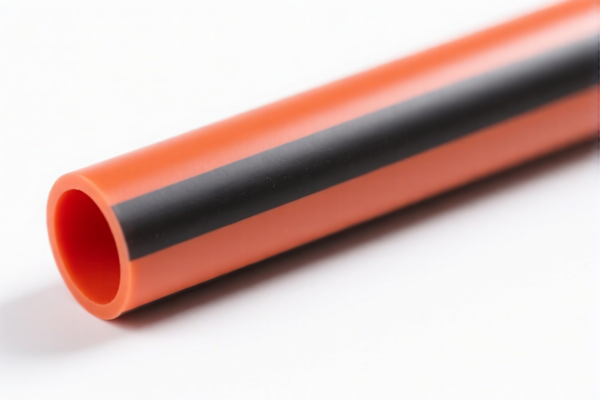
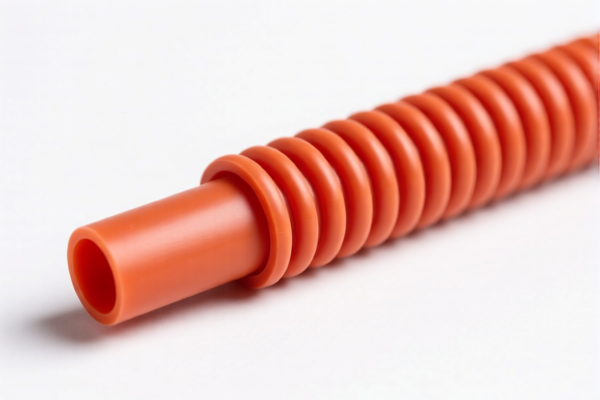
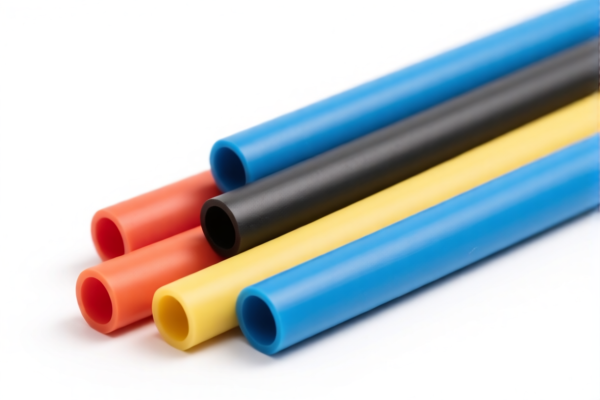
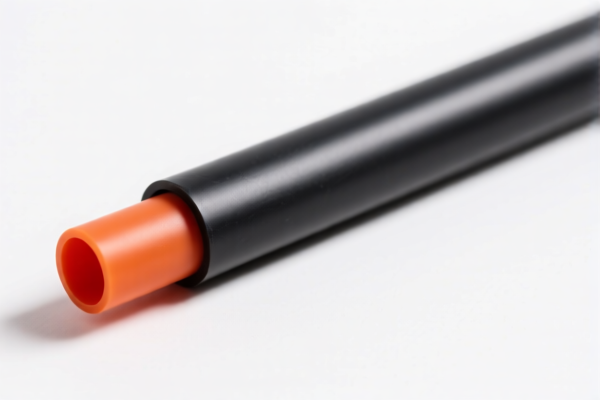
Heat shrink tubing is a thermoplastic sleeve that contracts when heated, providing electrical insulation, mechanical protection, strain relief, and environmental sealing for wires, cables, and connectors.
It is widely used in:
- Automotive wiring harnesses
- Aerospace & defense systems
- Industrial control panels
- Consumer electronics (phones, laptops, chargers)
- Medical devices & renewable energy systems
⚠️ Critical Insight:
Despite being made of plastic (e.g., polyolefin, PVC, fluoropolymers), heat shrink tubing can be classified under different HS codes depending on form, function, and intended use — and this determines whether you pay 13.1% or 89.6% in tariffs!
📊 2. HS Code Classification Breakdown (2026 U.S. Tariff Schedule)
| HS Code | Product Description | Key Classification Criteria | Tax Risk Level |
|---|---|---|---|
3917.32.00.50 |
Tubing/soft hose made of plastic (polymer), not for electrical insulation | General plastic tube, no electrical function | 🔴 Moderate (38.1%) |
8547.90.00.20 |
Electrical insulation tubing, used for wire/connector protection | Electrical insulation function, plastic/resin material | 🔴 High (89.6%) |
8547.90.00.10 |
Insulating accessories for electrical equipment, made of polyolefin | Designed for electrical insulation, not just mechanical use | 🔴 High (89.6%) |
3917.39.00.50 |
Other plastic tubing (e.g., polyolefin), not for electrical use | Non-electrical, general-purpose tubing | 🟡 Low (13.1%) |
🔍 Key Distinction:
- If the tubing is used for electrical insulation, it must be classified under 8547.90.00.10 or .20 — even if it's made of plastic.
- If it's just a protective sleeve with no electrical function, it may qualify under 3917.32.00.50 or 3917.39.00.50.
💰 3. 2026 U.S. Tariff Rate Analysis (With Full Legal Breakdown)
✅ Applicable Country: United States (US)
✅ Origin: China (CN)
✅ Effective Date: November 10, 2025 (including subsequent imports)
🎯 1. 3917.32.00.50 — General Plastic Tubing (Non-Electrical Use)
| Item | Detail |
|---|---|
| Base Duty | 3.1% (ad valorem) |
| Section 301 (USITC) Additional Tariff | +25.0% |
| Section 122 (IEEPA) Additional Tariff | +10.0% |
| Total Effective Tariff | 38.1% |
| Tax Calculation | CIF Value × 38.1% |
| De Minimis Exemption? | ❌ No (denied under U.S. de minimis rule for China-origin goods) |
| Legal Basis Path | IEEPA:9903.01.25 → IEEPA:9903.01.24 → USITC:3917.32.00.50 → FOOTNOTE:9903.88.01 |
📌 Explanation:
- Applies to non-electrical plastic tubing (e.g., for plumbing, HVAC, general packaging).
- Even if used in electronics, if it’s not designed for electrical insulation, this code may apply.
- Still high at 38.1% — but not the worst.
🎯 2. 8547.90.00.20 — Electrical Insulation Tubing (Used in Wiring Systems)
| Item | Detail |
|---|---|
| Base Duty | 4.6% |
| Section 301 (USITC) Additional Tariff | +25.0% |
| Section 122 (IEEPA) Additional Tariff | +10.0% |
| Steel/Aluminum/Copper Product Additional Tariff (122) | +50.0% |
| Total Effective Tariff | 89.6% |
| Tax Calculation | CIF Value × 89.6% |
| De Minimis Exemption? | ❌ No |
| Legal Basis Path | IEEPA:9903.01.25 → IEEPA:9903.01.24 → USITC:8547.90.00.20 → FOOTNOTE:9903.88.01 → SECTION 122: 50% ADDITIONAL |
📌 Explanation:
- This is the most dangerous code for heat shrink tubing.
- Applies if the tubing is used for electrical insulation, even if made of plastic.
- The 50% additional tariff applies because the product is used in electrical systems — not due to material, but function.
- Total: 89.6% — over 8x the base rate.
- This is the default for most electronic heat shrink tubing.
🎯 3. 8547.90.00.10 — Insulating Accessories for Electrical Equipment
| Item | Detail |
|---|---|
| Base Duty | 4.6% |
| Section 301 (USITC) Additional Tariff | +25.0% |
| Section 122 (IEEPA) Additional Tariff | +10.0% |
| Steel/Aluminum/Copper Product Additional Tariff (122) | +50.0% |
| Total Effective Tariff | 89.6% |
| Tax Calculation | CIF Value × 89.6% |
| De Minimis Exemption? | ❌ No |
| Legal Basis Path | IEEPA:9903.01.25 → IEEPA:9903.01.24 → USITC:8547.90.00.10 → FOOTNOTE:9903.88.01 → SECTION 122: 50% ADDITIONAL |
📌 Explanation:
- This code is identical in rate to8547.90.00.20.
- Applies to accessories used in electrical insulation systems, including heat shrink tubing.
- Function determines classification, not material.
- Even if the tubing is not a "tube" in the traditional sense, if it's used for electrical protection, this applies.
🎯 4. 3917.39.00.50 — Other Plastic Tubing (Non-Electrical)
| Item | Detail |
|---|---|
| Base Duty | 3.1% |
| Section 301 (USITC) Additional Tariff | +0.0% (no 301 tariff) |
| Section 122 (IEEPA) Additional Tariff | +10.0% |
| Total Effective Tariff | 13.1% |
| Tax Calculation | CIF Value × 13.1% |
| De Minimis Exemption? | ✅ Yes (if value ≤ $800 per shipment) |
| Legal Basis Path | IEEPA:9903.01.24 → FOOTNOTE:9903.88.01 → 3917.39.00.50 |
📌 Explanation:
- Lowest tariff of all four codes.
- Applies only if the tubing is NOT used for electrical insulation.
- Example: Plastic tubing used for labeling, packaging, or non-electrical sealing.
- If you claim this, you must prove it's not for electrical use.
🛠️ 4. Customs Clearance Strategy (Pro Tips to Avoid 89.6%!)
✅ 1. Critical Documentation Checklist (Must-Have)
| Document | Required? | Why It Matters |
|---|---|---|
| ✅ Product Specification Sheet | ✔️ | Must state intended use (e.g., "for wire insulation" vs "for general packaging") |
| ✅ Circuit Diagram / Product Use Case | ✔️ | Prove whether it’s used in electrical systems |
| ✅ High-Res Product Photos (with labels) | ✔️ | Show material, size, markings, and application |
| ✅ Third-Party Test Report | ✔️ | UL, RoHS, CE, or IPC-6013 (if applicable) |
| ✅ Commercial Invoice | ✔️ | Must clearly state "Heat Shrink Tubing for Electrical Insulation" or "General Plastic Tubing" |
| ✅ Certificate of Origin (CO) | ✔️ | If from Vietnam, Mexico, or Thailand, can reduce tariffs |
| ✅ Packing List | ✔️ | Show if bundled with wires, connectors, or tools |
✅ 2.申报技巧(Key Rules to Remember)
🔥 "Function Over Form — If It’s for Electricity, Pay 89.6%!"
| Scenario | Correct HS Code | Wrong Code | Risk |
|---|---|---|---|
| Used to insulate wires in a car harness | 8547.90.00.20 or .10 |
3917.32.00.50 |
89.6% tariff |
| Used for packaging plastic parts | 3917.39.00.50 |
8547.90.00.10 |
89.6% instead of 13.1% |
| Sold as "protective sleeve" with no electrical use | 3917.39.00.50 |
8547.90.00.10 |
Avoidable risk |
| Used in medical device wiring | 8547.90.00.10 |
3917.32.00.50 |
89.6% vs 38.1% |
📌 Golden Rule:
- If it's used in electrical circuits, it's 8547.90.00.10 or .20 → 89.6%
- If it's not used for electrical insulation, it's 3917.39.00.50 → 13.1% (with de minimis!)
✅ 3. Special Cases & Workarounds
| Situation | Recommended Action |
|---|---|
| Tubing used in non-electrical systems (e.g., HVAC, plumbing) | Use 3917.39.00.50 — 13.1% |
| Tubing sold as "general-purpose" with no electrical use claim | Use 3917.39.00.50 — 13.1% + de minimis |
| Tubing used in electronics (even if not labeled as such) | Must use 8547.90.00.10/.20 — 89.6% |
| Origin from Vietnam, Mexico, Thailand, Malaysia | Apply for IEEPA exemption — 0% to 5% |
| OEM/Custom-Branded Tubing | Provide customer design specs to prove use case |
🌍 5. Global Market Tariff Comparison (2026)
| Country | Recommended HS Code | Tariff | Certification | Notes |
|---|---|---|---|---|
| 🇺🇸 USA | 8547.90.00.10 or .20 |
89.6% (China) | FCC, UL, RoHS | High risk |
| 🇨🇳 China | 8547.90.00.10 |
5% | CCC | No extra tariffs |
| 🇪🇺 EU | 8547.90.00.10 |
0% (if CE) | CE, RoHS | No 301/IEEPA |
| 🇦🇺 Australia | 8547.90.00.10 |
5% | RCM | No extra tariffs |
| 🇯🇵 Japan | 8547.90.00.10 |
0% | PSE | No additional duties |
📌 Insight:
- The U.S. is the only market with 89.6% tariffs on electrical insulation tubing.
- China-origin goods are hit hardest — 89.6% is not negotiable.
🚫 6. Common Mistakes & Costly Errors (Learn from Others)
❌ Mistake 1:
"We used
3917.32.00.50because it's plastic."
👉 Result: Customs reclassified as electrical insulation → 89.6% → $10,000+ in back taxes + penalties
❌ Mistake 2:
"It’s just a tube — why not use
3917.39.00.50?"
👉 Result: If used in electronics, still 89.6% — no de minimis.
❌ Mistake 3:
"We didn’t label it for electrical use — so it’s not electrical."
👉 Result: Customs uses product function, not labeling → still 89.6%.
✅ Correct Approach:
Use clear, functional language in invoice:
- ✅ "Heat shrink tubing for electrical wire insulation, polyolefin, 3mm inner diameter" →8547.90.00.10
- ✅ "General-purpose plastic tubing for packaging, not for electrical use" →3917.39.00.50
🎯 7. Final Verdict: Know Your HS Code, Save Thousands!
🔥 "If it insulates electricity — it’s 89.6%.
If it doesn’t — it’s 13.1%.
If you’re unsure — get a pre-ruling."
📌 Pro Tips: - ✅ Apply for Advance Ruling (Pre-Decision) before shipment — avoid surprises. - ✅ Use non-China origin (Vietnam, Mexico, Thailand) to avoid 301/IEEPA tariffs. - ✅ Label clearly: “For Electrical Insulation” vs “For General Use”. - ✅ Keep documentation for 5 years — U.S. CBP audits can go back.
📣 Act Now!
📞 Contact a U.S. Customs Broker + HS Code Pre-Ruling Specialist
🚀 Ensure your heat shrink tubing clears customs without 89.6% tax traps!
✨ Your Profit Depends on One Code — Get It Right!
💼 Precision in Classification = Savings in Tariffs = Smooth Global Trade!
Customer Reviews
About HS Code Classification
The Harmonized System (HS) is an internationally standardized nomenclature developed by the World Customs Organization (WCO) to classify traded products. Over 200 countries use the HS system as the basis for customs tariffs, trade statistics, and import/export regulations.
Each HS code follows a hierarchical structure:
- Chapter (2 digits) — Broad category of goods (e.g., Chapter 84: Machinery and Mechanical Appliances)
- Heading (4 digits) — More specific grouping within the chapter
- Subheading (6 digits) — Internationally standardized breakdown, used by all WCO member countries
- National subdivisions (8-10 digits) — Country-specific extensions for further classification, such as US HTSUS 10-digit codes
Correct HS code classification is essential for smooth customs clearance, accurate duty payment, and compliance with trade regulations. Misclassification can lead to customs delays, overpayment of duties, or penalties.
When importing from CN to US, the applicable tariff rates may include:
- Most-Favored-Nation (MFN) rate — The standard duty rate applied to WTO members
- General rate — Applied to countries without trade agreements
- Trade remedy duties — Additional tariffs such as Section 301 (anti-dumping), Section 232 (national security), or countervailing duties
The information provided on this page is for reference purposes only. For official classification, please consult with your local customs authority or a licensed customs broker.