heater fan
CN → US| HS Code | Tariff Rate | Origin | Destination | Doc |
|---|---|---|---|---|
| 8516290060 | 38.7% | CN | US | Official Doc |
| 7321116000 | 85.0% | CN | US | Official Doc |
| 8516290030 | 38.7% | CN | US | Official Doc |
| 8509805095 | 14.2% | CN | US | Official Doc |
| 8414519060 | 14.7% | CN | US | Official Doc |
Product Images
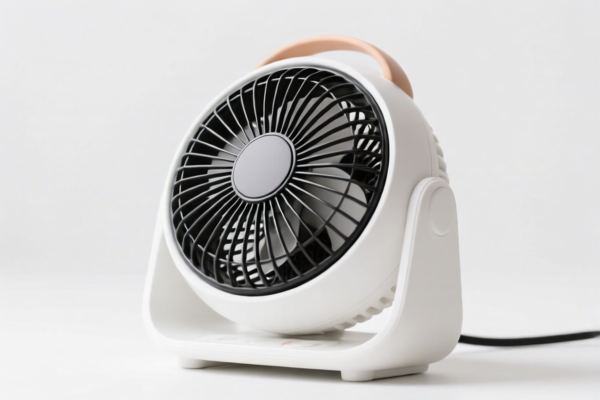
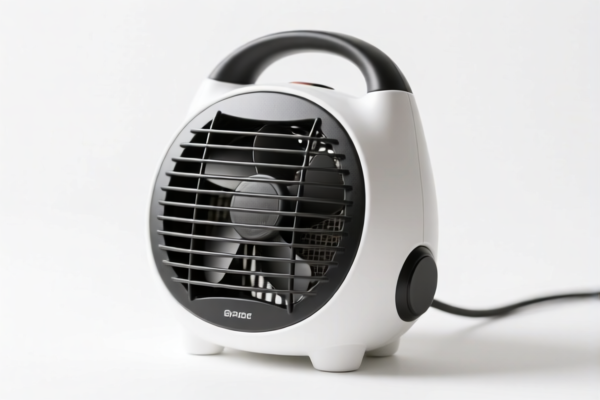
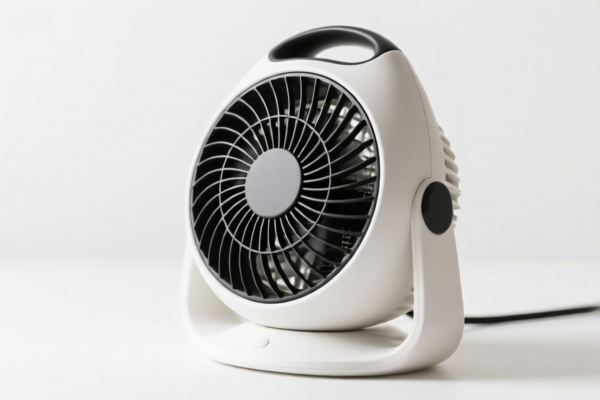
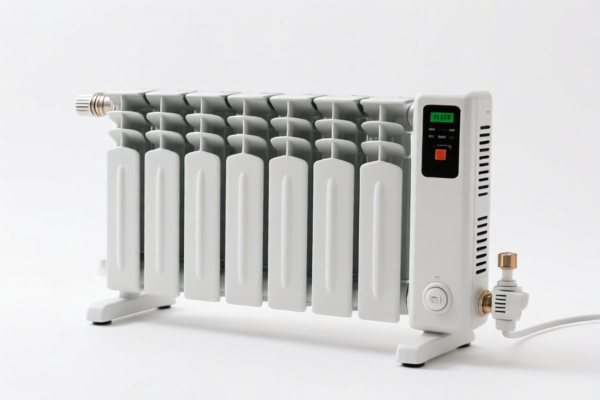
AI Analysis
🔥💨 Heater & Fan (Space Heaters & Air Circulators)
🌐 HS Code Reference & Clearance Guide | 2024/2025 Tax Analysis | Professional Compliance Strategy
📌 I. Product Definition & Classification: Do You Really Know "Heater Fan"?
"Heater" and "Fan" are common household appliances, but their classification depends entirely on power source, structure, and primary function. In international trade, especially when importing into the United States, these items face significant tariff differences due to Section 301 and Section 122 measures.
Core Distinction: 1. Electric Space Heaters (Electric Heating): Use electrical energy to generate heat. Primarily classified under Chapter 85. 2. Gas Heaters (Gas Heating): Use gas (propane/natural gas) to generate heat. Primarily classified under Chapter 73 (if steel/iron based). 3. Fans (Air Circulators): Move air without generating heat as the primary function. Primarily classified under Chapter 84 or 85.
⚠️ Critical Warning for US Imports:
- Electric Heaters: Subject to high additional tariffs (Base + 301 + 122).
- Gas Heaters (Steel): Subject to the highest tier of additional tariffs (Base + 301 + 122 + Steel/Aluminum/Copper Surcharge).
- Fans: Generally lower additional tariffs (mostly Base + 122, unless specific 301 rules apply).
📦 II. HS Code Classification Details (Based on Provided Data)
| HS Code | Product Description | Key Characteristics | Primary Function |
|---|---|---|---|
8516.29.00.60 |
Portable Space Heater (Electric) | Electric-powered, inferred as portable space heater. | Heating (Electric) |
7321.11.60.00 |
Gas Heater (Steel/Iron) | Made of iron/steel; fits gas-heated plate/heater appliances. | Heating (Gas) |
8516.29.00.30 |
Electric Space Heater (Portable/Non-portable) | Space heating device; inferred as portable or non-portable electric heater. | Heating (Electric) |
8509.80.50.95 |
Fan (With Self-Contained Motor) | Home appliance with its own electric motor; fits "other" electrical appliance definition. | Air Circulation |
8414.51.90.60 |
Fan (Standard Definition) | Core purpose matches "fan" definition exactly; no material/form conflict. | Air Circulation |
💰 III. 2024/2025 Latest Tariff Rate Breakdown (Detailed Policy Analysis)
✅ Applicable Country: United States (US)
✅ Origin: China (CN) (Assumed based on "301/122" and "Steel/Copper" surcharges in data)
✅ Effective Time: Current Active Rates (Section 301 & Section 122)
🎯 1. 8516.29.00.60 & 8516.29.00.30 —— Electric Space Heaters
These codes fall under Chapter 85 (Electrical Machinery). They are subject to Base Tariff, Section 301, and Section 122.
| Item | Content |
|---|---|
| Base Tariff | 3.7% |
| Section 301 Tariff | +25.0% (List 3/4 Item) |
| Section 122 Tariff | +10.0% (New Measure on Electric Vehicles, Electronics, Heaters, etc.) |
| Total Effective Rate | 38.7% |
| Tax Calculation | CIF Value × 38.7% |
| De Minimis Exemption? | ❌ NO (Section 301 & 122 goods are generally excluded from de minimis) |
| Legal Path | HTS:8516.29.00.60 → USITC:Footnote 9903.88.01 (301) + IEEPA:10412 (122) |
📌 Explanation:
- 38.7% is a heavy burden for electric heaters.
- Section 122 specifically targets "electrical space heaters," adding an extra 10% on top of existing 301 tariffs.
- No exemption for small parcels (de minimis) if they are subject to 301/122 duties.
🎯 2. 7321.11.60.00 —— Gas Heaters (Steel/Iron)
This code falls under Chapter 73 (Articles of Iron or Steel). It is subject to the highest combined tariff due to the additional steel/copper surcharge.
| Item | Content |
|---|---|
| Base Tariff | 0.0% |
| Section 301 Tariff | +25.0% |
| Section 122 Tariff | +10.0% |
| Steel/Aluminum/Copper Surcharge | +50.0% (Specific to steel articles under HTS 7321) |
| Total Effective Rate | 85.0% |
| Tax Calculation | CIF Value × 85.0% |
| De Minimis Exemption? | ❌ NO |
| Legal Path | HTS:7321.11.60.00 → USITC:Footnote 9903.88.01 (301) + IEEPA:10412 (122) + IEEPA:Steel/Copper Surcharge |
📌 Explanation:
- 85.0% is extremely high. This code applies to gas heaters made of steel.
- The +50% surcharge is triggered because the product is classified under Chapter 73 (Iron/Steel) and is subject to the specific steel/copper duties.
- Do not misclassify an electric heater as a gas heater to avoid this, but also do not misclassify a steel gas heater to avoid the 50% surcharge. Accurate material and power-source declaration is critical.
🎯 3. 8509.80.50.95 & 8414.51.90.60 —— Fans
Fans are generally less taxed than heaters, but still subject to Section 122 and potentially Section 301 depending on the specific subheading and motor type.
A. 8509.80.50.95 (Electrical Appliances, Other)
| Item | Content |
|---|---|
| Base Tariff | 4.2% |
| Section 301 Tariff | 0.0% (No 301 applied to this specific "other electrical appliance" code in many cases) |
| Section 122 Tariff | +10.0% |
| Total Effective Rate | 14.2% |
| De Minimis Exemption? | ❌ NO (If subject to 122) |
📌 Note: Some fans may be exempt from 301 but still hit by 122 if they are considered "electrical appliances."
B. 8414.51.90.60 (Fans, Ventilating/Floor Stands)
| Item | Content |
|---|---|
| Base Tariff | 4.7% |
| Section 301 Tariff | 0.0% |
| Section 122 Tariff | +10.0% |
| Total Effective Rate | 14.7% |
| De Minimis Exemption? | ❌ NO (If subject to 122) |
📌 Note: This code is for fans that match the core definition of "fan" without specific material conflicts. It is a standard classification for household air circulators.
🛠️ IV. Clearance Practical Advice (Real-World Pitfall Guide)
✅ 1. Preparation Checklist (Mandatory)
| Document | Required? | Explanation |
|---|---|---|
| ✅ Product Specification Sheet | ✔️ | Must specify Power Source (Electric vs. Gas), Material (Steel/Plastic), and Function (Heat vs. Air Flow). |
| ✅ Photos (Label & Structure) | ✔️ | Must clearly show input voltage (e.g., 120V AC) for electric, or fuel type (Propane) for gas. |
| ✅ Certificate of Origin | ✔️ | Critical for proving origin to apply any potential waivers (though unlikely for CN origin under 301/122). |
| ✅ Third-Party Testing Reports | ✔️ | UL/ETL for electric heaters (safety), EPA for gas heaters (emissions). |
| ✅ Commercial Invoice | ✔️ | Must accurately describe the item as "Electric Space Heater" or "Gas Patio Heater," NOT generic "Heater Fan." |
✅ 2. Classification Strategy (Key Rules)
🔥 "Power Source Defines HS, Material Triggers Surcharge, 122 Adds 10%"
| Scenario | Correct Classification | Risk of Misclassification |
|---|---|---|
| Electric Portable Heater | 8516.29.00.60 or .30 |
Risk: Low. But ensure it's not classified as a "fan" to avoid underpayment of taxes. |
| Gas Steel Heater | 7321.11.60.00 |
Risk: HIGH. If misclassified as electric (8516), you save ~46% but face fraud penalties. If misclassified as non-steel, you avoid the 50% surcharge but face material misdeclaration. |
| Standard Electric Fan | 8414.51.90.60 |
Risk: Low. Ensure it's not a "heater-fan combo" if it has heating elements. |
| Heater-Fan Combo | 8516.29.00.60 (Primary Function) |
Risk: If declared as "Fan," customs may reclassify to Heater code (38.7%) + back duties. |
✅ 3. Special Considerations
| Situation | Recommendation |
|---|---|
| "Heater Fan" Hybrid | If the product can only blow air or only heat, classify by primary function. If it does both equally, customs may apply the higher tariff rate or classify as a heater. |
| Section 122 Impact | Since Nov 2024, all electric space heaters and many fans are subject to the extra 10% Section 122 tariff. Budget for this! |
| Steel Surcharge | For 7321.11.60.00, the +50% is non-negotiable for steel articles. Consider alternative materials (e.g., ceramic heaters 8516) to reduce costs. |
| De Minimis (Section 321) | Do NOT rely on $800 de minimis for these goods. Both Section 301 and Section 122 explicitly exclude goods from de minimis treatment. |
🌍 V. Global Market Comparison (2024/2025)
| Region | Recommended HS Code | Estimated Total Duty (CN Origin) | Key Certification |
|---|---|---|---|
| 🇺🇸 USA | 8516.29.00.60 (Heater) |
38.7% | UL/ETL, ETL |
| 🇺🇸 USA | 7321.11.60.00 (Gas Steel) |
85.0% | EPA, CGA |
| 🇺🇸 USA | 8414.51.90.60 (Fan) |
14.7% | ETL, DOE |
| 🇪🇺 EU | 8414.51 / 8516.29 |
0% - 6% + VAT | CE, RoHS, ErP |
| 🇨🇳 China | 8516.29 / 8414.51 |
6% - 10% | CCC |
📌 Conclusion:
- USA is the most challenging market due to 301 + 122 + Steel Surcharge.
- EU and China have much lower tariffs but require strict safety/energy efficiency certifications (CE/ErP, CCC).
- Strategy: For the US market, fans (8414) are significantly cheaper to import than heaters (8516). Consider shifting product focus if tariffs are prohibitive.
📌 VI. Common Errors & Pitfalls (Lessons Learned)
❌ Error 1: Classifying a Gas Heater under 8516 (Electric) to avoid the 50% steel surcharge.
👉 Consequence: Customs inspection reveals fuel type/steel material → Penalty + Back Duties + Possible Seizure.
❌ Error 2: Classifying an Electric Heater as a Fan (8414) to save on Section 122.
👉 Consequence: Customs rejects due to heating element presence → Reclassification to 38.7% + Interest.
❌ Error 3: Assuming De Minimis ($800) applies to Section 301/122 goods.
👉 Consequence: Package held at border, duties demanded, or rejected entry. Plan for full duty payment.
✅ Correct Practice:
"Electric Portable Space Heater, 1500W, 120V, Plastic Casing, UL Certified" →
8516.29.00.60(38.7%)
"Gas Patio Heater, Propane, Steel Frame, EPA Certified" →7321.11.60.00(85.0%)
"Floor Fan, 16-inch, Plastic Blades, Motor Included" →8414.51.90.60(14.7%)
🎯 VII. Conclusion: Professional Classification, Cost Control
🎯 Key Takeaways:
1. Heaters are Expensive: Electric heaters face 38.7%, Gas steel heaters face 85.0%.
2. Fans are Cheaper: Fans face 14.2% - 14.7%.
3. Material Matters: Steel components can trigger a +50% surcharge on gas heaters.
4. No De Minimis: All these goods are subject to full duty assessment.
🔹 "Check Power, Check Material, Check Section 122."
🔹 "Steel Gas Heaters are a Tariff Trap – Avoid or Price Accordingly."
📌 Pro Tip:
If you are importing to the US, get a Pre-Ruling from CBP for ambiguous "Heater-Fan" hybrids. Also, consider supply chain diversification (e.g., sourcing fans from Vietnam/Mexico) to mitigate Section 301/122 risks.
📣 Action Plan:
📞 Contact Customs Broker + Provide Product Specs + Verify Section 122 Applicability
🚀 Optimize HS Code Selection to minimize duty impact.
✨ Accurate Classification is Your Best Defense Against Tariff Shocks!
💼 Every Percentage Point Counts in Today's Trade Environment!
Customer Reviews
About HS Code Classification
The Harmonized System (HS) is an internationally standardized nomenclature developed by the World Customs Organization (WCO) to classify traded products. Over 200 countries use the HS system as the basis for customs tariffs, trade statistics, and import/export regulations.
Each HS code follows a hierarchical structure:
- Chapter (2 digits) — Broad category of goods (e.g., Chapter 84: Machinery and Mechanical Appliances)
- Heading (4 digits) — More specific grouping within the chapter
- Subheading (6 digits) — Internationally standardized breakdown, used by all WCO member countries
- National subdivisions (8-10 digits) — Country-specific extensions for further classification, such as US HTSUS 10-digit codes
Correct HS code classification is essential for smooth customs clearance, accurate duty payment, and compliance with trade regulations. Misclassification can lead to customs delays, overpayment of duties, or penalties.
When importing from CN to US, the applicable tariff rates may include:
- Most-Favored-Nation (MFN) rate — The standard duty rate applied to WTO members
- General rate — Applied to countries without trade agreements
- Trade remedy duties — Additional tariffs such as Section 301 (anti-dumping), Section 232 (national security), or countervailing duties
The information provided on this page is for reference purposes only. For official classification, please consult with your local customs authority or a licensed customs broker.