heating finger cots
CN → US| HS Code | Tariff Rate | Origin | Destination | Doc |
|---|---|---|---|---|
| 8543704500 | 37.6% | CN | US | Official Doc |
| 8543708500 | 35.0% | CN | US | Official Doc |
| 6217109550 | 32.1% | CN | US | Official Doc |
| 6217909085 | 32.1% | CN | US | Official Doc |
Product Images
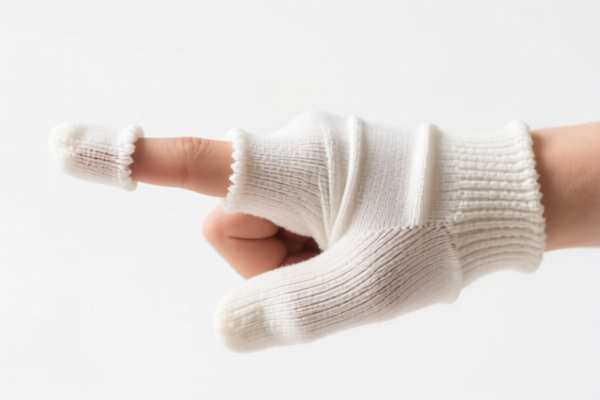
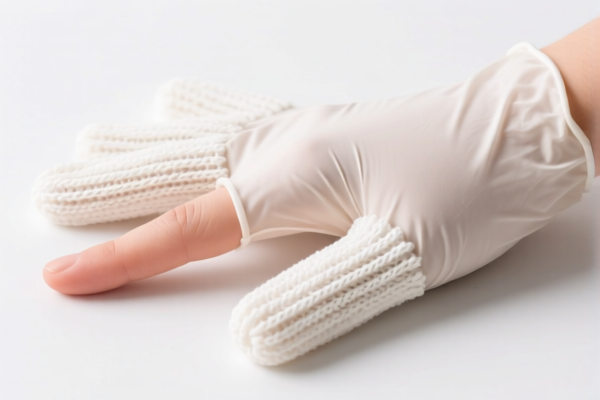
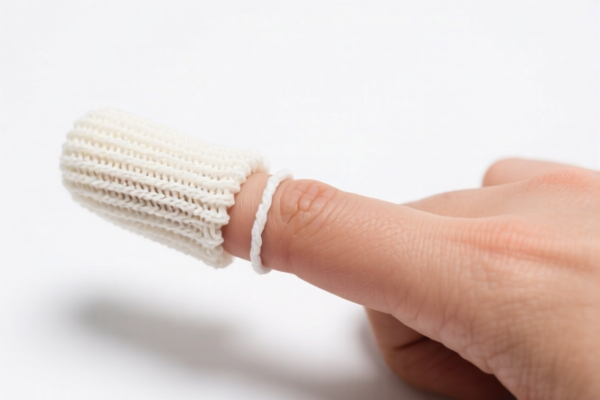
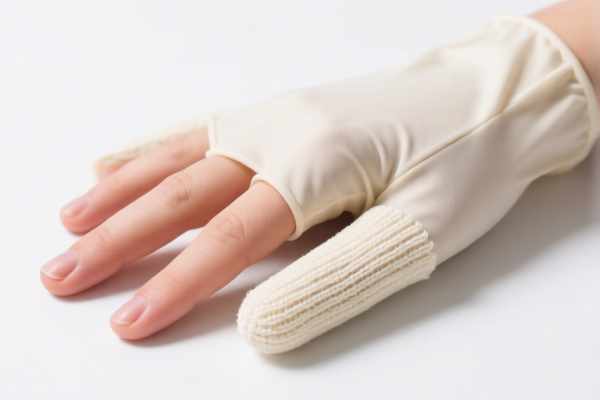
AI Analysis
🔥 Heating Finger Cots (Thermal Finger Sleeves)
🌐 HS Code Reference & Customs Clearance Guide | 2026 Latest Tariff Analysis | Professional通关 Strategy
📌 I. Product Definition & Classification: Do You Really Know "Heating Finger Cots"?
Heating finger cots, also known as thermal finger sleeves or heated finger covers, are wearable devices designed to provide warmth or targeted heat therapy to fingers. They are commonly used in cold-weather sports (skiing, hunting), industrial work in freezing environments, or medical rehabilitation.
In international trade, these products sit at the intersection of textiles/apparel and electronic/electrical appliances, leading to significant classification ambiguity. The key distinction lies in whether they are viewed as functional apparel accessories or independent electrical heating devices.
⚠️ Critical Distinction Points: - If primarily seen as apparel accessories with minimal electronic components (e.g., battery-operated heating elements integrated into fabric) → Potential classification under Chapter 62 (Articles of Apparel and Clothing Accessories, Not Knitted or Crocheted). - If viewed as electrical heating devices with independent functionality, regardless of form factor → Potential classification under Chapter 85 (Electrical machinery and equipment).
📦 II. HS Code Classification Details (2026 Latest Tariff Authoritative Comparison)
| HS Code | Product Description | Applicable Scenario | Reasoning Summary |
|---|---|---|---|
8543.70.45.00 |
Other electrical machines and apparatus with individual functions, including electric heaters | Devices with explicit electric heating performance, classified as independent functional units | Matches "other independent functional electrical machinery" for electric heating; no material/shape conflict identified. |
8543.70.85.00 |
Other electrical machines and apparatus with individual functions | Electric/electronic heating or stimulation devices | Matches electric heating/stimulation category; no material/shape conflict. |
6217.10.95.50 |
Other made-up apparel accessories and parts, including parts of garments | Apparel/clothing accessories; fallback category due to lack of specific material description | Form matches clothing accessory; "other" category applies due to lack of specific material conflicts. |
6217.90.90.85 |
Other made-up parts of apparel or clothing accessories | Accessories/parts made from man-made fibers | Matches apparel accessory form; inferred material compatibility with man-made fibers. |
🔍 Key Reminder: - Products classified under 8543 are subject to higher total tariffs due to being treated as electrical appliances with additional trade duties. - Products classified under 6217 are treated as textile/apparel accessories, resulting in lower base tariffs but still subject to additional trade duties. - The choice of HS Code significantly impacts the total tax burden and customs clearance complexity.
💰 III. 2026 Latest Tariff Rate Breakdown (Including Surtaxes, Policy Add-ons)
✅ Applicable Country: United States (US)
✅ Country of Origin: China (CN)
✅ Effective Date: From 2025-11-10 onwards (including subsequent imports)
🎯 1. 8543.70.45.00 —— Other electrical machines/apparatus with individual functions (Electric Heating)
| Item | Detail |
|---|---|
| Base Tariff Rate | 2.6% (ad valorem) |
| Section 301 Surtax | +25.0% |
| Section 122 Tariff | +10.0% |
| Total Tariff Rate | 37.6% |
| Tax Calculation | CIF Value × 37.6% |
| De Minimis Exemption Available? | ❌ No (deny_de_minimis) |
| Legal Basis Path | IEEPA:9903.01.25 → IEEPA:9903.01.24 → USITC:8543.70.45.00 → FOOTNOTE:301 |
📌 Explanation: - The 25% Section 301 surtax is applied under the US Trade Act Section 301 against Chinese goods. - The 10% Section 122 tariff applies specifically to Chinese electric heating devices. - Total 37.6% is a high tariff rate, requiring proactive cost planning.
🎯 2. 8543.70.85.00 —— Other electrical machines/apparatus with individual functions
| Item | Detail |
|---|---|
| Base Tariff Rate | 0.0% |
| Section 301 Surtax | +25.0% |
| Section 122 Tariff | +10.0% |
| Total Tariff Rate | 35.0% |
| Tax Calculation | CIF Value × 35.0% |
| De Minimis Exemption Available? | ❌ No (deny_de_minimis) |
| Legal Basis Path | IEEPA:9903.01.25 → IEEPA:9903.01.24 → USITC:8543.70.85.00 → FOOTNOTE:301 |
📌 Note: - Although the base rate is 0%, the 35% total tariff is still significant due to the surtaxes. - This classification is slightly more favorable than
8543.70.45.00due to the lower base rate.
🎯 3. 6217.10.95.50 —— Other made-up apparel accessories (Fallback Category)
| Item | Detail |
|---|---|
| Base Tariff Rate | 14.6% |
| Section 301 Surtax | +7.5% |
| Section 122 Tariff | +10.0% |
| Total Tariff Rate | 32.1% |
| Tax Calculation | CIF Value × 32.1% |
| De Minimis Exemption Available? | ❌ No (deny_de_minimis) |
| Legal Basis Path | IEEPA:9903.01.25 → IEEPA:9903.01.24 → USITC:6217.10.95.50 → FOOTNOTE:301 |
📌 Explanation: - Classified as an apparel accessory, the base tariff is higher (14.6%) compared to electrical devices, but the Section 301 surtax is lower (7.5% vs. 25%). - Total 32.1% is the lowest among the four options, making it the most tariff-efficient classification if justifiable.
🎯 4. 6217.90.90.85 —— Other made-up parts of apparel/apparel accessories
| Item | Detail |
|---|---|
| Base Tariff Rate | 14.6% |
| Section 301 Surtax | +7.5% |
| Section 122 Tariff | +10.0% |
| Total Tariff Rate | 32.1% |
| Tax Calculation | CIF Value × 32.1% |
| De Minimis Exemption Available? | ❌ No (deny_de_minimis) |
| Legal Basis Path | IEEPA:9903.01.25 → IEEPA:9903.01.24 → USITC:6217.90.90.85 → FOOTNOTE:301 |
📌 Note: - Similar to
6217.10.95.50, this classification benefits from a lower Section 301 surtax (7.5%). - Total 32.1% is equally efficient as6217.10.95.50.
🛠️ IV. Customs Clearance Operational Advice (Practical Pitfall Avoidance Guide)
✅ 1. Required Documentation Checklist (All Essential)
| Document | Required? | Description |
|---|---|---|
| ✅ Product Specification Sheet | ✔️ | Includes dimensions, heating elements type, power source, voltage, wattage |
| ✅ Circuit/Structure Diagram | ✔️ | To determine if the device is primarily electrical or textile-based |
| ✅ Product Photos (Including Label) | ✔️ | Clear images of model number, brand, input/output parameters |
| ✅ Third-Party Test Report | ✔️ | FCC, CE, RoHS, UL (if applicable) |
| ✅ Commercial Invoice | ✔️ | Clearly describe as "Heating Finger Cots" or "Thermal Finger Sleeves" |
| ✅ Certificate of Origin (CO) | ✔️ | If not from China, to qualify for preferential rates |
| ✅ Packing List | ✔️ | Detail the relationship between main product and accessories to avoid split declaration |
✅ 2. Declaration Tips (Key Mnemonic)
🔥 "Apparel Accessory vs. Electrical Device: Classification Determines Tax!"
| Scenario | Correct Declaration | Wrong Approach |
|---|---|---|
| Product primarily functions as heating appliance with electrical components | 8543.70.45.00 or 8543.70.85.00 |
Misclassify as apparel → Risk of penalty for misdeclaration |
| Product primarily functions as apparel accessory with heating element | 6217.10.95.50 or 6217.90.90.85 |
Misclassify as electrical device → Higher tax burden (35-37.6%) |
| Product includes battery pack separately | Declare as single unit | Split declaration → Each item taxed separately, higher total cost |
| Product used for medical rehabilitation | Provide medical device certification | Misdeclare as general consumer good → Delays or rejection |
✅ 3. Special Cases Handling
| Situation | Handling Advice |
|---|---|
| OEM Custom Heated Finger Cots | Provide customer order + design drawings to avoid "non-standard" classification |
| Heating Element Removable | If the heating unit can be removed, consider declaring as textile accessory (6217) with separate declaration for the electrical unit if sold separately |
| Heating Finger Cots for Medical Use | If classified as medical devices, additional FDA documentation may be required; consult specialist |
| Heating Finger Cots for Military/Aerospace | Apply for "special purpose" declaration; tax rates may vary, requires prior communication |
🌍 V. Global Market Customs Clearance Comparison (2026 Latest)
| Country/Region | Recommended HS Code | Tariff | Certification Requirements | Notes |
|---|---|---|---|---|
| 🇺🇸 United States | 6217.10.95.50 or 6217.90.90.85 |
32.1% (China-origin) | FCC + RoHS + UL (if electrical) | Electrical classification (8543) leads to 35-37.6% |
| 🇨🇳 China | 6217.10.95.50 or 8543.70.45.00 |
5-10% | CCC (if electrical) | No additional surtaxes |
| 🇪🇺 European Union | 6217.10.95.50 or 8543.70.45.00 |
0-4% (if CE compliant) | CE + RoHS + WEEE | No Section 301 surtax |
| 🇦🇺 Australia | 6217.10.95.50 |
5% | RCM | No surtax |
| 🇯🇵 Japan | 6217.10.95.50 |
0-3% | PSE (if electrical) | No surtax |
📌 Conclusion: - The United States imposes the highest total tariff burden due to Section 301 and Section 122 surtaxes. - Classifying as apparel accessories (
6217) is significantly more cost-effective than classifying as electrical devices (8543). - China-origin products face higher tariffs in the US compared to other markets; consider supply chain diversification.
📌 VI. Common Errors & Pitfall Avoidance (Blood and Tears Lessons)
❌ Error 1: Declaring "Heating Finger Cots" as simple textile gloves without mentioning heating functionality
👉 Consequence: Customs may reclassify as electrical device → Higher tax (35-37.6%) + Penalties!
❌ Error 2: Declaring as electrical heaters when the product is primarily an apparel accessory
👉 Consequence: Overpayment of tariffs by 3-5.5% → Lost profit!
❌ Error 3: Failing to provide circuit/structure diagrams
👉 Consequence: Customs unable to determine classification → Delay in release or return of goods
❌ Error 4: Using vague descriptions like "Finger Sleeves" or "Heated Gloves"
👉 Consequence: Customs ambiguity → Audit risk + Potential penalties
✅ Correct Approach:
"Heating Finger Cots, Battery-Operated, 3.7V, 5W, Man-Made Fiber Material, FCC & RoHS Certified, Model XYZ"
🎯 VII. Conclusion: Professional Declaration, Time-Saving, Cost-Effective!
🎯 Remember the Mnemonic:
🔹 "Apparel Accessory: 32.1%, Electrical Device: 35-37.6%, Choose Wisely!"
🔹 "HS Code Determines Tax, Classification Error Costs Thousands!"
📌 Pro Tip:
If your heating finger cots are originated from Vietnam, Mexico, Thailand, or Malaysia, you may qualify for IEEPA exemptions, reducing tariffs to 0-5%.
Recommend applying for Advance Ruling before shipment to avoid customs risks.
📣 Immediate Action:
📞 Contact a professional customs broker + Provide product photos + Apply for HS Code Advance Ruling
🚀 Ensure your heating finger cots clear customs smoothly, maximize profit margins!
✨ Professional Customs Clearance Starts with Accurate Classification!
💼 Every cent of your cost deserves precise calculation!
Customer Reviews
About HS Code Classification
The Harmonized System (HS) is an internationally standardized nomenclature developed by the World Customs Organization (WCO) to classify traded products. Over 200 countries use the HS system as the basis for customs tariffs, trade statistics, and import/export regulations.
Each HS code follows a hierarchical structure:
- Chapter (2 digits) — Broad category of goods (e.g., Chapter 84: Machinery and Mechanical Appliances)
- Heading (4 digits) — More specific grouping within the chapter
- Subheading (6 digits) — Internationally standardized breakdown, used by all WCO member countries
- National subdivisions (8-10 digits) — Country-specific extensions for further classification, such as US HTSUS 10-digit codes
Correct HS code classification is essential for smooth customs clearance, accurate duty payment, and compliance with trade regulations. Misclassification can lead to customs delays, overpayment of duties, or penalties.
When importing from CN to US, the applicable tariff rates may include:
- Most-Favored-Nation (MFN) rate — The standard duty rate applied to WTO members
- General rate — Applied to countries without trade agreements
- Trade remedy duties — Additional tariffs such as Section 301 (anti-dumping), Section 232 (national security), or countervailing duties
The information provided on this page is for reference purposes only. For official classification, please consult with your local customs authority or a licensed customs broker.