hex bolt
CN → US| HS Code | Tariff Rate | Origin | Destination | Doc |
|---|---|---|---|---|
| 7318152065 | 85.0% | CN | US | Official Doc |
| 7318158069 | 93.5% | CN | US | Official Doc |
| 7415338010 | 88.0% | CN | US | Official Doc |
| 7415338050 | 88.0% | CN | US | Official Doc |
| 7415331000 | 86.4% | CN | US | Official Doc |
Product Images
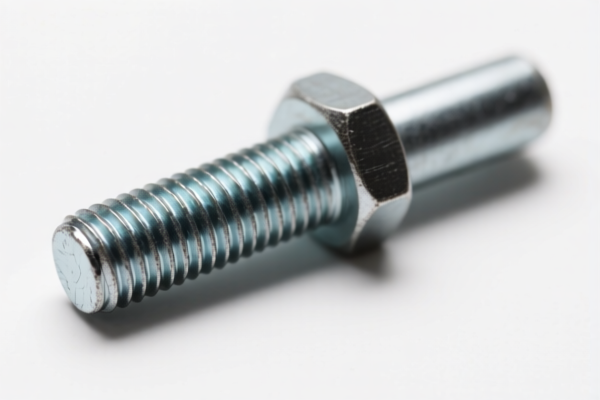
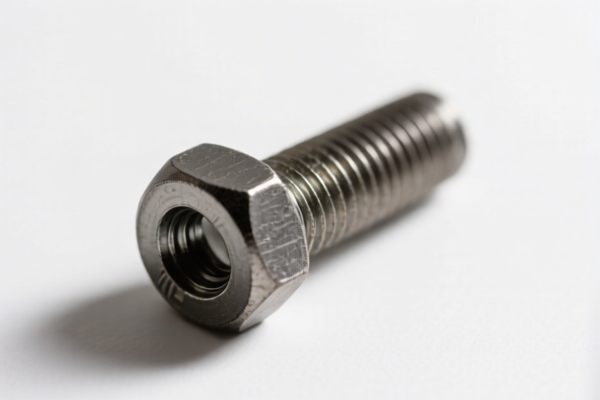
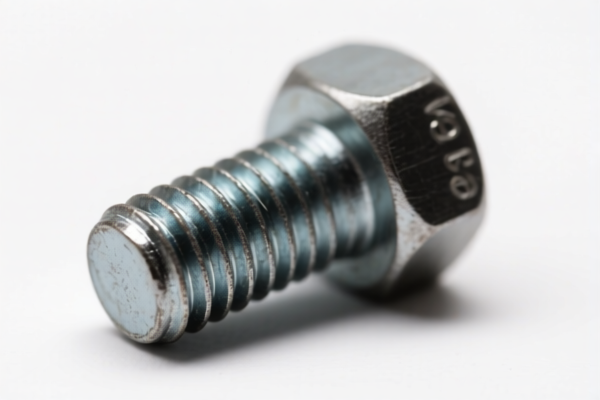
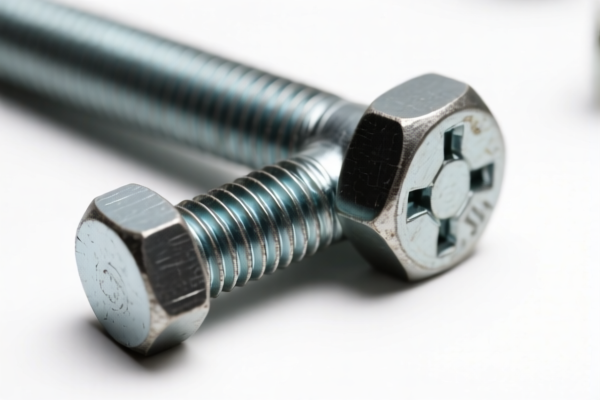
AI Analysis
🔩 Hex Bolts (Hex Head Screws/Bolts)
🌐 HS Code Reference & Customs Clearance Guide | 2026 Latest Tariff Analysis | Professional Clearance Strategy
📌 I. Product Definition & Classification: What Exactly Are "Hex Bolts"?
Hex bolts, also known as hex head bolts or simply "hexes," are one of the most fundamental fasteners in global manufacturing, construction, and automotive industries. In international trade, the classification of hex bolts is strictly determined by their raw material composition. While they share the same geometric shape (hexagonal head), their HS Codes diverge based on whether they are made of Iron/Steel, Copper, or Brass.
⚠️ Critical Distinction Point:
- Iron/Steel Hex Bolts: The most common industrial fasteners. Subject to specific HTSUs based on thread pitch and material.
- Copper/Brass Hex Bolts: Used for corrosion resistance or electrical conductivity. Classified under Copper article chapters, distinct from steel.
- Mixed Packages: If a shipment contains mixed materials, customs may inspect individual items. Mixed shipments often trigger higher scrutiny or require splitting the declaration.
📦 II. HS Code Classification Details (2026 Latest Tariff Authority对照)
| HS Code | Product Description | Material | Applicable Scenario | Tax Rate (CN → US) |
|---|---|---|---|---|
7318.15.20.65 |
Hexagonal Head Bolts, Iron or Steel | Iron/Steel | Standard structural bolts, machinery, steel structures | 85.0% |
7318.15.80.69 |
Hexagonal Head Bolts, Iron or Steel | Iron/Steel | Other iron/steel bolts (non-specified under .65) | 93.5% |
7415.33.80.10 |
Hexagonal Head Bolts, Copper | Copper | Copper fasteners for electrical or marine use | 88.0% |
7415.33.80.50 |
Threaded Articles, Copper (incl. Bolts) | Copper | Generic copper threaded items, including bolts | 88.0% |
7415.33.10.00 |
Brass Threaded Hex Bolts/Nuts | Brass | Brass bolts/nuts, often for decorative or specific marine applications | 86.4% |
🔍 Key Insight:
- Steel vs. Copper: The first two digits (73vs74) are the primary divider.73= Articles of Iron/Steel;74= Articles of Copper.
- Precision Matters: For steel bolts,7318.15.20.65is often used for standard coarse-thread bolts, while.69may apply to other steel variations. Misclassification here can lead to a 8.5% tariff difference ($85.0\%$ vs $93.5\%$).
- Brass Exception: Brass bolts fall under7415.33.10.00with a slightly lower total tax rate ($86.4\%$) compared to pure copper bolts ($88.0\%$).
💰 III. 2026 Latest Tariff Rate Breakdown (Including Additional Duties)
✅ Applicable Country: United States (US)
✅ Country of Origin: China (CN)
✅ Effective Time: Ongoing (Post-2025 Policies)
🎯 1. 7318.15.20.65 —— Steel Hex Bolts (Standard)
| Item | Details |
|---|---|
| Base MFN Duty | 0.0% |
| Section 301 Additional Duty | +25.0% |
| Section 122 Duty (Steel) | +10.0% |
| Other Steel/Aluminum/Copper Surtax | +50.0% |
| Total Effective Rate | 85.0% |
| Tax Calculation | CIF Value × 85% |
| De Minimis Exemption | ❌ No (High tariff items excluded) |
| Legal Path | Section 301: Footnote 9903.08.01 → Section 122 → USITC:7318.15.20.65 |
📌 Explanation:
- 0% Base: Standard MFN rate for certain steel bolts is low/zero.
- 25% + 10% + 50%: The high total rate is driven by multiple layers of trade remedies:
1. 301 Tariff (25%): General US-China trade war tariff.
2. Section 122 (10%): Specific duty on certain steel products.
3. Steel/Aluminum Surtax (50%): Additional punitive tariff on steel/copper/steel products from China.
- Result: An $85.0\%$ total tax rate makes importing these bolts extremely expensive for US entities.
🎯 2. 7318.15.80.69 —— Steel Hex Bolts (Other Variations)
| Item | Details |
|---|---|
| Base MFN Duty | 8.5% |
| Section 301 Additional Duty | +25.0% |
| Section 122 Duty (Steel) | +10.0% |
| Other Steel/Aluminum/Copper Surtax | +50.0% |
| Total Effective Rate | 93.5% |
| Tax Calculation | CIF Value × 93.5% |
| De Minimis Exemption | ❌ No |
| Legal Path | Section 301 → Section 122 → USITC:7318.15.80.69 |
📌 Note:
- This code applies to steel bolts not covered by.65(e.g., different thread pitches, lengths, or specifications).
- The 8.5% base duty adds to the total, making this category even more costly ($93.5\%$ vs $85.0\%$).
- Risk: Importers often mistakenly use.80.69for standard bolts, leading to overpayment of 8.5%.
🎯 3. 7415.33.80.10 & .50 —— Copper Hex Bolts
| Item | Details |
|---|---|
| Base MFN Duty | 3.0% |
| Section 301 Additional Duty | +25.0% |
| Section 122 Duty (Copper) | +10.0% |
| Other Steel/Aluminum/Copper Surtax | +50.0% |
| Total Effective Rate | 88.0% |
| Tax Calculation | CIF Value × 88.0% |
| De Minimis Exemption | ❌ No |
| Legal Path | Section 301 → Section 122 → USITC:7415.33.80.10/.50 |
📌 Note:
- Copper bolts incur a 3.0% base duty, which is higher than steel's 0% but lower than steel's base in some cases.
- However, the 50% surtax on copper applies here just as it does for steel, leading to the high 88% total.
🎯 4. 7415.33.10.00 —— Brass Hex Bolts
| Item | Details |
|---|---|
| Base MFN Duty | 1.4% |
| Section 301 Additional Duty | +25.0% |
| Section 122 Duty | +10.0% |
| Other Steel/Aluminum/Copper Surtax | +50.0% |
| Total Effective Rate | 86.4% |
| Tax Calculation | CIF Value × 86.4% |
| De Minimis Exemption | ❌ No |
| Legal Path | Section 301 → Section 122 → USITC:7415.33.10.00 |
📌 Note:
- Brass has a lower base duty (1.4%) than pure copper (3.0%).
- Savings: Brass bolts are 1.6% cheaper in total tax ($86.4\%$) than pure copper bolts ($88.0\%$).
- Design Consideration: If corrosion resistance is required, consider if brass is sufficient, as it offers a slight tariff advantage.
🛠️ IV. Customs Clearance Practical Advice (Pitfall Avoidance Guide)
✅ 1. Required Documentation Checklist
| Document | Mandatory | Explanation |
|---|---|---|
| ✅ Product Specification Sheet | ✔️ | Must specify Material (Iron, Steel, Copper, Brass), Thread Size, Length, and Head Type. |
| ✅ Commercial Invoice | ✔️ | Clearly state "Hex Bolt" and exact material. Do not use generic "Fasteners." |
| ✅ Packing List | ✔️ | Separate shipments by material if possible to avoid mixed-material classification issues. |
| ✅ Certificate of Origin (CO) | ✔️ | Required to prove Origin = China (to apply/confirm applicable tariffs). |
| ✅ Material Test Report | ✔️ | Optional but recommended if customs disputes the material (e.g., "Steel" vs "Iron"). |
✅ 2. Classification Tips (Key Mnemonics)
🔥 "Material First, Shape Second! Check Base Rate, Avoid 8.5% Trap!"
| Scenario | Correct HS Code | Error Consequence |
|---|---|---|
| Standard Steel Hex Bolt | 7318.15.20.65 (85.0%) |
If misclassified as .80.69 → Pay 93.5% (Overpay 8.5%) |
| Copper Hex Bolt | 7415.33.80.10 (88.0%) |
If misclassified as Steel → Penalty + Higher Duty |
| Brass Bolt | 7415.33.10.00 (86.4%) |
If misclassified as Copper → Overpay 1.6% |
| Mixed Shipment | Split Declaration | Mixed materials may cause inspection delays or higher scrutiny. |
✅ 3. Special Cases
| Scenario | Advice |
|---|---|
| OEM Custom Bolts | Provide drawings and material specs to confirm exact HTSUS. |
| Coated Bolts (Zinc/Nickel) | Coating does not change the base HS Code (still Iron/Steel/Copper), but affects surface description in invoice. |
| Small Lots (< $800) | ❌ No De Minimis: Due to high tariffs (85%+), these items cannot enter under Section 321 (De Minimis) exemption. Must be formal entered. |
| Transshipment (e.g., Vietnam) | ⚠️ High Risk: If bolts are made in China and shipped via Vietnam, US Customs may still apply Chinese tariffs if substantial transformation does not occur. |
🌍 V. Global Market Comparison (2026)
| Country/Region | Recommended HS Code | Tariff (CN Origin) | Notes |
|---|---|---|---|
| 🇺🇸 USA | 7318.15.20.65 / 7415.33... |
85.0% - 93.5% | High punitive tariffs; Do not use De Minimis. |
| 🇨🇳 China | 7318.15 / 7415.33 |
0% - 5% | Low import duty; domestic consumption friendly. |
| 🇪🇺 EU | 7318.15 / 7415.33 |
0% - 3% | No Section 301/122 surcharges; Much cheaper. |
| 🇬🇧 UK | 7318.15 / 7415.33 |
0% - 3% | Post-Brexit tariffs generally low for fasteners. |
| 🇦🇺 Australia | 7318.15 / 7415.33 |
0% - 5% | No major surcharges. |
📌 Conclusion:
- USA is the most expensive market for Chinese hex bolts due to layered tariffs (301 + 122 + Surtax).
- EU/UK/Asia markets offer significantly lower tariff barriers.
- Strategy: For US-bound goods, consider supply chain diversification (e.g., sourcing from Vietnam/Mexico with substantial transformation) or absorbing costs if volume justifies.
📌 VI. Common Errors & Pitfalls (Lessons Learned)
❌ Error 1: Using generic "Fasteners" or "Screws" in the description.
👉 Consequence: Customs may classify under a higher-duty category or request detailed specs, causing delays.
❌ Error 2: Misclassifying Steel Bolts as .80.69 when they qualify for .20.65.
👉 Consequence: Overpaying 8.5% on every shipment. A $100,000 shipment loses $8,500 unnecessarily.
❌ Error 3: Assuming De Minimis applies to bolts.
👉 Consequence: Rejection. Items with >8% duty are generally excluded from Section 321. Formal entry required.
❌ Error 4: Mixing Copper and Steel in one shipment without clear separation.
👉 Consequence: Customs may inspect every item, leading to higher inspection fees and clearance delays.
✅ Correct Practice:
"Hex Head Bolt, Steel, Grade 5, M10x50mm, Zinc Plated, HS 7318.15.20.65"
🎯 VII. Conclusion: Precise Classification, Cost Control!
🎯 Remember the Mantra:
🔹 "Material Dictates HS! Steel 85%, Copper 88%, Brass 86%! Check Base Rate to Save 8.5%!"
🔹 "No De Minimis for High Tariffs! Formal Entry is a Must!"
📌 Pro Tip:
If you are importing large volumes of hex bolts to the US, apply for an Advance Ruling (Customs Ruling) to confirm the correct HTSUS. Also, evaluate if supply chain shifts (e.g., sourcing from non-China origins with valid FTAs) can reduce the 85%+ tariff burden.
📣 Immediate Action:
📞 Contact your Customs Broker + Provide Detailed Material Specs + Verify HTSUS
🚀 Optimize Your Classification, Minimize Tax Liability, Clear Customs Smoothly!
✨ Professional Clearance Starts with Precise Classification!
💼 Every Percent Saved is Pure Profit!
Customer Reviews
About HS Code Classification
The Harmonized System (HS) is an internationally standardized nomenclature developed by the World Customs Organization (WCO) to classify traded products. Over 200 countries use the HS system as the basis for customs tariffs, trade statistics, and import/export regulations.
Each HS code follows a hierarchical structure:
- Chapter (2 digits) — Broad category of goods (e.g., Chapter 84: Machinery and Mechanical Appliances)
- Heading (4 digits) — More specific grouping within the chapter
- Subheading (6 digits) — Internationally standardized breakdown, used by all WCO member countries
- National subdivisions (8-10 digits) — Country-specific extensions for further classification, such as US HTSUS 10-digit codes
Correct HS code classification is essential for smooth customs clearance, accurate duty payment, and compliance with trade regulations. Misclassification can lead to customs delays, overpayment of duties, or penalties.
When importing from CN to US, the applicable tariff rates may include:
- Most-Favored-Nation (MFN) rate — The standard duty rate applied to WTO members
- General rate — Applied to countries without trade agreements
- Trade remedy duties — Additional tariffs such as Section 301 (anti-dumping), Section 232 (national security), or countervailing duties
The information provided on this page is for reference purposes only. For official classification, please consult with your local customs authority or a licensed customs broker.