hidden camera detectors
CN → US| HS Code | Tariff Rate | Origin | Destination | Doc |
|---|---|---|---|---|
| 8543906800 | 35.0% | CN | US | Official Doc |
| 8543908885 | 85.0% | CN | US | Official Doc |
| 9031808085 | 35.0% | CN | US | Official Doc |
| 9031499000 | 35.0% | CN | US | Official Doc |
Product Images
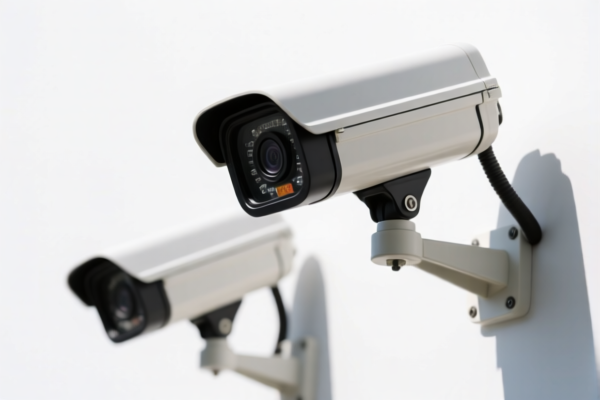
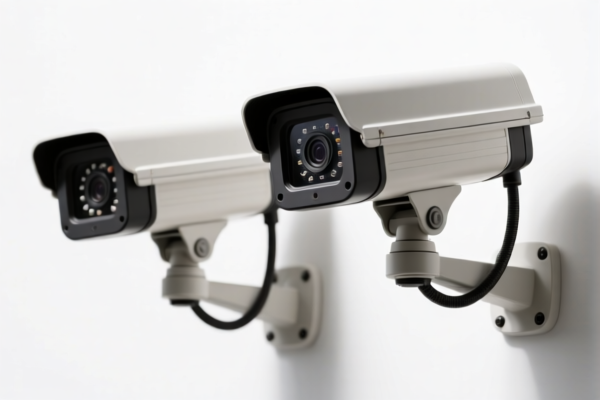
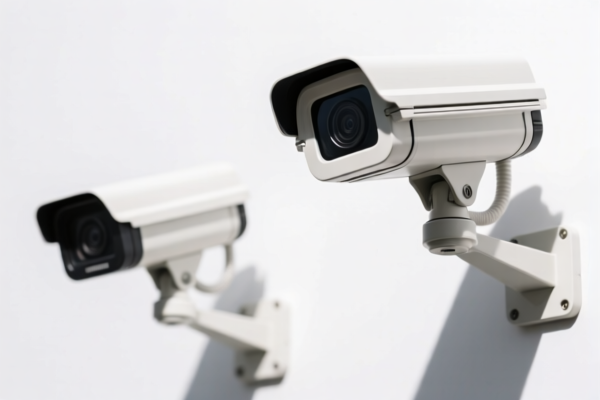
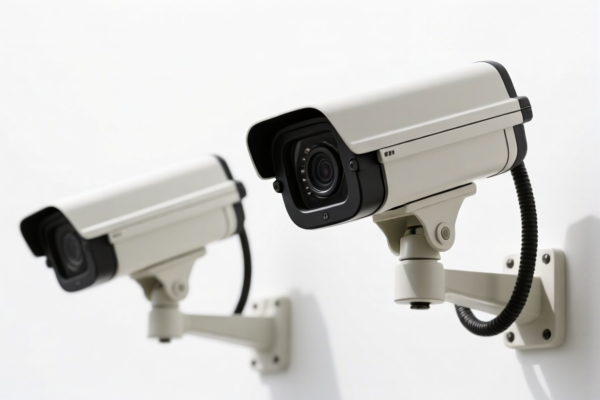
AI Analysis
🔦 Hidden Camera Detectors (Spy Gear & Security Tools)
🌐 HS Code Reference & Customs Clearance Guide | 2026 Tariff Analysis | Professional Clearance Strategy
📌 I. Product Definition: What Are We Really Importing?
Hidden Camera Detectors are specialized electronic devices designed to locate unauthorized surveillance equipment. In international trade, they are classified based on their core functional principle: whether they operate as general electrical appliances with specific functions or as precision optical/measuring instruments.
⚠️ Key Classification Distinction:
- General Electrical Device: Uses RF signal detection, magnetic field sensing, or simple lens reflection. Categorized under Chapter 85 (Electrical Machinery/Equipment).
- Precision Optical/Metrological Instrument: Uses complex laser scanning, spectral analysis, or high-precision optical detection. Categorized under Chapter 90 (Optical/Medical Instruments).
📦 II. HS Code Classification Details (2026 Latest Tariff Alignment)
Based on the provided data, there are 4 primary classification pathways. The correct code depends on the device's internal technology and intended use.
| HS Code | Summary & Logic | Primary Function |
|---|---|---|
| 8543.90.68.00 | Independent Functional Electrical Apparatus. Core electronic components fit the classification logic for general electrical devices. | General RF/Signal Detection, Magnetic Field Sensors. |
| 8543.90.88.85 | Other Electrical Apparatus. Fallback "catch-all" category for independent detection equipment not specified elsewhere. | Complex hybrid detectors, proprietary tech devices. |
| 9031.80.80.85 | Other Measuring/Checking Instruments. Specifically cited for detecting hidden cameras (lens reflection/laser sweep). | Optical lens detectors, Laser sweep detectors. |
| 9031.49.90.00 | Optical Measuring Instruments. Functions fit the definition of optical equipment for detection and inspection. | High-end optical scanning systems, Spectral analyzers for security. |
🔍 Critical Note:
- If the device primarily uses optical lenses/lasers to find camera glass, Chapter 90 is often preferred by customs for clarity, despite the high tariff risk.
- If the device is a simple RF scanner (like a Wi-Fi detector), Chapter 85 is the standard electrical classification.
- Do NOT mix these codes arbitrarily. Misclassification leads to severe penalties due to the significant tariff differences (35% vs 85%).
💰 III. 2026 Tariff Rate Breakdown (Including Surcharges & Policy Add-ons)
✅ Applicable Country: United States (US)
✅ Origin: China (CN)
✅ Effective Date: Current trade policies (Section 301 & IEEPA)
🎯 1. 8543.90.68.00 —— General Independent Electrical Apparatus
| Item | Detail |
|---|---|
| Base Duty | 0.0% |
| Section 301 Surcharge | 25.0% |
| IEEPA Surcharge (122 Clause) | 10.0% |
| Total Tariff Rate | 35.0% |
| Tax Calculation | CIF Value × 35% |
| De Minimis Exemption | ❌ Not Eligible (High tariff rate denies de minimis) |
| Legal Basis | Section 301: Footnote 9903.88.01 → IEEPA: 122 Clause |
📌 Explanation:
This is the most common classification for standard RF detectors. The 35% rate consists of the standard 25% Section 301 tariff plus the additional 10% IEEPA surcharge. It is high but manageable for commercial shipments.
🎯 2. 8543.90.88.85 —— Other Electrical Apparatus (Catch-All)
| Item | Detail |
|---|---|
| Base Duty | 0.0% |
| Section 301 Surcharge | 25.0% |
| IEEPA Surcharge (122 Clause) | 10.0% |
| Steel/Aluminum/Copper Surtax | 50.0% |
| Total Tariff Rate | 85.0% |
| Tax Calculation | CIF Value × 85% |
| De Minimis Exemption | ❌ Not Eligible |
| Legal Basis | Section 301 + IEEPA + Metal Component Surtax |
📌 Warning:
This is the most expensive classification. The 50% metal surtax applies if the device contains significant steel, aluminum, or copper components (common in detectors with metal casings or heavy wiring).
Risk: Unless absolutely necessary, avoid this code. The 85% rate can destroy profit margins.
🎯 3. 9031.80.80.85 —— Other Measuring/Checking Instruments (Camera Specific)
| Item | Detail |
|---|---|
| Base Duty | 0.0% |
| Section 301 Surcharge | 25.0% |
| IEEPA Surcharge (122 Clause) | 10.0% |
| Total Tariff Rate | 35.0% |
| Tax Calculation | CIF Value × 35% |
| De Minimis Exemption | ❌ Not Eligible |
| Legal Basis | Section 301 + IEEPA → Chapter 90 Metrology |
📌 Explanation:
Specifically justified for hidden camera detection purposes. Even though it falls under Chapter 90, the surcharges remain at 35%. This code is defensible if your product manual and marketing explicitly state "Camera Detection" as the primary function.
🎯 4. 9031.49.90.00 —— Optical Measuring Instruments
| Item | Detail |
|---|---|
| Base Duty | 0.0% |
| Section 301 Surcharge | 25.0% |
| IEEPA Surcharge (122 Clause) | 10.0% |
| Total Tariff Rate | 35.0% |
| Tax Calculation | CIF Value × 35% |
| De Minimis Exemption | ❌ Not Eligible |
| Legal Basis | Section 301 + IEEPA → Chapter 90 Optical |
📌 Explanation:
Best suited for devices using optical lenses, lasers, or spectral analysis to detect camera glass. The 35% rate is consistent with other Chapter 90 classifications. Choose this if your product relies heavily on optical technology rather than RF signals.
🛠️ IV. Customs Clearance Operational Advice (Avoiding Pitfalls)
✅ 1. Documentation Checklist (Essential for Clearance)
| Document | Required? | Notes |
|---|---|---|
| ✅ Product Specification Sheet | ✔️ | Must detail detection methods (RF vs. Optical vs. Magnetic). |
| ✅ User Manual (English) | ✔️ | Clearly state primary function: "For detecting hidden surveillance cameras." |
| ✅ Component List | ✔️ | Specify materials (especially if metal-heavy) to justify/avoid the 50% metal surtax. |
| ✅ Commercial Invoice | ✔️ | Description must match HS Code logic (e.g., "Optical Camera Detector" vs. "RF Scanner"). |
| ✅ Certifications | ✔️ | FCC (for RF devices), CE, RoHS. |
| ✅ Photos of Product & Label | ✔️ | Show model number, input voltage, and brand. |
✅ 2. Declaration Strategy (Key Tips)
🔥 "Describe the Function, Not Just the Form!"
| Scenario | Recommended HS Code | Reasoning |
|---|---|---|
| RF/Wi-Fi Detector | 8543.90.68.00 |
Core function is electrical signal processing. Safe 35% rate. |
| Laser/Optical Lens Detector | 9031.49.90.00 or 9031.80.80.85 |
Core function is optical detection. Justify with technical specs. |
| Hybrid Device with Metal Body | Avoid 8543.90.88.85 |
Risk of 85% tax. Try to classify as specialized instrument (Chapter 90) if tech allows. |
| Simple Flashlight with IR | Re-evaluate | Might be classified as lighting or other electrical. Ensure it meets "Detection" criteria. |
⚠️ Critical Warning:
- Do NOT declare a complex optical detector as a simple "flashlight" to evade taxes. Customs will inspect and reclassify, leading to back taxes, fines, and seizure.
- Do NOT use8543.90.88.85unless no other specific code fits. The 50% metal surtax is a trap for generic electrical goods.
✅ 3. Special Circumstances
| Situation | Handling Advice |
|---|---|
| OEM/Private Label | Provide authorization letters and design drawings to prove function. |
| Kit Components (Parts + Assembly) | Declare as complete units, not parts, to avoid "89.5% component rates." |
| Software-Based Detectors | If the detector is mostly software running on a phone, it may have different tariffs. Consult a specialist. |
🌍 V. Global Market Comparison (2026)
| Country/Region | Recommended HS Code | Duty (China Origin) | Key Certifications | Notes |
|---|---|---|---|---|
| 🇺🇸 USA | 8543.90.68.00 or 9031.80.80.85 |
35% | FCC, UL | Avoid 8543.90.88.85 due to 85% rate. |
| 🇨🇳 China | 8543.90.68.00 |
~5-10% | CCC | No Section 301/IEEPA surcharges. |
| 🇪🇺 EU | 8543.70 or 9031.80 |
0-2.7% | CE, GDPR | Generally low duty; focus on data privacy compliance. |
| 🇬🇧 UK | 8543.70 |
0-2.7% | UKCA | Post-Brexit rules align closely with EU. |
📌 Conclusion:
The US market is the most challenging due to the layered surcharges (301 + IEEPA).
Chapter 85 (8543.90.68.00) and Chapter 90 (9031.80.80.85) offer the same 35% effective rate but differ in technical justification.
Chapter 90 may be slightly more defensible for "camera detection" specific devices, while Chapter 85 is standard for "electronic detectors."
📌 VI. Common Mistakes & Pitfalls (Blood & Tears Lessons)
❌ Mistake 1: Declaring a complex optical detector as a generic "electrical toy"
👉 Consequence: Customs reclassifies to 9031 or 8543, applying 35% + penalties.
❌ Mistake 2: Using 8543.90.88.85 for a metal-cased detector
👉 Consequence: 85% Tax Rate. Profit margin wiped out instantly.
❌ Mistake 3: Ignoring the "122 Clause" IEEPA surcharge
👉 Consequence: Underpayment of 10%. Customs issues a demand for payment + interest.
❌ Mistake 4: Mixing RF and Optical detectors in one shipment without clear separation
👉 Consequence: Confusion for CBP (Customs and Border Protection). Delayed release.
✅ Correct Approach:
"Optical Hidden Camera Detector, Model XYZ, Laser Sweep Technology, FCC Certified, for Security Use Only."
🎯 VII. Conclusion: Professional Declaration, Cost Control!
🎯 Remember:
🔹 "Function determines Code, Code determines Tax."
🔹 "35% is the safe zone; 85% is the danger zone."
🔹 "Chapter 90 for Optical, Chapter 85 for Electrical. Don't mix unless you know the law."
📌 Pro Tip:
If your detector uses proprietary hybrid technology, consider applying for an Advance Ruling from US Customs (CBP) before shipping large volumes. This provides legal certainty on whether you fall under 8543.90.68.00 or 9031.80.80.85.
📣 Immediate Action:
📞 Contact a Licensed Customs Broker + Provide Technical Specs + Request HS Code Pre-Ruling
🚀 Ensure Smooth Clearance, Avoid 85% Traps, Protect Your Margins!
✨ Professional Clearance Starts with Accurate Classification!
💼 Every Percent of Tariff Saved is Pure Profit!
Customer Reviews
About HS Code Classification
The Harmonized System (HS) is an internationally standardized nomenclature developed by the World Customs Organization (WCO) to classify traded products. Over 200 countries use the HS system as the basis for customs tariffs, trade statistics, and import/export regulations.
Each HS code follows a hierarchical structure:
- Chapter (2 digits) — Broad category of goods (e.g., Chapter 84: Machinery and Mechanical Appliances)
- Heading (4 digits) — More specific grouping within the chapter
- Subheading (6 digits) — Internationally standardized breakdown, used by all WCO member countries
- National subdivisions (8-10 digits) — Country-specific extensions for further classification, such as US HTSUS 10-digit codes
Correct HS code classification is essential for smooth customs clearance, accurate duty payment, and compliance with trade regulations. Misclassification can lead to customs delays, overpayment of duties, or penalties.
When importing from CN to US, the applicable tariff rates may include:
- Most-Favored-Nation (MFN) rate — The standard duty rate applied to WTO members
- General rate — Applied to countries without trade agreements
- Trade remedy duties — Additional tariffs such as Section 301 (anti-dumping), Section 232 (national security), or countervailing duties
The information provided on this page is for reference purposes only. For official classification, please consult with your local customs authority or a licensed customs broker.