high density expandable polystyrene resin
CN → US| HS Code | Tariff Rate | Origin | Destination | Doc |
|---|---|---|---|---|
| 3903901000 | 41.5% | CN | US | Official Doc |
| 3903110000 | 41.5% | CN | US | Official Doc |
| 3903190000 | 41.5% | CN | US | Official Doc |
Product Images
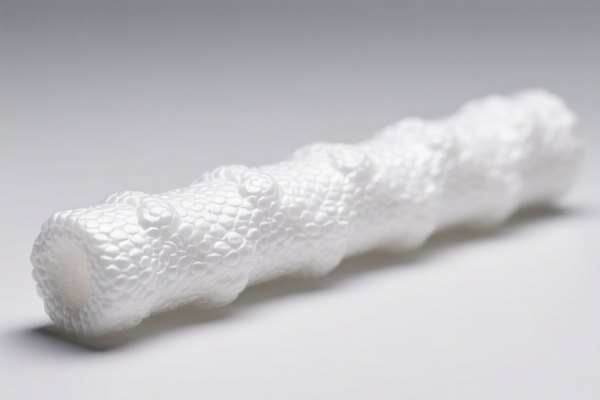



AI Analysis
🧪 High Density Expandable Polystyrene Resin (HIPS/EPS Resin)
🌐 HS Code Reference & Customs Clearance Guide | 2026 Latest Tariff Analysis | Professional Clearance Strategy
📌 I. Product Definition & Classification: Do You Really Understand "Polystyrene Resin"?
High Density Expandable Polystyrene Resin is a specialized polymer material primarily used in packaging, construction insulation, and consumer goods manufacturing. In international trade, its classification depends heavily on its physical form and specific properties.
The core distinction lies in how the resin is presented: * Primary Shape (Resin): Beads, pellets, or powder that are ready for further processing (e.g., steaming to expand). * Expanded Form: If the beads are already expanded and bonded into blocks or sheets, they may fall under different subheadings (not covered in the provided data, but crucial for clarity).
⚠️ Key Distinction:
- If the product is in its raw resin form (beads/powder) ready for expansion → It falls under Chapter 39 (Plastics).
- If it is already expanded into foam sheets/blocks → It may fall under Chapter 39.03 or 39.21 depending on specific binding.
Note: The following analysis is strictly based on the provided HS Code data for "Resin/Primary Shape" forms.
📦 II. HS Code Classification Details (2026 Latest Tariff Authority Cross-Reference)
| HS Code | Product Description | Applicability | Physical Form | Key Characteristic |
|---|---|---|---|---|
3903.90.10.00 |
High Density Expandable Polystyrene Resin, Material: Polystyrene Resin, Form: Primary Shape | General Polystyrene Resin | Primary Shape (Beads/Powder) | Specific "High Density" designation in this subheading |
3903.11.00.00 |
High Density Expandable Polystyrene Resin, Material: Polystyrene, Property: Expandable, Form: Resin | Expandable Polystyrene (EPS) | Resin | Specifically for "Expandable" types |
3903.19.00.00 |
High Density Expandable Polystyrene Resin, Material: Polystyrene, Form: Resin/Primary Shape | Other Expandable Polystyrene | Resin/Primary Shape | Catch-all for other expandable forms not elsewhere specified |
🔍 Critical Reminder:
- All three codes relate to Polystyrene (PS) in its primary shape.
- The term "High Density" and "Expandable" are key descriptors for customs brokers to identify the correct subheading within Chapter 39.
- Do not confuse with "Expanded Polystyrene Foam" (finished goods), which has different duty rates. These codes apply to the resin beads/pellets.
💰 III. 2026 Latest Tariff Rate Breakdown (Including Surtaxes & Policy Add-ons)
✅ Applicable Country: USA (US)
✅ Origin: China (CN)
✅ Effective Date: 2025–2026 (Current Trade War Context)
🎯 1. 3903.90.10.00 —— High Density Expandable Polystyrene Resin (Primary Shape)
| Item | Content |
|---|---|
| Base Duty Rate | 6.5% (ad valorem) |
| Section 301 Surtax | +25.0% (Under USITC Footnote 9903.88.01) |
| Section 122 Tariff | +10.0% (Specific policy add-on) |
| Total Effective Duty | 41.5% |
| Tax Calculation | CIF Value × 41.5% |
| De Minimis Exemption | ❌ Not Eligible (Deny de minimis for Section 301/122 goods) |
| Legal Basis Path | HTSUS:3903.90.10.00 → 301 Tariff List → 122 Clause Add-on |
📌 Explanation:
- The 6.5% base rate is the standard Most Favored Nation (MFN) rate for polystyrene.
- The 25% surtax is imposed under Section 301 of the Trade Act of 1974 against Chinese goods.
- The 10% Section 122 tariff is a specific additional duty applicable to certain steel/aluminum or related industrial inputs, often layered on top.
- Total 41.5% is a high tariff barrier. Cost calculation must include this fully.
🎯 2. 3903.11.00.00 —— Expandable Polystyrene (EPS) Resin
| Item | Content |
|---|---|
| Base Duty Rate | 6.5% |
| Section 301 Surtax | +25.0% |
| Section 122 Tariff | +10.0% |
| Total Effective Duty | 41.5% |
| Tax Calculation | CIF Value × 41.5% |
| De Minimis Exemption | ❌ Not Eligible |
| Legal Basis Path | HTSUS:3903.11.00.00 → 301 Tariff List → 122 Clause Add-on |
📌 Note:
- This code is specifically for Expandable Polystyrene (EPS).
- The tariff structure is identical to3903.90.10.00.
- Ensure your product datasheet explicitly states "Expandable" to justify this code, avoiding misclassification penalties.
🎯 3. 3903.19.00.00 —— Other Expandable Polystyrene
| Item | Content |
|---|---|
| Base Duty Rate | 6.5% |
| Section 301 Surtax | +25.0% |
| Section 122 Tariff | +10.0% |
| Total Effective Duty | 41.5% |
| Tax Calculation | CIF Value × 41.5% |
| De Minimis Exemption | ❌ Not Eligible |
| Legal Basis Path | HTSUS:3903.19.00.00 → 301 Tariff List → 122 Clause Add-on |
📌 Note:
- This is the "Other" category for expandable polystyrene.
- Use only if3903.11.00.00does not precisely fit your technical specifications.
- Tax burden remains 41.5%.
🛠️ IV. Customs Clearance Practical Advice (Real-World Pitfall Avoidance)
✅ 1. Required Documentation Checklist (Non-negotiable)
| Document | Mandatory? | Explanation |
|---|---|---|
| ✅ Product Specification Sheet | ✔️ | Must state: "Polystyrene Resin," "Expandable," "High Density," Physical Form (Beads/Pellets). |
| ✅ Material Safety Data Sheet (MSDS) | ✔️ | Confirms chemical composition (Polystyrene, not PVC/PE). |
| ✅ Commercial Invoice | ✔️ | Clear description: "High Density Expandable Polystyrene Resin, HS Code 3903.11.00.00." |
| ✅ Packing List | ✔️ | Show weight/volume. EPS resin is bulky; ensure volume weight is calculated correctly. |
| ✅ Certificate of Origin (CO) | ✔️ | If claiming preferential rates (none apply here due to 301 tariffs). |
| ✅ Phytosanitary/Fumigation Cert | ❌ | Not required for synthetic resin (only for wood packaging). |
✅ 2. Declaration Strategy (Key Mantras)
🔥 “Resin Form, Expandable Property, 41.5% Total Duty!”
| Scenario | Correct Declaration | Error to Avoid |
|---|---|---|
| Raw Beads/Pellets | 3903.11.00.00 or 3903.19.00.00 |
Misdeclaring as "Foam Blocks" → Different duty/classification. |
| Already Expanded Beads (Pre-expanded) | Still 3903.11.00.00 if not bonded. |
Declaring as "Finished Packaging" → May trigger higher anti-dumping or different HS. |
| Mixed with Additives | Specify "Polystyrene with Catalysts" | If additives change the fundamental character, it may fall under 3903.90.10.00. |
✅ 3. Special Situation Handling
| Situation | Handling Advice |
|---|---|
| Low-Value Shipments | ❌ No De Minimis Exemption. Even for shipments <$800, Section 301 tariffs apply. Plan for full tax payment. |
| Transshipment via 3rd Country | ⚠️ High Risk. If origin is China, US Customs will require proof of substantial transformation. Simple relabeling leads to seizure. |
| Quality Disputes | Provide third-party lab reports confirming "Polystyrene" identity. Misclassification as other plastics can lead to fines. |
| Packaging Materials | Ensure wood pallets are ISPM 15 compliant. Non-compliant wood can delay release, even if the resin itself is cleared. |
🌍 V. Global Market Comparison (2026 Latest)
| Country/Region | Recommended HS Code | Total Duty (China Origin) | Certification Requirements | Notes |
|---|---|---|---|---|
| 🇺🇸 USA | 3903.11.00.00 / 3903.19.00.00 |
41.5% (6.5% Base + 25% 301 + 10% 122) | No specific US cert required for raw resin. | Highest barrier. Cost must be factored into FOB/CIF pricing. |
| 🇨🇳 China | 3903.11.00.00 |
~6-9% (Export VAT refund may apply) | N/A (Export) | Domestic sales have lower VAT impact. |
| 🇪🇺 EU | 3903.11.00 |
~6.5% + Anti-Dumping (Check Current) | REACH Registration Required. | EU has strict chemical registration (REACH) for polymers. |
| 🇯🇵 Japan | 3903.11.00 |
~6% | JIS Standards. | Lower tariffs, but strict quality control. |
📌 Conclusion:
- USA is the most expensive market for Chinese-sourced EPS Resin due to the 41.5% total duty.
- EU and Japan are more tariff-friendly but have higher regulatory compliance costs (REACH, chemical safety).
- Strategy: For US market, consider pricing strategies to absorb 41.5% or explore Third-Country Sourcing (e.g., Vietnam, Mexico) if supply chain allows.
📌 VI. Common Errors & Pitfall Guide (Lessons Learned)
❌ Error 1: Declaring "EPS Beads" without specifying "Resin/Primary Shape"
👉 Consequence: Customs may classify as "Finished Foam Products" → Different duty, potential anti-dumping investigation.
❌ Error 2: Ignoring Section 122 Tariff
👉 Consequence: Underpayment of 10%. Audit reveals shortfall + penalties.
❌ Error 3: Assuming De Minimis ($800) applies
👉 Consequence: Package held at border, taxed in full, plus storage fees. 301/122 tariffs kill de minimis.
❌ Error 4: Confusing "Expandable" with "Expanded"
👉 Consequence: "Expanded" foam might have different HS codes (e.g., 3903.30). If declared incorrectly, goods may be rejected for not matching description.
✅ Correct Approach:
“High Density Expandable Polystyrene Resin, Beads, Primary Shape, for Packaging/EPS Molding. HS: 3903.11.00.00. Origin: China.”
🎯 VII. Conclusion: Professional Declaration, Cost Control, Efficiency!
🎯 Remember the Mantra:
🔹 “Polystyrene Resin, Expandable Type, 41.5% Duty is Key!”
🔹 “No De Minimis for 301/122, Plan Your Logistics!”
📌 Pro Tip:
- If your resin is not from China, check for FTA benefits (e.g., USMCA for Canada/Mexico, RCEP for Asia).
- Always request a Customs Ruling from CBP if your resin formulation is unique (e.g., high additive content).
- For US shipments, build the 41.5% cost into your Incoterms (e.g., DDP) to avoid surprises for your buyer.
📣 Take Action Now:
📞 Engage a Licensed Customs Broker + Provide Material Safety Data Sheet (MSDS) + Confirm HS Code 3903.11.00.00.
🚀 Ensure Smooth Customs Clearance, Avoid Seizure, Maximize Profit Margin!
✨ Professional Customs Clearance Starts with Accurate Classification!
💼 Your Every Dollar of Duty is Worth Precisely Calculating!
Customer Reviews
About HS Code Classification
The Harmonized System (HS) is an internationally standardized nomenclature developed by the World Customs Organization (WCO) to classify traded products. Over 200 countries use the HS system as the basis for customs tariffs, trade statistics, and import/export regulations.
Each HS code follows a hierarchical structure:
- Chapter (2 digits) — Broad category of goods (e.g., Chapter 84: Machinery and Mechanical Appliances)
- Heading (4 digits) — More specific grouping within the chapter
- Subheading (6 digits) — Internationally standardized breakdown, used by all WCO member countries
- National subdivisions (8-10 digits) — Country-specific extensions for further classification, such as US HTSUS 10-digit codes
Correct HS code classification is essential for smooth customs clearance, accurate duty payment, and compliance with trade regulations. Misclassification can lead to customs delays, overpayment of duties, or penalties.
When importing from CN to US, the applicable tariff rates may include:
- Most-Favored-Nation (MFN) rate — The standard duty rate applied to WTO members
- General rate — Applied to countries without trade agreements
- Trade remedy duties — Additional tariffs such as Section 301 (anti-dumping), Section 232 (national security), or countervailing duties
The information provided on this page is for reference purposes only. For official classification, please consult with your local customs authority or a licensed customs broker.