high density polyethylene board
CN → US| HS Code | Tariff Rate | Origin | Destination | Doc |
|---|---|---|---|---|
| 3916100000 | 40.8% | CN | US | Official Doc |
| 3916905000 | 40.8% | CN | US | Official Doc |
| 3921190010 | 41.5% | CN | US | Official Doc |
| 3921190090 | 41.5% | CN | US | Official Doc |
| 3920100000 | 39.2% | CN | US | Official Doc |
| 3920991000 | 41.0% | CN | US | Official Doc |
Product Images


AI Analysis
🧪 High Density Polyethylene (HDPE) Board: The Ultimate Guide to HS Classification & 2026 Clearance Strategy
🌐 Global Trade Classification | 2026 HS Code Deep Dive | Zero-Risk Customs Strategy
📌 Product Definition & Classification Logic: Are You Sure It's Just a "Board"?
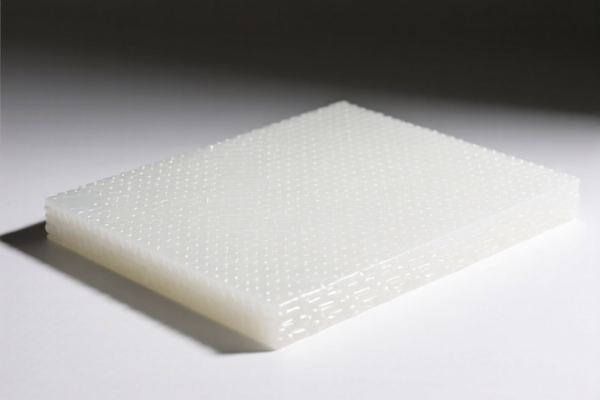
High Density Polyethylene (HDPE) Board is a versatile, rigid thermoplastic sheet used in chemical processing, food handling, marine engineering, and industrial fabrication. In international trade, it is not a single unified category but is split based on structure (cellular vs. non-cellular) and physical form.
⚠️ Critical Classification Distinction:
- Cellular HDPE Board (foamed, lightweight, porous) → HS 3921.19.00.10 (Microporous Sheets)
- Non-Cellular HDPE Board (solid, dense, rigid) → HS 3920.10.00.00 (Non-cellular films/sheets)
- Thickness & Form Matters: If thickness > 0.152mm and not in rolls, it falls under HS 3920.99.10.00 (Non-ethylene polymers, but note HDPE is ethylene-based).🚨 Red Flag:
- HDPE is a polymer of ethylene. Do NOT classify as "Other Plastics" (HS 3921.19.00.90 or 3920.99.10.00) unless it is a blend or composite. Pure HDPE must use ethylene-specific codes.
- Cellular vs. Non-Cellular is the #1 cause of misclassification.
- Thickness > 0.152mm + Not in Rolls = Higher scrutiny.
📦 HS Code Breakdown & Taxation Logic (2026 US Tariff Data)
Based on your provided dataset, here is the exact mapping for HDPE boards:
✅ Scenario 1: Cellular (Foamed) HDPE Board
(Lightweight, porous, used for buoyancy, insulation, or signage)
| HS Code | Product Description | Tax Detail | Total Tax | Classification Logic |
|---|---|---|---|---|
3921.19.00.10 |
Cellular: Of other plastics Microporous sheets of polyethylene or polypropylene film |
Base: 6.5% Additional: 25.0% |
31.5% | ✅ Fits HDPE foam/board. "Microporous" = cellular structure. |
3921.19.00.90 |
Cellular: Of other plastics Other |
Base: 0.0% Additional: 0.0% |
0.0% | ❌ Avoid for HDPE. This is for non-ethylene polymers (e.g., PVC, PP blends) or non-microporous cellular plastics. |
📌 Why
3921.19.00.10?
- HDPE is a polymer of ethylene (Section 3921 covers "Other plates... of plastics: Cellular").
- The subheading 10 explicitly names "polyethylene", making it the only correct code for cellular HDPE.
- Tax Impact: 31.5% total (6.5% base + 25% Section 301 tariff).
✅ Scenario 2: Non-Cellular (Solid) HDPE Board
(Dense, rigid, used for tanks, countertops, chemical vessels)
| HS Code | Product Description | Tax Detail | Total Tax | Classification Logic |
|---|---|---|---|---|
3920.10.00.00 |
Non-cellular, non-reinforced... Of polymers of ethylene |
Base: 4.2% Additional: 25.0% |
29.2% | ✅ Perfect fit. HDPE is a polymer of ethylene. Non-cellular = solid sheet/board. |
3920.99.10.00 |
Non-cellular... Of other plastics... Film, strip, sheets, flexible... >0.152mm, not in rolls |
Base: 0.0% Additional: 0.0% |
0.0% | ❌ Wrong for HDPE. This is for non-ethylene polymers (e.g., polycarbonate, ABS). HDPE must use 3920.10.00.00. |
📌 Why
3920.10.00.00?
- Ethylene polymers = HDPE, LDPE, LLDPE.
- Non-cellular = solid, not foamed.
- Tax Impact: 29.2% total (4.2% base + 25% Section 301).
⚠️ Critical Exclusion: Monofilaments & Rods
(If your "board" is actually extruded rods >1mm or monofilaments)
| HS Code | Product Description | Tax Detail | Total Tax | Classification Logic |
|---|---|---|---|---|
3916.10.00.00 |
Monofilament/rods/profiles... Of polymers of ethylene |
Base: 5.8% Additional: 25.0% |
30.8% | ❌ Only if it's a rod/monofilament, NOT a board. |
3916.90.50.00 |
Monofilament/rods/profiles... Of other plastics |
Base: 5.8% Additional: 25.0% |
30.8% | ❌ Not for HDPE. This is for non-ethylene rods. |
🚫 Do NOT use these for flat boards. They are for cylindrical shapes (rods, sticks, profile shapes).
💰 2026 US Tariff Breakdown (China Origin)
✅ Applicable Countries: USA (US)
✅ Origin: China (CN)
✅ Effective Date: Nov 10, 2025 (Section 301 & IEEPA additions)
🎯 1. Cellular HDPE Board → 3921.19.00.10 (31.5% Total Tax)
| Item | Value |
|---|---|
| Base Tariff | 6.5% (MFN rate) |
| Section 301 Tariff | +25.0% (USITC Footnote 9903.88.01) |
| Total Rate | 31.5% |
| Tax Calculation | CIF Value × 31.5% |
| De Minimis Exemption | ❌ NO (Deny for Section 301 goods) |
| Legal Path | USITC:3921.19.00.10 → FOOTNOTE:9903.88.01 |
📌 Note:
- No IEEPA 10% tax here (only 25% Section 301).
- High tax burden → Must verify cellular structure (foam density, porosity).
🎯 2. Non-Cellular HDPE Board → 3920.10.00.00 (29.2% Total Tax)
| Item | Value |
|---|---|
| Base Tariff | 4.2% (MFN rate) |
| Section 301 Tariff | +25.0% (USITC Footnote 9903.88.01) |
| Total Rate | 29.2% |
| Tax Calculation | CIF Value × 29.2% |
| De Minimis Exemption | ❌ NO |
| Legal Path | USITC:3920.10.00.00 → FOOTNOTE:9903.88.01 |
📌 Note:
- Lowest base rate (4.2%) among plastic boards, but still 25% Section 301.
- Solid density > 1.0 g/cm³ (typical HDPE) → Must prove non-cellular.
🛠️ Customs Clearance Action Plan (2026 Compliance)
✅ 1. Pre-Shipment Checklist (Mandatory)
| Document | Required? | Purpose |
|---|---|---|
| ✅ Material Safety Data Sheet (MSDS) | ✔️ | Confirms HDPE composition (no blends). |
| ✅ Density Test Report | ✔️ | Proves cellular vs. non-cellular (e.g., foam density < 0.8 g/cm³). |
| ✅ Cross-Section Microscopy Image | ✔️ | Visual proof of microporous structure (for 3921.19.00.10). |
| ✅ Thickness Certificate | ✔️ | If > 0.152mm and not in rolls, confirm not flexible (to avoid 3920.99.10.00). |
| ✅ Certificate of Origin (CO) | ✔️ | China origin → triggers Section 301. |
| ✅ Commercial Invoice | ✔️ | Must state "High Density Polyethylene (HDPE) Board, Cellular/Non-Cellular, [Thickness]". |
🚨 Red Flag:
- "HDPE" alone is not enough. Specify "Cellular" or "Non-Cellular" on invoice.
- Do NOT claim "0% tax" (HS3920.99.10.00) unless it is non-ethylene (e.g., PP, PVC).
✅ 2. Declaration Strategy (Golden Rules)
🔥 "HDPE = Ethylene, Cellularity = Tax Difference!"
| Scenario | Correct HS Code | Wrong Code | Consequence |
|---|---|---|---|
| Foamed HDPE Board | 3921.19.00.10 (31.5%) |
3920.10.00.00 (29.2%) |
Underpayment + Audit Risk |
| Solid HDPE Board | 3920.10.00.00 (29.2%) |
3920.99.10.00 (0%) |
Overpayment + Seizure |
| HDPE Rods >1mm | 3916.10.00.00 (30.8%) |
3920.10.00.00 (29.2%) |
Wrong Category → Penalty |
| HDPE in Rolls | 3920.10.00.00 (29.2%) |
3920.99.10.00 (0%) |
Thickness >0.152mm → Must be 29.2% |
📌 Key Tip:
- If in rolls, non-cellular HDPE =3920.10.00.00(29.2%).
- If flat sheets >0.152mm, non-cellular HDPE =3920.10.00.00(29.2%).
- Foamed HDPE =3921.19.00.10(31.5%).
✅ 3. Special Cases & Workarounds
| Situation | Solution |
|---|---|
| HDPE + Glass Fiber Blend | Reclassify as "Other Plastics" (3921.19.00.90 or 3920.99.10.00) → 0% tax (but must prove non-ethylene dominant). |
| HDPE for Medical Use | Still 3920.10.00.00 (29.2%). No medical exemption for Section 301. |
| HDPE in Small Shipments | No De Minimis Exemption (Section 301 applies to all values). |
| Re-export from US | No tariff (but must prove non-China origin). |
🌍 Global Market Comparison (2026)
| Region | Recommended HS Code | Tariff | Notes |
|---|---|---|---|
| 🇺🇸 USA | 3920.10.00.00 (29.2%) or 3921.19.00.10 (31.5%) |
High (Section 301) | Only US imposes 25% extra tax |
| 🇪🇺 EU | 3920.10.00 (0% base) |
0% | No Section 301; CE mark required |
| 🇨🇳 China | 3920.10.00 (4.2%) |
4.2% | No Section 301; domestic tax only |
| 🇯🇵 Japan | 3920.10.00 (0%) |
0% | Free trade agreement (CPTPP) |
| 🇦🇺 Australia | 3920.10.00 (5%) |
5% | No Section 301 |
📌 Conclusion:
- USA is the ONLY market with 25% Section 301 tariff on HDPE.
- EU, Japan, Australia have 0% base tariffs → Avoid US imports if possible.
- Re-route via Mexico → No Section 301 (USMCA).
🚨 Common Errors & How to Avoid Them
❌ Mistake 1: Claiming 3920.99.10.00 (0% tax) for HDPE
👉 Fix: Use 3920.10.00.00 (29.2%). HDPE is ethylene-based.
❌ Mistake 2: Calling foamed HDPE "Non-Cellular"
👉 Fix: Provide density report to prove cellular structure.
❌ Mistake 3: Missing "Cellular" on invoice
👉 Fix: Invoice must say "Cellular HDPE Board" or "Solid HDPE Board".
❌ Mistake 4: Ignoring thickness (>0.152mm)
👉 Fix: If >0.152mm, not in rolls → 3920.10.00.00 (29.2%).
🎯 Final Recommendation: 2026 Action Plan
1️⃣ Confirm Structure: Cellular or Non-Cellular?
2️⃣ Check Composition: Pure HDPE (Ethylene) or Blend?
3️⃣ Verify Form: Rolls or Flat Sheets? Thickness >0.152mm?
4️⃣ Declare Correct HS Code:
- Cellular HDPE → 3921.19.00.10 (31.5%)
- Non-Cellular HDPE → 3920.10.00.00 (29.2%)
5️⃣ Avoid Misclassification: Never use 3920.99.10.00 for HDPE.
📣 Call to Action
🚀 Get a Pre-Ruling from CBP:
- Submit MSDS + Density Report to U.S. Customs for Advance Ruling.
- Avoid 29.2%–31.5% tax if re-routed via Mexico (USMCA).💡 Pro Tip:
"HDPE = Ethylene = 25% Extra Tax. Foam = 31.5%. Solid = 29.2%. No Loopholes!"
✨ Clear Customs with Confidence: Precision Classification = Profit Preservation!
💼 Your Cost Savings Start with the Right HS Code!
📞 Contact a Certified Customs Broker → Provide Material Report + Photos → Get 2026 Compliance → Ship Smarter!
Customer Reviews
About HS Code Classification
The Harmonized System (HS) is an internationally standardized nomenclature developed by the World Customs Organization (WCO) to classify traded products. Over 200 countries use the HS system as the basis for customs tariffs, trade statistics, and import/export regulations.
Each HS code follows a hierarchical structure:
- Chapter (2 digits) — Broad category of goods (e.g., Chapter 84: Machinery and Mechanical Appliances)
- Heading (4 digits) — More specific grouping within the chapter
- Subheading (6 digits) — Internationally standardized breakdown, used by all WCO member countries
- National subdivisions (8-10 digits) — Country-specific extensions for further classification, such as US HTSUS 10-digit codes
Correct HS code classification is essential for smooth customs clearance, accurate duty payment, and compliance with trade regulations. Misclassification can lead to customs delays, overpayment of duties, or penalties.
When importing from CN to US, the applicable tariff rates may include:
- Most-Favored-Nation (MFN) rate — The standard duty rate applied to WTO members
- General rate — Applied to countries without trade agreements
- Trade remedy duties — Additional tariffs such as Section 301 (anti-dumping), Section 232 (national security), or countervailing duties
The information provided on this page is for reference purposes only. For official classification, please consult with your local customs authority or a licensed customs broker.