high density polyethylene elastomer
CN → US| HS Code | Tariff Rate | Origin | Destination | Doc |
|---|---|---|---|---|
| 3901909000 | 41.5% | CN | US | Official Doc |
| 3901901000 | 35.0% | CN | US | Official Doc |
| 4002800000 | 35.0% | CN | US | Official Doc |
| 3901201000 | 41.5% | CN | US | Official Doc |
| 3901205000 | 41.5% | CN | US | Official Doc |
Product Images
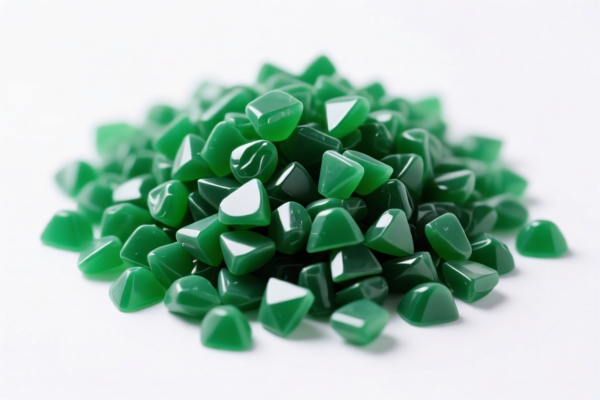
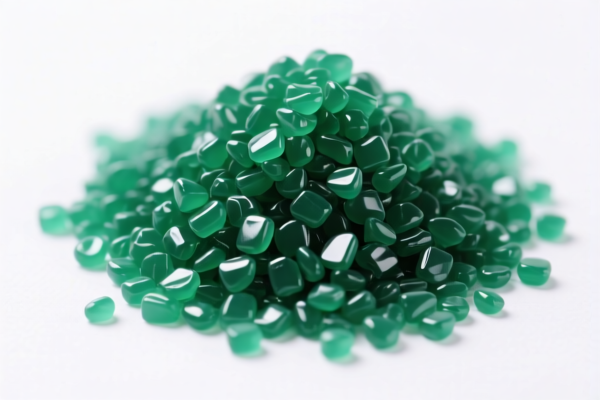
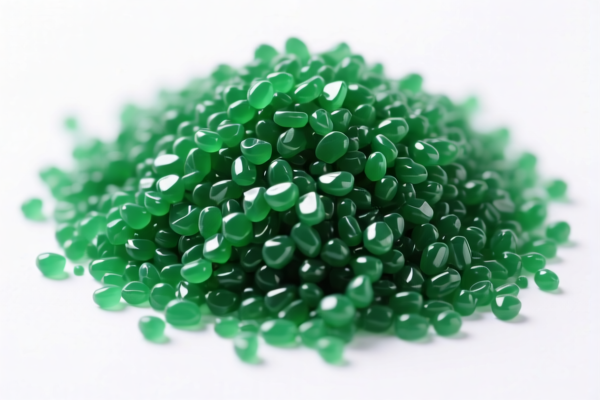
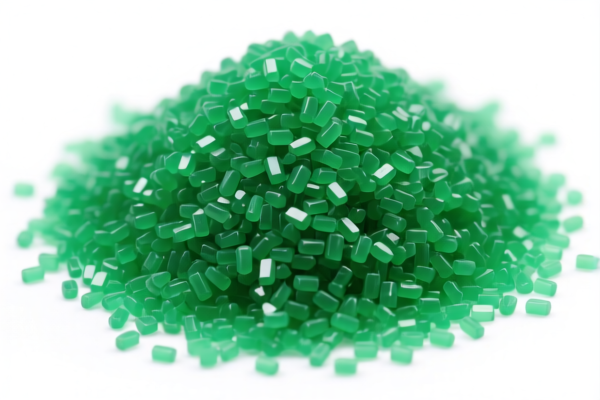
AI Analysis
🧪 High Density Polyethylene Elastomer (HDPE Elastomer)
🌐 HS Code Reference & Clearance Guide | 2026 Latest Tariff Analysis | Professional Customs Strategy
📌 I. Product Definition & Classification: Do You Really Understand "HDPE Elastomer"?
High-Density Polyethylene (HDPE) Elastomers represent a unique intersection of two material worlds: the rigidity of polyethylene plastics and the flexibility of rubber. In international trade, classification depends heavily on the chemical structure, physical state, and intended use.
Polymer Classification (Chapter 39): If the material is chemically defined as a polymer of ethylene (PE) in primary forms (powder, granules, liquids), it generally falls under HS Code heading 3901.
Rubber Classification (Chapter 40): If the material is explicitly defined as a "synthetic rubber" or "elastomer" with rubber-like properties, it may fall under HS Code heading 4002.
⚠️ Key Distinction Point:
- If the product is primarily an ethylene polymer (even if elastic) →归入 3901.xx.xx
- If the product is explicitly classified as a synthetic rubber/elastomer → 归入 4002.xx.xx
📦 II. HS Code Classification Details (2026 Latest Tariff Authority Comparison)
Based on the provided data, here are the four possible HS Codes for High Density Polyethylene Elastomers:
| HS Code | Product Description | Applicable Scenario | Tax Rate Profile |
|---|---|---|---|
3901.90.90.00 |
Polyethylene elastomers classified as ethylene polymers, in other forms. | General PE elastomers not specifically listed elsewhere in 3901.90. | 41.5% (6.5% Base + 25% Addl. + 10% 122) |
3901.90.10.00 |
Polyethylene elastomers or high-resilience ethylene elastomer resins, explicitly matching ethylene polymers & elastomers. | Specific high-resilience PE elastomer resins. | 35.0% (0.0% Base + 25% Addl. + 10% 122) |
4002.80.00.00 |
Polyethylene elastomers belonging to the category of synthetic rubber/plastics, conforming to the description of Heading 4002. | Classified as synthetic rubber/elastomer. | 35.0% (0.0% Base + 25% Addl. + 10% 122) |
3901.20.10.00 / 3901.20.50.00 |
High-Density Polyethylene Resins classified as ethylene polymers in primary forms / Specific gravity ≥ 0.94. | If the "elastomer" property is minimal and it behaves like standard HDPE resin. | 41.5% (6.5% Base + 25% Addl. + 10% 122) |
🔍 Key Reminder:
-3901.90.10.00and4002.80.00.00offer the lowest base duty (0%), resulting in a lower total tax burden compared to other PE classifications.
-3901.90.90.00,3901.20.10.00, and3901.20.50.00carry a 6.5% base duty, pushing the total tax higher.
- Misclassification Risk: Classifying a standard HDPE resin as an "elastomer" to avoid the 6.5% base duty can lead to customs audits if the product lacks specific rubber-like properties.
💰 III. 2026 Latest Tariff Rate Details (Including Additional Taxes & Policy Surcharges)
✅ Applicable Country: United States (US)
✅ Origin: China (CN)
✅ Effective Time: Ongoing (including imports after 2025/2026)
🎯 1. 3901.90.90.00 —— Polyethylene Elastomers (Other Forms)
| Item | Content |
|---|---|
| Base Duty | 6.5% (ad valorem) |
| Section 301 Additional Duty | +25.0% |
| Section 122 Tariff | +10.0% |
| Total Tax Rate | 41.5% |
| Tax Calculation | CIF Value × 41.5% |
| De Minimis Exemption | ❌ Not Eligible |
| Legal Basis Path | Base: 3901.90.90.00 → 301: +25% → Section 122: +10% |
📌 Explanation:
- This code applies if the product is deemed a general "other" ethylene polymer without a more specific subheading.
- The 6.5% base duty makes this the highest cost option among the PE classifications.
🎯 2. 3901.90.10.00 —— Polyethylene Elastomers / High-Resilience Ethylene Elastomer Resins
| Item | Content |
|---|---|
| Base Duty | 0.0% |
| Section 301 Additional Duty | +25.0% |
| Section 122 Tariff | +10.0% |
| Total Tax Rate | 35.0% |
| Tax Calculation | CIF Value × 35.0% |
| De Minimis Exemption | ❌ Not Eligible |
| Legal Basis Path | Base: 3901.90.10.00 → 301: +25% → Section 122: +10% |
📌 Note:
- This is the preferred classification if the product is explicitly described as a "high-resilience ethylene elastomer resin."
- Savings: $6.50 per $100 of CIF value compared to3901.90.90.00.
🎯 3. 4002.80.00.00 —— Synthetic Rubber / Elastic Plastics
| Item | Content |
|---|---|
| Base Duty | 0.0% |
| Section 301 Additional Duty | +25.0% |
| Section 122 Tariff | +10.0% |
| Total Tax Rate | 35.0% |
| Tax Calculation | CIF Value × 35.0% |
| De Minimis Exemption | ❌ Not Eligible |
| Legal Basis Path | Base: 4002.80.00.00 → 301: +25% → Section 122: +10% |
📌 Note:
- Applicable if the material is classified as a synthetic rubber.
- Identical tax rate to3901.90.10.00.
- Risk: Customs may challenge this if the material is chemically a PE resin rather than a cross-linked rubber.
🎯 4. 3901.20.10.00 / 3901.20.50.00 —— High-Density Polyethylene (HDPE) Resins
| Item | Content |
|---|---|
| Base Duty | 6.5% |
| Section 301 Additional Duty | +25.0% |
| Section 122 Tariff | +10.0% |
| Total Tax Rate | 41.5% |
| Tax Calculation | CIF Value × 41.5% |
| De Minimis Exemption | ❌ Not Eligible |
| Legal Basis Path | Base: 3901.20.xx.xx → 301: +25% → Section 122: +10% |
📌 Note:
- These codes apply if the "elastomer" property is considered negligible, and the product is treated as standard HDPE resin (Specific Gravity ≥ 0.94).
- HDPE 0.94+ (3901.20.50.00) and Other HDPE (3901.20.10.00) both incur the 6.5% base duty.
🛠️ IV. Customs Clearance Practical Advice (Real-World Pitfall Avoidance)
✅ 1. Documentation Checklist (All Required)
| Document | Must Provide | Explanation |
|---|---|---|
| ✅ Product Specification Sheet | ✔️ | Must detail chemical composition (ethylene content), specific gravity, melt index, and tensile strength. |
| ✅ Material Safety Data Sheet (MSDS) | ✔️ | Confirms physical state and safety handling. |
| ✅ Third-Party Test Report | ✔️ | ASTM/ISO tests proving "elastomeric" properties (e.g., elongation at break) if claiming 3901.90.10.00 or 4002.80.00.00. |
| ✅ Commercial Invoice | ✔️ | Must clearly state "Polyethylene Elastomer" or "Ethylene Elastomer Resin." Avoid vague terms like "Plastic Granules." |
| ✅ Certificate of Origin (CO) | ✔️ | Required for origin determination and any potential future exemptions. |
| ✅ Packing List | ✔️ | Detailing weight, volume, and package count. |
✅ 2. Declaration Tips (Key Mnemonic)
🔥 “Clarify the Chemistry: Is it Rubber or Plastic? Base Duty Decides the Cost!”
| Scenario | Correct Declaration | Incorrect Practice |
|---|---|---|
| Product has significant rubber-like elasticity and is marketed as "Elastomer" | 3901.90.10.00 or 4002.80.00.00 (35%) |
Misdeclare as standard HDPE (3901.20...) → 41.5% |
| Product is standard HDPE with minor plasticizer (still rigid) | 3901.20.50.00 (41.5%) |
Misdeclare as "Elastomer" → Risk of audit & penalty |
| Product is a generic PE polymer not meeting specific subheadings | 3901.90.90.00 (41.5%) |
N/A |
| OEM Custom Elastomer | Provide customer PO + Technical Specs | Vague description "Plastic" → Delay & Inspection |
✅ 3. Special Situations
| Situation | Handling Advice |
|---|---|
| Hybrid Materials | If the product is a blend, declare the ** predominant component**. If PE > 50%, Chapter 39 likely applies. |
| Import from Non-China Origins | If sourced from Vietnam/Mexico, Section 301 (25%) and Section 122 (10%) may not apply. Check specific FTAs. |
| Pre-Ruling Request | Highly recommended if the product is on the borderline between 3901.90.10.00 (Elastomer) and 3901.20.50.00 (HDPE). |
| De Minimis (Section 321) | ❌ Not Applicable. All listed codes exceed the $800 threshold value or are restricted items. |
🌍 V. Global Market Comparison (2026 Latest)
| Country/Region | Recommended HS Code | Tariff (China Origin) | Certification | Notes |
|---|---|---|---|---|
| 🇺🇸 USA | 3901.90.10.00 / 4002.80.00.00 |
35.0% (Base 0% + 30% Surcharges) | No specific cert | Highest cost market due to tariffs. |
| 🇨🇳 China | 3901.90.10.00 |
0% - 6.5% (VAT 13% applies) | CCC (if applicable) | No anti-dumping on PE elastomers. |
| 🇪🇺 EU | 3901.90 or 4002.80 |
0% - 6.5% | REACH / RoHS | No Section 301/122 equivalents. |
| 🇯🇵 Japan | 3901.90 or 4002.80 |
0% - 5.5% | JIS | CPTPP benefits may apply. |
📌 Conclusion:
- The USA imposes a heavy burden of 30-36.5% in additional tariffs on top of base duties.
- Optimization Strategy: Aim for3901.90.10.00or4002.80.00.00to eliminate the 6.5% base duty.
- Supply Chain: Consider shifting production to non-China origins to avoid 25% + 10% surcharges.
📌 VI. Common Mistakes & Pitfall Guide (Blood & Tears Lessons)
❌ Mistake 1: Declaring all PE elastomers as 3901.20.50.00 (HDPE Resin) to avoid higher scrutiny.
👉 Consequence: If customs determines the product has elastomeric properties, they may reclassify to 3901.90.10.00 (35%) but penalize for misdeclaration. If it is HDPE, you save 0%, but risk audit.
❌ Mistake 2: Ignoring the Section 122 Tariff (10%).
👉 Consequence: Unexpected 10% surge on top of 25% 301 duty. Total 35-41.5%. Many importers budget for 25% only.
❌ Mistake 3: Using vague descriptions like "Plastic Pellets."
👉 Consequence: Customs flags for inspection, causing 2-4 week delays. Provide specific technical data.
❌ Mistake 4: Assuming "Elastomer" automatically means Chapter 40 (Rubber).
👉 Consequence: Chapter 39 (Plastics) is often more appropriate for polyethylene-based elastomers unless chemically cross-linked as rubber.
✅ Correct Approach:
"Polyethylene Elastomer Resin, Ethylene-Based, High Resilience, Granules, Not Cross-Linked Rubber, Model: XYZ, MSDS Attached."
🎯 VII. Conclusion: Precision in Classification, Efficiency in Clearance!
🎯 Remember the Mnemonic:
🔹 "Base Duty Matters: 0% vs 6.5% = $6.50 Savings per $100!"
🔹 "Section 301 + 122 = 35% Minimum Cost for China Origin."
🔹 "Declare Precisely: Avoid Audits, Save Time!"
📌 Pro Tip:
If your PE Elastomer is imported from Vietnam, Mexico, or Thailand, the 25% Section 301 and 10% Section 122 tariffs do not apply. The total duty may drop to 6.5% or 0% (depending on base rate).
Recommendation: Obtain a Certificate of Origin and apply for Pre-Ruling (PB Ruling) if your product is novel.
📣 Immediate Action:
📞 Contact a Licensed Customs Broker
📎 Provide Product Specs + Technical Data Sheets
🚀 Secure Your HS Code Classification Before Shipment!
✨ Professional Clearance Starts with Accurate Classification!
💼 Every Percent of Duty Saved is Pure Profit!
Customer Reviews
About HS Code Classification
The Harmonized System (HS) is an internationally standardized nomenclature developed by the World Customs Organization (WCO) to classify traded products. Over 200 countries use the HS system as the basis for customs tariffs, trade statistics, and import/export regulations.
Each HS code follows a hierarchical structure:
- Chapter (2 digits) — Broad category of goods (e.g., Chapter 84: Machinery and Mechanical Appliances)
- Heading (4 digits) — More specific grouping within the chapter
- Subheading (6 digits) — Internationally standardized breakdown, used by all WCO member countries
- National subdivisions (8-10 digits) — Country-specific extensions for further classification, such as US HTSUS 10-digit codes
Correct HS code classification is essential for smooth customs clearance, accurate duty payment, and compliance with trade regulations. Misclassification can lead to customs delays, overpayment of duties, or penalties.
When importing from CN to US, the applicable tariff rates may include:
- Most-Favored-Nation (MFN) rate — The standard duty rate applied to WTO members
- General rate — Applied to countries without trade agreements
- Trade remedy duties — Additional tariffs such as Section 301 (anti-dumping), Section 232 (national security), or countervailing duties
The information provided on this page is for reference purposes only. For official classification, please consult with your local customs authority or a licensed customs broker.