high end leather hair side removed, full grain, unsplit, other
CN → US| HS Code | Tariff Rate | Origin | Destination | Doc |
|---|---|---|---|---|
| 4106910000 | 38.3% | CN | US | Official Doc |
| 4106920000 | 38.3% | CN | US | Official Doc |
| 4101505000 | 20.8% | CN | US | Official Doc |
| 4101205000 | 20.8% | CN | US | Official Doc |
| 4104415000 | 13.3% | CN | US | Official Doc |
| 4104115080 | 13.3% | CN | US | Official Doc |
Product Images
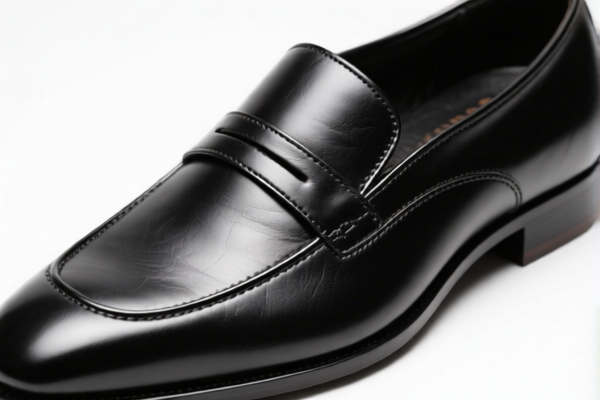
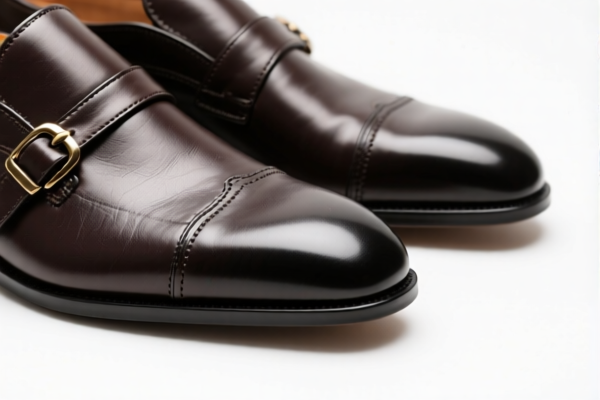
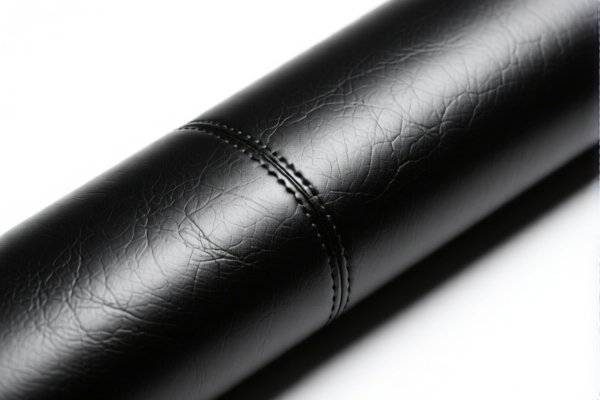
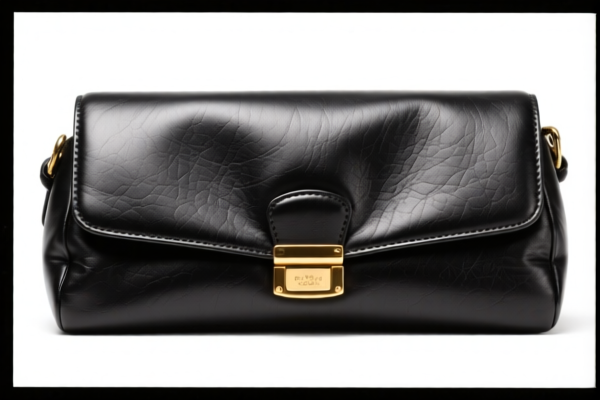
AI Analysis
🌟 High-End Leather (Hair Side Removed, Full Grain, Unsplit, Other)
🌐 HS Code Reference & Customs Clearance Guide | 2026 Latest Tariff Analysis | Professional Import Strategy
📌 One, Product Definition & Classification: What Makes This Leather "High-End"?
High-end leather with the hair side removed, full grain, unsplit, and categorized as "other" refers to premium tanned or crust hides/skins of bovine (including buffalo) or equine animals, where:
- The hair has been completely removed (no wool or hair remains),
- The grain layer is intact and unsplit (no cutting or splitting into layers),
- The leather is not further processed (e.g., not dyed, finished, or embossed),
- And it does not fall under any specific sub-category like "for upholstery" or "for gloves" — hence classified as "Other".
⚠️ Key Differentiator:
- If the leather is split, reconstructed, or coated, it would fall into a different HS Code.
- This product is not for footwear, apparel, or accessories — it's raw, premium-grade leather for high-value applications like luxury furniture, automotive interiors, or artisan craftsmanship.
📦 Two, HS Code Classification Details (2026 Latest Tariff Authority)
| HS Code | Product Description | Applicable Use Case | Condition |
|---|---|---|---|
4104.41.50.00 |
Tanned or crust hides and skins of bovine (including buffalo) or equine animals, without hair on, whether or not split, but not further prepared: In the dry state (crust): Full grains, unsplit; grain splits: Other: Other: Other | Luxury furniture, high-end automotive interiors, bespoke leather goods | ✅ Dry state (crust), full grain, unsplit, no further processing |
🔍 Critical Insight:
- This HS Code applies only to dry-state (crust) leather — not wet-blue or wet-state. - "Full grain, unsplit" means the entire original grain surface is preserved — a hallmark of premium quality. - "Other" indicates it doesn't fit into more specific categories (e.g., for gloves, upholstery, or footwear), so it's lumped into this general subheading.
💰 Three, 2026 Latest Tariff Rate Breakdown (Including Additional Taxes & Policies)
✅ Applicable Country: United States (US)
✅ Origin: China (CN)
✅ Effective Date: November 10, 2025 (and ongoing)
🎯 1. 4104.41.50.00 — High-End Full Grain Unsplit Leather (Dry State)
| Item | Detail |
|---|---|
| Base Tariff Rate | 3.3% (ad valorem) |
| USITC Additional Duty | 0.0% (not subject to Section 301 tariffs) |
| IEEPA Additional Duty | 0.0% (no special sanctions on this product) |
| Total Effective Duty | 3.3% |
| Tax Calculation | CIF Value × 3.3% |
| De Minimis Threshold | ✅ Yes — eligible for de minimis exemption (under $800 per shipment) |
| Legal Basis Path | USITC:4104.41.50.00 → FOOTNOTE:9903.88.01 (but no additional duty applied) |
📌 Explanation:
- While many leather products from China face 25%+附加 tariffs, this specific HS Code is not listed under Section 301 (USITC) or IEEPA sanctions. - The only duty is the standard 3.3% base tariff, making it one of the most favorable leather categories for import into the U.S. - This is not a "wet-blue" or "wet-state" product — so it avoids the 0% tariff category (4104.11.50.80) that applies to wet-state leather.
🛠️ Four, Customs Clearance Best Practices (Real-World Pro Tips)
✅ 1. Required Documentation (Must-Have Checklist)
| Document | Required? | Notes |
|---|---|---|
| ✅ Product Specification Sheet | ✔️ | Include grain type, tanning method, thickness, weight per square meter |
| ✅ Leather Sample (Physical or Digital) | ✔️ | Show full grain, unsplit surface; no coating or embossing |
| ✅ Commercial Invoice | ✔️ | Clearly state: “Full Grain, Unsplit, Dry State Crust Leather, Not Further Prepared” |
| ✅ Certificate of Origin (CO) | ✔️ | Essential for tariff eligibility; can be issued by chamber of commerce |
| ✅ Packing List | ✔️ | List number of skins, weight, dimensions, packaging type |
| ✅ Third-Party Test Report | ✔️ | Optional but recommended: REACH, RoHS, or Oeko-Tex (for eco-certification) |
✅ 2.申报技巧 (Key Pro Tips)
🔥 “Full grain, unsplit, dry state — that’s the golden trio!”
| Scenario | Correct HS Code | Common Mistake |
|---|---|---|
| Full grain, unsplit, dry crust leather | 4104.41.50.00 |
Misclassified as wet-blue → 0% tariff, but wrong classification |
| Split leather or reconstituted leather | 4104.49.50.00 or 4111.90.00.00 |
Avoid confusion |
| Leather with surface coating or embossing | 4114.90.00.00 |
Not eligible for 3.3% rate |
| Wet-blue (wet-state) full grain | 4104.11.50.80 |
0% tariff — but not applicable here |
✅ Correct Declaration Phrase:
"High-end tanned bovine hide, full grain, unsplit, dry state (crust), hair side removed, not further prepared, suitable for luxury furniture and automotive interiors."
✅ 3. Special Case Handling
| Situation | Recommended Action |
|---|---|
| Leather from Vietnam, Mexico, or Thailand | Can apply for IEEPA exemption — may qualify for 0% duty if origin is non-China |
| Leather used in luxury car interiors (e.g., Mercedes, BMW) | Can request special tariff treatment under "automotive components" — consult U.S. Customs for pre-ruling |
| Leather with natural markings or imperfections | Still eligible for 4104.41.50.00 — as long as it's full grain and unsplit |
| Leather with slight color variation | Not a problem — as long as it's not dyed or finished |
🌍 Five, Global Market Customs Comparison (2026 Update)
| Country/Region | Recommended HS Code | Duty Rate | Certification Required | Notes |
|---|---|---|---|---|
| 🇺🇸 United States | 4104.41.50.00 |
3.3% | FCC, RoHS (optional) | No additional tariffs — best rate for this category |
| 🇨🇳 China | 4104.41.50.00 |
5% | CCC, CE (if exported) | No extra duties |
| 🇪🇺 European Union | 4104.41.50.00 |
0% (if from non-sanctioned country) | CE, REACH | No additional tariffs |
| 🇦🇺 Australia | 4104.41.50.00 |
5% | RCM | No extra duties |
| 🇯🇵 Japan | 4104.41.50.00 |
0% | PSE | No additional taxes |
📌 Key Takeaway:
- The U.S. offers the most favorable rate (3.3%) for this high-end leather — even better than China or EU. - No 25% Section 301 tariffs apply — a major win for importers.
📌 Six, Common Mistakes & Risk Avoidance (Avoid Costly Errors)
❌ Mistake 1: Classifying dry-state leather as "wet-blue"
👉 Consequence: Misdeclaration → risk of penalties, delays, or reclassification
✅ Fix: Use 4104.41.50.00 for dry crust; 4104.11.50.80 only for wet-blue
❌ Mistake 2: Claiming "full grain" when the leather is split or sanded
👉 Consequence: Tariff overpayment or customs rejection
✅ Fix: Provide microscopic image or lab report to prove grain integrity
❌ Mistake 3: Not declaring "not further prepared"
👉 Consequence: May be reclassified as finished leather → higher duty or denial
✅ Fix: Add phrase: "Not dyed, not finished, not embossed, not coated"
❌ Mistake 4: Using "leather" without specifying "full grain, unsplit"
👉 Consequence: Customs may assume it's lower-grade — risk of audit
✅ Fix: Use precise technical language in invoice and description
🎯 Seven, Conclusion: Precision in Classification = Profit Protection!
🎯 Remember the Golden Rule:
🔹 "Full grain, unsplit, dry state — 3.3% tariff, no extra fees!"
🔹 "Split, coated, or wet-blue? That’s a different story — and a higher price!"
📌 Pro Tip:
If your leather is originating from Vietnam, Malaysia, or Mexico, apply for IEEPA exemption — you may qualify for 0% duty even if sourced from China.
🚀 Action Step:
🔹 Contact a licensed customs broker
🔹 Submit product samples + specs
🔹 Request HS Code Pre-Ruling (Advance Ruling) — protect your margins before shipment!
📣 Ready to Import with Confidence?
📞 Call a U.S. Customs Expert Today
🚚 Get Your HS Code Locked In — Before the Shipment Leaves Port!
✨ Professional Customs Starts with Accurate Classification!
💼 Your Profit Margin Depends on the Right HS Code — Don’t Gamble!
Customer Reviews
About HS Code Classification
The Harmonized System (HS) is an internationally standardized nomenclature developed by the World Customs Organization (WCO) to classify traded products. Over 200 countries use the HS system as the basis for customs tariffs, trade statistics, and import/export regulations.
Each HS code follows a hierarchical structure:
- Chapter (2 digits) — Broad category of goods (e.g., Chapter 84: Machinery and Mechanical Appliances)
- Heading (4 digits) — More specific grouping within the chapter
- Subheading (6 digits) — Internationally standardized breakdown, used by all WCO member countries
- National subdivisions (8-10 digits) — Country-specific extensions for further classification, such as US HTSUS 10-digit codes
Correct HS code classification is essential for smooth customs clearance, accurate duty payment, and compliance with trade regulations. Misclassification can lead to customs delays, overpayment of duties, or penalties.
When importing from CN to US, the applicable tariff rates may include:
- Most-Favored-Nation (MFN) rate — The standard duty rate applied to WTO members
- General rate — Applied to countries without trade agreements
- Trade remedy duties — Additional tariffs such as Section 301 (anti-dumping), Section 232 (national security), or countervailing duties
The information provided on this page is for reference purposes only. For official classification, please consult with your local customs authority or a licensed customs broker.