high end plastic wallpaper
CN → US| HS Code | Tariff Rate | Origin | Destination | Doc |
|---|---|---|---|---|
| 3921901100 | 39.2% | CN | US | Official Doc |
| 3921902510 | 41.5% | CN | US | Official Doc |
Product Images
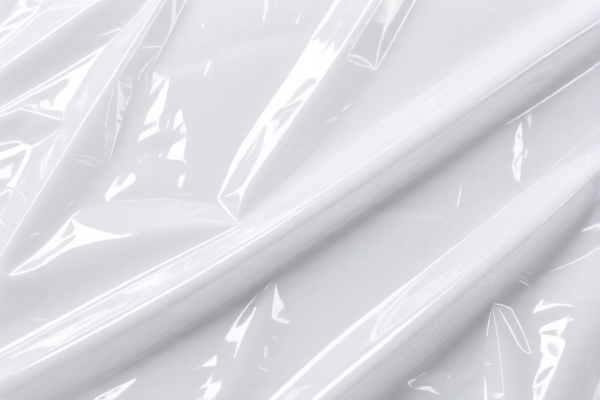
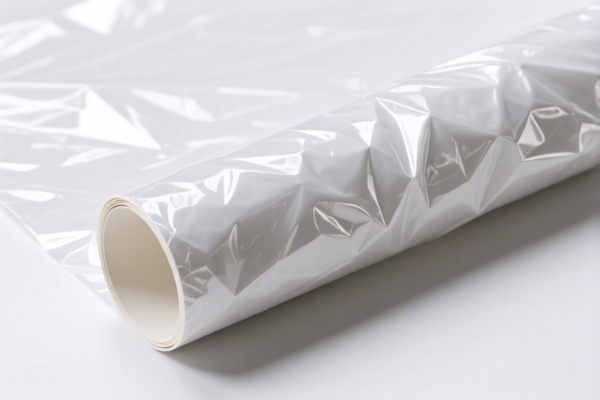
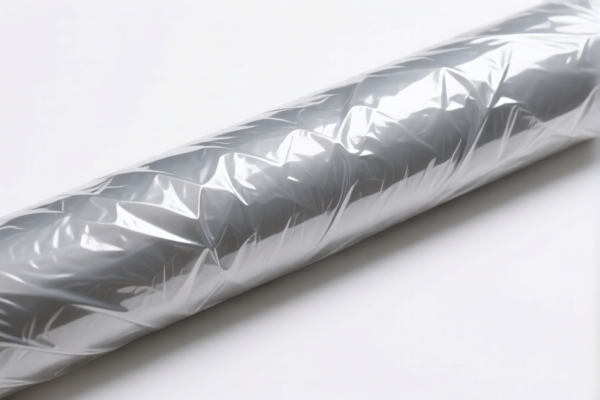
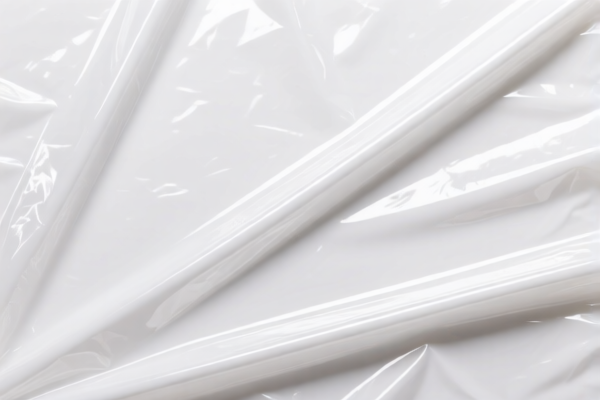
AI Analysis
🎨 High-End Plastic Wallpaper (Plastic Sheets/Strips Combined with Textiles)
🌐 HS Code Reference & Customs Clearance Guide | 2026 Latest Tariff Analysis | Professional Compliance Strategy
📌 1. Product Definition: What is "High-End Plastic Wallpaper"?
In international trade, "High-End Plastic Wallpaper" is not a single HS code but a functional description. It refers to composite materials consisting of plastics and textile materials. The classification depends strictly on two physical metrics: 1. Weight per square meter ($kg/m^2$): Is it lightweight (< 1.492 kg/m²) or heavy (> 1.492 kg/m²)? 2. Material Composition: Do man-made fibers predominate by weight, and is the plastic content > 70%?
⚠️ Key Distinction:
- If the product is a flexible composite (plastic + textile) and weighs ≤ 1.492 kg/m² →归入 3921.90.11.00
- If the product is a flexible composite (plastic + textile) and weighs > 1.492 kg/m² →归入 3921.90.25.10
- Note: If the product is pure plastic without textile backing, it falls under different headings (e.g., 3921.10/3921.90 other). The data provided specifically addresses the textile-combined variants.
📦 2. HS Code Classification Details (2026 Latest Tariff Authority Comparison)
| HS Code | Product Description | Weight Limit | Key Condition | Tariff Rate |
|---|---|---|---|---|
3921.90.11.00 |
Other plates, sheets, film, foil, strip of plastics Combined with textile materials Man-made fibers predominate > 70% weight plastics |
≤ 1.492 kg/m² | Lightweight composite wall covering | 0.0% |
3921.90.25.10 |
Other plates, sheets, film, foil, strip of plastics Combined with textile materials Man-made fibers predominate > 70% weight plastics |
> 1.492 kg/m² | Heavy-duty/Dense composite wall covering | 0.0% |
🔍 Critical Clarification:
- Both codes apply to "Other" plastics (non-foamed, non-cellular) combined with textiles.
- "Man-made fibers predominate": This means if the textile backing contains polyester, nylon, or acrylic, and their weight is higher than natural fibers (cotton, wool, etc.), these codes apply.
- > 70% Plastics: The plastic layer must constitute more than 70% of the total weight. If it’s less, it might fall under textile classifications (Chapter 59).
💰 3. 2026 Latest Tariff Rate Detailed Explanation
✅ Applicable Country: United States (US)
✅ Origin: China (CN) [Assumed based on common trade context; verify if origin is different]
✅ Effective Time: Current 2026 Tariff Schedule
🎯 1. 3921.90.11.00 – Lightweight Plastic-Textile Composite (≤ 1.492 kg/m²)
| Item | Content |
|---|---|
| Base Tariff | 0.0% (Most Favored Nation rate) |
| Section 301 Tariff (USITC) | 0.0% (Excluded or Not Applied to this specific subheading in the provided data) |
| IEEPA Add-on | 0.0% |
| Total Effective Tariff | 0.0% |
| De Minimis Eligibility | ✅ YES (If value ≤ $800, eligible for Section 321 exemption) |
| Legal Path | HTSUS:3921.90.11.00 → Base Rate: 0.0% |
📌 Explanation:
- This code benefits from zero tariffs.
- Because it is under Chapter 39 (Plastics), it is generally not subject to the aggressive Section 301 tariffs that often hit textiles or electronics, provided it meets the specific "plastic > 70%" and "man-made fiber" criteria.
- Low Risk: Suitable for low-value shipments via express courier (de minimis).
🎯 2. 3921.90.25.10 – Heavy Plastic-Textile Composite (> 1.492 kg/m²)
| Item | Content |
|---|---|
| Base Tariff | 0.0% |
| Section 301 Tariff (USITC) | 0.0% |
| IEEPA Add-on | 0.0% |
| Total Effective Tariff | 0.0% |
| De Minimis Eligibility | ✅ YES (If value ≤ $800) |
| Legal Path | HTSUS:3921.90.25.10 → Base Rate: 0.0% |
📌 Explanation:
- Despite being heavier (more material-intensive), this specific composite structure also enjoys 0% duty.
- Important: Do not confuse with5903(Textiles impregnated with plastic), which may have different duties. The key here is "Plastics" (Chapter 39) because plastic > 70%. If textile > plastic, it would be Chapter 59.
🛠️ 4. Customs Clearance Practical Advice (Avoid Pitfalls)
✅ 1. Documentation Checklist (Must-Haves)
| Document | Required? | Purpose |
|---|---|---|
| Product Specification Sheet | ✅ | Must clearly state: "Plastic content > 70%", "Textile backing: Polyester/Nylon", "Weight per sqm: X kg/m²" |
| Composition Declaration | ✅ | Proof that man-made fibers predominate over natural fibers |
| Commercial Invoice | ✅ | Must describe as "Plastic Wallpaper with Textile Backing," NOT just "Wallpaper" |
| Weight Measurement Proof | ✅ | Certify whether the product is ≤ 1.492 kg/m² or > 1.492 kg/m² |
| Photos of Cross-Section | ✅ | To prove plastic layer is the primary material (>70%) |
✅ 2. Declaration Tips (Key Mantra)
🔥 "Weight Defines the Code, Plastic Defines the Chapter!"
| Scenario | Correct Declaration | Wrong Action |
|---|---|---|
| Lightweight vinyl wallpaper with fabric back | 3921.90.11.00 |
Mislabel as "Textile Wallpaper" (Chapter 59) → Higher duty |
| Heavy-duty industrial plastic sheet with mesh | 3921.90.25.10 |
Mislabel as "Plastic Sheet, uncombined" (3921.10) → Wrong classification |
| Pure plastic self-adhesive film (no textile) | Not listed in DATA | Do NOT use these codes! Use 3921.10/3921.90 other |
| Cotton-based wallpaper with thin plastic layer | Not listed in DATA | If plastic < 70%, it’s textile (Chapter 59). Avoid these codes. |
✅ 3. Special Considerations
| Situation | Handling Advice |
|---|---|
| Mixed Fibers | If the textile backing has both polyester (30%) and cotton (30%), but plastic is 70%, it still fits IF man-made fibers predominate over any single natural fiber. |
| Weight Tolerance | Ensure your product weight is consistently within the range. A product at 1.50 kg/m² MUST use 3921.90.25.10. Do not force it into 3921.90.11.00. |
| Origin Verification | While the data shows 0% for China, verify if any Section 301 exclusions have changed. As per the provided data, it is 0%. |
🌍 5. Global Market Comparison (2026 Latest)
| Market | Recommended HS Code | Tariff | Key Requirement |
|---|---|---|---|
| 🇺🇸 USA | 3921.90.11.00 or .25.10 |
0.0% | Must prove plastic > 70% and man-made fiber dominance |
| 🇪🇺 EU | 3921.90.85 (approx) |
Varies (0-4%) | CE marking, REACH compliance for plastics |
| 🇨🇳 China | 3921.90.90 |
6% - 9% | Import license may be required for certain plastics |
| 🇬🇧 UK | 3921.90.90 |
6% | Post-Brexit tariff schedules may differ slightly |
| 🇨🇦 Canada | 3921.90.90 |
0% (if under CUSMA) | Preferential origin required |
📌 Conclusion:
- The US market is highly favorable for these specific plastic-textile wallpapers with 0% duty.
- Accuracy in weight declaration is the single most important factor to avoid misclassification penalties.
📌 6. Common Errors & Pitfalls (Blood Lessons)
❌ Error 1: Declaring "Plastic Wallpaper" as simple "Plastic Sheets" (3921.10)
👉 Consequence: If it contains textile, it is misclassified. Customs may reclassify to 3921.90.xxxx, but if weight is wrong, duties change.
👉 Result: Delay, fines, or re-inspection.
❌ Error 2: Ignoring the "Man-Made Fiber" rule
👉 Consequence: If the textile is 100% cotton, it does NOT fit 3921.90.11.00 or .25.10 because man-made fibers do not predominate.
👉 Result: Must use different HS code (likely under Chapter 59), potentially with higher tariffs.
❌ Error 3: Confusing "Weight" with "Volume"
👉 Consequence: Customs uses kg/m², not thickness or volume.
👉 Result: If you declare 1.4 kg/m² but actual is 1.5 kg/m², you are declared under the wrong code.
✅ Correct Practice:
"High-End Vinyl Wallpaper with Polyester Backing, Plastic Content 75%, Man-Made Fiber Base, Weight: 1.2 kg/m²"
🎯 7. Conclusion: Precision in Composition & Weight
🎯 Remember the Mantra:
🔹 "Plastic > 70% + Man-Made Fiber + Weight Check = 0% Duty!"
🔹 "Under 1.492 kg? Use .11.00. Over 1.492 kg? Use .25.10."
🔹 "Don't guess the weight! Test it! Customs will weigh it!"
📌 Pro Tip:
If your wallpaper is 100% plastic (no textile), these codes DO NOT APPLY. You must use other 3921 subcodes.
If your wallpaper is textile with thin plastic coating (plastic < 70%), it falls under Chapter 59.
Always verify the material breakdown before declaring!
📣 Immediate Action:
📞 Provide Weight per Square Meter and Material Composition Ratio to your customs broker.
🚀 Ensure your invoice matches the HS Code definition exactly.
💼 Zero Duty is a gift – don't lose it by misclassification!
✨ Professional Customs Compliance Starts with Accurate Data!
💼 Your profit margin depends on this 0% duty clearance!
Customer Reviews
About HS Code Classification
The Harmonized System (HS) is an internationally standardized nomenclature developed by the World Customs Organization (WCO) to classify traded products. Over 200 countries use the HS system as the basis for customs tariffs, trade statistics, and import/export regulations.
Each HS code follows a hierarchical structure:
- Chapter (2 digits) — Broad category of goods (e.g., Chapter 84: Machinery and Mechanical Appliances)
- Heading (4 digits) — More specific grouping within the chapter
- Subheading (6 digits) — Internationally standardized breakdown, used by all WCO member countries
- National subdivisions (8-10 digits) — Country-specific extensions for further classification, such as US HTSUS 10-digit codes
Correct HS code classification is essential for smooth customs clearance, accurate duty payment, and compliance with trade regulations. Misclassification can lead to customs delays, overpayment of duties, or penalties.
When importing from CN to US, the applicable tariff rates may include:
- Most-Favored-Nation (MFN) rate — The standard duty rate applied to WTO members
- General rate — Applied to countries without trade agreements
- Trade remedy duties — Additional tariffs such as Section 301 (anti-dumping), Section 232 (national security), or countervailing duties
The information provided on this page is for reference purposes only. For official classification, please consult with your local customs authority or a licensed customs broker.