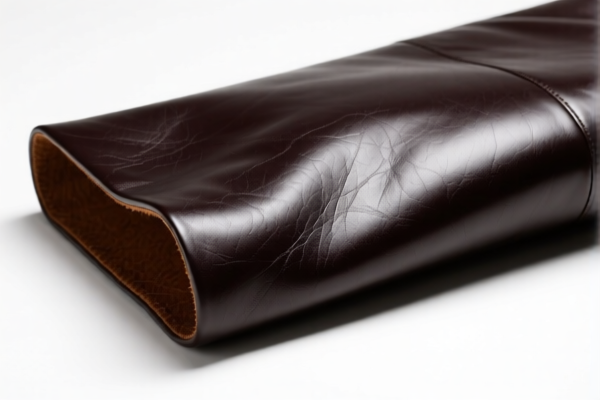
high grade bovine leather sheets
CN → US| HS Code | Tariff Rate | Origin | Destination | Doc |
|---|---|---|---|---|
| 4107115000 | 12.8% | CN | US | Official Doc |
| 4107111020 | 35.0% | CN | US | Official Doc |
Product Images

AI Analysis
🐂 High Grade Bovine Leather Sheets
🌐 HS Code Reference & Customs Clearance Guide | 2026 Latest Tariff Analysis | Professional Tier-1 Clearance Strategy
📌 I. Product Definition & Classification: Do You Truly Understand "High Grade Bovine Leather"?
Bovine Leather, derived from cattle (including buffalo), is the cornerstone of the global footwear, upholstery, and automotive industries. In international trade, "High Grade" typically implies specific structural and surface characteristics. For customs purposes, we distinguish strictly between whole hides/skins and split leather, and between full grain and other.
Whole Hides and Skins (未剖层整张皮革): The entire hide has not been split into layers. It retains its natural grain surface. * Full Grain (全粒面): The topmost layer with natural grain intact. * Other (其他): Includes corrected grain or surface-treated full grain.
⚠️ Key Distinction Point:
- If the leather is whole (not split) and of full grain, it falls under specific sub-headings based on surface area and end-use (upholstery vs. upper/lining).
- If the leather is split (sawn into layers), it belongs to a different HS Code (not provided in the current dataset).
- "Upholstery Leather" refers specifically to leather intended for furniture seating, often characterized by specific durability and softness requirements.
📦 II. HS Code Classification Details (2026 Authoritative Tariff Reference)
Based on the provided data, here are the two relevant HS Codes for Whole Hides and Skins: Full Grains, Unsplit.
| HS Code | Product Description | Key Characteristics | Typical End-Use |
|---|---|---|---|
| 4107.11.50.00 | Whole hides/skins: Full grains, unsplit: Other: Other: Upholstery leather | - Bovine/Equine - No hair - Full grain, unsplit - Specifically for upholstery |
Sofa covers, car seats, furniture |
| 4107.11.10.20 | Whole hides/skins: Full grains, unsplit: Of bovines, area ≤ 28 sq ft (2.6 m²): Upper leather; lining leather | - Bovine only - Unit surface area ≤ 2.6 m² - For shoes/clothing |
Shoe uppers, garment linings, small leather goods |
🔍 Critical Analysis:
- 4107.11.50.00: This code is broader regarding surface area but specific to Upholstery. If your "High Grade" sheets are large hides intended for furniture, this is likely the correct code.
- 4107.11.10.20: This code is specific to smaller hides (≤ 2.6 m²) intended for Upper/Lining use. Note the strict size limit. If a hide exceeds 2.6 m², it cannot be declared under this specific sub-heading even if it's for shoes.
💰 III. 2026 Latest Tariff Rate Breakdown (Including Surtaxes & Policy Add-ons)
✅ Applicable Country: United States (US)
✅ Origin: China (CN)
✅ Effective Time: Current rates apply based on the provided data structure.
🎯 1. HS Code 4107.11.50.00 — Upholstery Leather
| Item | Content |
|---|---|
| Base Tariff (MFN) | 0.0% |
| Section 301 Surtax (Added Tariff) | 0.0% |
| Total Tax Rate | 0.0% |
| Tax Detail | Base: 0.0%, Additional: 0.0% |
| Calculation | CIF Value × 0% = $0 |
| De Minimis Eligibility | ❓ Not explicitly denied in data, but 0% base suggests low risk. |
| Legal Basis Path | HTSUS:4107.11.50 |
📌 Interpretation:
- Zero Duty: This is a highly favorable classification. High-grade bovine leather for upholstery faces no duty in the US.
- Strategic Advantage: This code avoids the heavy 25% Section 301 tariffs that often apply to other leather categories or manufactured goods.
🎯 2. HS Code 4107.11.10.20 — Upper/Lining Leather (≤ 2.6 m²)
| Item | Content |
|---|---|
| Base Tariff (MFN) | 0.0% |
| Section 301 Surtax (Added Tariff) | +25.0% |
| Total Tax Rate | 25.0% |
| Tax Detail | Base: 0.0%, Additional: 25.0% |
| Calculation | CIF Value × 25% |
| De Minimis Eligibility | ❌ Likely Excluded (Due to 301 surtax) |
| Legal Basis Path | HTSUS:4107.11.10.20 → USITC:301_List |
📌 Interpretation:
- High Duty: While the base tariff is 0%, the 25% additional tariff makes this significantly more expensive.
- Why the Difference?: The 25% surtax is applied due to US-China trade tensions affecting specific Chinese-origin goods. Leather for footwear (upper/lining) is often categorized differently than large upholstery hides in trade policy, leading to this disparity.
🛠️ IV. Customs Clearance Practical Advice (Battle-Tested Pitfall Avoidance)
✅ 1. Preparation Checklist (Non-Negotiable)
| Document | Required? | Purpose |
|---|---|---|
| ✅ Commercial Invoice | ✔️ | Must clearly state "Bovine Leather, Tanned, Whole Hide, Unsplit". Specify if "Upholstery" or "Upper". |
| ✅ Packing List | ✔️ | Include weight and dimensions of each hide. |
| ✅ Hide Size Data | ✔️ | Crucial: Must provide square footage/m² for each hide to prove compliance with the ≤ 2.6 m² limit (if using 4107.11.10.20). |
| ✅ Product Description | ✔️ | "Full Grain, Unsplit, Hair Removed". Avoid vague terms like "Cheap Leather". |
| ✅ Photos | ✔️ | Show the grain surface and any tags/branding. |
| ✅ Certificate of Origin | ✔️ | If not from China, this may avoid the 25% surtax. |
✅ 2. Declaration Strategy (Key Mantras)
🔥 “Size Matters, End-Use Defines, Upholstery Free, Upper Taxed!”
| Scenario | Correct Declaration | Wrong Declaration | Consequence |
|---|---|---|---|
| Large Hides (>2.6 m²) for Furniture | 4107.11.50.00 |
4107.11.10.20 |
Audit Risk: Size limit violation. Correct code (0%) applies, but fine for error. |
| Small Hides (≤2.6 m²) for Shoes | 4107.11.10.20 |
4107.11.50.00 |
Overpayment: Paying 0% instead of 25%? No, usually under-declaring duty leads to penalties. Here, misclassification could lead to 25% if corrected. |
| Split Leather (Layered) | Not these codes | 4107.11.xxxx |
Rejection: Split leather is HS 4104 or 4105. Wrong code = Refund + Penalty. |
| With Hair On | Not these codes | 4107.11.xxxx |
Rejection: These codes are "Without Hair On". Wrong code = Seizure. |
✅ 3. Special Handling Tips
- Size Measurement: For
4107.11.10.20, ensure every single hide is measured accurately. If even one hide exceeds 2.6 m², the entire shipment may be scrutinized or reclassified. - "Upholstery" Definition: If you are shipping leather for car seats, clarify if it is "Upholstery" (HS 4107.11.50.00) or "Upper" (HS 4107.11.10.20). US Customs often leans towards 4107.11.50.00 for automotive upholstery if it meets specific durability tests, saving you the 25% duty. Provide test reports!
- Split Leather: If your "High Grade" leather is actually split (corrected grain from the lower layer), it does not fall under these codes. It would likely be 4104.41 or similar, with different duties. Ensure you are not misdeclaring split leather as full grain.
🌍 V. Global Market Comparison (2026 Update)
| Market | Recommended HS Code | Estimated Duty (China Origin) | Key Requirement |
|---|---|---|---|
| 🇺🇸 USA | 4107.11.50.00 |
0% | Upholstery declaration, size proof |
| 🇺🇸 USA | 4107.11.10.20 |
25% | ≤ 2.6 m², Upper/Lining use |
| 🇪🇺 EU | 4107.11 |
0% (Often) | CE/RoHS not applicable, but TSCA compliance if treated |
| 🇨🇳 China | 4107.11 |
Varies (5-10%) | Import licenses may be required |
📌 Conclusion:
- USA offers a 25% cost advantage for Upholstery Leather (4107.11.50.00) compared to Upper/Lining Leather (4107.11.10.20).
- If your product can be classified as upholstery (even for high-end automotive), strategically declare it as such with supporting documentation (durability specs, intended use) to save 25%.
📌 VI. Common Errors & Pitfalls (Blood Lessons)
❌ Error 1: Declaring all bovine leather as 4107.11.10.20 to avoid scrutiny, ignoring the 25% tax.
👉 Result: Paying 25% when you could have paid 0%.
❌ Error 2: Using 4107.11.50.00 for small shoe uppers to save tax.
👉 Result: Customs audit. The size (<2.6 m²) and end-use (shoe) contradict the "Upholstery" definition. Back taxes + 25% surtax + Penalties.
❌ Error 3: Failing to declare "Unsplit" and "Full Grain".
👉 Result: If it's split, it's a different HS code. Misclassification leads to severe penalties.
✅ Correct Action:
"Bovine Leather, Tanned, Full Grain, Unsplit, Hair Removed. Intended for Upholstery. No Splits."
🎯 VII. Conclusion: Strategic Classification for Cost Saving
🎯 Remember the Golden Rule:
🔹 "Upholstery is Free, Upper is Taxed."
🔹 "Check the Size: <2.6m² for Upper, Any Size for Upholstery."
🔹 "Full Grain Only: If Split, Run Away (from these codes)!"
📌 Pro Tip:
If your leather is not from China (e.g., from Brazil, Italy, or India), the 25% surtax does not apply. However, even for non-China origin, verify the base tariff. For China-origin leather, HS 4107.11.50.00 is your golden ticket for 0% duty. HS 4107.11.10.20 is a cost trap (25%).
📞 Immediate Action:
1. Verify the intended end-use (Furniture vs. Shoes).
2. Measure the average hide size.
3. If possible, structure the shipment to qualify for Upholstery classification to save 25%.
4. Consult a customs broker for a Pre-Ruling if the distinction is ambiguous.
✨ Professional Customs Clearance, Starting with Precise Classification!
💼 Your Profit Margin Depends on the Last Digit of Your HS Code!
Customer Reviews
About HS Code Classification
The Harmonized System (HS) is an internationally standardized nomenclature developed by the World Customs Organization (WCO) to classify traded products. Over 200 countries use the HS system as the basis for customs tariffs, trade statistics, and import/export regulations.
Each HS code follows a hierarchical structure:
- Chapter (2 digits) — Broad category of goods (e.g., Chapter 84: Machinery and Mechanical Appliances)
- Heading (4 digits) — More specific grouping within the chapter
- Subheading (6 digits) — Internationally standardized breakdown, used by all WCO member countries
- National subdivisions (8-10 digits) — Country-specific extensions for further classification, such as US HTSUS 10-digit codes
Correct HS code classification is essential for smooth customs clearance, accurate duty payment, and compliance with trade regulations. Misclassification can lead to customs delays, overpayment of duties, or penalties.
When importing from CN to US, the applicable tariff rates may include:
- Most-Favored-Nation (MFN) rate — The standard duty rate applied to WTO members
- General rate — Applied to countries without trade agreements
- Trade remedy duties — Additional tariffs such as Section 301 (anti-dumping), Section 232 (national security), or countervailing duties
The information provided on this page is for reference purposes only. For official classification, please consult with your local customs authority or a licensed customs broker.