high modulus polyamide raw material
CN → US| HS Code | Tariff Rate | Origin | Destination | Doc |
|---|---|---|---|---|
| 5604902000 | 43.8% | CN | US | Official Doc |
| 5604909000 | 40.0% | CN | US | Official Doc |
| 3908100000 | 41.3% | CN | US | Official Doc |
| 3908902000 | 35.0% | CN | US | Official Doc |
| 5402113030 | 43.8% | CN | US | Official Doc |
| 5402459040 | 43.0% | CN | US | Official Doc |
Product Images

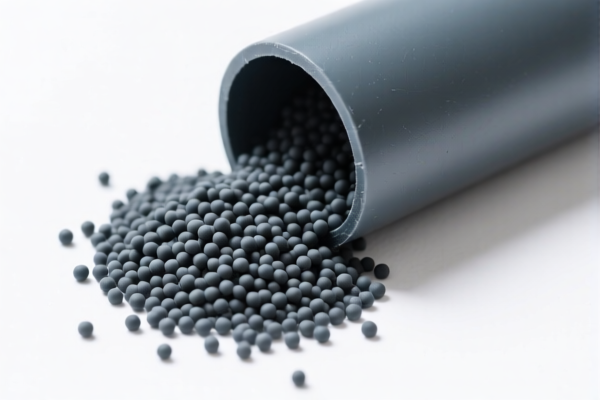
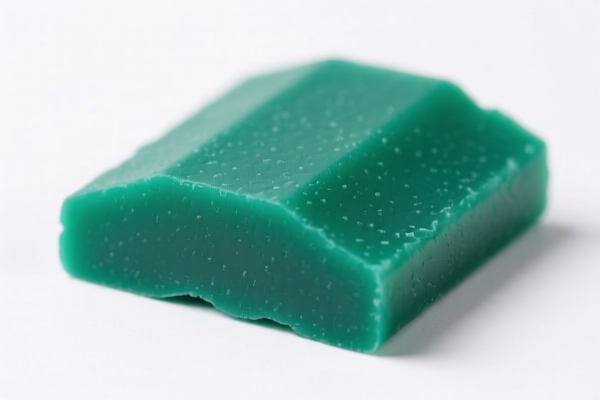
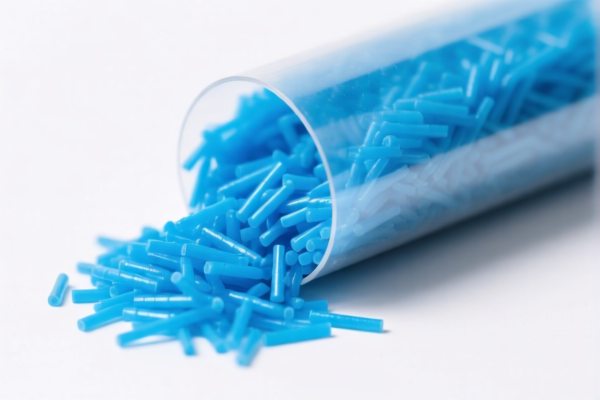
AI Analysis
🧪 High Modulus Polyamide Raw Material (Polyamides in Primary Forms)
🌐 HS Code Reference & Customs Clearance Guide | 2026 Latest Tariff Analysis | Professional Entry Strategy
📌 I. Product Definition & Classification: What is "High Modulus Polyamide"?
"High Modulus Polyamide" generally refers to polyamides (nylons) with high stiffness and strength, often used in engineering plastics, high-performance fibers, or specialty copolymers. In international trade, these raw materials are classified under Chapter 39 (Plastics and Articles Thereof) or Chapter 54 (Man-made Filaments) depending on their physical form (primary form vs. yarn/filament).
Key Distinction: * Polyamide Resins/Granules (Primary Forms): If the material is in beads, flakes, or powders used for molding or extrusion, it falls under HS Code 3908. * High-Tenacity Filament Yarns: If the polyamide has been extruded into high-strength yarns (e.g., for seatbelts, ropes, industrial fabrics), it falls under HS Code 5402 or 5604.
⚠️ Critical Note:
- "Primary Form" = Resin, pellets, flakes, powders. → Chapter 39
- "Filament Yarn" = Continuous strands, textured or untwisted. → Chapter 54
- "Rubber-Covered Yarn" = Textile yarn impregnated with rubber/plastics. → Chapter 56
📦 II. HS Code Classification Details (2026 Latest Tariff Authority)
Based on the provided <DATA>, here are the specific HS codes for different forms of polyamide raw materials:
| HS Code | Product Description | Application Scenario | Physical Form |
|---|---|---|---|
3908.10.00.00 |
Polyamides in primary forms: Polyamide-6, -11, -12, -6,6, -6,9, -6,10 or -6,12 | Standard engineering plastics (Nylon 6, 6.6, 11, 12) for injection molding, extrusion | ✅ Resin/Pellets/Flakes |
3908.90.20.00 |
Polyamides in primary forms: Other: Bis(4-amino-3-methylcyclohexyl)methane-isophthalic acid-laurolactam copolymer | Specialty copolymers, high-performance custom resins | ✅ Resin/Pellets/Flakes |
5402.11.30.30 |
Synthetic filament yarn: High tenacity yarn of nylon or other polyamides... Of aramids... Single yarn Not more than 920 decitex... Multifilament, with twist of 5 turns or more per meter | High-strength industrial yarns (e.g., para-aramid/nylon blends) for safety gear | ✅ High-Tenacity Filament Yarn |
5402.45.90.40 |
Synthetic filament yarn: Other yarn, single, untwisted or with twist ≤50 turns/m... Other, of nylon or other polyamides... Multifilament, with twist ≥5 turns/m | General industrial nylon yarns, less specialized than aramids | ✅ Filament Yarn |
5604.90.20.00 |
Rubber thread/cord, textile covered... High tenacity yarn of polyesters, nylon or other polyamides... impregnated/coated | Rubber-covered nylon yarn for elastic applications (e.g., spandex-like blends) | ✅ Rubber-Covered Yarn |
5604.90.90.00 |
Rubber thread/cord, textile covered... Other: Other | Miscellaneous rubber-covered textile products not specified above | ✅ Rubber-Covered Yarn |
🔍 Key Clarification:
- "Primary Forms" (Chapter 39): If you are importing raw polymer resin (pellets, powder, flakes), you must use 3908 codes.
- "Filament Yarns" (Chapter 54): If the polyamide is already spun into yarn for weaving/knitting, use 5402 codes.
- "Coated Yarns" (Chapter 56): If the yarn is impregnated/coated with rubber, use 5604 codes.
💰 III. 2026 Latest Tariff Rate Breakdown (Including Add-on Duties)
✅ Applicable Country: United States (US)
✅ Origin: China (CN)
✅ Effective Date: 2025/2026 Tariff Schedule
🎯 1. 3908.10.00.00 — Standard Polyamides (Nylon 6, 6.6, etc.) in Primary Forms
| Item | Details |
|---|---|
| Base Tariff Rate | 0.0% (Ad Valorem) |
| Additional Tariff (Section 301) | 0.0% |
| Total Tax Rate | 0.0% |
| Calculation | CIF Value × 0.0% = $0 |
| De Minimis Eligibility | ❌ No (General Rule: >$800 requires entry) |
| Legal Basis | USITC:3908.10.00.00 |
📌 Explanation:
- Standard polyamides like Nylon 6 and Nylon 6.6 are classified under3908.10.00.00.
- Current US Tariff: 0%. This is a zero-duty item for standard polyamides from China.
🎯 2. 3908.90.20.00 — Specialty Polyamide Copolymers (Primary Forms)
| Item | Details |
|---|---|
| Base Tariff Rate | 0.0% |
| Additional Tariff (Section 301) | 25.0% |
| Total Tax Rate | 25.0% |
| Calculation | CIF Value × 25.0% |
| De Minimis Eligibility | ❌ No |
| Legal Basis | USITC:3908.90.20.00 → Section 301: Footnote 9903.88.01 |
📌 Explanation:
- This code covers specialty copolymers not listed in3908.10(e.g., Bis(4-amino-3-methylcyclohexyl)methane-isophthalic acid-laurolactam copolymer).
- Current US Tariff: 25%. These specialized materials face a 25% additional tariff under Section 301.
🎯 3. 5402.11.30.30 — High-Tenacity Aramid/Nylon Yarn (Primary Filament Form)
| Item | Details |
|---|---|
| Base Tariff Rate | 0.0% |
| Additional Tariff (Section 301) | 0.0% |
| Total Tax Rate | 0.0% |
| Calculation | CIF Value × 0.0% = $0 |
| De Minimis Eligibility | ❌ No |
| Legal Basis | USITC:5402.11.30.30 |
📌 Explanation:
- High-tenacity aramid or nylon filaments (twist ≥5 turns/m) enjoy 0% duty.
🎯 4. 5402.45.90.40 — Other Nylon Filament Yarns
| Item | Details |
|---|---|
| Base Tariff Rate | 0.0% |
| Additional Tariff (Section 301) | 0.0% |
| Total Tax Rate | 0.0% |
| Calculation | CIF Value × 0.0% = $0 |
| De Minimis Eligibility | ❌ No |
| Legal Basis | USITC:5402.45.90.40 |
📌 Explanation:
- Standard nylon filament yarns (untwisted or low twist) are 0% duty.
🎯 5. 5604.90.20.00 — Rubber-Covered High-Tenacity Polyamide Yarn
| Item | Details |
|---|---|
| Base Tariff Rate | 0.0% |
| Additional Tariff (Section 301) | 0.0% |
| Total Tax Rate | 0.0% |
| Calculation | CIF Value × 0.0% = $0 |
| De Minimis Eligibility | ❌ No |
| Legal Basis | USITC:5604.90.20.00 |
📌 Explanation:
- Rubber-covered nylon yarns are 0% duty.
🎯 6. 5604.90.90.00 — Other Rubber-Covered Textile Products
| Item | Details |
|---|---|
| Base Tariff Rate | 0.0% |
| Additional Tariff (Section 301) | 0.0% |
| Total Tax Rate | 0.0% |
| Calculation | CIF Value × 0.0% = $0 |
| De Minimis Eligibility | ❌ No |
| Legal Basis | USITC:5604.90.90.00 |
📌 Explanation:
- Miscellaneous rubber-covered textile items are 0% duty.
🛠️ IV. Customs Clearance Practical Advice (Real-World Pitfall Guide)
✅ 1. Preparation Checklist (Non-Negotiable)
| Document | Required? | Notes |
|---|---|---|
| ✅ Material Safety Data Sheet (MSDS) | ✔️ | Critical for chemical identification; confirms "Polyamide" composition |
| ✅ Product Specification Sheet | ✔️ | Must specify: Type (PA6, PA66, Copolymer), Form (Pellet, Yarn), Decitex/Twist (if yarn) |
| ✅ Commercial Invoice | ✔️ | Clearly state: "Polyamide Resin, Pellets, HS 3908.10.00.00" OR "Nylon Filament Yarn, HS 5402.45.90.40" |
| ✅ Bill of Lading | ✔️ | Ensure cargo description matches invoice exactly |
| ✅ Certificate of Origin (CO) | ✔️ | Required for tariff determination; if non-China, may qualify for FTZ benefits |
✅ 2. Classification Strategy (Key Mnemonic)
🔥 "Resin vs. Yarn: Form Determines Code! Primary Form = 3908, Yarn = 5402/5604"
| Scenario | Correct HS Code | Incorrect Code | Consequence |
|---|---|---|---|
| Nylon 6/6.6 Pellets | 3908.10.00.00 |
3908.90.20.00 |
Misclassification → 25% tariff if wrongly classified as specialty copolymer |
| Specialty Copolymer Resin | 3908.90.20.00 |
3908.10.00.00 |
Underpayment → 25% tariff + penalties |
| Nylon Filament Yarn (Untwisted) | 5402.45.90.40 |
3908.10.00.00 |
Wrong chapter → 0% vs 0% (but risk of inspection delay) |
| Rubber-Covered Nylon Yarn | 5604.90.20.00 |
5402.45.90.40 |
Wrong chapter → 0% vs 0% (but risk of inspection delay) |
✅ 3. Special Case Handling
| Scenario | Recommendation |
|---|---|
| Copolymer vs. Homopolymer | Provide chemical structure proof. If it’s a copolymer (e.g., with isophthalic acid), use 3908.90.20.00 (25% tariff). If it’s PA6/66, use 3908.10.00.00 (0%). |
| Yarn Twist Degree | For 5402.11.30.30, twist must be ≥5 turns/meter. For 5402.45.90.40, twist must be ≤50 turns/meter. Misjudging twist can lead to incorrect classification. |
| Rubber Coating Thickness | If rubber coating is minimal, it may still be classified under Chapter 54. If substantial, Chapter 56. Check with USITC rulings. |
| Aramid vs. Nylon | Aramids have specific codes under 5402.11.30.30. If it’s pure aramid, use this code (0%). If it’s nylon, use other codes. |
🌍 V. Global Market Comparison (2026 Latest)
| Country/Region | Recommended HS Code | Tariff (China Origin) | Notes |
|---|---|---|---|
| 🇺🇸 USA | 3908.10.00.00 |
0% | Standard polyamides duty-free |
| 🇺🇸 USA | 3908.90.20.00 |
25% | Specialty copolymers face 25% tariff |
| 🇨🇳 China | 3908.10.00.00 |
0% | Import duty 0% |
| 🇪🇺 EU | 3908.10.00.00 |
0% | Standard polyamides duty-free |
| 🇯🇵 Japan | 3908.10.00.00 |
0% | Standard polyamides duty-free |
| 🇦🇺 Australia | 3908.10.00.00 |
5% | Standard polyamides 5% |
📌 Conclusion:
- USA is the only market with a 25% tariff for specialty polyamide copolymers (3908.90.20.00).
- Standard polyamides (PA6, PA66) are duty-free globally.
- Yarns and coated yarns are mostly duty-free or low-tariff.
📌 VI. Common Errors & Pitfalls (Lessons Learned)
❌ Error 1: Classifying specialty copolymer resin as standard PA6/66
👉 Consequence: 25% tariff evasion → Back taxes + penalties!
✅ Fix: Use 3908.90.20.00 for copolymers.
❌ Error 2: Classifying nylon filament yarn as polyamide resin
👉 Consequence: Wrong chapter → Delayed customs clearance + inspection.
✅ Fix: Use 5402 codes for yarns.
❌ Error 3: Ignoring rubber coating
👉 Consequence: If yarn is rubber-covered, it should be under 5604, not 5402.
✅ Fix: Confirm if rubber impregnation is present.
❌ Error 4: Misidentifying twist degree in yarn
👉 Consequence: Incorrect sub-category → Potential audit risk.
✅ Fix: Measure twist per meter and classify accordingly.
🎯 VII. Conclusion: Precision Classification Saves Money!
🎯 Remember the Mnemonic:
🔹 "Resin = 3908, Yarn = 5402, Coated = 5604"
🔹 "Standard PA = 0%, Specialty Copolymer = 25%, Yarns = 0%"
🔹 "Form is Key: Pellets vs. Yarns Change the HS Code!"
📌 Pro Tip:
- If you are importing specialty copolymers to the US, budget for a 25% tariff.
- Consider pre-classification rulings with CBP if your product is a unique copolymer not clearly listed in 3908.10.
- For yarns, ensure your supplier provides twist degree and decitex details for accurate classification.
📣 Immediate Action:
📞 Contact a licensed customs broker
📄 Provide MSDS, Specification Sheet, and Photos
✅ Apply for HS Code Pre-Ruling if unsure
🚀 Clear Customs Efficiently, Avoid Penalties, Maximize Profit!
✨ Professional Customs Clearance Starts with Accurate Classification!
💼 Every Dollar Saved is a Dollar Earned!
Customer Reviews
About HS Code Classification
The Harmonized System (HS) is an internationally standardized nomenclature developed by the World Customs Organization (WCO) to classify traded products. Over 200 countries use the HS system as the basis for customs tariffs, trade statistics, and import/export regulations.
Each HS code follows a hierarchical structure:
- Chapter (2 digits) — Broad category of goods (e.g., Chapter 84: Machinery and Mechanical Appliances)
- Heading (4 digits) — More specific grouping within the chapter
- Subheading (6 digits) — Internationally standardized breakdown, used by all WCO member countries
- National subdivisions (8-10 digits) — Country-specific extensions for further classification, such as US HTSUS 10-digit codes
Correct HS code classification is essential for smooth customs clearance, accurate duty payment, and compliance with trade regulations. Misclassification can lead to customs delays, overpayment of duties, or penalties.
When importing from CN to US, the applicable tariff rates may include:
- Most-Favored-Nation (MFN) rate — The standard duty rate applied to WTO members
- General rate — Applied to countries without trade agreements
- Trade remedy duties — Additional tariffs such as Section 301 (anti-dumping), Section 232 (national security), or countervailing duties
The information provided on this page is for reference purposes only. For official classification, please consult with your local customs authority or a licensed customs broker.