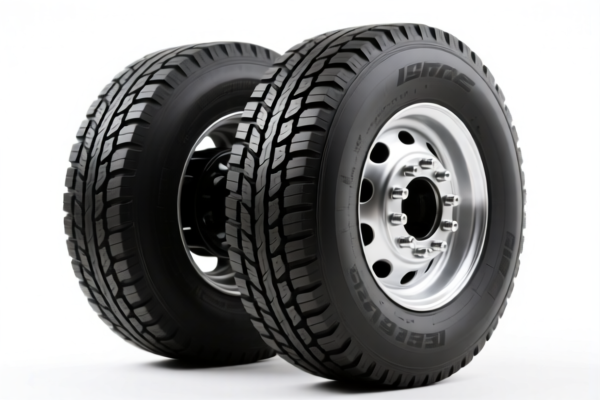
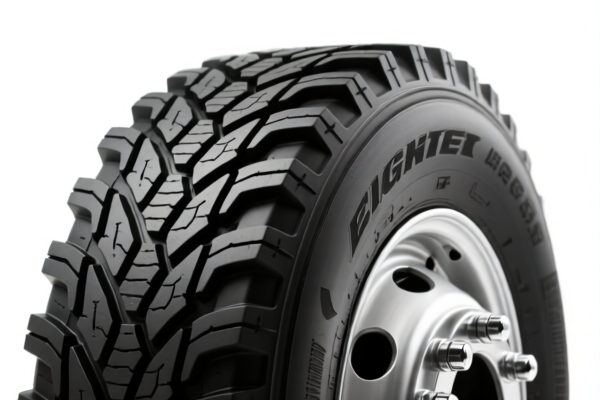
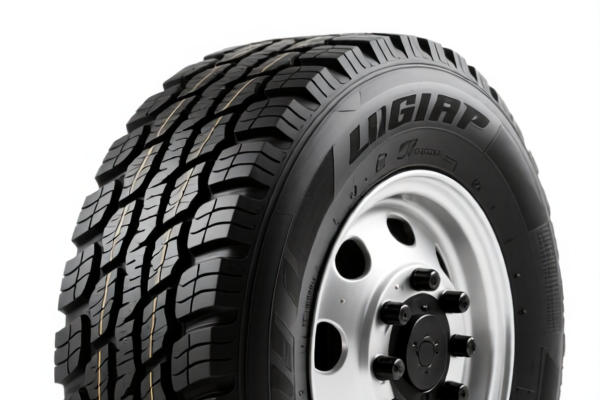
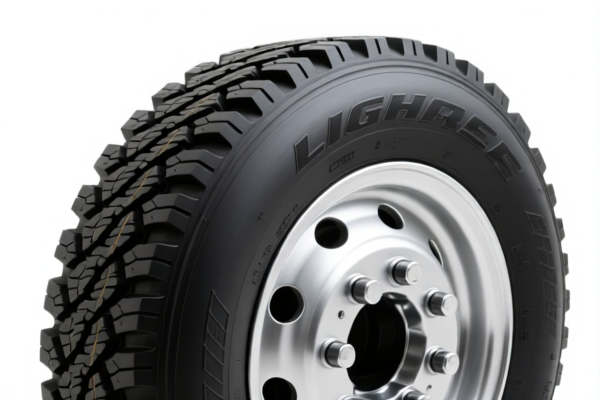
high performance pneumatic tires for light trucks
CN → US| HS Code | Tariff Rate | Origin | Destination | Doc |
|---|---|---|---|---|
| 4011201005 | 39.0% | CN | US | Official Doc |
| 4011205010 | 38.4% | CN | US | Official Doc |
| 4012124015 | 39.0% | CN | US | Official Doc |
| 4012128019 | 38.4% | CN | US | Official Doc |
| 4016996050 | 37.5% | CN | US | Official Doc |
Product Images
AI Analysis
🚛 High-Performance Pneumatic Tires for Light Trucks
🌐 HS Code Reference & Customs Clearance Guide | 2026 Latest Tariff Analysis | Professional Strategy for Rubber Goods
📌 Part I: Product Definition & Classification: Do You Really Know "Light Truck Tires"?
High-performance pneumatic tires for light trucks are specialized rubber components designed for vehicles such as pickup trucks, light commercial vehicles, and SUVs. In international trade, these tires are categorized under Chapter 40 (Rubber and Articles Thereof).
The critical distinction in classification lies in the specific HS Code subheadings, which vary based on minute technical specifications (such as exact weight class, tread pattern, or manufacturing standard) within the broader category of "Tires for light trucks."
⚠️ Key Distinction Point:
- While all items in the provided dataset describe "Light Truck Tires," they fall under four different HS Codes (4011.20.10.05,4011.20.50.10,4012.12.40.15,4012.12.80.19). This indicates that despite similar summaries, customs authorities differentiate them based on precise technical parameters not fully detailed in the summary.
- Item4016.99.60.50is distinct: it is an Industrial Pneumatic Tire, NOT for road vehicles. Misclassifying this as a vehicle tire will lead to severe penalties.
📦 Part II: HS Code Classification Details (2026 Latest Tariff Authority Cross-Reference)
| HS Code | Product Description | Application | Total Tax Rate (China Origin to US) | Tax Composition |
|---|---|---|---|---|
4011.20.10.05 |
Light Truck Tires, Rubber | Light Trucks | 39.0% | Base: 4.0% + Section 301: 25.0% + Section 122: 10.0% |
4011.20.50.10 |
Light Truck Tires, Rubber | Light Trucks | 38.4% | Base: 3.4% + Section 301: 25.0% + Section 122: 10.0% |
4012.12.40.15 |
Light Truck Tires, Rubber | Light Trucks | 39.0% | Base: 4.0% + Section 301: 25.0% + Section 122: 10.0% |
4012.12.80.19 |
Light Truck Tires, Rubber | Light Trucks | 38.4% | Base: 3.4% + Section 301: 25.0% + Section 122: 10.0% |
4016.99.60.50 |
Industrial Pneumatic Tires, Vulcanized Rubber | Industrial Use | 37.5% | Base: 2.5% + Section 301: 25.0% + Section 122: 10.0% |
🔍 Important Note:
- The first four codes (4011...and4012...) are for road-going light trucks. The slight difference in tax rate (39.0% vs 38.4%) depends on the specific base tariff (4.0% vs 3.4%).
- The fifth code (4016...) is for industrial applications (e.g., forklifts, agricultural machinery, or stationary equipment). It has a lower base tariff (2.5%) but still incurs the same additional duties.
💰 Part III: 2026 Latest Tariff Rate Breakdown (Including Surtaxes & Policy Add-ons)
✅ Applicable Country: United States (US)
✅ Origin: China (CN)
✅ Effective Date: 2025 November 10 (and subsequent imports)
🎯 1. 4011.20.10.05 & 4012.12.40.15 —— Light Truck Tires (Standard Variant)
| Item | Content |
|---|---|
| Base Tariff | 4.0% (Ad Valorem) |
| Section 301 Surtax | +25.0% (From USITC Footnote) |
| Section 122 Tariff | +10.0% (Targeting China/HK Products) |
| Total Tax Rate | 39.0% |
| Tax Calculation | CIF Value × 39.0% |
| De Minimis Exemption | ❌ Not Applicable (Deny de minimis) |
| Legal Basis Path | Base Tariff 4% → Section 301: 25% → Section 122: 10% |
📌 Explanation:
- "Base Tariff 4%": Standard MFN rate for these specific tire subheadings.
- "Section 301 Surtax 25%": The ongoing trade war tariff on Chinese rubber goods.
- "Section 122 Tariff 10%": A specific additional levy applied to certain Chinese imports, adding to the total burden.
- Total 39%: This is a very high import cost. Profit margins must account for this nearly 40% deduction from CIF value.
🎯 2. 4011.20.50.10 & 4012.12.80.19 —— Light Truck Tires (Alternative Variant)
| Item | Content |
|---|---|
| Base Tariff | 3.4% |
| Section 301 Surtax | +25.0% |
| Section 122 Tariff | +10.0% |
| Total Tax Rate | 38.4% |
| Tax Calculation | CIF Value × 38.4% |
| De Minimis Exemption | ❌ Not Applicable |
| Legal Basis Path | Base Tariff 3.4% → Section 301: 25% → Section 122: 10% |
📌 Note:
- Slightly cheaper than the previous variant due to a 0.6% lower base tariff.
- Ensure your product documentation explicitly matches the technical criteria for this subheading to avoid being downgraded to the higher 39% bracket.
🎯 3. 4016.99.60.50 —— Industrial Pneumatic Tires
| Item | Content |
|---|---|
| Base Tariff | 2.5% |
| Section 301 Surtax | +25.0% |
| Section 122 Tariff | +10.0% |
| Total Tax Rate | 37.5% |
| Tax Calculation | CIF Value × 37.5% |
| De Minimis Exemption | ❌ Not Applicable |
| Legal Basis Path | Base Tariff 2.5% → Section 301: 25% → Section 122: 10% |
📌 Critical Warning:
- This code is for INDUSTRIAL use only. If you ship light truck tires (for road vehicles) under this code, Customs will flag it for misclassification.
- The base tariff is lower (2.5% vs 4.0% or 3.4%), but the risk of audit is extremely high if the end-use is not industrial.
🛠️ Part IV: Customs Clearance Practical Advice (Combat Avoidance Guide)
✅ 1. Documentation Checklist (Non-negotiable)
| Document | Required | Description |
|---|---|---|
| ✅ Product Specification Sheet | ✔️ | Must detail: Tire size, load index, speed rating, tread pattern, material composition (Vulcanized Rubber). |
| ✅ Technical Drawing/Diagram | ✔️ | Crucial to distinguish between Light Truck (Road) and Industrial use. |
| ✅ Product Photos (including sidewall) | ✔️ | Clear view of markings: "LT" (Light Truck), size (e.g., 265/70R17), and origin label. |
| ✅ Commercial Invoice | ✔️ | Must state: "High-Performance Pneumatic Tires for Light Trucks" or "Industrial Pneumatic Tires" accurately. |
| ✅ Packing List | ✔️ | Clearly link HS Codes to specific tire models. |
| ✅ Country of Origin Certificate | ✔️ | Essential for calculating Section 301 and Section 122 tariffs. |
✅ 2. Declaration Strategy (Key Mantra)
🔥 "Match the Code, Define the Use, Avoid Misclassification, Save Money!"
| Scenario | Correct Declaration | Wrong Action |
|---|---|---|
| Road Vehicle Tires | 4011.20.10.05 / 4012.12.40.15 etc. |
Declare as 4016 (Industrial) → High Risk of Penalty |
| Industrial Tires | 4016.99.60.50 |
Declare as 4011 (Road) → Incorrect Base Rate |
| Mixed Container | Split Declaration | Bundle all as one HS Code → Audit Trigger |
| Vague Description | "Rubber Tire" | → Customs Rejection or Re-classification |
✅ 3. Special Situation Handling
| Situation | Handling Advice |
|---|---|
| OEM Custom Tires | Provide client orders + design specs. Ensure the "Light Truck" designation is explicit. |
| Tires with Run-Flat Technology | Still generally 4011 or 4012 series, but ensure no electronic components are included (which might change classification). |
| Industrial vs. Light Truck Confusion | If tires are for both (dual-use), declare based on primary intended use. If ambiguous, provide end-user statements. |
| Re-treaded Tires | Not in this dataset. Ensure tires are new to fit these HS Codes. |
🌍 Part V: Global Market Comparison (2026 Latest)
| Country/Region | Recommended HS Code | Tariff Rate (China Origin) | Certification | Notes |
|---|---|---|---|---|
| 🇺🇸 USA | 4011.20.10.05 etc. |
39.0% / 38.4% / 37.5% | DOT Mark Required | Highest tax burden due to Section 301 + 122. |
| 🇨🇳 China | 4011.20 / 4012.12 |
~10-12% (Import Duty) | CCC (if applicable) | Lower duty, but export restrictions may apply. |
| 🇪🇺 EU | 4011 / 4016 |
~4.5% | ECE Marks Required | No Section 301/122 equivalent, but strict safety standards. |
| 🇬🇧 UK | 4011 / 4016 |
~4.5% | ECE / UKCA | Post-Brexit rules apply. |
| 🇦🇺 Australia | 4011 / 4016 |
~5.0% | ADR Compliance | Moderate duties. |
📌 Conclusion:
- The US is the most expensive market for Chinese rubber tires due to the 39% total tax rate.
- Competitiveness in the US market depends on cost control and accurate classification to avoid the higher 39% vs 38.4% bracket.
📌 Part VI: Common Mistakes & Pitfalls (Blood-Lesson Guide)
❌ Mistake 1: Using 4016.99.60.50 (Industrial) for road-going light truck tires.
👉 Consequence: Customs seizure, fines, and potential loss of import privileges. The tax difference (37.5% vs 39%) is not worth the risk.
❌ Mistake 2: Ignoring the difference between 4011 and 4012 subheadings.
👉 Consequence: Paying 39.0% instead of 38.4%. On a large container, this is a thousand-dollar loss. Verify technical specs to qualify for the lower base rate.
❌ Mistake 3: Vague invoice descriptions like "Rubber Tires."
👉 Consequence: Customs may downgrade to the highest duty bracket or hold the shipment for examination.
❌ Mistake 4: Assuming De Minimis exemption applies.
👉 Consequence: Rubber goods from China are explicitly excluded from de minimis (under $800) thresholds due to Section 301/122. All shipments are subject to full duty calculation.
✅ Correct Practice:
"High-Performance Pneumatic Tires, Size 265/70R17, Load Index 115Q, for Light Trucks (Pickup), Vulcanized Rubber, Model XYZ, DOT Certified."
🎯 Part VII: Conclusion: Precision Classification, Cost Optimization!
🎯 Remember the Mantra:
🔹 "Road vs. Industrial, Check the Code First!"
🔹 "39% is High, 38.4% is Better, 37.5% is for Industry Only!"
🔹 "No De Minimis for China Rubber, Declare Fully and Accurately!"
📌 Pro Tip:
- If your tires qualify for Section 122 exclusions (if any are active for your specific product line), apply for them immediately.
- Always request a Pre-Ruling (Advance Ruling) from CBP if you are unsure whether your tire falls under 4011 or 4012, or if it is truly industrial (4016).
📣 Immediate Action:
📞 Consult a licensed customs broker + Provide technical datasheets + Apply for HS Code Advance Ruling
🚀 Ensure your tires clear customs smoothly, avoiding penalties and maximizing profit margins!
✨ Professional Clearance Starts with Accurate Classification!
💼 Every Percent of Tariff Counts!
Customer Reviews
About HS Code Classification
The Harmonized System (HS) is an internationally standardized nomenclature developed by the World Customs Organization (WCO) to classify traded products. Over 200 countries use the HS system as the basis for customs tariffs, trade statistics, and import/export regulations.
Each HS code follows a hierarchical structure:
- Chapter (2 digits) — Broad category of goods (e.g., Chapter 84: Machinery and Mechanical Appliances)
- Heading (4 digits) — More specific grouping within the chapter
- Subheading (6 digits) — Internationally standardized breakdown, used by all WCO member countries
- National subdivisions (8-10 digits) — Country-specific extensions for further classification, such as US HTSUS 10-digit codes
Correct HS code classification is essential for smooth customs clearance, accurate duty payment, and compliance with trade regulations. Misclassification can lead to customs delays, overpayment of duties, or penalties.
When importing from CN to US, the applicable tariff rates may include:
- Most-Favored-Nation (MFN) rate — The standard duty rate applied to WTO members
- General rate — Applied to countries without trade agreements
- Trade remedy duties — Additional tariffs such as Section 301 (anti-dumping), Section 232 (national security), or countervailing duties
The information provided on this page is for reference purposes only. For official classification, please consult with your local customs authority or a licensed customs broker.