high purity bimetal casting agent
CN → US| HS Code | Tariff Rate | Origin | Destination | Doc |
|---|---|---|---|---|
| 3824100000 | 41.0% | CN | US | Official Doc |
| 3824999361 | 40.0% | CN | US | Official Doc |
| 7202998040 | 15.0% | CN | US | Official Doc |
| 7202992000 | 40.0% | CN | US | Official Doc |
| 7106915000 | 38.0% | CN | US | Official Doc |
| 7106100000 | 35.0% | CN | US | Official Doc |
| 810490 | 0.0% | CN | US | Official Doc |
| 810500 | 0.0% | CN | US | Official Doc |
Product Images
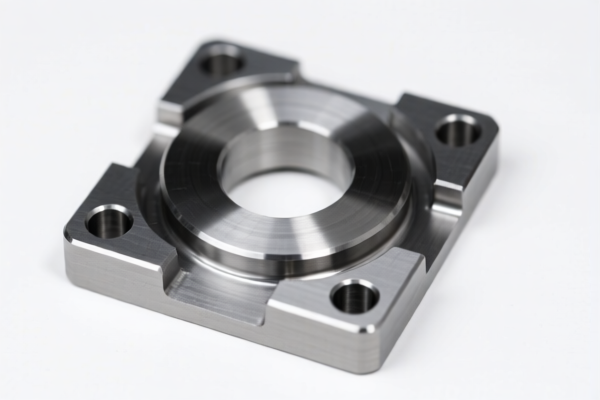
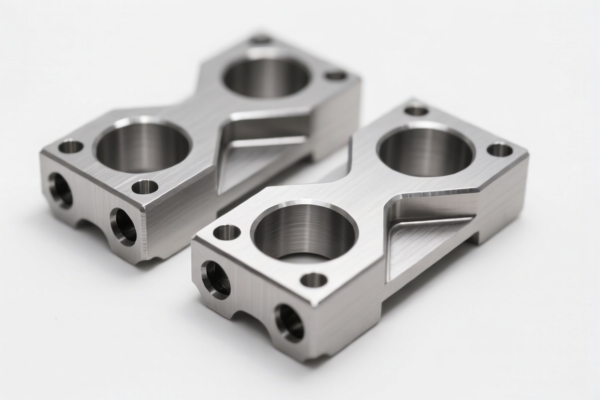
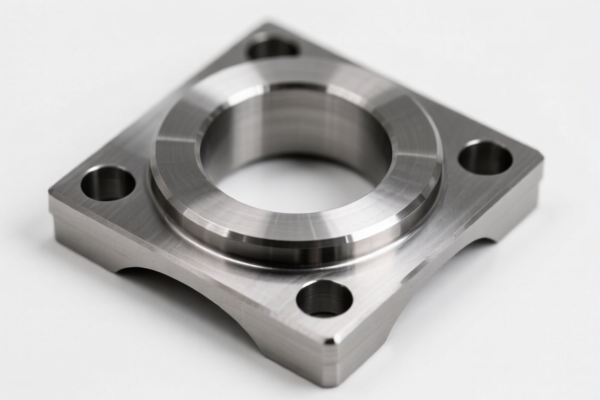
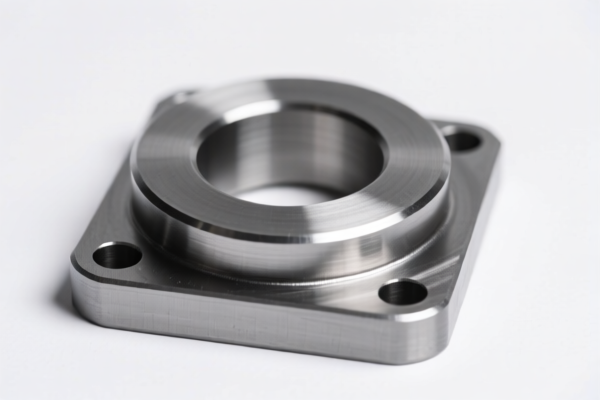
AI Analysis
🧪 High Purity Bimetal Casting Agent
🌐 HS Code Reference & Customs Clearance Guide | 2026 Latest Tariff Analysis | Professional Entry Strategy
📌 I. Product Definition & Classification: What is a "Casting Agent"?
The term "High Purity Bimetal Casting Agent" is a descriptive, non-standard commercial term that lacks direct equivalence in the Harmonized System (HS). In international trade, the HS classification depends strictly on the chemical composition, physical form, and specific function of the material.
Based on the provided data, this product likely falls into one of two categories depending on its exact nature:
- A Chemical Binder/Preparation: If the "agent" is a mixture (e.g., resin, binder, or chemical powder) used to create molds or cores for casting metals, it is classified under Chapter 38.
- A Bimetal/Multilayered Metal Article: If the "agent" refers to a physical metal product (such as a wire, sheet, or pre-formed piece) made of two different metals bonded together, for use in casting, it may fall under Chapter 81.
⚠️ Critical Distinction:
- If it is a powder, liquid, or mixture used to make the mold → HS Code 3824.
- If it is a solid metal product (bimetal/multilayered) used in the casting process → HS Code 8104/8105.
📦 II. HS Code Classification Details (2026 Latest Tariff Authority Reference)
Since the term "Casting Agent" is ambiguous, we must look at the specific HS Codes provided in the data that relate to "Casting" or "Bimetal" components.
| HS Code | Product Description | Applicable Scenario | Is it a Chemical or Metal? |
|---|---|---|---|
3824.10.00.00 |
Prepared binders for foundry molds or cores | Chemical mixtures, resins, or binders used to hold sand/metals in shape during casting. | ✅ Chemical/Preparation |
8104.90 |
Other articles of bimetal or other multilayered metal... for use in casting processes requiring high purity materials | Physical bimetal products (e.g., bimetal rods, sheets) specifically designed for high-purity casting applications. | ✅ Metal Article |
8105.00 |
Articles of bimetal or other multilayered metal... for use in industrial casting applications with high purity requirements | Similar to 8104.90 but potentially for different specific high-purity industrial contexts. | ✅ Metal Article |
🔍 Key Warning:
- The data indicates that tax information for HS Codes 8104.90 and 8105.00 failed to retrieve. This often implies complex classification rules or that these codes require specific Advance Rulings from customs.
- HS Code 3824.10.00.00 has clear tax data. If your "casting agent" is a binder (like a resin or clay mixture), this is the most likely and safest classification.
💰 III. 2026 Latest Tariff Rate Details (Including Surcharges & Policy Add-ons)
✅ Applicable Country: United States (US)
✅ Origin: China (CN)
✅ Effective Date: 2025/2026 Period
🎯 1. 3824.10.00.00 —— Prepared Binders for Foundry Molds or Cores
This is the most likely classification if the "agent" is a chemical binder.
| Item | Content |
|---|---|
| Base Tariff | 6.0% (ad valorem) |
| Retaliatory/Surcharge Tariff | +25.0% (Section 301 Tariffs on Chinese Goods) |
| Total Tax Rate | 31.0% |
| Tax Calculation | CIF Value × 31% |
| Can De Minimis Apply? | ❌ No (Deny de minimis for goods subject to Section 301 tariffs) |
| Legal Basis Path | HTSUS:3824.10.00.00 → Section 301 Footnote → Total 31% |
📌 Explanation:
- The 6% base rate is standard for prepared binders.
- The 25% surcharge is the critical "China Tariff" added by US Customs and Border Protection (CBP).
- Total 31% is a high-cost entry. Importers must ensure the product is clearly defined as a "Prepared Binder" to avoid being misclassified into higher-tariff chemical mixtures (e.g., 3824.99.93.61 at 30%).
🎯 2. 8104.90 & 8105.00 —— Bimetal Articles for Casting
⚠️ Data Limitation:
The provided data explicitly states:
"tax_detail": "Failed to retrieve tax information"
"total_tax": "Error"📌 Interpretation:
- This does not mean 0%. It means the tax structure is complex, unspecified, or requires manual adjudication by CBP.
- These codes often attract standard MFN tariffs (usually 0-2.5%) but may also be subject to Section 301 surcharges depending on the specific metal composition.
- Risk: Without clear tax data, customs may classify these under a "catch-all" category with higher duties or require Section 321 de minimis exclusion if applicable.
- Recommendation: Do not assume 0%. Assume a standard 2.5-6% base + potential 25% surcharge until an official ruling is obtained.
🛠️ IV. Customs Clearance Practical Advice (Real-World Pitfall Guide)
✅ 1. Required Documentation Checklist (Non-Negotiable)
| Document | Must Provide | Description |
|---|---|---|
| ✅ Product Specification Sheet | ✔️ | Must clearly state: "Is it a chemical binder OR a metal product?" |
| ✅ Safety Data Sheet (SDS) | ✔️ | Crucial for chemical classifications (HS 3824). Proves it’s a "prepared binder." |
| ✅ Physical Sample/Photos | ✔️ | Show if it’s a powder/liquid (Chemical) or a solid metal piece (Metal). |
| ✅ Commercial Invoice | ✔️ | Use precise terminology: "Prepared Binder for Foundry Molds" (if chemical) or "Bimetal Casting Component" (if metal). Avoid vague terms like "Agent." |
| ✅ Certificate of Composition | ✔️ | For bimetal codes, prove the % of metals (e.g., Aluminum/Silicon ratio). |
✅ 2. Declaration Strategy (Key Rules)
🔥 "Define the Form, Define the Duty!"
| Scenario | Correct HS Code | Error to Avoid |
|---|---|---|
| Powder/Liquid Binder used for sand molds | 3824.10.00.00 |
❌ Do NOT declare as "Casting Aid" without specifying it’s a binder. |
| Bimetal Wire/Sheet used to introduce purity | 8104.90 or 8105.00 |
❌ Do NOT declare as a "chemical" if it’s solid metal. |
| Mixture of Metals/Chemicals | 3824.99.93.61 |
❌ Avoid this if it’s a specific binder; it’s for complex chemical mixtures. |
💡 Pro Tip:
If the product is a binder, explicitly state:
"Prepared binder composed of [Chemical Name] for use in creating foundry molds. Not a metal."
This steers customs toward 3824.10.00.00 (31% total) rather than uncertain metal codes.
🌍 V. Global Market Comparison (2026)
| Market | Recommended HS Code | Est. Total Duty | Certification/Notes |
|---|---|---|---|
| 🇺🇸 USA | 3824.10.00.00 |
31% (6% Base + 25% Surcharge) | SDS required. High risk of audit for "Bimetal" codes due to missing data. |
| 🇨🇳 China | 3824.10.00.00 |
~6-13% | Import duty + VAT. No Section 301 surcharge. |
| 🇪🇺 EU | 3824.10 |
~6-7% | No surcharge. ECHA compliance for chemicals may apply. |
| 🇯🇵 Japan | 3824.10 |
~6-8% | Standard MFN. |
📌 Conclusion:
The US market is the most expensive due to the 25% Section 301 tariff on Chinese chemical preparations.
Bimetal codes (8104/8105) are risky in the US due to unclear tax data; avoid them unless you have an Advance Ruling.
📌 VI. Common Mistakes & Pitfalls (Blood Lessons)
❌ Mistake 1: Using the term "Casting Agent" on the invoice.
👉 Consequence: Customs may classify it under a "Miscellaneous" category with highest possible duty or reject it for insufficient data.
✅ Fix: Use "Prepared Binder for Foundry Molds" (if chemical) or "Bimetal Casting Component" (if metal).
❌ Mistake 2: Assuming "Bimetal" codes have 0% tax.
👉 Consequence: The data says "Error/Failed to retrieve," which often leads to manual assessment by CBP officers, causing delays, audits, or unexpected duties.
✅ Fix: Get a Binding Ruling from CBP before shipping if importing bimetal articles.
❌ Mistake 3: Confusing "Binder" with "Alloy."
👉 Consequence: If you ship a resin binder but declare it as a metal product (HS 81), it may be rejected or reclassified.
✅ Fix: Provide SDS to prove it’s a chemical preparation.
🎯 VII. Conclusion: Professional Declaration, Lower Costs, Faster Clearance
🎯 Remember This Rule:
🔹 "Binder = 3824 (31% for US/China)"
🔹 "Bimetal Metal = 8104/8105 (Unclear/High Risk in US)"
🔹 "Never use 'Agent' alone; specify 'Binder' or 'Component'!"
📌 Tips:
- If your product is a chemical binder, use HS 3824.10.00.00 and budget for 31% duty.
- If it is a bimetal product, contact a customs broker immediately for an Advance Ruling because the tax data is "Error" in the system.
- Pre-clearance documentation is mandatory. Do not rely on generic descriptions.
📣 Immediate Action:
📞 Consult a licensed customs broker with your SDS and Product Photos.
🚀 Accurate classification saves money and time!
✨ Professional Clearance Starts with Precise Classification!
💼 Your Cost Efficiency Depends on the Right HS Code!
Customer Reviews
About HS Code Classification
The Harmonized System (HS) is an internationally standardized nomenclature developed by the World Customs Organization (WCO) to classify traded products. Over 200 countries use the HS system as the basis for customs tariffs, trade statistics, and import/export regulations.
Each HS code follows a hierarchical structure:
- Chapter (2 digits) — Broad category of goods (e.g., Chapter 84: Machinery and Mechanical Appliances)
- Heading (4 digits) — More specific grouping within the chapter
- Subheading (6 digits) — Internationally standardized breakdown, used by all WCO member countries
- National subdivisions (8-10 digits) — Country-specific extensions for further classification, such as US HTSUS 10-digit codes
Correct HS code classification is essential for smooth customs clearance, accurate duty payment, and compliance with trade regulations. Misclassification can lead to customs delays, overpayment of duties, or penalties.
When importing from CN to US, the applicable tariff rates may include:
- Most-Favored-Nation (MFN) rate — The standard duty rate applied to WTO members
- General rate — Applied to countries without trade agreements
- Trade remedy duties — Additional tariffs such as Section 301 (anti-dumping), Section 232 (national security), or countervailing duties
The information provided on this page is for reference purposes only. For official classification, please consult with your local customs authority or a licensed customs broker.