high quality leather shoe soles
CN → US| HS Code | Tariff Rate | Origin | Destination | Doc |
|---|---|---|---|---|
| 4206009000 | 10.0% | CN | US | Official Doc |
| 4206001930 | 13.9% | CN | US | Official Doc |
| 4107116060 | 13.3% | CN | US | Official Doc |
| 4107126060 | 13.3% | CN | US | Official Doc |
| 4206009000 | 10.0% | CN | US | Official Doc |
Product Images
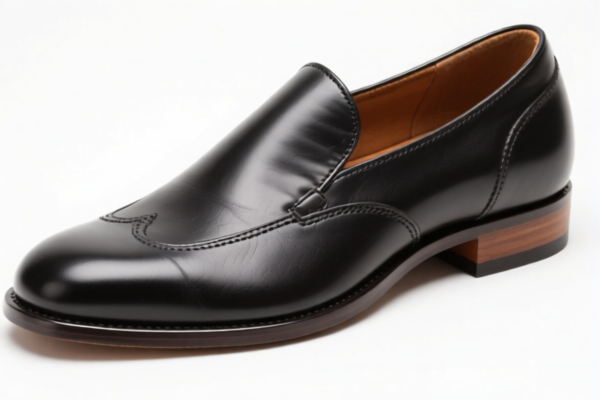
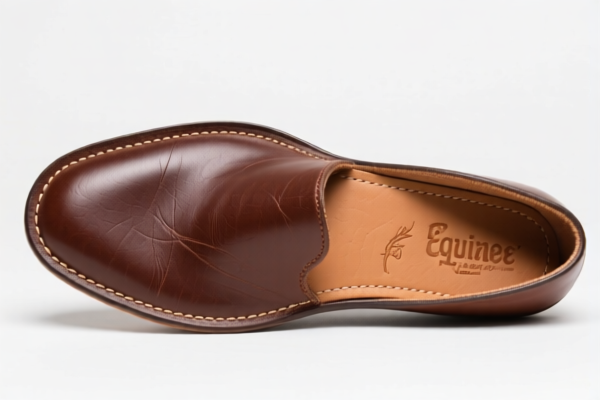
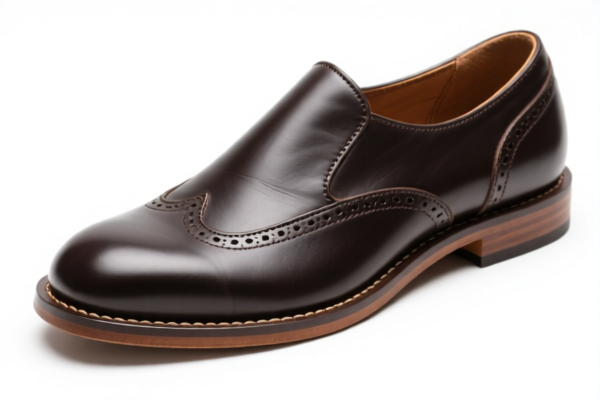
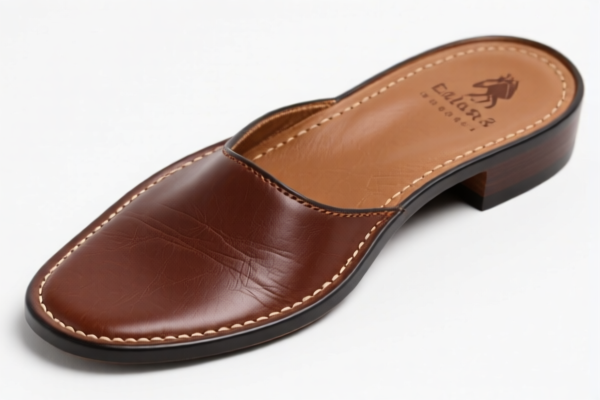
AI Analysis
👞 High Quality Leather Shoe Soles: HS Code Classification & Tax Strategy Guide (2026)
🌐 HS Code Reference & Customs Clearance Guide | 2026 Latest Tariff Analysis | Professional Strategy for Leather Soles
📌 I. Product Definition & Classification: What Exactly Are "Leather Shoe Soles"?
Leather shoe soles are the bottom components of footwear, crafted from processed leather. In international trade, they are not treated as finished footwear but as parts or accessories. The critical factor for classification is the specific material form and end-use application.
Two Main Categories in the Data:
1. Finished Soles (Parts of Footwear): Leather cut and shaped specifically to serve as the sole of a shoe. These fall under Chapter 42 (Articles of leather; saddle harness...).
2. Raw/Processed Leather for Soles: Leather specifically treated and shaped for the purpose of being a sole, but not yet cut into final sole shapes (often classified under Chapter 41 - Raw/Hides/Skins, specifically "Sole Leather").
⚠️ Key Distinction Point:
- If the item is a finished component ready for attachment to an upper → Chapter 42 (e.g., 4206.00)
- If the item is leather specifically classified as "Sole Leather" due to thickness, tanning, and material properties → Chapter 41 (e.g., 4107.11/12)
📦 II. HS Code Classification Details (2026 Latest Tariff Authority Mapping)
Based on the provided <DATA>, here are the four specific HS Codes matched to different interpretations of "High Quality Leather Shoe Soles":
| HS Code | Product Description | Application Scenario | Classification Logic |
|---|---|---|---|
| 4206.00.90.00 | Leather shoe soles, classified as "Other Articles of Leather" | Finished leather soles; generic "other leather products" when specific sole classification is not used. | ✅ Finished Product: Treated as a general leather article (Chapter 42). |
| 4206.00.19.30 | Leather shoe soles, falling under "Other articles of intestine, skin, bladder or tendon" | Specific leather types (e.g., exotic skins, processed hide variants) used for soles. | ✅ Specific Material: Treated as a specialized leather article under Chapter 42. |
| 4107.11.60.60 | Leather shoe soles, matching material as leather and use as "Sole Leather" | Leather specifically tanned and prepared for use as soles, classified under raw/material chapter (Chapter 41). | ✅ Material Classification: Classified as "Sole Leather" in Chapter 41 due to specific tanning/process. |
| 4107.12.60.60 | Leather shoe soles, material and form fully conforming to sole leather classification | High-grade, thick leather specifically designated and processed as sole leather. | ✅ Material Classification: Strict "Sole Leather" definition under Chapter 41. |
🔍 Critical Insight:
- Chapter 42 (4206...) applies when the item is considered a part/article of leather.
- Chapter 41 (4107...) applies when the item is considered processed leather material specifically for soles.
- Tax Implication: Chapter 41 codes carry a 3.3% Basic Tariff, while Chapter 42 codes carry 0% Basic Tariff (in the provided data). However, both are subject to the same 122 Clause tariff.
💰 III. 2026 Latest Tariff Rate Breakdown (Including Add-on Taxes & Policy Surcharges)
✅ Applicable Country: United States (US)
✅ Origin: China (CN)
✅ Effective Date: 2025 November 10 onwards (including subsequent imports)
🎯 1. 4206.00.90.00 & 4206.00.19.30 — Leather Articles (Chapter 42)
| Item | Content |
|---|---|
| Basic Tariff | 0.0% (for 4206.00.90.00) / 3.9% (for 4206.00.19.30) |
| Section 301 / 122 Clause Tariff | +10% |
| Total Tax Rate | 10.0% (for 4206.00.90.00) 13.9% (for 4206.00.19.30) |
| Tax Calculation | CIF Value × Total Rate |
| De Minimis Exemption | ❌ Not Applicable (Denied for these categories) |
| Legal Basis Path | 122 Clause: 10% → Customs Tariff Schedule |
📌 Explanation:
- For4206.00.90.00, the basic tariff is 0%, so the total is just the 10% 122 Clause tariff.
- For4206.00.19.30, the basic tariff is 3.9%, plus the 10% 122 Clause tariff, totaling 13.9%.
- The "122 Clause" refers to specific US trade policy surcharges applied to certain Chinese goods.
🎯 2. 4107.11.60.60 & 4107.12.60.60 — Sole Leather (Chapter 41)
| Item | Content |
|---|---|
| Basic Tariff | 3.3% |
| Section 301 / 122 Clause Tariff | +10% |
| Total Tax Rate | 13.3% |
| Tax Calculation | CIF Value × 13.3% |
| De Minimis Exemption | ❌ Not Applicable (Denied for these categories) |
| Legal Basis Path | 122 Clause: 10% → USITC:4107.11.60.60 / 4107.12.60.60 |
📌 Explanation:
- These codes are classified under Chapter 41 (Leather), which carries a higher basic tariff (3.3%) than the general "other leather articles" in Chapter 42 (4206.00.90.00).
- The 10% 122 Clause is added on top, resulting in a 13.3% total rate.
- Cost Comparison:4206.00.90.00(10.0%) is the cheapest option if the goods can be legally classified under this code.4107.xx.xxcodes are more expensive (13.3%).
🛠️ IV. Customs Clearance Practical Advice (Actionable Pitfall Avoidance)
✅ 1. Documentation Checklist (Non-Negotiable)
| Document | Required | Description |
|---|---|---|
| ✅ Product Specification Sheet | ✔️ | Must detail: Material (Leather type), Thickness, Width, Length, Treatment (Tanning process). |
| ✅ Technical Data Sheet | ✔️ | Differentiate between "Finished Sole" (4206) and "Sole Leather" (4107). Include cross-section photos if possible. |
| ✅ Commercial Invoice | ✔️ | Clearly state: "Leather Shoe Soles" or "Processed Leather for Shoe Soles". Avoid vague terms like "Leather Parts". |
| ✅ Packing List | ✔️ | Detail quantity, weight, and packaging type. |
| ✅ Proof of Origin | ✔️ | Certificate of Origin (CO) for China. |
| ✅ Third-Party Test Report | ✔️ | Optional but recommended: Leather composition analysis to prove material type (e.g., bovine, exotic). |
✅ 2. Classification Strategy & Declaration Tips
🔥 Key Rule: "Material First, Use Second. Chapter 41 vs. 42 Determines Cost."
| Scenario | Recommended HS Code | Tax Rate | Why? |
|---|---|---|---|
| High-Quality Sole Leather (Thick, Tanned specifically for soles, sold in hides/semi-finished) | 4107.11.60.60 or 4107.12.60.60 |
13.3% | Classified as processed leather material. Higher basic tariff (3.3%). |
| Finished Leather Soles (Cut to shape, ready to attach to shoes) | 4206.00.90.00 |
10.0% | Classified as "Other Articles of Leather". Lowest Tax! (0% basic + 10% surcharge). |
| Exotic/Specific Leather Soles (e.g., intestine, specific skin types) | 4206.00.19.30 |
13.9% | Specific sub-category for exotic materials. Highest tax. |
⚠️ Warning:
- Do NOT misdeclare "Finished Soles" as "Sole Leather" to avoid scrutiny, but do NOT misdeclare "Sole Leather" as "Finished Soles" to evade the 3.3% basic tariff if customs inspects and proves it’s raw/semi-processed leather.
- Customs Inspection Risk: If you declare4206.00.90.00but the goods are raw leather hides, you may face penalties for misclassification. Ensure the product is indeed a finished "article" (sole shape) for Chapter 42.
✅ 3. Special Circumstances Handling
| Situation | Handling Advice |
|---|---|
| Mixed Shipments | If a shipment contains both raw leather and finished soles, declare separately. Do not mix HS Codes on one line item. |
| OEM Custom Orders | Provide design specs showing the soles are pre-cut. This supports 4206.00.90.00 classification. |
| Dispute on "Sole Leather" vs. "Article" | If challenged, provide tanning certificates and manufacturing process descriptions. If the leather is tanned specifically for soles, Chapter 41 (4107) is stronger. If it’s a finished part, Chapter 42 (4206) is appropriate. |
| 122 Clause Impact | The 10% surcharge is unavoidable for all four codes listed. Focus on optimizing the Basic Tariff (0% vs 3.3% vs 3.9%). |
🌍 V. Global Market Comparison (2026 Context)
| Market | Recommended HS Code | Base Tariff | 122/Additional Tariff | Total Effective Rate | Notes |
|---|---|---|---|---|---|
| 🇺🇸 USA | 4206.00.90.00 |
0% | 10% | 10.0% | Best Cost Option if classified as article. |
| 🇺🇸 USA | 4107.11.60.60 |
3.3% | 10% | 13.3% | Higher base tariff for material classification. |
| 🇪🇺 EU | Not Covered in Data | Varies | None | Low | EU generally has lower tariffs on leather goods. |
| 🇨🇳 China | Export Context | Varies | None | Low | Focus on accurate export declaration for rebates. |
📌 Conclusion:
- For US Imports, the 10.0% rate under4206.00.90.00is the most cost-effective, provided the product is clearly a finished leather article (sole shape) and not raw/semi-processed leather.
- If the product is unequivocally "Sole Leather" (material), the 13.3% rate under4107.xx.xxis the correct and compliant classification.
📌 VI. Common Errors & Pitfall Guide (Lessons Learned)
❌ Error 1: Declaring "Leather Soles" as 4206.00.90.00 when they are actually raw hides or large sheets of leather meant for cutting.
👉 Consequence: Customs reclassifies to 4107.xx.xx → Back taxes + Penalties.
👉 Fix: Ensure goods are cut into sole shapes or explicitly described as finished articles.
❌ Error 2: Ignoring the 122 Clause 10% Surtax.
👉 Consequence: Underpayment of duties → Hold at Customs.
👉 Fix: Always include the 10% surcharge in cost calculations for US-bound goods from China.
❌ Error 3: Confusing "Sole Leather" (Chapter 41) with "Sole Articles" (Chapter 42).
👉 Consequence: Wrong HS Code → Audit Risk.
👉 Fix: Use clear product descriptions: "Cut Leather Soles" (4206) vs. "Processed Sole Leather Hides" (4107).
❌ Error 4: Overlooking the different basic tariffs (0% vs 3.3% vs 3.9%).
👉 Consequence: Profit margin erosion.
👉 Fix: Strategically declare as 4206.00.90.00 (10% total) if product qualifies, saving 3.3% vs Chapter 41 codes.
✅ Correct Declaration Example:
"LEATHER SHOE SOLES, PRE-CUT, FOR FOOTWEAR MANUFACTURING, MATERIAL: BOVINE LEATHER, MODEL: LS-2026, HS: 4206.00.90.00"
🎯 VII. Conclusion: Smart Classification Saves Money!
🎯 Key Takeaways:
🔹 "Finished Soles = 4206 (10%) | Raw/Processed Sole Leather = 4107 (13.3%)"
🔹 "122 Clause is 10% for ALL codes. Save on the Basic Tariff!"
🔹 "Clear Description is Key: 'Cut Sole' vs 'Leather Hide'."
📌 Pro Tip:
If your leather soles are pre-cut and ready for use, insist on the 4206.00.90.00 classification to benefit from the 0% basic tariff. This saves you 3.3% compared to Chapter 41 codes. Always have technical docs ready to prove they are finished articles, not raw materials.
📣 Immediate Action:
📞 Confirm with your supplier: "Are these soles pre-cut/finished or raw leather?"
📄 Prepare technical sheets highlighting "Finished Article" status.
🚀 Declare under4206.00.90.00for optimal 10.0% total tax rate.
✨ Professional Customs Clearance Starts with Accurate Classification!
💼 Your Cost Savings Depend on the First 8 Digits!
Customer Reviews
About HS Code Classification
The Harmonized System (HS) is an internationally standardized nomenclature developed by the World Customs Organization (WCO) to classify traded products. Over 200 countries use the HS system as the basis for customs tariffs, trade statistics, and import/export regulations.
Each HS code follows a hierarchical structure:
- Chapter (2 digits) — Broad category of goods (e.g., Chapter 84: Machinery and Mechanical Appliances)
- Heading (4 digits) — More specific grouping within the chapter
- Subheading (6 digits) — Internationally standardized breakdown, used by all WCO member countries
- National subdivisions (8-10 digits) — Country-specific extensions for further classification, such as US HTSUS 10-digit codes
Correct HS code classification is essential for smooth customs clearance, accurate duty payment, and compliance with trade regulations. Misclassification can lead to customs delays, overpayment of duties, or penalties.
When importing from CN to US, the applicable tariff rates may include:
- Most-Favored-Nation (MFN) rate — The standard duty rate applied to WTO members
- General rate — Applied to countries without trade agreements
- Trade remedy duties — Additional tariffs such as Section 301 (anti-dumping), Section 232 (national security), or countervailing duties
The information provided on this page is for reference purposes only. For official classification, please consult with your local customs authority or a licensed customs broker.