high strength textile spool
CN → US| HS Code | Tariff Rate | Origin | Destination | Doc |
|---|---|---|---|---|
| 3916905000 | 40.8% | CN | US | Official Doc |
| 8448205090 | 20.8% | CN | US | Official Doc |
| 3916903000 | 41.5% | CN | US | Official Doc |
| 3926909989 | 22.8% | CN | US | Official Doc |
| 3926906090 | 39.2% | CN | US | Official Doc |
| 8448399000 | 17.5% | CN | US | Official Doc |
Product Images
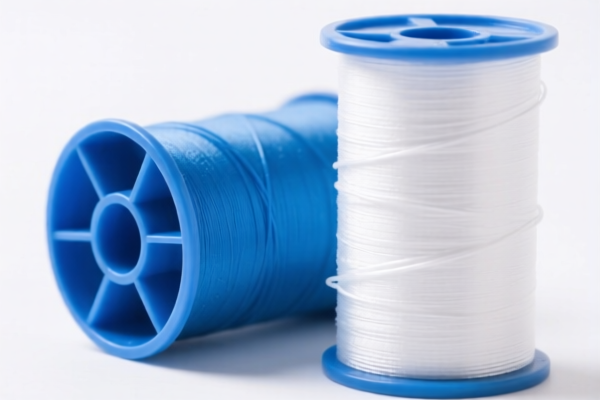
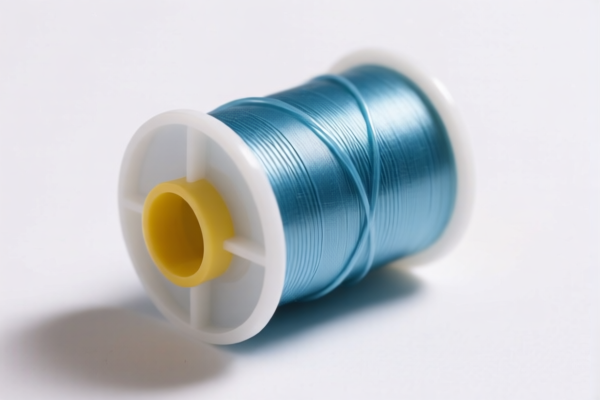
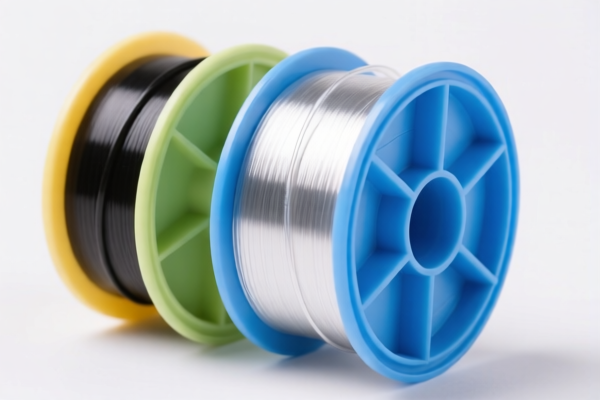
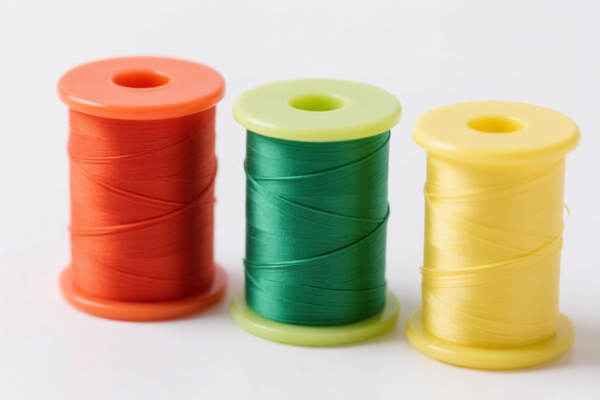
AI Analysis
🧵 High Strength Textile Spool (High Strength Plastic Bobbin)
🌐 HS Code Reference & Customs Clearance Guide | 2026 Latest Tariff Analysis | Professional-Level Clearance Strategy
📌 I. Product Definition & Classification: Do You Really Understand the “High Strength Plastic Spool”?
A High Strength Textile Spool is a core component in the textile industry, used to hold and wind yarn, thread, or filaments during spinning, weaving, knitting, and sewing processes. Made from high-strength plastic materials, these spools are designed to withstand high tension and rotational speeds.
In international trade, they can be classified under different HS codes depending on their primary function, physical form, and intended use. The key distinction lies in whether they are treated as plastic products, textile machinery parts, or general plastic articles.
⚠️ Key Classification Point:
- If the spool is primarily a plastic article with no specific machinery integration → Chapter 39 (Plastics)
- If it is specifically identified as a part/accessory of textile machinery → Chapter 84 (Machinery)
- Misclassification can lead to significant tariff differences (e.g., 17.5% vs. 41.5%)!
📦 II. HS Code Classification Details (2026 Latest Tariff Authority Comparison)
| HS Code | Product Description | Application Scenario | Tax Rate (Total) |
|---|---|---|---|
3916.90.50.00 |
High Strength Plastic Spool, Plastic Material, Spool Form, Other Forms | General plastic spools without specific machinery integration | 40.8% |
8448.20.50.90 |
High Strength Plastic Spool, Spool Form (Part/Accessory), Plastic Material, Other Categories | Spools specifically used as parts/accessories for textile machinery | 20.8% |
3916.90.30.00 |
High Strength Plastic Spool, Plastic Material, Spool Form, Related Form of Monofilament, Rod, Strip, etc. | Spools associated with plastic extrusion products like monofilaments | 41.5% |
3926.90.99.89 |
High Strength Plastic Spool, Plastic Material, Other Products, Matches Axis/Spool-like Part/Accessory Features | Plastic spools classified as "other plastic articles" due to lack of specific machinery link | 22.8% |
3926.90.60.90 |
High Strength Plastic Spool, Plastic Material, Other Plastic Items, Matches General Catch-all Principle | Plastic spools falling under the general "other plastic products" category | 39.2% |
8448.39.90.00 |
High Strength Plastic Spool, Textile Machinery Auxiliary Machine/Accessory, Plastic Material, Other Categories Catch-all | Spools explicitly recognized as auxiliary parts of textile machinery | 17.5% |
🔍 Critical Reminder:
- Machinery Parts (Chapter 84) generally enjoy lower tariffs if clearly documented as parts of textile machinery. - Plastic Products (Chapter 39) are subject to higher tariffs and additional trade remedies. - Correct documentation (e.g., technical specs, machine compatibility statements) is essential to justify Chapter 84 classification.
💰 III. 2026 Latest Tariff Rate Breakdown (Including Surcharges & Policy Add-ons)
✅ Applicable Country: United States (US)
✅ Country of Origin: China (CN)
✅ Effective Date: From November 10, 2025 (and subsequent imports)
🎯 1. 3916.90.50.00 —— High Strength Plastic Spool (Plastic Product Category)
| Item | Content |
|---|---|
| Base Tariff | 5.8% (ad valorem) |
| Section 301 Surcharge | +25.0% (from USITC Footnote 9903.88.01) |
| Section 122 Surcharge | +10.0% (Targeting China/HK products, effective Nov 10, 2025) |
| Total Tariff | 40.8% |
| Tax Calculation | CIF Value × 40.8% |
| De Minimis Exemption Eligible? | ❌ No (deny_de_minimis) |
| Legal Basis Path | IEEPA:9903.01.25 → IEEPA:9903.01.24 → USITC:3916.90.50.00 → FOOTNOTE:9903.88.01 |
📌 Explanation:
- The 25% Section 301 surcharge is applied due to ongoing US-China trade tensions under the Trade Act of 1974; - The 10% Section 122 surcharge is a new add-on targeting specific Chinese imports; - Total 40.8% is considered a high tariff burden, requiring proactive cost management.
🎯 2. 8448.20.50.90 —— High Strength Plastic Spool (Textile Machinery Part)
| Item | Content |
|---|---|
| Base Tariff | 3.3% (ad valorem) |
| Section 301 Surcharge | +7.5% |
| Section 122 Surcharge | +10.0% |
| Total Tariff | 20.8% |
| Tax Calculation | CIF Value × 20.8% |
| De Minimis Exemption Eligible? | ❌ No (deny_de_minimis) |
| Legal Basis Path | IEEPA:9901.25 → IEEPA:9903.01.24 → USITC:8448.20.50.90 → FOOTNOTE:9903.07.03 |
📌 Note:
- This classification offers a significant tariff advantage (20.8% vs. 40.8%) if the spool can be proven as a part of textile machinery; - Even "high strength plastic spools" for industrial use can qualify if properly documented.
🎯 3. 3916.90.30.00 —— High Strength Plastic Spool (Related to Monofilament/Rod Forms)
| Item | Content |
|---|---|
| Base Tariff | 6.5% (ad valorem) |
| Section 301 Surcharge | +25.0% |
| Section 122 Surcharge | +10.0% |
| Total Tariff | 41.5% |
| Tax Calculation | CIF Value × 41.5% |
| De Minimis Exemption Eligible? | ❌ No (deny_de_minimis) |
| Legal Basis Path | IEEPA:9903.01.25 → IEEPA:9903.01.24 → USITC:3916.90.30.00 → FOOTNOTE:9903.88.01 |
📌 Caution:
- This is the highest tariff rate among all options; - Avoid this classification unless the spool is explicitly linked to monofilament or rod extrusion lines.
🎯 4. 3926.90.99.89 —— High Strength Plastic Spool (Other Plastic Articles)
| Item | Content |
|---|---|
| Base Tariff | 5.3% (ad valorem) |
| Section 301 Surcharge | +7.5% |
| Section 122 Surcharge | +10.0% |
| Total Tariff | 22.8% |
| Tax Calculation | CIF Value × 22.8% |
| De Minimis Exemption Eligible? | ❌ No (deny_de_minimis) |
| Legal Basis Path | IEEPA:9901.25 → IEEPA:9903.01.24 → USITC:3926.90.99.89 → FOOTNOTE:9903.07.03 |
📌 Observation:
- This is a moderate tariff rate; - Suitable when the spool cannot be clearly linked to machinery but is still a standardized plastic product.
🎯 5. 3926.90.60.90 —— High Strength Plastic Spool (General Catch-all Plastic Article)
| Item | Content |
|---|---|
| Base Tariff | 4.2% (ad valorem) |
| Section 301 Surcharge | +25.0% |
| Section 122 Surcharge | +10.0% |
| Total Tariff | 39.2% |
| Tax Calculation | CIF Value × 39.2% |
| De Minimis Exemption Eligible? | ❌ No (deny_de_minimis) |
| Legal Basis Path | IEEPA:9903.01.25 → IEEPA:9903.01.24 → USITC:3926.90.60.90 → FOOTNOTE:9903.88.01 |
📌 Warning:
- High tariff due to 25% Section 301 surcharge; - Not recommended unless no other classification fits.
🎯 6. 8448.39.90.00 —— High Strength Plastic Spool (Textile Machinery Auxiliary Part)
| Item | Content |
|---|---|
| Base Tariff | 0.0% (ad valorem) |
| Section 301 Surcharge | +7.5% |
| Section 122 Surcharge | +10.0% |
| Total Tariff | 17.5% |
| Tax Calculation | CIF Value × 17.5% |
| De Minimis Exemption Eligible? | ❌ No (deny_de_minimis) |
| Legal Basis Path | IEEPA:9901.25 → IEEPA:9903.01.24 → USITC:8448.39.90.00 → FOOTNOTE:9903.07.03 |
📌 Recommendation:
- This is the lowest total tariff rate (17.5%); - Ideal for industrial-grade spools used in textile machinery; - Requires strong technical documentation proving its role as a machine part/accessory.
🛠️ IV. Customs Clearance Practical Advice (Battlefield Pitfall Avoidance Guide)
✅ 1. Required Documentation Checklist (All Must Be Provided)
| Document | Mandatory | Description |
|---|---|---|
| ✅ Product Specification Sheet | ✔️ | Includes dimensions, material type, load capacity, rotational speed limit |
| ✅ Technical Diagram/Structure Drawing | ✔️ | To demonstrate compatibility with textile machinery |
| ✅ Product Photos (Including Label) | ✔️ | Clear image of model number, brand, input/output parameters |
| ✅ Third-Party Test Report | ✔️ | ISO, CE, RoHS, UL (if applicable) |
| ✅ Commercial Invoice | ✔️ | Must clearly state "High Strength Plastic Spool for Textile Machinery" |
| ✅ Certificate of Origin (CO) | ✔️ | If non-Chinese origin, may qualify for preferential rates |
| ✅ Packing List | ✔️ | Clarifies relationship between main goods and accessories to avoid split declaration |
✅ 2. Declaration Tips (Key Mnemonic)
🔥 "Machine Part Gets Lower Rate, Plastic Article Gets Higher Rate! Name Precisely, Save Half the Cost!"
| Scenario | Correct Declaration | Incorrect Practice |
|---|---|---|
| Spool explicitly used in textile machinery | 8448.39.90.00 or 8448.20.50.90 |
Misreported as "plastic product" → 40.8% |
| General plastic spool (no machinery link) | 3926.90.99.89 |
Misreported as "machine part" → Audit risk |
| Spool for monofilament extrusion | 3916.90.30.00 |
Misreported as "general plastic" → 41.5% |
| Industrial spool for weaving/knitting | 8448.39.90.00 |
Misreported as "other plastic article" → 39.2% |
✅ 3. Special Case Handling
| Situation | Handling Advice |
|---|---|
| OEM Custom Spools | Provide customer order + design drawings to avoid being deemed "non-standard" |
| Spools with Metal Reinforcement | Still classified under plastic if plastic is dominant; provide material composition proof |
| Spools Used in Medical Textiles | If for specialized medical fabric production, may apply for "non-commercial use" exemption with proof |
| Spools for Military/Aerospace Applications | May qualify for "special purpose" declaration, potentially lowering tariffs; consult in advance |
🌍 V. Global Major Market Clearance Comparison (2026 Latest)
| Country/Region | Recommended HS Code | Tariff | Certification Requirements | Notes |
|---|---|---|---|---|
| 🇺🇸 United States | 8448.39.90.00 |
17.5% (China-origin) | ISO + RoHS | 40.8% for plastic classification |
| 🇨🇳 China | 8448.39.90.00 |
5% | CCC + RoHS | No additional surcharges |
| 🇪🇺 European Union | 8448.39.90.00 |
0% (if CE compliant) | CE + REACH | No additional surcharges |
| 🇦🇺 Australia | 8448.39.90.00 |
5% | RCM | No additional surcharges |
| 🇯🇵 Japan | 8448.39.90.00 |
0% | PSE | No additional surcharges |
📌 Conclusion:
- The US is the only market imposing high surcharges on Chinese-origin textile spools; - Chinese-origin spools face extremely high clearance costs in the US; consider supply chain adjustments or pre-clearance rulings.
📌 VI. Common Mistakes & Pitfall Avoidance (Lessons Learned)
❌ Mistake 1: Declaring "textile spool" as "plastic container"
👉 Consequence: Tariff jumps from 17.5% to 40.8% → Massive cost increase!
❌ Mistake 2: Failing to provide technical specs for machinery integration
👉 Consequence: Customs cannot verify machine part status → Delayed release or return
❌ Mistake 3: Using vague names like "Plastic Bobbin" without context
👉 Consequence: Ambiguity leads to misclassification → Back taxes + penalties!
❌ Mistake 4: Ignoring Section 122 and Section 301 implications
👉 Consequence: Unexpected 35%+ total tariffs → Profit margin wiped out!
✅ Correct Approach:
“High Strength Plastic Textile Spool, Industrial Grade, Compatible with [Machine Model XYZ], ISO Certified, Model ABC”
🎯 VII. Conclusion: Professional Declaration Saves Time, Effort, and Money!
🎯 Remember the Mnemonic:
🔹 "Machine Part = Low Tariff, Plastic Article = High Tariff! Name Precisely, Save Half the Cost!"
🔹 "HS Code Determines Life or Death, 23% Rate Difference, One Declaration Step Away from Thousands in Back Taxes!"
📌 Pro Tip:
If your spools are originating from Vietnam, Mexico, Thailand, or Malaysia, you may apply for IEEPA exemptions, reducing tariffs to 0%~5%;
Recommend applying for Advance Ruling beforehand to mitigate clearance risks.
📣 Take Action Now:
📞 Contact a Professional Customs Broker + Provide Product Photos + Apply for HS Code Advance Ruling
🚀 Ensure Your Textile Spools Clear Customs Smoothly, Export Efficiently, and Double Profits!
✨ Professional Clearance Starts with Accurate Classification!
💼 Every Cent of Your Cost Deserves Precision Calculation!
Customer Reviews
About HS Code Classification
The Harmonized System (HS) is an internationally standardized nomenclature developed by the World Customs Organization (WCO) to classify traded products. Over 200 countries use the HS system as the basis for customs tariffs, trade statistics, and import/export regulations.
Each HS code follows a hierarchical structure:
- Chapter (2 digits) — Broad category of goods (e.g., Chapter 84: Machinery and Mechanical Appliances)
- Heading (4 digits) — More specific grouping within the chapter
- Subheading (6 digits) — Internationally standardized breakdown, used by all WCO member countries
- National subdivisions (8-10 digits) — Country-specific extensions for further classification, such as US HTSUS 10-digit codes
Correct HS code classification is essential for smooth customs clearance, accurate duty payment, and compliance with trade regulations. Misclassification can lead to customs delays, overpayment of duties, or penalties.
When importing from CN to US, the applicable tariff rates may include:
- Most-Favored-Nation (MFN) rate — The standard duty rate applied to WTO members
- General rate — Applied to countries without trade agreements
- Trade remedy duties — Additional tariffs such as Section 301 (anti-dumping), Section 232 (national security), or countervailing duties
The information provided on this page is for reference purposes only. For official classification, please consult with your local customs authority or a licensed customs broker.