high temperature fluororubber gasket raw material
CN → US| HS Code | Tariff Rate | Origin | Destination | Doc |
|---|---|---|---|---|
| 8484900000 | 37.5% | CN | US | Official Doc |
| 8484100000 | 37.5% | CN | US | Official Doc |
Product Images
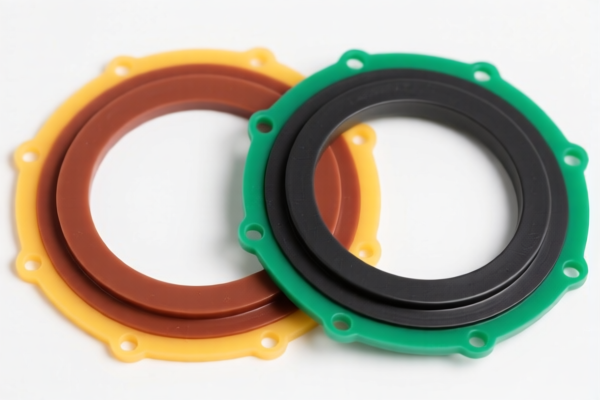
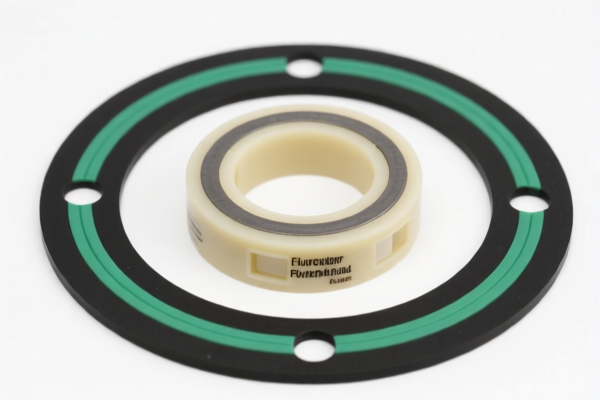
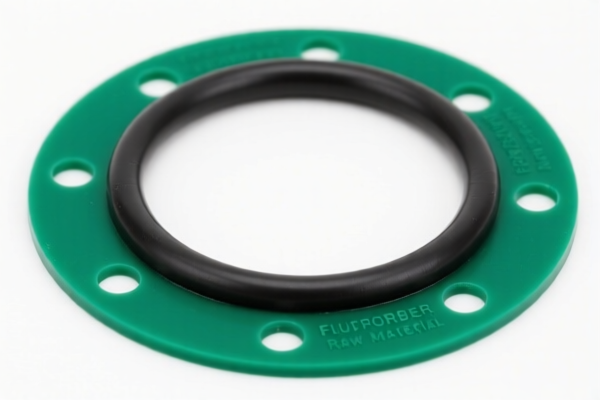
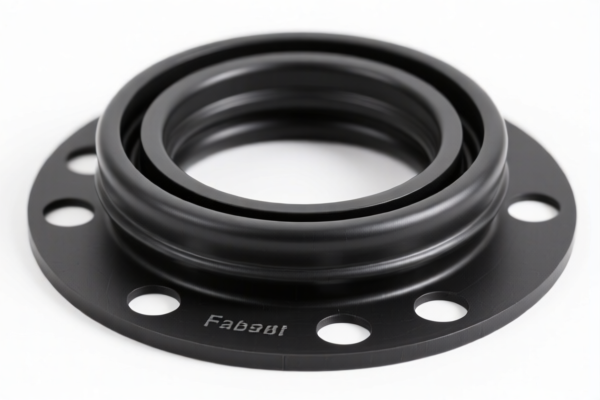
AI Analysis
🏭 High Temperature Fluororubber Gasket Raw Material (FKM/EPM Compounds)
🌐 HS Code Reference & Customs Clearance Guide | 2026 Latest Tariff Analysis | Professional Customs Strategy
📌 I. Product Definition & Classification: What is "Fluororubber Gasket Raw Material"?
High-temperature fluororubber (typically FKM or FFKM) gasket raw materials refer to unvulcanized rubber compounds, semi-finished sheets, or specific gasket precursors used in industrial sealing applications. These materials are designed to withstand extreme temperatures, corrosive chemicals, and high pressure.
In international trade, the classification depends heavily on the degree of processing and the physical form:
1. Semi-Finished/Composite Gaskets (8484.10.00.00):
Raw materials that are already formed into sheets, rings, or shapes combined with other materials (e.g., metal backing, PTFE layers) or consisting of two or more layers of metal/materials. These are considered "gaskets and similar joints of metal sheeting combined with other material."
2. Mechanical Seals/Other Gaskets (8484.90.00.00):
Unvulcanized raw rubber compounds, generic sheets without specific shaping into a "joint" structure, or mechanical seals that do not fit the specific composite definition above. These fall under "Other."
⚠️ Key Distinction Point:
- If the product is a composite layer (e.g., rubber bonded to metal) or a specific gasket shape intended for immediate sealing → 8484.10.00.00
- If it is pure raw rubber compound, generic sheets, or general mechanical seals not defined as composite joints → 8484.90.00.00
📦 II. HS Code Classification Details (2026 Latest Tariff Authority Comparison)
| HS Code | Product Description | Applicable Scenario | Material Composition |
|---|---|---|---|
8484.10.00.00 |
Gaskets of metal sheeting combined with other material or of two or more layers of metal | Composite gaskets, metal-rubber hybrids, multi-layer industrial seals | ✅ Composite (Metal + Non-Metal) |
8484.90.00.00 |
Other gaskets and similar joints; Mechanical seals | Pure rubber compounds, unvulcanized raw materials, generic mechanical seals, single-material gaskets | ❌ Non-Composite (Pure Material/Seal) |
🔍 Key Reminder:
- Composite Structure is Crucial: If the fluororubber is merely a loose sheet or compound without being combined with another material (like metal) or layered specifically as a "joint," it likely falls under 8484.90.00.00.
- "Raw Material" Ambiguity: If the "raw material" is an unvulcanized block of pure FKM, it is not a "gasket joint" yet. However, customs often scrutinize this. If it’s shaped into a gasket profile but not vulcanized, it may still be classified as a gasket (8484.10 or 8484.90) depending on specificity. Pure compound usually leans toward 8484.90 unless explicitly defined as a composite joint.
💰 III. 2026 Latest Tariff Rate Breakdown (Including Supplementary Taxes)
✅ Applicable Country: United States (US)
✅ Country of Origin: China (CN)
✅ Effective Date: 2025 November 10 onwards (for subsequent imports)
🎯 1. 8484.90.00.00 —— Other Gaskets / Mechanical Seals (Pure Raw Materials/Seals)
| Item | Content |
|---|---|
| Base Tariff | 0.0% (ad valorem) |
| Supplementary Tariff (Trade War) | 0.0% |
| Total Tax Rate | 0.0% |
| Tax Calculation | CIF Value × 0.0% |
| De Minimis Eligibility | ❌ Not Applicable (Due to de minimis threshold rules for high-value items, but rate is 0) |
| Legal Basis | HTSUS:8484.90.00.00 |
📌 Explanation:
- This category has zero duty. This is highly advantageous for pure raw material imports.
- However, ensure the product description clearly states it is "Unvulcanized FKM Compound" or "Mechanical Seal, Non-Composite" to avoid being misclassified as a composite gasket.
🎯 2. 8484.10.00.00 —— Gaskets of Metal Sheeting Combined with Other Material (Composite Gaskets)
| Item | Content |
|---|---|
| Base Tariff | 2.5% (ad valorem) |
| Supplementary Tariff (Trade War) | 25.0% |
| Total Tax Rate | 27.5% |
| Tax Calculation | CIF Value × 27.5% |
| De Minimis Eligibility | ❌ Not Eligible (deny_de_minimis applies to Section 301 goods) |
| Legal Basis Path | USITC:8484.10.00.00 → Section 301 Footnote |
📌 Critical Warning:
- 27.5% is a HIGH tariff. This applies if your fluororubber gasket material is combined with metal (e.g., metal core gaskets with rubber coating) or is a multi-layer composite.
- Avoidance Strategy: If you are importing pure rubber raw materials, do not ship them as composite goods with metal inserts if avoidable. Ship as raw compound to utilize the 0% rate.
🛠️ IV. Customs Clearance Practical Advice (Real-World Pitfall Guide)
✅ 1. Required Documentation Checklist (Non-Negotiable)
| Document | Required | Notes |
|---|---|---|
| ✅ Material Safety Data Sheet (MSDS) | ✔️ | Critical for chemical imports. Must state composition (e.g., FKM, PTFE, additives). |
| ✅ Technical Specification Sheet | ✔️ | Clearly define: Vulcanized vs. Unvulcanized, Composite vs. Pure, Temperature Resistance. |
| ✅ Commercial Invoice | ✔️ | Must explicitly state: "Fluororubber (FKM) Raw Compound, Unvulcanized" or "Composite Gasket". |
| ✅ Certificate of Origin (CO) | ✔️ | To prove origin for 301 tariff determination. |
| ✅ Packaging List | ✔️ | Details net/gross weight. |
| ✅ Photo of Product & Label | ✔️ | Show no metal components if claiming 0% rate. |
✅ 2. Declaration Strategy (Key Mnemonic)
🔥 "Pure Rubber Zero, Composite Twenty-Seven-Five!"
(Unvulcanized/Pure = 8484.90 = 0%; Composite/Metal-Rubber = 8484.10 = 27.5%)
| Scenario | Correct Declaration | Wrong Action |
|---|---|---|
| Pure FKM Compound/Sheet | 8484.90.00.00 |
Misdeclaring as composite → Paying 27.5% unnecessarily |
| Metal-Core Gasket with Rubber | 8484.10.00.00 |
Misdeclaring as pure rubber → Penalty + Back Taxes |
| Mechanical Seal (Single Material) | 8484.90.00.00 |
Misdeclaring as 8484.10 → Overpayment |
| Sets of Dissimilar Gaskets | Check packing: If pouch/set, may still be 8484.90 unless specifically composite joints | Confusion with "Sets" classification |
✅ 3. Special Case Handling
| Situation | Handling Advice |
|---|---|
| OEM Raw Materials | Provide client order + spec sheet. Emphasize "Unvulcanized" to argue for 8484.90. |
| Composite Gaskets (Rubber + Metal) | Must declare as 8484.10. No evasion possible. Plan for 27.5% cost. |
| Mechanical Seals | If it’s a pre-formed seal (not a gasket joint), it falls under 8484.90. Use precise term "Mechanical Seal" in invoice. |
| High-Purity FFKM | Still falls under 8484.90 if pure. Value may be high, so ensure accurate CIF declaration to avoid under-valuation flags. |
🌍 V. Global Market Comparison (2026 Latest)
| Country/Region | Recommended HS Code | Tariff (China Origin) | Certification | Remarks |
|---|---|---|---|---|
| 🇺🇸 USA | 8484.90.00.00 (Pure) / 8484.10.00.00 (Composite) |
0% / 27.5% | FDA (if food grade), REACH | High Risk for Composite Goods |
| 🇨🇳 China | 8484.90.00.00 / 8484.10.00.00 |
Low/Zero | CCC (if applicable) | No major supplementary tariffs |
| 🇪🇺 EU | 8484.90 / 8484.10 |
0% - 2.7% | REACH, RoHS | No major trade war tariffs |
| 🇮🇳 India | 8484.90 / 8484.10 |
Varies (7-10%) | BIS | Check current import policy |
📌 Conclusion:
- The US market is the only one with a massive tariff disparity (0% vs 27.5%) based on material composition.
- Pure fluororubber raw materials enjoy a 0% duty, offering significant cost savings.
- Composite gaskets are heavily taxed.
📌 VI. Common Mistakes & Pitfalls (Lessons Learned)
❌ Mistake 1: Declaring a Metal-Cored Rubber Gasket as "Pure Rubber"
👉 Consequence: Customs inspection finds metal core → 27.5% + Penalty + Delay
❌ Mistake 2: Declaring Unvulcanized Compound as "Finished Gasket"
👉 Consequence: If misclassified as 8484.10 (Composite), you pay 27.5%. If correctly 8484.90, you pay 0%. Be precise.
❌ Mistake 3: Ignoring MSDS/Chemical Composition
👉 Consequence: Customs may delay shipment for chemical review, leading to demurrage fees.
❌ Mistake 4: Not separating Sets of Gaskets
👉 Consequence: If sold as a set of dissimilar materials in a pouch, check if it fits 8484.10 definition. Often, "sets" are classified under 8484.90 unless they are specific composite joints.
✅ Correct Practice:
"Unvulcanized FKM Fluororubber Compound Sheets, Pure Rubber, No Metal Components, Model: FKM-RAW-01"
OR
"Composite Mechanical Gasket, Rubber Bonded to Steel Core, High Temp Resistant"
🎯 VII. Conclusion: Professional Declaration for Cost Savings
🎯 Remember the Mnemonic:
🔹 "Pure Raw = 0%, Composite = 27.5%. Know your composition!"
🔹 "Invoice must match physical structure. Metal in? Pay the premium. No metal? Save the cash."
📌 Pro Tip:
- If you are importing pure fluororubber raw materials, ensure the invoice explicitly states "Unvulcanized" and "No Metal Components".
- If you are importing composite gaskets, factor the 27.5% tariff into your pricing model immediately.
- Consider Advance Ruling if your product is borderline (e.g., rubber coated on thin metal foil).
📣 Immediate Action:
📞 Contact your customs broker with MSDS + Product Photos
🚀 Classify correctly, clear customs fast, and maximize profit!
✨ Professional Clearance Starts with Accurate Classification!
💼 Your Cost Structure Depends on This Decision!
Customer Reviews
About HS Code Classification
The Harmonized System (HS) is an internationally standardized nomenclature developed by the World Customs Organization (WCO) to classify traded products. Over 200 countries use the HS system as the basis for customs tariffs, trade statistics, and import/export regulations.
Each HS code follows a hierarchical structure:
- Chapter (2 digits) — Broad category of goods (e.g., Chapter 84: Machinery and Mechanical Appliances)
- Heading (4 digits) — More specific grouping within the chapter
- Subheading (6 digits) — Internationally standardized breakdown, used by all WCO member countries
- National subdivisions (8-10 digits) — Country-specific extensions for further classification, such as US HTSUS 10-digit codes
Correct HS code classification is essential for smooth customs clearance, accurate duty payment, and compliance with trade regulations. Misclassification can lead to customs delays, overpayment of duties, or penalties.
When importing from CN to US, the applicable tariff rates may include:
- Most-Favored-Nation (MFN) rate — The standard duty rate applied to WTO members
- General rate — Applied to countries without trade agreements
- Trade remedy duties — Additional tariffs such as Section 301 (anti-dumping), Section 232 (national security), or countervailing duties
The information provided on this page is for reference purposes only. For official classification, please consult with your local customs authority or a licensed customs broker.