high temperature resistant refractory mortar
CN → US| HS Code | Tariff Rate | Origin | Destination | Doc |
|---|---|---|---|---|
| 3816002010 | 38.0% | CN | US | Official Doc |
| 3816002050 | 38.0% | CN | US | Official Doc |
Product Images
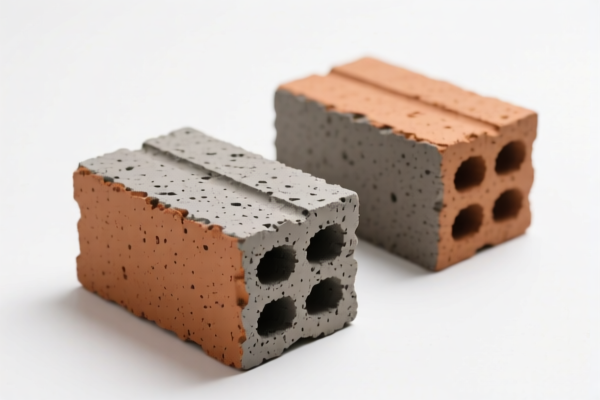
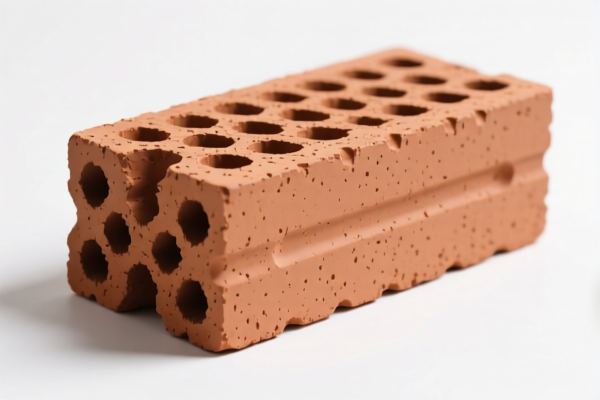
AI Analysis
🔥 High Temperature Resistant Refractory Mortar
🌐 HS Code Reference & Customs Clearance Guide | 2026 Latest Tariff Analysis | Professional Clearance Strategy
📌 I. Product Definition and Classification: Do You Truly Understand "Refractory Mortar"?
Refractory mortars, cements, concretes, and similar compositions (excluding dolomite ramming mixes) are specialized industrial materials designed to withstand extreme thermal stress, chemical corrosion, and physical abrasion. They are critical for lining industrial furnaces, kilns, boilers, and incinerators.
In international trade, these products are primarily classified under Heading 3816 (Refractory cements, mortars, concretes and similar compositions, including dolomite ramming mix, other than products of heading 3801). However, precise classification depends on the composition and intended use, leading to two distinct sub-headings with vastly different tax implications.
⚠️ Key Distinction Point:
- If the product is a standard refractory mixture (clay-based, alumina-based, etc.) that does not contain specific high-value refractory minerals like calcined clay or specific chemical refractories listed under Heading 3801 → It falls under 3816.00.20.10 (Other Clay).
- If the product is a specialized refractory mixture that does not fall under the "Other Clay" definition but is still a refractory cement/mortar/concrete → It falls under 3816.00.20.50 (Other Other).
📦 II. HS Code Classification Details (2026 Latest Tariff Authority Comparison)
| HS Code | Product Description | Applicable Scenario | Key Characteristic |
|---|---|---|---|
3816.00.20.10 |
Refractory cements, mortars, concretes...: Other Clay | Standard clay-based refractory mortars, fire clays, basic industrial linings | ✅ Classified as "Other Clay" |
3816.00.20.50 |
Refractory cements, mortars, concretes...: Other Other | Specialized high-temp mortars, non-clay refractory mixes, advanced industrial compositions | ✅ Classified as "Other Other" |
🔍 Crucial Reminder:
- "Other Clay" (.10) typically covers more common, lower-value refractory materials based on clay or similar simple compositions.
- "Other Other" (.50) is a catch-all for refractory products that do not fit the "Other Clay" description, often implying more complex or specialized formulations.
- Misclassification is risky: Declaring a specialized mortar as "Clay" to avoid higher taxes will be flagged by customs if the chemical composition doesn't match.
💰 III. 2026 Latest Tariff Rate Details (Including Surtaxes)
✅ Applicable Country: United States (US)
✅ Origin: China (CN)
✅ Effective Date: 2025 November 10 onwards (including subsequent imports)
🎯 1. 3816.00.20.10 —— Refractory Mortar: Other Clay
| Item | Content |
|---|---|
| Base Tariff Rate | 0.0% (Ad Valorem) |
| Additional Tariff (Section 301) | 0.0% |
| Total Tax Rate | 0.0% |
| Tax Calculation | CIF Value × 0% = $0 |
| De Minimis Exemption | ❌ Not Applicable (Note: While the rate is 0%, this is a regulated industrial product) |
| Legal Basis Path | HTSUS 3816.00.20.10 |
📌 Explanation:
- Products classified under "Other Clay" enjoy a 0% total tariff rate.
- This is a significant advantage for importers of standard clay-based refractory mortars.
- Why? These are considered less sensitive strategic materials compared to high-tech components.
- Caution: Ensure the product truly qualifies as "Other Clay" under HTSUS notes. If it's a specialized ceramic or chemical refractory, it may fall under.50.
🎯 2. 3816.00.20.50 —— Refractory Mortar: Other Other
| Item | Content |
|---|---|
| Base Tariff Rate | 3.0% (Ad Valorem) |
| Additional Tariff (Section 301) | 25.0% |
| Total Tax Rate | 28.0% |
| Tax Calculation | CIF Value × 28% |
| De Minimis Exemption | ❌ Not Applicable |
| Legal Basis Path | HTSUS 3816.00.20.50 |
📌 Explanation:
- Products classified under "Other Other" are subject to a 28% total tariff rate (3% base + 25% Section 301 surtax).
- The 25% Section 301 surtax is imposed on a wide range of Chinese industrial goods, including certain refractory materials that do not qualify for the "Clay" exemption.
- Why 28%? This reflects the US policy to protect domestic manufacturing and offset perceived unfair trade practices in advanced industrial materials.
- Impact: This rate significantly increases the landed cost. Importers must budget for this extra 25% cost.
🛠️ IV. Customs Clearance Practical Advice (Combat Pitfall Guide)
✅ 1. Required Documentation Checklist (Non-negotiable)
| Document | Must Provide | Explanation |
|---|---|---|
| ✅ Product Specification Sheet | ✔️ | Must detail chemical composition, binding agents, max temp resistance, and application. |
| ✅ Technical Data Sheet (TDS) | ✔️ | Proof of refractory properties (e.g., alumina content, silica content). |
| ✅ HS Code Justification Letter | ✔️ | Explain why it fits .10 (Clay) vs .50 (Other) based on composition. |
| ✅ Commercial Invoice | ✔️ | Clearly state "Refractory Mortar/Cement" and specify "High Temperature Resistant." |
| ✅ Certificate of Origin (CO) | ✔️ | To verify Chinese origin and apply correct surtax. |
| ✅ Packing List | ✔️ | Detail net/gross weight, number of bags/pallets. |
| ✅ Third-Party Test Report | ✔️ | (Optional but recommended) ISO/ASTM test results for heat resistance. |
✅ 2. Declaration Tips (Key Mantra)
🔥 “Composition is King, Clay vs. Other, Choose Wisely, Taxes Differ!”
| Scenario | Correct Declaration | Wrong Practice |
|---|---|---|
| Standard clay-based refractory mortar | 3816.00.20.10 (0% Total Tax) |
Misdeclaring as .50 → 28% Tax |
| Specialized high-temp chemical mortar | 3816.00.20.50 (28% Total Tax) |
Misdeclaring as .10 → Smuggling Risk/Back Taxes |
| Dolomite Ramming Mix | Not 3816 (Check other headings) | Misdeclaring under 3816 → Wrong Code |
| Products of Heading 3801 | Not 3816 | Misdeclaring under 3816 → Penalty |
✅ 3. Special Cases Handling
| Scenario | Handling Advice |
|---|---|
| Mixed Shipments | If you ship both .10 and .50 products, declare separately. Do not lump them together. |
| New Formulations | If the mortar contains new synthetic binders, request an Advance Ruling from CBP to confirm if it’s .10 or .50. |
| Origin Labeling | Clearly mark "Made in China" on all packaging. Customs will verify against CO. |
| Dolomite Ramming Mix | Excluded from Heading 3816. Do not use 3816 codes for dolomite ramming mix. |
🌍 V. Global Major Market Clearance Comparison (2026 Latest)
| Country/Region | Recommended HS Code | Tariff (China Origin) | Certification Requirements | Notes |
|---|---|---|---|---|
| 🇺🇸 United States | 3816.00.20.10 or .50 |
0% or 28% | None specific, but CBP may request test reports | Critical: Distinguish between "Clay" and "Other" to save 28%. |
| 🇨🇳 China | 3816.00.20 |
Low/Normal | GB Standards | Domestic production often has lower VAT refunds. |
| 🇪🇺 European Union | 3816.00 |
~4.5% (General) | REACH Compliance | No US-style Section 301 surtax, but REACH registration is costly. |
| 🇬🇧 United Kingdom | 3816.00 |
~4.5% (General) | UK REACH | Post-Brexit rules apply. |
| 🇯🇵 Japan | 3816.00 |
~5.5% (General) | JIS Standards | No major surtax on industrial chemicals. |
📌 Conclusion:
- USA is the most critical market for tariff planning due to the 28% surtax on "Other Other" refractories.
- Clay-based products (.10) are tariff-free in the US, offering a huge cost advantage.
- Specialized mortars (.50) must absorb the 28% cost or consider supply chain shifts.
📌 VI. Common Errors & Pitfall Guide (Lessons Learned)
❌ Mistake 1: Declaring a specialized ceramic mortar as "Clay" to avoid the 25% surtax.
👉 Consequence: CBP audit reveals different chemical composition → Back taxes + Penalties + Possible seizure.
❌ Mistake 2: Ignoring the "Exclusion of Heading 3801" clause.
👉 Consequence: If the product is a specific refractory product of Heading 3801, using 3816 is wrong → Rejection of entry.
❌ Mistake 3: Lumping Dolomite Ramming Mix with Refractory Mortar.
👉 Consequence: Dolomite ramming mix is excluded from 3816 → Classification Error.
❌ Mistake 4: Not providing a Technical Data Sheet.
👉 Consequence: Customs cannot verify if it’s "Clay" or "Other" → Delays + Additional Inspection Fees.
✅ Correct Practice:
"Refractory Mortar, Clay-Based, High Temperature Resistant, ASTM C-275 Compliant, HS 3816.00.20.10"
OR
"Refractory Cement, Aluminum-Oxide Based, Industrial Furnace Lining, HS 3816.00.20.50"
🎯 VII. Conclusion: Professional Declaration, Time-Saving, Cost-Reduction!
🎯 Remember the Mantra:
🔹 "Clay is Zero, Other is Twenty-Eight, Composition is Key, Don't Guess!"
🔹 "HS Code 3816, Split into Two, .10 Saves Money, .50 Costs More!"
🔹 "Dolomite Ramming Mix, Stay Away, Check Heading 3801, Don't Delay!"
📌 Pro Tip:
- If your refractory mortar is clay-based and qualifies for 3816.00.20.10, you save 28% on every shipment compared to non-clay specialized mortars.
- Consult a customs broker to review your product's chemical composition before shipping to the US.
- For large-volume shipments, consider applying for an Exclusion if applicable (though rare for this category), or Advance Ruling to lock in the classification.
📣 Immediate Action:
📞 Contact your customs broker + Provide Technical Data Sheet + Request HS Code Confirmation
🚀 Ensure Smooth Customs Clearance, Avoid 28% Surprise, Protect Your Margins!
✨ Professional Clearance Starts with Accurate Classification!
💼 Every Dollar Saved in Tariffs is Pure Profit!
Customer Reviews
About HS Code Classification
The Harmonized System (HS) is an internationally standardized nomenclature developed by the World Customs Organization (WCO) to classify traded products. Over 200 countries use the HS system as the basis for customs tariffs, trade statistics, and import/export regulations.
Each HS code follows a hierarchical structure:
- Chapter (2 digits) — Broad category of goods (e.g., Chapter 84: Machinery and Mechanical Appliances)
- Heading (4 digits) — More specific grouping within the chapter
- Subheading (6 digits) — Internationally standardized breakdown, used by all WCO member countries
- National subdivisions (8-10 digits) — Country-specific extensions for further classification, such as US HTSUS 10-digit codes
Correct HS code classification is essential for smooth customs clearance, accurate duty payment, and compliance with trade regulations. Misclassification can lead to customs delays, overpayment of duties, or penalties.
When importing from CN to US, the applicable tariff rates may include:
- Most-Favored-Nation (MFN) rate — The standard duty rate applied to WTO members
- General rate — Applied to countries without trade agreements
- Trade remedy duties — Additional tariffs such as Section 301 (anti-dumping), Section 232 (national security), or countervailing duties
The information provided on this page is for reference purposes only. For official classification, please consult with your local customs authority or a licensed customs broker.