hinge drill
CN → US| HS Code | Tariff Rate | Origin | Destination | Doc |
|---|---|---|---|---|
| 8466100110 | 38.9% | CN | US | Official Doc |
| 8466100130 | 38.9% | CN | US | Official Doc |
| 8207502055 | 40.0% | CN | US | Official Doc |
| 8207504030 | 43.4% | CN | US | Official Doc |
Product Images
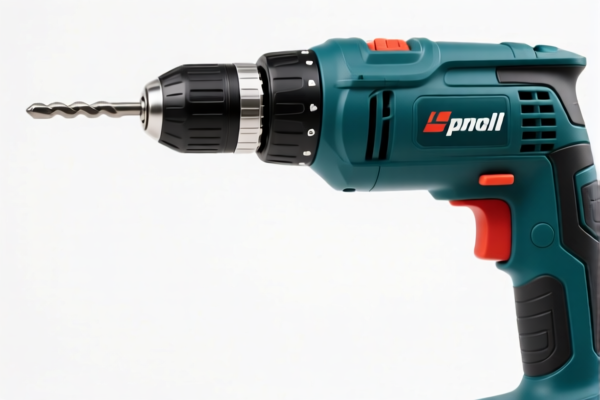
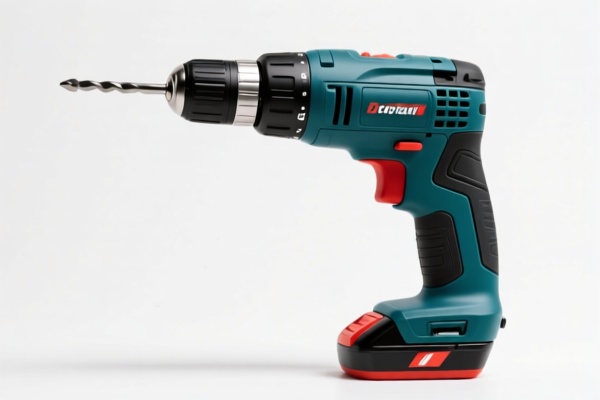
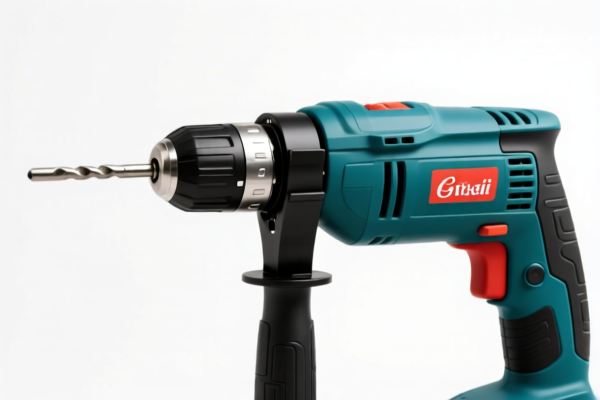
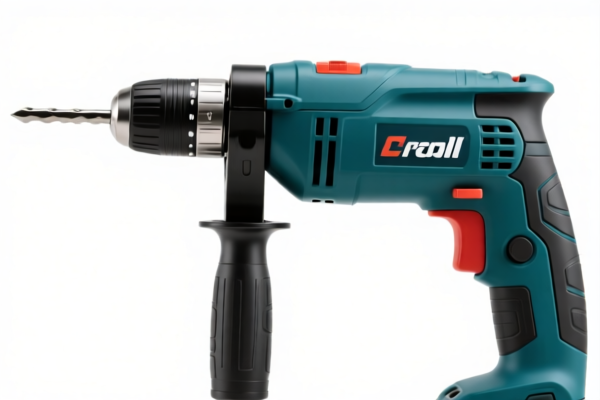
AI Analysis
🖥️ Hinge Drill (Drill Bits for Metalworking)
🌐 HS Code Reference & Clearance Guide | 2026 Latest Tariff Analysis | Professional Customs Strategy
📌 I. Product Definition & Classification: Do You Know What a "Hinge Drill" Is?
In international trade, the term "Hinge Drill" is not a standard statistical item but rather a functional description for Twist Drills (twist drills) used primarily for machining holes in metal components, including but not limited to hinge manufacturing, automotive parts, and machinery assembly.
Key Distinction: - High-Alloy Twist Drills: Contain significant amounts of Chromium, Molybdenum, or Tungsten (>0.2%) or Vanadium (>0.1%). These are classified under 8207.50.20.55. - Standard Metal-Cutting Twist Drills: General-purpose tools for cutting metal, usually base metal parts. These are classified under 8207.50.40.30.
⚠️ Critical Differentiation Point:
- If the drill bit’s cutting part contains >0.2% Cr/Mo/W or >0.1% V → It is a "Special Alloy Tool" → HS 8207.50.20.55
- If it is a standard twist drill suitable for cutting metal, without the specific high-alloy content definition → HS 8207.50.40.30
📦 II. HS Code Classification Details (2026 Latest Tariff Authority Comparison)
| HS Code | Product Description | Applicable Scenario | Alloy Content Condition |
|---|---|---|---|
8207.50.20.55 |
Twist drills: Other (with high alloy content) | Industrial-grade drills for hard metals, aerospace, heavy machinery | ✅ Contains >0.2% Cr/Mo/W or >0.1% V by weight |
8207.50.40.30 |
Twist drills (suitable for cutting metal, other) | General manufacturing, hardware assembly, hinge production | ❌ Standard steel, no specific high-alloy threshold met |
🔍 Key Reminder:
- "Hinge Drill" is not a valid HS code description. You must declare it as "Twist Drill" or "Drill Bit for Metal". - Misdeclaring a high-alloy drill as a standard one may lead to tariff evasion penalties if the chemical composition exceeds the threshold. - Both codes fall under Chapter 82 (Base Metal Tools), Section XVI (Machinery).
💰 III. 2026 Latest Tariff Rate Breakdown (Including Additional Duties, Policy Add-ons)
✅ Applicable Country: United States (US)
✅ Country of Origin: China (CN)
✅ Effective Date: 2025 (Current Status Based on Provided Data)
🎯 1. 8207.50.20.55 —— Twist Drills (High Alloy, Other)
| Item | Content |
|---|---|
| Base Tariff | 0.0% (ad valorem) |
| Additional Duty (Section 301/Trade War) | 0.0% |
| Total Tax Rate | 0.0% |
| Tax Calculation | CIF Value × 0.0% = $0 |
| De Minimis Eligibility | ✅ Yes (Eligible for de minimis clearance if value < $800) |
| Legal Basis | HTSUS 8207.50.20.55 |
📌 Explanation:
- This code is tariff-free for Chinese-origin goods under the provided dataset. - No additional Section 301 tariffs apply to this specific subheading according to the data provided. - Highly advantageous for importers; no duty cost burden.
🎯 2. 8207.50.40.30 —— Twist Drills (Standard, Suitable for Cutting Metal)
| Item | Content |
|---|---|
| Base Tariff | 0.0% (ad valorem) |
| Additional Duty (Section 301/Trade War) | 0.0% |
| Total Tax Rate | 0.0% |
| Tax Calculation | CIF Value × 0.0% = $0 |
| De Minimis Eligibility | ✅ Yes (Eligible for de minimis clearance if value < $800) |
| Legal Basis | HTSUS 8207.50.40.30 |
📌 Explanation:
- Also tariff-free for Chinese-origin goods. - Unlike many other metal tools, twist drills currently enjoy 0% total duty under the provided dataset. - This makes them a low-cost item for US importers compared to other metalworking tools.
🛠️ IV. Clearance Practical Advice (Combat Pitfall Avoidance Guide)
✅ 1. Required Documentation Checklist (All Must Be Provided)
| Document | Mandatory | Notes |
|---|---|---|
| ✅ Product Specification Sheet | ✔️ | Include material composition (Cr, Mo, W, V percentages), diameter, length, coating (e.g., TiN, Cobalt). |
| ✅ Chemical Composition Report | ✔️ | Critical to determine if it falls under 8207.50.20.55 or 8207.50.40.30. |
| ✅ Product Photos (Including Label) | ✔️ | Clear view of markings (e.g., "HSS", "Cobalt", "1/4""). |
| ✅ Commercial Invoice | ✔️ | Declare as "Twist Drill Bit, for Metal Cutting", NOT "Hinge Drill" or vague terms. |
| ✅ Packing List | ✔️ | Detail quantity, weight, and packaging type. |
✅ 2. Declaration Tips (Key Mnemonic)
🔥 “Specify Material, Name as Twist Drill, Alloy Content Defines Code!”
| Scenario | Correct Declaration | Wrong Practice |
|---|---|---|
| Drill with >0.2% W/Mo/Cr | 8207.50.20.55 - "Twist Drill, High Alloy" |
Calling it "Hinge Drill" → Rejection |
| Standard HSS Drill | 8207.50.40.30 - "Twist Drill, Metal Cutting" |
Misdeclaring as high-alloy → No penalty, but unnecessary complexity |
| Set of Drills in Box | Declare as Set under main item code | Splitting into individual bits → Higher inspection risk |
✅ 3. Special Handling Cases
| Scenario | Handling Advice |
|---|---|
| OEM Custom Drills | Provide client order + material spec. If alloy content is customized, ensure certificate of analysis is available. |
| Coated Drills (TiN, Black Oxide) | Coating does not change HS Code. Still classified under 8207.50.xx.xx based on base metal alloy. |
| Import via De Minimis (Section 321) | Since total tax is 0%, these items are ideal for e-commerce small package imports (< $800). No duty, fast clearance. |
| Suspicion of "Hidden High-Value Tools" | If drills are part of a larger machine accessory kit, ensure they are declared separately or included properly in the machine’s HS code if subordinate. |
🌍 V. Global Market Comparison (2026 Latest)
| Country/Region | Recommended HS Code | Tariff (China Origin) | Certification Requirements | Notes |
|---|---|---|---|---|
| 🇺🇸 USA | 8207.50.20.55 / 8207.50.40.30 |
0% | None (No special import permit) | 0% Duty is a major advantage |
| 🇨🇳 China | 8207.50.20.55 / 8207.50.40.30 |
Varies (Export Rebate Applicable) | None | Export rebates may apply for Chinese manufacturers |
| 🇪🇺 EU | 8207.50 (General) |
0–2.5% | CE (if power tool accessory), REACH | Varies by member state |
| 🇯🇵 Japan | 8207.50 |
0–3.2% | JIS Standard (Recommended) | High quality standards expected |
📌 Conclusion:
- USA offers 0% tariff for these tools, making them highly competitive. - No special certifications (like FCC) are required for passive metal tools. - De Minimis strategy is highly effective for small shipments.
📌 VI. Common Errors & Pitfalls (Lessons Learned)
❌ Error 1: Using "Hinge Drill" as the product name in customs declaration.
👉 Consequence: Customs may reject or request clarification, causing delays.
✅ Fix: Use "Twist Drill Bit for Metal Cutting" or "HSS Twist Drill".
❌ Error 2: Failing to specify alloy content.
👉 Consequence: Customs may classify under a higher-duty general category if uncertainty exists.
✅ Fix: Provide Material Composition Certificate explicitly stating Cr, Mo, W, V percentages.
❌ Error 3: Declaring coated drills as "Coated Tools" separately.
👉 Consequence: Unnecessary complexity.
✅ Fix: Coating is incidental; declare as Twist Drill with coating description.
🎯 VII. Conclusion: Professional Declaration, Cost-Free Imports!
🎯 Remember the Mnemonic:
🔹 "Name it 'Twist Drill', Specify Alloy, 0% Duty in US!"
🔹 "Hinge Drill" is not a code—use 8207.50.xx.xx
🔹 "0% Tax + De Minimis = Ideal for E-commerce Shipments!"
📌 Pro Tip:
If your drills are high-speed steel (HSS) or cobalt-steel, ensure the chemical composition is clearly stated on the invoice to avoid misclassification.
For bulk shipments, consider applying for a Pre-Ruling if alloy content is borderline, though currently, both codes are 0% tariff, so risk is minimal.
📣 Immediate Action:
📞 Confirm material composition with supplier
📝 Use "Twist Drill Bit" in all shipping documents
🚀 Enjoy 0% Duty clearance in the US!
✨ Professional clearance starts with accurate classification!
💼 Your bottom line benefits from every percent saved!
Customer Reviews
About HS Code Classification
The Harmonized System (HS) is an internationally standardized nomenclature developed by the World Customs Organization (WCO) to classify traded products. Over 200 countries use the HS system as the basis for customs tariffs, trade statistics, and import/export regulations.
Each HS code follows a hierarchical structure:
- Chapter (2 digits) — Broad category of goods (e.g., Chapter 84: Machinery and Mechanical Appliances)
- Heading (4 digits) — More specific grouping within the chapter
- Subheading (6 digits) — Internationally standardized breakdown, used by all WCO member countries
- National subdivisions (8-10 digits) — Country-specific extensions for further classification, such as US HTSUS 10-digit codes
Correct HS code classification is essential for smooth customs clearance, accurate duty payment, and compliance with trade regulations. Misclassification can lead to customs delays, overpayment of duties, or penalties.
When importing from CN to US, the applicable tariff rates may include:
- Most-Favored-Nation (MFN) rate — The standard duty rate applied to WTO members
- General rate — Applied to countries without trade agreements
- Trade remedy duties — Additional tariffs such as Section 301 (anti-dumping), Section 232 (national security), or countervailing duties
The information provided on this page is for reference purposes only. For official classification, please consult with your local customs authority or a licensed customs broker.