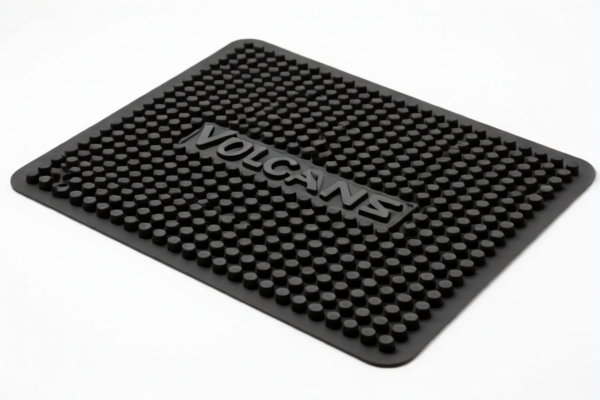
hollow out anti pressure ulcer pad
CN → US| HS Code | Tariff Rate | Origin | Destination | Doc |
|---|---|---|---|---|
| 3926907500 | 14.2% | CN | US | Official Doc |
| 3926907700 | 12.4% | CN | US | Official Doc |
| 9404299095 | 41.0% | CN | US | Official Doc |
| 9404210095 | 38.0% | CN | US | Official Doc |
Product Images
AI Analysis
Based on the provided data, here is the professional classification guide and clearance strategy for the Hollow Out Anti-Pressure Ulcer Pad.
🛌 Hollow Out Anti-Pressure Ulcer Pad: Global HS Code Classification & Clearance Strategy (2026)
🌐 HS Code Reference & Clearance Guide | Comprehensive Tax Analysis | Professional Customs Strategy
📌 What is a "Hollow Out Anti-Pressure Ulcer Pad"?
A specialized medical/healthcare product designed to redistribute body pressure and prevent bedsores (pressure ulcers) in bedridden patients. The "hollow out" structure typically refers to air-cell technology or specific foam channeling designed to improve airflow and weight distribution.
In international trade, this product falls into a critical classification zone between Medical Plastics and Bedding/Mattresses. The correct HS Code is the difference between paying 14.2% tax vs. 41.0% tax.
⚠️ Key Distinction:
- Plastic/Inflatable Air Mattress Type → Classified under 3926 (Plastic Products).
- Foam/Rubber Bedding Type → Classified under 9404 (Mattresses).
Misclassification can lead to massive tax surcharges and customs delays.
📦 1. HS Code Classification Breakdown (Based on Provided Data)
| HS Code | Product Description | Classification Logic | Total Tax Rate |
|---|---|---|---|
| 3926.90.75.00 | Plastic Air Cushion Type (Inflatable/Air-cell pad) |
Classified as "Plastic products," specifically fitting the description of "Air beds and other inflatable articles." | 14.2% |
| 3926.90.77.00 | Plastic/Polymer Pad Type (Rigid or semi-rigid plastic cushion) |
Classified as a "Cushion product," inferred material is plastic or synthetic, fitting the "Cushion" morphology. | 12.4% |
| 9404.21.00.95 | Foam/Rubber Mattress Type (Solid foam or rubber core) |
Classified as "Mattresses/Bedding," material inferred as Foam Plastic or Rubber. | 38.0% |
| 9404.29.90.95 | Other Material Mattress Type (Complex material composition) |
Classified as "Mattress类产品," made of other materials not specified elsewhere, fitting the "Other" category standard. | 41.0% |
🔍 Critical Analysis:
- Low Tax Path (12.4% - 14.2%): If your product is primarily an inflatable air pad or a plastic sheet with air channels, you should aim for 3926.90.75.00 or 3926.90.77.00.
- High Tax Path (38.0% - 41.0%): If the product is a solid foam mattress with hollow cutouts, it falls under 9404, triggering heavy additional tariffs (25% Section 301 tax).
💰 2. 2026 Tax Rate Breakdown & Legal Basis
✅ Applicable Country: Importing from China (CN)
✅ Target Market: US (Based on the tax structure provided)
✅ Effective Date: As per 2026 tariff regulations
🎯 Scenario A: Plastic/Inflatable Classification (3926.90.75.00)
Best case scenario for low-cost importers.
| Item | Detail |
|---|---|
| Base Duty Rate | 4.2% |
| Additional Tariff (Section 301/122) | 10.0% ("122 Clause Tariff") |
| Total Tax Rate | 14.2% |
| Tax Calculation | CIF Value × 14.2% |
| Legal Basis | Plastic products under HTS 3926, subject to specific 122 tariff clauses. |
| Note | No Section 301 25% surcharge applies here if correctly classified as plastic inflatables. |
🎯 Scenario B: Plastic Pad Classification (3926.90.77.00)
Alternative for solid plastic pads.
| Item | Detail |
|---|---|
| Base Duty Rate | 2.4% |
| Additional Tariff (Section 301/122) | 10.0% ("122 Clause Tariff") |
| Total Tax Rate | 12.4% |
| Tax Calculation | CIF Value × 12.4% |
| Legal Basis | Plastic cushions under HTS 3926.90.77. |
🚨 Scenario C: Mattress Classification (9404.21.00.95 & 9404.29.90.95)
High-risk classification requiring deep due diligence.
| Item | Detail |
|---|---|
| Base Duty Rate | 3.0% (for foam) / 6.0% (for other materials) |
| Section 301 Additional Tariff | +25.0% (Heavy surcharge) |
| Additional "122 Clause" Tariff | +10.0% |
| Total Tax Rate | 38.0% (Foam) or 41.0% (Other) |
| Tax Calculation | CIF Value × (Base + 25% + 10%) |
| Legal Basis | Mattresses (9404) are heavily targeted by trade measures. |
📌 Tax Warning:
Moving from 3926 (Plastic) to 9404 (Mattress) increases your tax burden by 24% to 26.8%. For a $10,000 shipment, this is an extra $2,400 - $2,680 in duty alone!
🛠️ 3. Customs Clearance Practical Advice (Avoid Pitfalls)
✅ 1. Preparation Checklist (Mandatory)
| Document | Requirement | Why It Matters |
|---|---|---|
| Product Spec Sheet | ✔️ | Must explicitly state material: "Inflatable PVC", "Plastic Air Cells", vs "Foam Core". |
| Technical Diagram | ✔️ | Show the "Hollow" structure. If it's air-filled, it supports 3926. If it's solid foam with cutouts, it supports 9404. |
| Photos (Lifestyle & Detail) | ✔️ | Clear shots of the valve (for inflation) prove it's an air product. |
| Material Declaration | ✔️ | Must confirm % of plastic vs. rubber vs. foam. |
| Commercial Invoice | ✔️ | Description: "Anti-pressure Ulcer Air Pad (Plastic)" vs "Foam Mattress". Precision is key. |
| Certificate of Origin | ✔️ | Required to calculate 122 Clause tax applicability. |
✅ 2. Declaration Strategy (The "Golden Rule")
🔥 "Inflatable = Plastic (3926), Solid Foam = Mattress (9404)!"
| Scenario | Correct HS Code | Risk if Wrong |
|---|---|---|
| Product is a Pillow/Pad that you blow up with air | 3926.90.75.00 | If declared as 9404 → Pay 41% instead of 14.2%. |
| Product is a Plastic Sheet with air pockets (non-inflatable) | 3926.90.77.00 | If declared as 9404 → Pay 41% instead of 12.4%. |
| Product is a Foam Core with hollowed-out grooves | 9404.21.00.95 | Cannot claim 3926. Must pay 38%. |
| Product is made of mixed materials (Rubber/Plastic) | 9404.29.90.95 | Highest tax bracket (41%). |
✅ 3. Special Handling for "Hollow Out" Design
- Air vs. Foam: If the "hollow" part is designed to be filled with air via a pump, strongly argue for 3926.
- Marketing Claims: Do not market it as a "Mattress" if it is a small pad. Call it a "Cushion" or "Air Pad".
- Packaging: If shipped deflated in a bag, it looks like a "Plastic Product." If shipped inflated in a box, it might look like a "Mattress". Always ship deflated and include a pump.
🌍 4. Global Market Comparison (2026)
| Region | Recommended HS Code | Estimated Tax (China Origin) | Key Requirement |
|---|---|---|---|
| 🇺🇸 USA (Target) | 3926.90.75.00 | 14.2% | Avoid 9404 (41% tax trap). |
| 🇪🇺 EU | 3926.90.75.00 | Low (VAT + 0-5% Duty) | CE Marking required. |
| 🇨🇦 Canada | 3926.90.75.00 | Low | CITES not applicable. |
| 🇦🇺 Australia | 3926.90.75.00 | Low (LVT) | RCM Compliance. |
📌 Conclusion:
For the US market, 3926.90.75.00 is the winning code. It reduces your tax burden from 41.0% to 14.2% (a 65% tax reduction).
Do not classify your air-pad as a "Mattress" unless it is strictly solid foam.
📌 5. Common Mistakes & Avoidance
❌ Mistake 1: Calling it a "Medical Mattress" in the invoice.
👉 Result: Customs officer assumes it falls under 9404 (Mattresses) → 41.0% Tax.
✅ Fix: Call it "Air-filled Anti-pressure Cushion" or "Plastic Inflatable Pad."
❌ Mistake 2: Providing a photo of the product fully inflated.
👉 Result: Looks like a "Bed" or "Mattress."
✅ Fix: Provide photos of the deflated product in its packaging.
❌ Mistake 3: Not specifying the material in the description.
👉 Result: Customs defaults to the highest duty category (9404).
✅ Fix: Explicitly state: "Material: PVC Plastic, Air-filled."
🎯 6. Final Clearance Strategy Summary
- Identify Material: Is it air-filled/plastic? YES → Go to 3926. Is it foam? YES → Go to 9404.
- Select Code:
- Air Pad → 3926.90.75.00 (14.2%)
- Plastic Cushion → 3926.90.77.00 (12.4%)
- Declare Precisely: "Anti-pressure Ulcer Pad (Plastic/Air)"
- Prepare Docs: Material spec sheet, deflated photos, commercial invoice with exact description.
🚀 Pro Tip: If your product is a hybrid (Foam core + Air bladder), consult a customs broker immediately. The foam core might force a 9404 classification regardless of the air bladder.
✨ Professional Clearance Starts with Precision!
💼 Save 26% in Tax by Choosing the Right HS Code!
📞 Contact your broker today to confirm material composition before shipping!
Customer Reviews
About HS Code Classification
The Harmonized System (HS) is an internationally standardized nomenclature developed by the World Customs Organization (WCO) to classify traded products. Over 200 countries use the HS system as the basis for customs tariffs, trade statistics, and import/export regulations.
Each HS code follows a hierarchical structure:
- Chapter (2 digits) — Broad category of goods (e.g., Chapter 84: Machinery and Mechanical Appliances)
- Heading (4 digits) — More specific grouping within the chapter
- Subheading (6 digits) — Internationally standardized breakdown, used by all WCO member countries
- National subdivisions (8-10 digits) — Country-specific extensions for further classification, such as US HTSUS 10-digit codes
Correct HS code classification is essential for smooth customs clearance, accurate duty payment, and compliance with trade regulations. Misclassification can lead to customs delays, overpayment of duties, or penalties.
When importing from CN to US, the applicable tariff rates may include:
- Most-Favored-Nation (MFN) rate — The standard duty rate applied to WTO members
- General rate — Applied to countries without trade agreements
- Trade remedy duties — Additional tariffs such as Section 301 (anti-dumping), Section 232 (national security), or countervailing duties
The information provided on this page is for reference purposes only. For official classification, please consult with your local customs authority or a licensed customs broker.