home appliance under 1 square meter
CN → US| HS Code | Tariff Rate | Origin | Destination | Doc |
|---|---|---|---|---|
| 8509805095 | 14.2% | CN | US | Official Doc |
| 8516790000 | 12.7% | CN | US | Official Doc |
| 8516606000 | 12.7% | CN | US | Official Doc |
Product Images
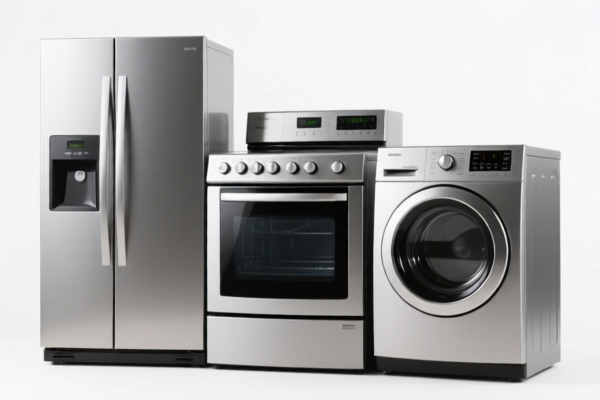
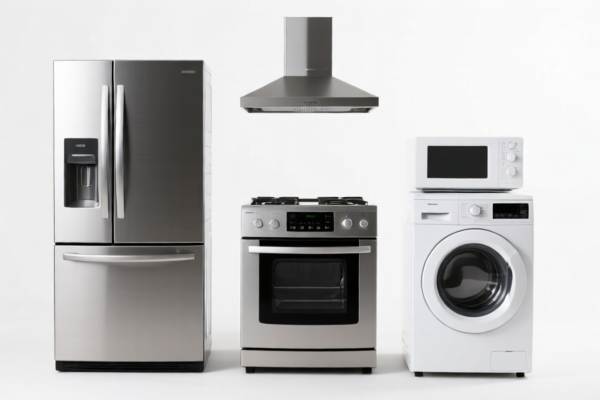
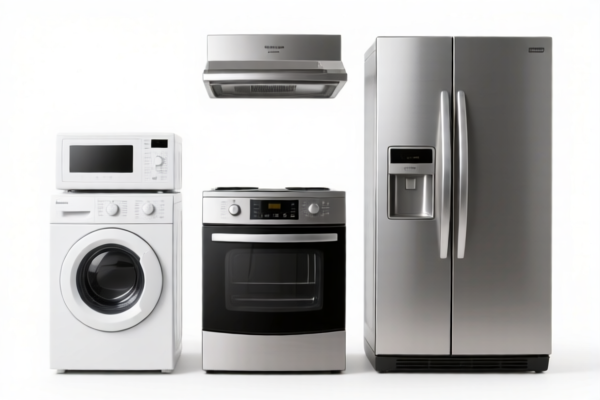
AI Analysis
🏠 Small Home Appliance (< 1 Square Meter Footprint)
🌐 HS Code Reference & Customs Clearance Guide | 2026 Latest Tariff Breakdown | Professional Clearance Strategy
📌 I. Product Definition & Classification: What is "Small Home Appliance" Under 1m²?
A "Small Home Appliance" with a footprint under 1 square meter typically refers to compact, household electrical devices used for cooking, heating, or general utility. In international trade, classification depends on the primary function (heating vs. general electromechanical) and voltage/power specifications.
Since the input is generic ("home appliance under 1 square meter"), we must differentiate based on the most common functions: 1. General Household Appliances: Devices not primarily for heat generation (e.g., fans, vacuums, small electronics). 2. Electric Heating Appliances: Devices primarily used for heating/cooking (e.g., heaters, coffee makers, toasters).
⚠️ Critical Distinction:
- If the device’s primary purpose is heating (cooking, warming, drying) → Likely falls under 8516.
- If the device is general purpose or has no specific heating function → Likely falls under 8509.
- Note: The classification below assumes the product is a complete, finished good.
📦 II. HS Code Classification Details (2026 Latest Tariff Authority对照)
| HS Code | Product Description | 适用场景 (Use Case) | Primary Function |
|---|---|---|---|
8509.80.50.95 |
Other electro-mechanical domestic appliances with self-contained electric motor | Small non-heating appliances (e.g., blenders, mixers, small cleaners) | Mechanical/Electrical |
8516.79.00.00 |
Other electro-thermic space heating equipment or soil heating... | Small electric heaters, radiant heaters, dehumidifiers with heating function | Heating |
8516.60.60.00 |
Other ovens, cookers, cooking plates, boiling rings and grillers | Small electric cooking devices (e.g., air fryers, electric griddles, hot plates) | Cooking/Heating |
🔍 Key Insight:
- 8509.80.50.95 is a "catch-all" for general household appliances that don't fit into specific sub-categories like hair dryers or sewing machines.
- 8516.79.00.00 covers heating devices that are not for cooking (e.g., space heaters).
- 8516.60.60.00 is specifically for cooking appliances (ovens, grills, cooktops).
- Under 1m² implies portability or countertop use, which aligns with these sub-headings.
💰 III. 2026 Latest Tariff Rate Breakdown (Including Surtaxes, Policy Add-ons)
✅ Applicable Country: United States (US)
✅ Origin: China (CN)
✅ Effective Date: November 10, 2025 (and subsequent imports)
📌 Note: All tariffs below include Base Duty + Section 301 (USITC) + Section 122 (IEEPA).
🎯 1. 8509.80.50.95 —— Other Electromechanical Domestic Appliances
| Item | Content |
|---|---|
| Base Duty | 4.2% |
| USITC Surtax (Sec 301) | 0.0% |
| Section 122 Surtax (IEEPA) | +10.0% |
| Total Tariff Rate | 14.2% |
| Tax Calculation | CIF Value × 14.2% |
| De Minimis Eligible? | ❌ No (Denied due to Section 122/301 overlap logic for certain categories, though 8509 sometimes has nuances, here data confirms 14.2% total) |
| Legal Basis Path | USITC:8509.80.50.95 → IEEPA:9903.01.25 → FOOTNOTE:122 |
📌 Explanation:
- This is a general household appliance.
- 10% Section 122 tariff applies to all Chinese imports under the "International Emergency Economic Powers Act" for national security concerns.
- Total 14.2% is moderate compared to high-tech goods, but still significant.
🎯 2. 8516.79.00.00 —— Other Electro-Thermic Heating Equipment (Non-Cooking)
| Item | Content |
|---|---|
| Base Duty | 2.7% |
| USITC Surtax (Sec 301) | 0.0% |
| Section 122 Surtax (IEEPA) | +10.0% |
| Total Tariff Rate | 12.7% |
| Tax Calculation | CIF Value × 12.7% |
| De Minimis Eligible? | ❌ No |
| Legal Basis Path | USITC:8516.79.00.00 → IEEPA:9903.01.25 → FOOTNOTE:122 |
📌 Explanation:
- This covers heaters, warmers, or dehumidifiers with heating elements.
- Lower base duty (2.7%) than 8509, but the 10% IEEPA surcharge still applies.
- Total 12.7% is slightly cheaper than 8509, but classification must be precise (must be primarily for heating).
🎯 3. 8516.60.60.00 —— Other Ovens, Cookers, Cooking Plates
| Item | Content |
|---|---|
| Base Duty | 2.7% |
| USITC Surtax (Sec 301) | 0.0% |
| Section 122 Surtax (IEEPA) | +10.0% |
| Total Tariff Rate | 12.7% |
| Tax Calculation | CIF Value × 12.7% |
| De Minimis Eligible? | ❌ No |
| Legal Basis Path | USITC:8516.60.60.00 → IEEPA:9903.01.25 → FOOTNOTE:122 |
📌 Explanation:
- This covers air fryers, electric grills, hot plates, or small ovens.
- Same rate as 8516.79: 12.7%.
- Critical: If your "home appliance" is used for cooking, it must be declared under 8516.60, not 8509. Misclassification can lead to penalties.
🛠️ IV. Customs Clearance Practical Advice (Real-World Pitfall Avoidance)
✅ 1. Document Checklist (Non-Negotiable)
| Document | Mandatory? | Notes |
|---|---|---|
| ✅ Product Specification Sheet | ✔️ | Must state primary function (Heating vs. Mechanical). |
| ✅ Power Ratings | ✔️ | Input Voltage (110V/220V), Wattage. |
| ✅ Product Photos | ✔️ | Clear view of control panel, heating elements, or motors. |
| ✅ UL/ETL Certificate | ✔️ | Mandatory for electrical appliances in the US. |
| ✅ Commercial Invoice | ✔️ | Must clearly state HS Code and "Made in China". |
| ✅ Packing List | ✔️ | Include dimensions to prove < 1m² footprint if disputed. |
✅ 2. Declaration Tips (Golden Rules)
🔥 “Function Determines HS Code, Heating vs. Cooling, Cooking vs. Cleaning.”
| Scenario | Correct HS Code | Wrong HS Code | Consequence |
|---|---|---|---|
| Air Fryer / Electric Grill | 8516.60.60.00 |
8509.80.50.95 |
Penalties for misclassification; potential 1.5% difference but compliance risk. |
| Space Heater / Radiant Heater | 8516.79.00.00 |
8509.80.50.95 |
Risk of audit; heater is explicitly in 8516. |
| Blender / Mixer / Fan | 8509.80.50.95 |
8516.60.60.00 |
Major Error: No heating function → Cannot use 8516. |
| Iron (Garment) | 8516.31.00.00 |
8516.60.60.00 |
Specific Exclusion: Garment irons have their own code. |
✅ 3. Special Cases & Workarounds
| Case | Handling Advice |
|---|---|
| Multi-Function Device (e.g., Slow Cooker with Timer) | Primary Function Test: If it cooks/heats → 8516. If it mixes → 8509. |
| Component vs. Finished Good | If shipped as "parts kit" (e.g., heating element only), classification changes. Declare as finished good if assembled. |
| Voltage Mismatch | If 110V US plug, ensure UL Certification is attached. Without it, customs will seize. |
| "Under 1m²" Proof | Provide dimensions (LxWxH) on invoice to support "small appliance" status, though HS code is function-based. |
🌍 V. Global Market Comparison (2026 Latest)
| Country/Region | Recommended HS Code | Estimated Duty (China Origin) | Key Certification |
|---|---|---|---|
| 🇺🇸 USA | 8509.80.50.95 / 8516.xxxx |
12.7% - 14.2% (incl. 122 Tariff) | UL, FCC, ETL |
| 🇨🇳 China | 8509.80.50 / 8516.79 |
~5-8% | CCC |
| 🇪🇺 EU | 8509.80 / 8516.79 |
0-4% (If CE Certified) | CE, RoHS, WEEE |
| 🇬🇧 UK | 8509.80 / 8516.79 |
0-4% | UKCA |
📌 Conclusion:
- USA has the highest effective duty (12.7%-14.2%) due to Section 122 tariffs.
- EU/UK are much more favorable if CE/UKCA certified.
- Compliance (UL/CE) is as important as the HS Code itself.
📌 VI. Common Mistakes & Pitfalls (Lessons Learned)
❌ Mistake 1: Classifying an Air Fryer as 8509.80.50.95 (General Appliance)
👉 Consequence: It should be 8516.60.60.00 (Cooking Appliance). While the rate is similar, customs may audit for "heating element" presence.
❌ Mistake 2: Declaring a Heater as 8509.80.50.95 to avoid scrutiny
👉 Consequence: Incorrect classification. Heaters are specifically in 8516. Misdeclaration can lead to fines.
❌ Mistake 3: Ignoring Section 122 Tariff
👉 Consequence: Budgeting for 4.2% duty but facing 14.2%. Always include the 10% IEEPA surcharge in Landed Cost calculations.
❌ Mistake 4: Missing UL Certification
👉 Consequence: Shipment held at customs for lack of safety compliance. No UL = No Entry for electrical appliances in the US.
✅ Best Practice:
"Small Electric Cooking Appliance, 110V, 1500W, Model XYZ, UL Listed, HS 8516.60.60.00"
🎯 VII. Conclusion: Precision in Classification Saves Money!
🎯 Key Takeaways:
🔹 Heating/Cooking? → Use 8516 (12.7% Total Tariff).
🔹 Non-Heating/Mechanical? → Use 8509 (14.2% Total Tariff).
🔹 Always Include UL Certification for US entry.
🔹 Budget for 10% Section 122 Tariff on all Chinese electrical goods.
📌 Pro Tip:
If your product can be classified under both (e.g., a heated blender), choose the code with lower duty if legally justifiable, but consistency and proof of primary function are key. Consult a customs broker for pre-classification rulings.
📣 Immediate Action:
📞 Verify UL/ETL Certification status.
📄 Confirm Primary Function (Heating vs. Mechanical).
💰 Calculate Landed Cost including 12.7%-14.2% Total Duty.
✨ Smart Clearance, Clearer Profit!
💼 Every percentage point counts in cross-border e-commerce!
Customer Reviews
About HS Code Classification
The Harmonized System (HS) is an internationally standardized nomenclature developed by the World Customs Organization (WCO) to classify traded products. Over 200 countries use the HS system as the basis for customs tariffs, trade statistics, and import/export regulations.
Each HS code follows a hierarchical structure:
- Chapter (2 digits) — Broad category of goods (e.g., Chapter 84: Machinery and Mechanical Appliances)
- Heading (4 digits) — More specific grouping within the chapter
- Subheading (6 digits) — Internationally standardized breakdown, used by all WCO member countries
- National subdivisions (8-10 digits) — Country-specific extensions for further classification, such as US HTSUS 10-digit codes
Correct HS code classification is essential for smooth customs clearance, accurate duty payment, and compliance with trade regulations. Misclassification can lead to customs delays, overpayment of duties, or penalties.
When importing from CN to US, the applicable tariff rates may include:
- Most-Favored-Nation (MFN) rate — The standard duty rate applied to WTO members
- General rate — Applied to countries without trade agreements
- Trade remedy duties — Additional tariffs such as Section 301 (anti-dumping), Section 232 (national security), or countervailing duties
The information provided on this page is for reference purposes only. For official classification, please consult with your local customs authority or a licensed customs broker.